
Record Volumes, Autonomous Ships and Security Challenges
Record Year 2024: Highest Container Volumes and Geopolitical Influences
The year 2024 was a landmark year for maritime transport due to enormous growth in container volumes. The United States recorded a record annual volume of 28,196,462 TEU (twenty-foot equivalent units), representing a 13% increase compared to 2023. The main driver of growth was trade with China, which achieved a year-on-year increase of 14.5%. Although supply chains were disrupted by pandemics and global political influences in previous years, improvements in transit delays and more efficient operations on the US East Coast contributed to achieving these results.
Autonomous Ships: The Future of Transport
On December 1, 2024, the first conference dedicated to autonomous transport was held at Gdynia Maritime University. The event focused on research and implementation of autonomous ships known as MASS (Maritime Autonomous Surface Ships). The topic also included the introduction of a new MASS code, whose mandatory implementation is planned for 2032. Autonomous ships represent a revolution in maritime transport, requiring new approaches to navigation, operations and safety.
China’s Significance in Global Trade
China remains a key player in global trade. In December 2024, containers from China accounted for 38.2% of the total volume imported into the USA. The most common products included furniture, plastics and machinery. However, geopolitical factors, such as conflicts in the Middle East, continue to affect shipping costs and the smooth movement of ships. The increase in attacks on ships in the Red Sea forced shippers to seek alternative routes, which increased both shipping time and costs.
Maritime Security Incidents
During December 10-16, 2024, 24 incidents related to maritime transport were recorded. These included, for example, attacks on merchant ships in the Gulf of Aden as well as repeated cases of drug and migrant smuggling in various regions of the world. These events highlight the need to strengthen maritime transport security and protect key trade routes.
Developments at American Ports
An interesting development in 2024 was the decline in the share of the ten largest American ports in total capacity, suggesting a redistribution of volumes to smaller ports. This trend could lead to infrastructure development and reduced congestion at major logistics hubs. Ports on the US West Coast maintained dominance with a share of 44.9% of all containers, while the East Coast and Gulf of Mexico coast combined reached 37.1%.
Challenges for 2025
The coming year will bring challenges such as possible new tariffs on goods from China, Mexico and Canada, as well as ongoing conflicts in the Middle East region. Negotiations between labor unions and port operators on the US East Coast could also cause operational disruptions if no agreement is reached by mid-January.
Future and Recommendations for Logistics
To face these challenges, companies should focus on diversifying supply chains, optimizing port operations and monitoring geopolitical risks. It will also be key to adapt to trade rules and tariffs that may change. The development of autonomous technologies and their integration into multimodal transport will offer new opportunities for more efficient transport.
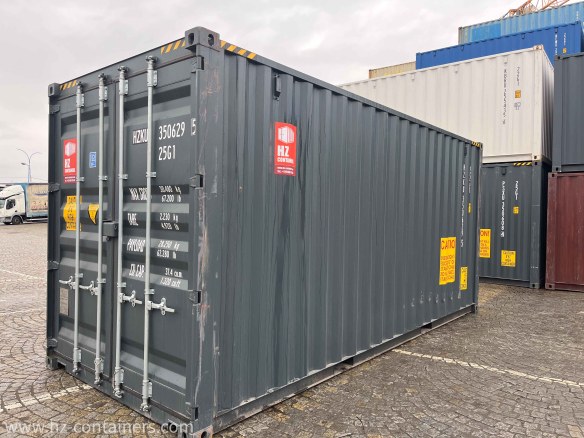
 Czech Republic, Třebíč
  FREE SHIPPING

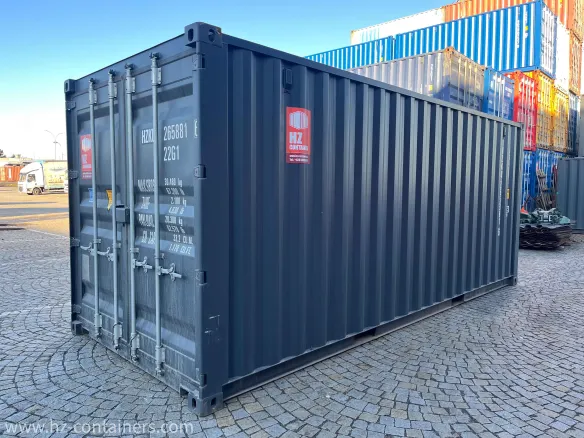
Other container news...
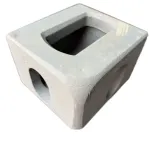
Corner casting steel vs aluminum
Every shipping container in the world — all 40 million of them — rests on eight critical components. Corner castings are the load-bearing blocks at each corner of an ISO shipping container, and they are the universal interface between the container and every crane, twistlock, spreader, and chassis on the planet. When you lift a container, stack it nine high on a ship, or lock it to a truck trailer, every ton of force flows through these fittings.

Construction cabin – selection, tips, dimensions and prices
Every construction project – whether a family house, a development project or a reconstruction – starts with the infrastructure. No construction manager, craftsman or investor who needs an on-site office, a changing room for workers or a safe storage for tools can do without a quality construction cell. But navigating the offer is not easy: residential containers, sanitary cells, storage modules, rental, purchase, refurbished pieces… This guide will give you answers to all the essential questions in one place.
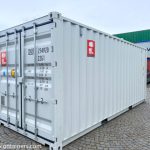
Storage container
A storage container is a lockable steel box designed for the safe and dry storage of materials, tools, goods or equipment. Originally created as a shipping container for maritime transport, its durability and versatility have found their way onto construction sites, corporate premises and private land.
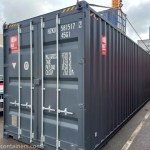
Shipping container 12m (40 ft)
A 12m shipping container is an investment that, if properly selected and cared for, will pay off in decades of trouble-free use. Whether you plan to use it as a warehouse, workshop, garage or the basis for a residential module — the key is careful selection of the condition, a thorough inspection before purchase and high-quality preparation of the base for placement. Take the time to compare offers, check the seller’s references and do not hesitate to personally inspect the container before buying. A properly selected 40-foot container will serve you reliably for many years.