
Import Customs Declaration – How to File Correctly and What to Watch Out For
In today’s globalized economy, international transport of goods in shipping containers is a fundamental pillar of world trade. However, this comes with a complex process of customs clearance, which is an integral part of every import. A key point in this process is the correct and timely import customs declaration – a formal act by which the importer or their representative informs the customs authority about the nature, value, and origin of goods crossing the state border.
Correct filing of a customs declaration is essential for:
- Ensuring smooth flow of goods without unnecessary delays.
- Minimizing the risk of financial penalties.
- Reducing the likelihood of physical inspection of the shipment.
- Obtaining accurate statistical data for economic planning.
In the Czech Republic, the customs clearance process is governed by European Union legislation, in particular Regulation (EU) No 952/2013 of the European Parliament and of the Council (Union Customs Code) and other implementing regulations. Connection with European and international electronic systems (ICS2, NCTS, TARIC, etc.) is standard. Every importer should be familiar with these rules to minimize risks and costs and ensure their competitiveness in the market.
What is an Import Customs Declaration?
Import customs declaration (in the EU referred to as “Import Declaration” or “Single Administrative Document – SAD”) is an official document that serves as a basic tool for:
- Collection of duties and taxes (VAT, excise tax, etc.).
- Verification of compliance with national and international legal requirements (e.g., consumer protection law, safety requirements).
- Statistical record of foreign trade.
- Protection of the market against illegal, dangerous, or dumped goods.
Mandatory Data in Import Customs Declaration:
| Item | Mandatory Significance | Note |
|---|---|---|
| HS/TARIC Code | Classification of goods according to the customs tariff | Affects the amount of duty and required certificates |
| Country of Origin | Whether goods come from a preferred/prohibited country | Necessary for determining preferential rate |
| Customs Value (CIF) | Basis for calculating duty and VAT | Including transport and insurance to the EU |
| Description of Goods | Precise, understandable, without commercial abbreviations | According to actual container contents |
| Number and Type of Packaging | Number of pieces, pallets, barrels, etc. | Necessary for physical inspection |
| Weight | Gross/net | Verification of declaration accuracy |
| Incoterms | Determines who pays duty and VAT | DDU/DAP/EXW/DDP, etc. |
| Invoice Price (Currency) | Verification of value for tax purposes | Conversion by ECB rate |
In the case of import in a shipping container, it is often necessary to divide the declaration according to individual recipients (consolidation, LCL shipment), which places increased demands on detailed packing lists and precise division of values.
Attention: Any discrepancies in the data may result in delays, detention of goods, additional duty assessment, or even fines (see § 293 of Act No. 242/2016 Coll., Customs Act).
Brief Overview of Legislation and Electronic Systems
In the Czech Republic and the EU, customs declarations are now mandatory to be filed electronically via the e-Customs system.
Main systems and portals:
- e-CELNÍK (Czech Republic) – portal for electronic communication with the Czech Customs Administration.
- ICS2 – Import Control System 2 – European system for entry summary declarations.
- TARIC – electronic customs tariff of the EU.
- NCTS – system for transit movement of goods.
- EMCS – for recording the movement of goods subject to excise tax.
Every importer must have:
- An account established in the e-CELNÍK system.
- Electronic signature (qualified certificate) for filing a declaration.
- Access to the current version of TARIC and knowledge of goods classification.
Customs Clearance Process – Step by Step
The customs process can be divided into the following phases:
1. Pre-preparation and Preliminary Notification
- Entry Summary Declaration (ENS): Mandatory to file before goods enter the EU territory, typically 24 hours before loading at the port of origin.
- Importer Security Filing (ISF 10+2): Mandatory in the USA, similar to ENS in the EU.
- Collection of documents: Verification of correct documents (invoice, packing list, bill of lading, certificate of origin).
- Verification whether goods are subject to special regimes (sanitary, phytosanitary, veterinary, CITES, etc.).
2. Arrival of Shipment at Port
- Registration of container in the port system.
- Filing of import customs declaration via electronic system (e-CELNÍK).
- For consolidated containers (LCL): Necessity to file a declaration for each recipient separately.
3. Documentation Review by Customs Authority
The customs officer:
- Compares data on the invoice, packing list, bill of lading, and declaration.
- Verifies HS code, origin, value, and any preferences.
- Checks mandatory attachments (certificate of origin, licenses, permits).
4. Calculation and Payment of Duties and Taxes
| Type of Fee | Calculated From | Payment and Rates |
|---|---|---|
| Duty | Customs Value CIF | According to TARIC, rate 0–50% |
| VAT | Basis = CIF + duty | 21% (in Czech Republic) |
| Excise Tax | According to type of goods | Alcohol, tobacco, fuel |
- Payment is made by: Importer or their representative (see Incoterms).
- Possibility of payment deferral: For frequent imports, customs bond can be used.
5. Possible Physical Inspection
- Selection of shipment for inspection – based on risk analysis, randomly, or upon request.
- Inspection methods: X-ray, weighing, complete opening of container, sampling.
- Special regimes: Goods subject to quality control, safety, CSN/EU standards, intellectual property, etc.
6. Release of Goods
- After payment of all fees and successful inspection, a Release Notification is issued.
- Container can be picked up and continues to the recipient.
Recommendation: Always plan a time buffer (typically 1–3 additional days) for possible customs officer intervention.
Key Terms and Required Documents (Including Practical Details)
Basic Mandatory Documents
| Document | Description and Content | Notes and Recommendations |
|---|---|---|
| Commercial Invoice | Identification of parties, precise description of goods, value, currency, Incoterms | Basic document for customs value |
| Bill of Lading (B/L) | Document of transport and ownership of goods, data on sender/recipient | Issued by carrier, necessary for goods release |
| Packing List | Detailed breakdown of contents, weight, number of packages, dimensions | Facilitates physical inspection |
| Certificate of Origin | Confirms country of manufacture, necessary for preferential duty | E.g., EUR.1, Form A |
| Export License | For goods subject to special regime | Weapons, medicines, certain technologies |
| Permits/Certificates | For example, sanitary, CE, CITES, EAC, ECO, etc. | Mandatory for certain commodities |
Overview of Types of Waybills (According to Type of Transport)
| Type of Document | Use | Specifics |
|---|---|---|
| Maritime Bill of Lading (B/L) | Sea transport | Original necessary for container release |
| FIATA Waybill | Multimodal transport | Combination of multiple types of transport |
| CMR | Road transport | Mandatory for intra-European road import |
| AWB | Air transport | Contains detailed shipment information |
| CIM | Rail transport | Rail only |
| ATA/TIR Carnet | Temporary import/export, transit | Simplification, possibility of multiple countries |
Electronic Structure of Filing (According to Czech Customs Administration)
- Field Metatypes: AlphaNumericString, Date, Boolean, Decimal, DIC, CU (customs office number).
- Data Formats: YYYYMMDD (date), an8 (office number), precise field differentiation.
- Automation: For larger companies, possibility of connecting ERP systems directly to e-CELNÍK.
What to Watch Out For: Common Mistakes and How to Avoid Them
1. Inaccurate or Incomplete Data in Declaration
- Most common source of delays and fines.
- Check consistency between invoice, packing list, and actual container contents.
2. Incorrect HS/TARIC Code Classification
- Affects the amount of duty, VAT rate, and necessity to attach permits/licenses.
- We recommend using consultation with a customs broker or online TARIC search engine.
3. Incorrect Value Declaration (Undervaluation or Overvaluation)
- Undervaluation is considered customs fraud and is punished according to law (fines, confiscation of goods).
- Always provide actual value with invoice, possibly with other evidence (contract, payment document).
4. Omission of Special Requirements of State Authorities (PGA)
- Some commodities are subject to supervision by other authorities (SZPI, SÚKL, ČOI, CITES, MPO, etc.).
- Find out in advance whether your product needs special permission or certification.
5. Misunderstanding of Incoterms Conditions
- Thoroughly clarify with your partner who pays duty, VAT, and transport fees.
- We recommend using the current version of Incoterms 2020.
6. Insufficient Time Planning
- Even without errors, delays can occur due to port congestion, increased inspections, etc.
- Plan for a time buffer, especially during holidays and peak season.
Role of Customs Broker
In practice, cooperation with a customs broker (so-called declarant) is the most effective solution, especially for companies that do not have their own specialized foreign trade department.
Main Benefits of Customs Broker:
- Knowledge of current legislation – monitors changes in TARIC, law amendments, rate and regime changes.
- Process optimization – minimizing time spent on customs matters.
- Representation in dealings with customs authorities – resolves any complaints or appeals in disputes.
- Protection against fines – guarantees accuracy of data and thus protects against sanctions.
- Consulting – suggests optimal import regime (transit, temporary import, shipment division, export regimes).
Selection of a quality customs broker is key especially for new importers, complex or risky commodities, unusual destinations, or when importing strategic goods.
Practical Tips and Real-Life Examples
- Example 1: Import of electronics from China as part of a consolidated container (LCL) – necessary division of value and packing lists, concurrent inspection of multiple recipients, risk of delay due to one missing document.
- Example 2: Import of food – obligation to present sanitary certificate, SZPI permit, increased probability of physical inspection and sampling.
- Example 3: Temporary import of machinery – possibility to use ATA carnet, savings on duty and VAT, but necessity to strictly comply with return export regime.
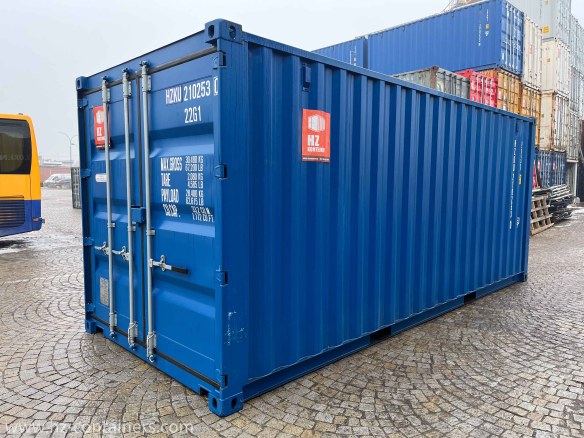
 Czech Republic, Vimperk
  FREE SHIPPING
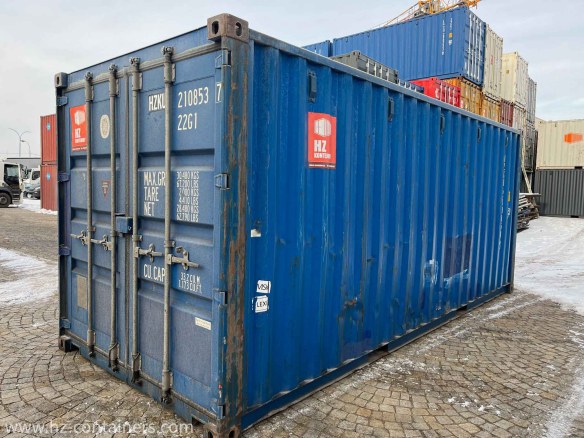
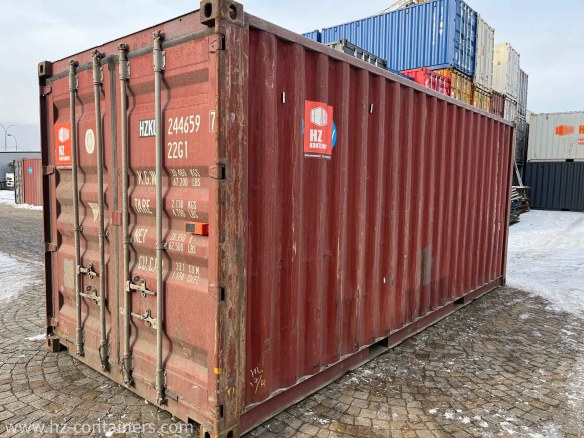
Other container news...
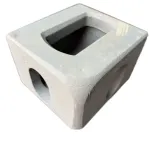
Corner casting steel vs aluminum
Every shipping container in the world — all 40 million of them — rests on eight critical components. Corner castings are the load-bearing blocks at each corner of an ISO shipping container, and they are the universal interface between the container and every crane, twistlock, spreader, and chassis on the planet. When you lift a container, stack it nine high on a ship, or lock it to a truck trailer, every ton of force flows through these fittings.

Construction cabin – selection, tips, dimensions and prices
Every construction project – whether a family house, a development project or a reconstruction – starts with the infrastructure. No construction manager, craftsman or investor who needs an on-site office, a changing room for workers or a safe storage for tools can do without a quality construction cell. But navigating the offer is not easy: residential containers, sanitary cells, storage modules, rental, purchase, refurbished pieces… This guide will give you answers to all the essential questions in one place.
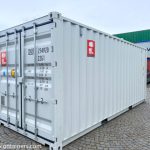
Storage container
A storage container is a lockable steel box designed for the safe and dry storage of materials, tools, goods or equipment. Originally created as a shipping container for maritime transport, its durability and versatility have found their way onto construction sites, corporate premises and private land.
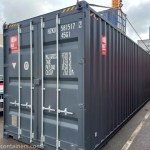
Shipping container 12m (40 ft)
A 12m shipping container is an investment that, if properly selected and cared for, will pay off in decades of trouble-free use. Whether you plan to use it as a warehouse, workshop, garage or the basis for a residential module — the key is careful selection of the condition, a thorough inspection before purchase and high-quality preparation of the base for placement. Take the time to compare offers, check the seller’s references and do not hesitate to personally inspect the container before buying. A properly selected 40-foot container will serve you reliably for many years.