
How to Weld Shipping Container Corner Castings
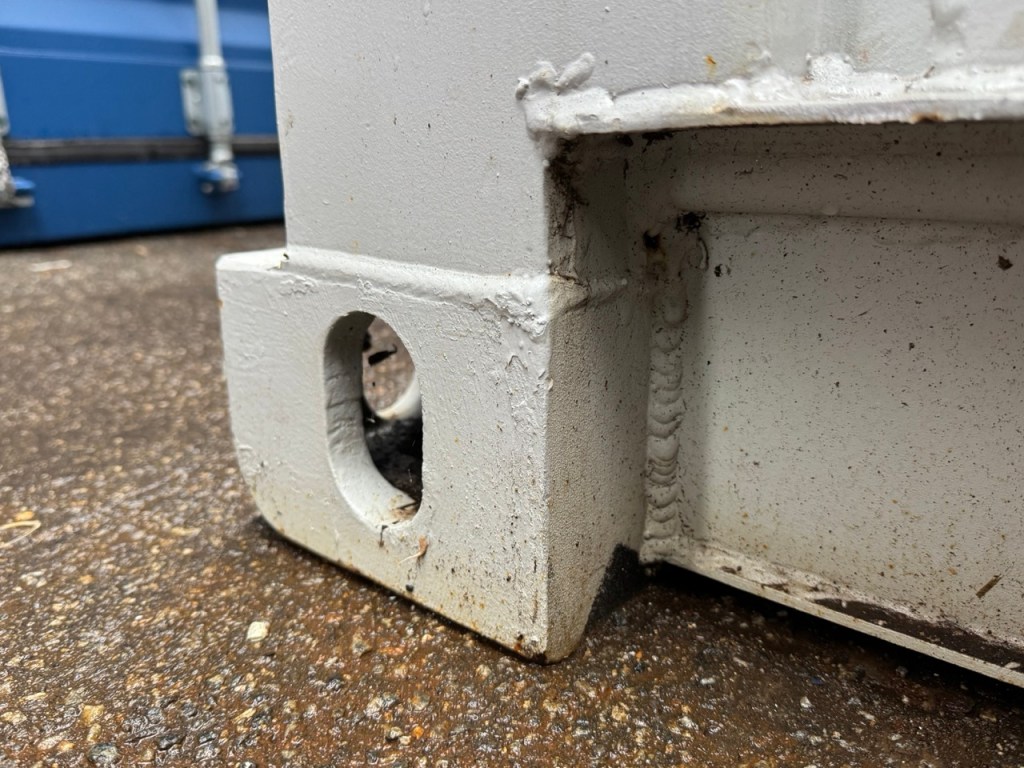
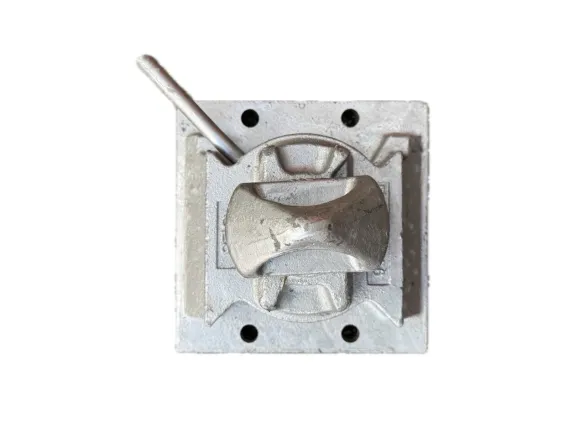
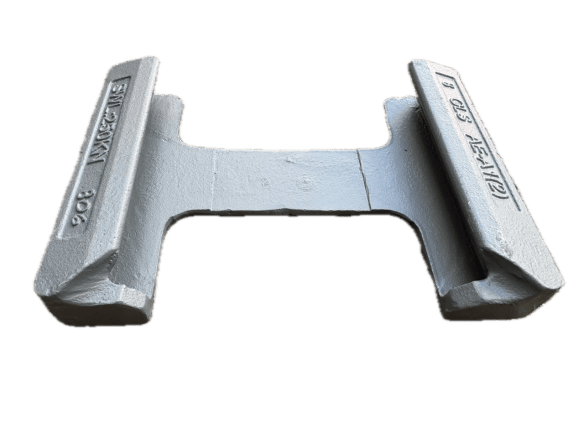
Corner casting (also called corner fitting or corner block) is a massive cast or welded component that forms each of the eight corners of an ISO container. Its main functions:

- Handling: Provides points for lifting with cranes, forklifts or spreaders.
- Stacking: Enables safe vertical connection of containers with twist‑locks.
- Lashing: Serves as anchoring points for securing the container during transport.
- Structural integrity: Carries all loads and forms the strong points of the container’s structure.
A standard ISO container has 8 of these castings: 4 on top, 4 on bottom.
Synonyms
- Corner casting
- Corner block
- Container corner
- Corner fitting/block
Standardisation
Thanks to the normalisation of dimensions and properties of corner castings according to ISO 1161, compatibility of containers worldwide is ensured.
Specifications and standards: ISO 1161, IACS
Properties, dimensions, tolerances and materials of corner castings are strictly defined by international standards.
Basic parameters of ISO 1161
| Parameter | Value |
|---|---|
| External dimensions | 178 × 162 × 118 mm |
| Tolerance | Within a few millimetres, guaranteeing interchangeability |
| Types | Top Left (TL), Top Right (TR), Bottom Left (BL), Bottom Right (BR) – differ by orientation and hole pattern |
Type and hole scheme
| Type | Position | Top hole | Side holes | Front holes |
|---|---|---|---|---|
| Top Left | Upper left | Yes | Yes | Yes |
| Top Right | Upper right | Yes | Yes | Yes |
| Bottom Left | Lower left | No | Yes | Yes |
| Bottom Right | Lower right | No | Yes | Yes |
Load tests according to ISO/IACS
| Load type | Value (kN) | Note |
|---|---|---|
| Stacking – top casting | 848 | Offset 25.4 mm lateral / 38 mm longitudinal |
| Stacking – bottom casting | 954 | On a flat surface |
| Lifting – top casting | 150 | Including hook or lug |
| Lifting – bottom casting | 300 | Loop at 30° |
| Longitudinal securing | 300 | Bottom castings, 2 points |
| Lashing (vertical) | 300 | All holes |
| Lashing (horizontal) | 150 | All holes |
Material of corner castings: Cast steel according to ISO/IACS
Chemical composition (per IACS, Table 1)
| Element | Limit (%) |
|---|---|
| C | max 0.20 |
| Mn | 0.90 – 1.50 |
| Si | 0.20 – 0.50 |
| P | max 0.035 |
| S | max 0.035 |
| Cr | max 0.25 |
| Ni | max 0.30 |
| Cu | max 0.20 |
| Mo | max 0.08 |
| Al (sol) | min 0.015 |
Carbon equivalent (Ceq) is strictly limited to ensure weldability.
Mechanical properties (per IACS, Table 2)
| Property | Minimum value |
|---|---|
| Yield strength ReH | 220 MPa |
| Tensile strength Rm | 430 – 600 MPa |
| Elongation A5 | 25 % |
| Impact energy (KV) at –20 °C | 27 J |
| Impact energy (KV) at –40 °C | 21 J |
Heat treatment
All castings must be heat‑treated (normalising or annealing) to obtain a homogeneous microstructure and minimise internal stresses.
Cast steel vs. Corten
- Corner castings: Always made of cast steel, never Corten.
- Container walls/frames: Usually Corten (S355J2W, SPA‑H, etc.) for enhanced corrosion resistance.
- Weldability: Cast steel is designed for good weldability; Corten requires additional Cu‑alloy filler material.
How to weld corner castings correctly
Preparation before welding
- Thorough cleaning – down to bare metal, free of rust, oil, paint.
- Beveling – to achieve a full‑penetration weld with a blunt (V, X) groove; minimum bevel width 4–5 mm for thick sections.
- Fit‑up – minimise gaps and ensure correct alignment.
Welding methods

MIG/MAG (GMAW)
- Most common in industry, high productivity and quality.
- Shielding gas: 82 % Ar / 18 % CO₂.
- Wire: ER70S‑6 (G3Si1, A18), diameter 1.0–1.2 mm.
- Technique: Spray transfer for deep penetration.
FCAW (flux‑cored wire)
- Suitable for outdoor/industrial environments.
- With/without gas: With gas – higher quality (E71T‑1); without gas – good wind resistance.
MMA/SMAW (shielded metal arc)
- Versatile, ideal for repairs and field work.
- Electrode: Low‑hydrogen E7018, diameter 2.5–4 mm.
Pre‑heat and temperatures
| Situation | Pre‑heat |
|---|---|
| Temperature < 5 °C | 80–100 °C |
| Thick sections (> 25 mm) | 80–150 °C |
| Moisture present | 80–100 °C |
- Inter‑pass temperature: max 250 °C.
- Post‑weld cooling: Slow; a non‑flammable blanket may be used.
Repair procedure according to the standard
- Repairs only on heat‑treated pieces, never on “as‑cast” material.
- After welding, perform post‑weld heat treatment (PWHT) at about 550 °C.
- Every repaired weld must be inspected visually and by NDT (magnetic or liquid penetrant).
Common defects and remedies
| Problem | Possible cause | Remedy |
|---|---|---|
| Cracking / HAZ | Rapid cooling, moisture | Pre‑heat, dry electrodes |
| Porosity | Insufficient gas shielding | Improve coverage, clean joint |
| Lack of penetration | Low current, poor bevel | Increase current, improve bevel |
Related terms and accessories
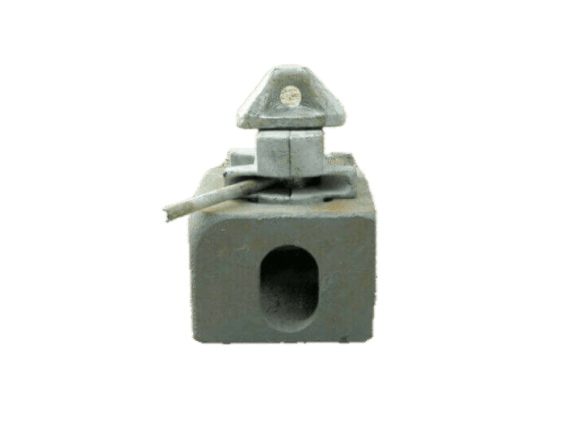
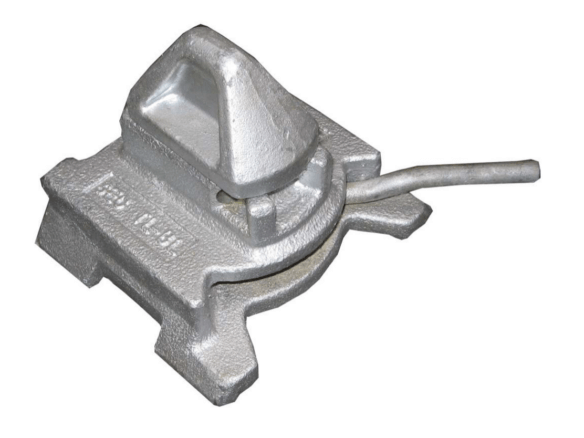
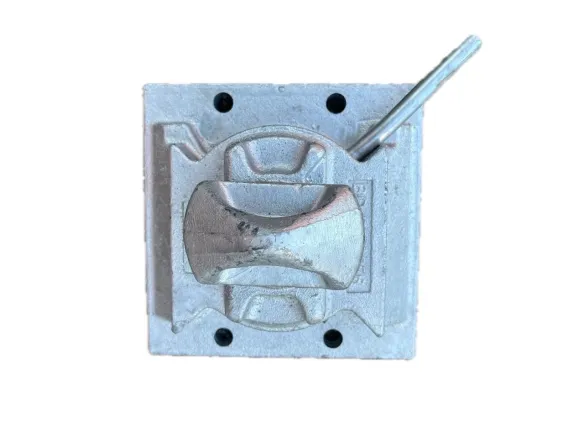
- Twist‑lock: Lock that fits into the corner casting holes for stacking/connecting containers.
- Container wheels: Wheels mounted in the bottom castings for easy handling.
- Fittings welded: Additional fittings and handles welded around the corner castings.
Marking and certification
Each corner casting must be marked with:
- Manufacturer’s mark
- Melt number (for traceability)
- Classification society mark
Every batch is certified, including chemical and mechanical test results.
FAQ – most common questions
Do I always have to pre‑heat a corner casting?
Strongly recommended when the temperature is below 5 °C, the material thickness is large, or moisture is present. Prevents cracking.
Can I use the standard ER70S‑6/A18 welding wire?
Yes, it is the approved choice for joining cast steel and structural steel.
Are corner castings made of cast iron?
No, they are always made of cast steel, which is weldable. Cast iron is not permissible.
Do top and bottom corner castings differ?
Yes, mainly in hole pattern and contact surfaces to suit different load types.
What is the correct repair procedure for a corner casting weld?
Repair only on a heat‑treated piece, perform subsequent PWHT, and conduct NDT verification.
Glossary
- Cast steel: Cast iron with specific alloying for weldability.
- Cast iron: Unsuitable, non‑weldable material for corner castings.
- Corner fitting: Synonym for corner casting.
- HAZ (Heat‑Affected Zone): Area of the base metal whose properties are altered by welding heat.
- ISO 1161: Standard for container corner castings.
- MIG/MAG (GMAW): Gas‑shielded arc welding.
- Mild steel: Common low‑carbon structural steel.
- PWHT: Post‑weld heat treatment.
- Pre‑heat: Heating before welding to reduce cracking risk.
Technical tables for practice
Chemical composition (IACS)
| C | Mn | Si | P | S | Cr | Ni | Cu | Mo | Al (sol) |
|---|---|---|---|---|---|---|---|---|---|
| max 0.20 | 0.90 – 1.50 | 0.20 – 0.50 | max 0.035 | max 0.035 | max 0.25 | max 0.30 | max 0.20 | max 0.08 | min 0.015 |
Mechanical properties of corner castings
| Property | Minimum value |
|---|---|
| Yield strength | 220 MPa |
| Tensile strength | 430 – 600 MPa |
| Elongation | 25 % |
| Impact energy (‑20 °C) | 27 J |
| Impact energy (‑40 °C) | 21 J |
 Czech Republic
  WITHOUT SHIPPING


Other container news...

20 Foot shipping container cost
If you are researching the cost of a 20 foot shipping container, you have likely already encountered wildly different prices — from $999 listings online to quotes exceeding $5,500. That range is not a sign of inconsistency. It reflects real differences in container condition, location, delivery logistics, and the seller you are dealing with.
Side Opening container
A side opening container is an ISO-compliant intermodal shipping container engineered with full-length bi-fold doors along one of its long side walls, in addition to the standard cargo doors at one end. Unlike conventional containers that restrict access to a single set of rear doors, a side opening container — also widely called an open side container, open-sided shipping container, or side door container — provides unobstructed lateral access across the entire 20-foot or 40-foot length of the unit. This design transforms the container from a narrow tunnel into a wide-open space that forklifts can enter from the side, multiple workers can load simultaneously, and oversized cargo that would never fit through standard end doors can be placed without struggle.
40 Foot High Cube container cost
A 40 foot high cube container — often abbreviated as 40ft HC, 40′ HC, or 40-foot high cube — is one of the most common shipping container sizes sold on the secondary market. But if you are researching what a 40 foot high cube container costs, you have almost certainly noticed that prices are all over the map. One seller quotes $1,500. Another quotes $7,000. Both could be legitimate.
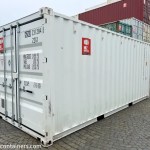
20 Foot container cost
If you have ever searched for a shipping container, you have almost certainly asked one question first: how much does a 20 foot container cost? The answer is not a single number. It is a range that spans from under $1,000 for a weathered, as-is unit to over $5,000 for a pristine, one-trip container — and that is before delivery, site preparation, or modifications enter the picture.