
How to Properly Stack Cars in a Shipping Container
Loading Vehicles into a Shipping Container
Loading vehicles into a shipping container, also referred to as container shipping vehicle transport, is a highly specialized logistics operation in which one or more vehicles are safely placed and secured into a standardized steel container. This method is among the most preferred for international vehicle transport because it provides:
- Maximum protection against weather conditions and corrosion (salt water, rain, snow)
- Completely enclosed space preventing theft, vandalism, and unauthorized handling
- Ability to transport non-running, valuable, or specially modified vehicles (including electric vehicles)
- Flexibility when combining with additional cargo (personal items, spare parts, motorcycles)
The correct process is not merely a matter of placing a vehicle in a “steel box,” but involves a multi-step set of procedures:
- Detailed inspection and documentation
- Selection of an appropriate container type based on dimensions and weight
- Use of certified securing and fastening systems
- Professional handling and careful securing against movement or overturning
Safety Procedures (Best Practices)
Safety measures are absolutely essential for every vehicle transport in a container. They include both technical and administrative steps designed to minimize the risk of vehicle damage, personnel injuries, and legal complications.
Safety Measures Checklist
| Step | Description and Recommendations |
|---|---|
| Fuel Reduction | Tank maximum at 1/4 capacity for fire safety; according to IMO regulations for maritime transport |
| Battery Disconnection | Especially for long routes; protects vehicle electrical systems from discharge or short circuit |
| Alarm Deactivation | Prevents false alarms and accidental triggering during handling |
| Professional Personnel | All workers must be trained in securing techniques, weight distribution, and anchor system operation |
| Use of Certified Equipment | Straps, wedges, frames must comply with ISO standards (e.g., EN 12195-2 for straps) and be regularly inspected for damage |
| Detailed Documentation | Photographs, condition report, inventory lists – essential for insurance and customs inspection |
Based on the experience of HZ Containers, it is important to avoid so-called “amateur securing” or improvisation, which is often a common cause of damage.
Chocking and Bracing
Principle
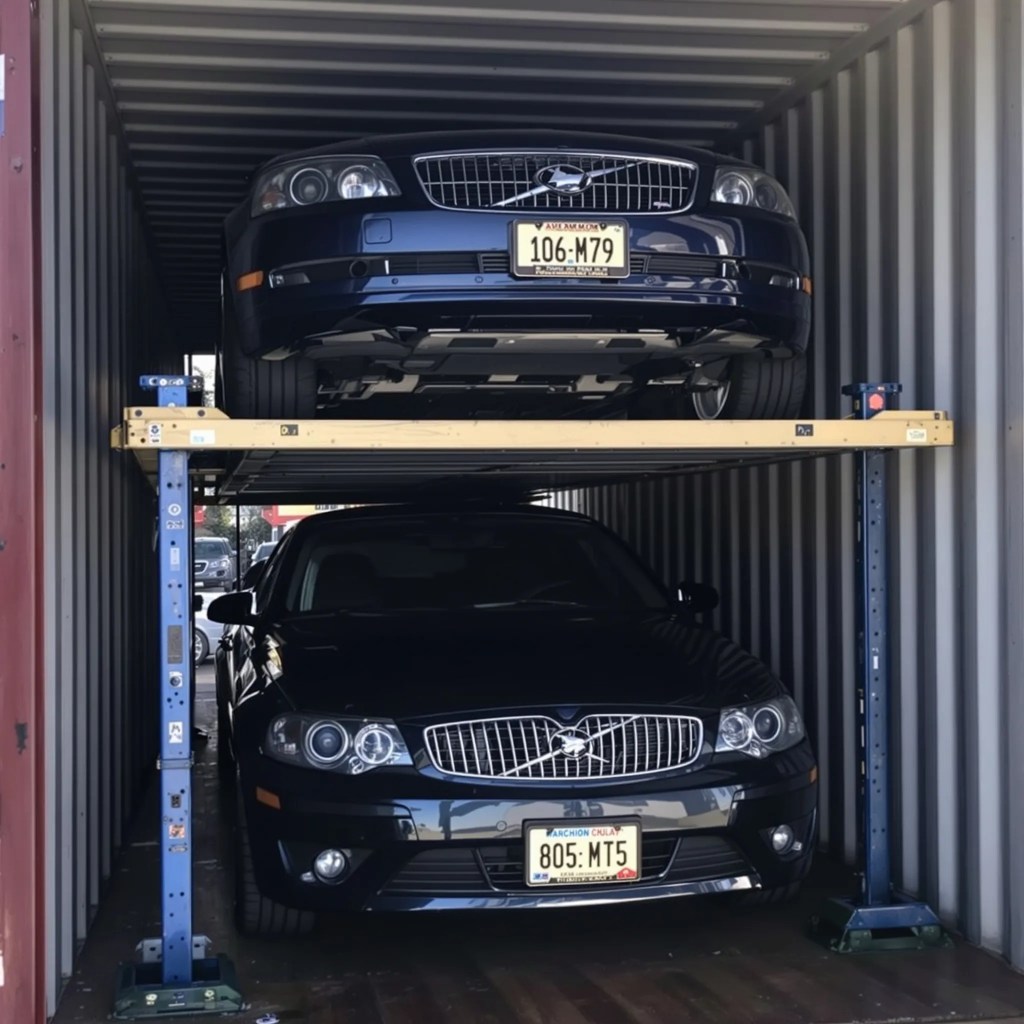
Chocking and bracing are physical methods of preventing vehicle movement in the container in all directions. Key is the use of:
- Chocking wedges: Wooden, plastic, or rubber wedges placed in front of and behind each wheel.
- Bracing: Wooden or metal braces securing wheels against container walls.
Technical Details
- Wedges should be firmly attached to the container floor (e.g., nails, screws, or adhesive) and designed for the specific wheel diameter.
- Braces reinforce the vehicle against lateral movement, especially during sudden ship movements.
- For heavy vehicles or with greater free space, a combination of multiple methods is recommended.
Standards: It is recommended to follow guidelines such as the CTU Code (Code of Practice for Packing of Cargo Transport Units), which establishes rules for cargo securing in containers.
Customs Clearance
Customs clearance is a necessary administrative process in which a vehicle is legally exported from one country and imported into another. Each country has its own requirements, but in principle, the following are needed:
- Original vehicle title
- Bill of Sale
- Export/Import Permit
- Vehicle condition report
- Inventory list in case of additional cargo
Caution: Any error or discrepancy in documentation can lead to container detention, delays, fines, or even vehicle confiscation.
Documentation
Careful documentation is both a legal and practical protection for the vehicle owner and transporter. It includes:
| Document | Purpose and Content |
|---|---|
| Condition Report | Record of vehicle condition, scratches, dents before loading |
| Photo Documentation | Images of exterior, interior, damage details, photos after loading and securing |
| Bill of Lading | Official transport document, confirms receipt of cargo, is the legal basis for transport |
| Ownership Documents | Vehicle title, bill of sale |
| Inventory List | Precise list of additional cargo for customs purposes |
Additional Cargo
One of the advantages of container transport is the ability to use unused space for transporting personal items, spare parts, or motorcycles. Key principles:
- Each item must be safely packed and secured so it cannot damage the vehicle
- Everything must be listed in the inventory list for customs purposes
- It is recommended to consult with a customs broker regarding possible restrictions in the destination country (for example, some countries prohibit transporting personal items together with a vehicle)
- All items must be easily identifiable and accessible for inspection
20-Foot Container
| Parameter | Value |
|---|---|
| Internal Length | approx. 5.89 m |
| Internal Width | approx. 2.34 m |
| Internal Height | approx. 2.38 m |
| Volume | approx. 33.2 m³ |
| Maximum Load | approx. 28,200 kg (depending on type) |
- Ideal for transporting one standard passenger vehicle
- Can also be used for two very small cars (e.g., Smart), but with minimal handling space
- Most common choice for individual transports or valuable vehicle transports
High-Cube Container
| Parameter | Value |
|---|---|
| Internal Height | approx. 2.69 m |
| Other Dimensions | Same as 20’/40′ container |
| Use | For taller vehicles (SUVs, vans), cars with roof racks, special modifications |
- Allows more efficient space utilization, for example for multi-level racking systems
- Often used for transporting larger or modified vehicles
Vehicle Inspection
Procedure
- Visual inspection of the entire vehicle including undercarriage, wheels, interior, and engine compartment
- Recording all existing damage in the condition report
- Taking detailed photographs
- Checking for removal of loose items (mobile devices, personal items, unsecured car accessories)
- Warning about possible fluid leaks, especially oil or coolant
Recommendation: Inspection should be performed in good light, ideally in the presence of a representative of both the transporter and the owner.
Condensation and Ventilation
The Problem of “Container Sweating”
- During transport, temperature changes occur, leading to water condensation on container walls and ceiling
- Water droplets can damage paint, interior, electronics, and cause corrosion
Protective Measures
| Method | Description |
|---|---|
| Ventilation | Standard containers have ventilation openings; for sensitive cargo, additional fans can be installed |
| Desiccants | Placement of bags with drying agents (e.g., silica gel, calcium chloride) |
- It is recommended to use a combination of both methods, especially for vintage and valuable vehicles
Container Shipping Vehicle Transport
Advantages
- Protection from external elements: Completely enclosed space protects against rain, snow, dust, and salt water
- Security: Sealed container resists theft and vandalism
- Flexibility: Ability to transport non-running vehicles, spare parts, personal items
- Discretion: Ideal for transporting valuable, luxury, or historic vehicles
Comparison with RoRo (Roll-on/Roll-off)
| Method | Advantages | Disadvantages |
|---|---|---|
| Container | Protection, security, ability to transport additional cargo | Higher price, limited volume |
| RoRo | Lower price, speed | Risk of damage, exposed to weather conditions, not suitable for non-running vehicles |
Consolidation (Consolidation / Shared Container)
- Process of sharing one 40-foot container by multiple customers whose vehicles are destined for the same location
- Significantly reduces transport costs per vehicle
- May mean longer waiting time until the container is filled
Loading Methods
| Method | Use and Advantages |
|---|---|
| Drive-In | Running vehicle drives into the container on a ramp; requires experience and assistance for precise handling |
| Winch | Non-running vehicles are pulled in with an electric or manual winch; safe for vehicles that cannot be started |
| Push | Manual pushing or use of a forklift with protective covers; suitable with limited space |
- Always ensure protection of undercarriage and body from contact with ramp or walls
Non-Running Vehicle
- Any automobile incapable of movement under its own power (under renovation, damaged, without engine)
- Transport in a container is often the only possible method, because RoRo transport requires the vehicle to be operational
- Winches, wedges, and special straps designed even for vehicles without functional braking systems are used
Container Seal
- Metal or plastic one-time security lock with a unique number
- The number is listed on transport documents
- An intact seal upon arrival is proof that the container was not opened during the entire transport period
Cargo Insurance
| Insurance Type | Description |
|---|---|
| All-Risk | Covers most types of damage (damage, theft, natural disasters, accidents) |
| Total Loss | Covers only total destruction or loss of vehicle |
- It is recommended to arrange insurance corresponding to the vehicle’s value and route risk
- Insurance may be a condition for transport, especially for more expensive vehicles
Straps and Tie-Downs
- Special high-strength textile straps are used (most commonly polyester, min. EN 12195-2)
- Each vehicle is secured with a four-point system (each wheel separately)
- Straps are tightened so they slightly compress the suspension and prevent the vehicle from bouncing on waves
| Type of Securing | Advantage |
|---|---|
| Over Wheels | Most secure, protects suspension and body |
| Via Frame/Chassis Eyes | Only for certain vehicles, must be used only in locations designated by the manufacturer |
Vehicle Preparation
Vehicle preparation before loading is essential for safety and for expediting customs and inspection processes.
Checklist:
- Fuel maximum 1/4 tank
- Battery disconnection
- Tightening and checking all fluids (oil, coolant)
- Removal of loose items (including antennas, roof racks)
- Vehicle washing for easier inspection
- Document and photo documentation check
Racking Systems
- Special steel structures inside 40-foot containers
- Allow stacking of vehicles on top of each other or at an angle
- Increase transport capacity to 3–4 vehicles in one container
- Best-known systems: R-Rak, EL-Rak
 Czech Republic, Opava
  FREE SHIPPING
Other container news...
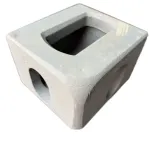
Corner casting steel vs aluminum
Every shipping container in the world — all 40 million of them — rests on eight critical components. Corner castings are the load-bearing blocks at each corner of an ISO shipping container, and they are the universal interface between the container and every crane, twistlock, spreader, and chassis on the planet. When you lift a container, stack it nine high on a ship, or lock it to a truck trailer, every ton of force flows through these fittings.

Construction cabin – selection, tips, dimensions and prices
Every construction project – whether a family house, a development project or a reconstruction – starts with the infrastructure. No construction manager, craftsman or investor who needs an on-site office, a changing room for workers or a safe storage for tools can do without a quality construction cell. But navigating the offer is not easy: residential containers, sanitary cells, storage modules, rental, purchase, refurbished pieces… This guide will give you answers to all the essential questions in one place.
Storage container
A storage container is a lockable steel box designed for the safe and dry storage of materials, tools, goods or equipment. Originally created as a shipping container for maritime transport, its durability and versatility have found their way onto construction sites, corporate premises and private land.
Shipping container 12m (40 ft)
A 12m shipping container is an investment that, if properly selected and cared for, will pay off in decades of trouble-free use. Whether you plan to use it as a warehouse, workshop, garage or the basis for a residential module — the key is careful selection of the condition, a thorough inspection before purchase and high-quality preparation of the base for placement. Take the time to compare offers, check the seller’s references and do not hesitate to personally inspect the container before buying. A properly selected 40-foot container will serve you reliably for many years.