
How to Connect Shipping Containers Together Using Bridge Fittings?
Welcome to the most comprehensive article dedicated to joining shipping containers horizontally using Bridge Fittings. This article is intended for everyone seeking truly detailed information, technical procedures, and expert advice on how to safely, reliably, and efficiently connect two or more containers.
What Is a Bridge Fitting?
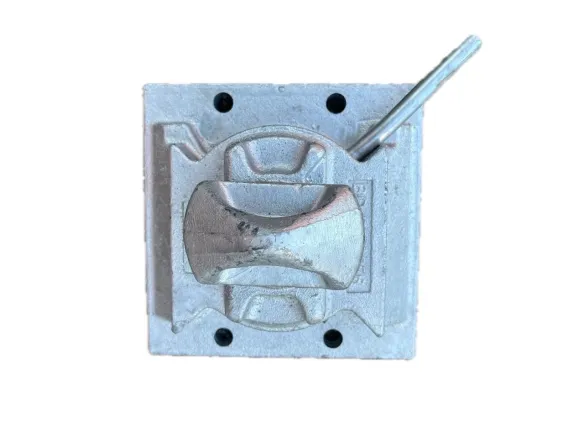
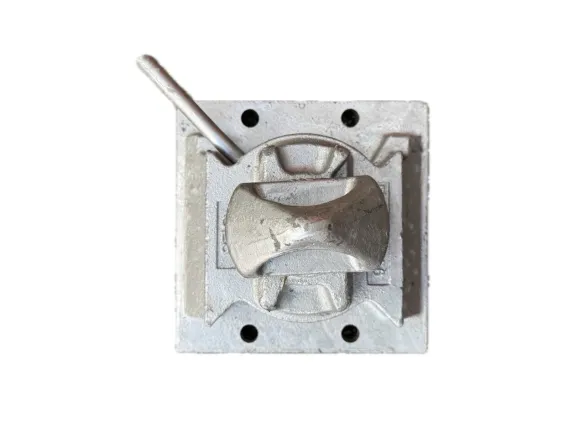
Bridge Fitting is a robust connecting component designed for horizontal (side‑by‑side) linkage of two shipping containers. It is used when containers need to be joined firmly and safely next to each other – for example during transport, in logistics warehouses, on construction sites, or in modular architecture.
Operating Principle
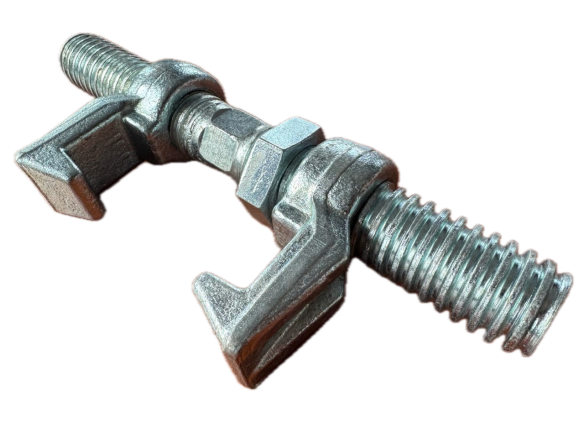
A Bridge Fitting works on a tension principle: two steel claws (hooks), precisely shaped for the holes in the corner castings, are linked by a central threaded rod. Rotating the central hex nut moves both claws together or apart, tightly pulling the frames of both containers toward each other. After tightening, the entire mechanism is secured with a lock nut to prevent loosening due to vibration (e.g., during transport).
Construction Details
- Material: High‑quality cast or forged steel (High Quality Casting Steel)
- Surface Treatment: Hot‑dip galvanizing, providing long life and excellent corrosion resistance, especially in aggressive marine environments
- Lengths: Most common 260 mm, 280 mm or 380 mm (extended). Adjustable range bridges gaps between containers of different widths (typically 18–38 cm depending on model)
- Weight: 3–5 kg per piece, indicating a massive construction
- Load Capacity: Maximum breaking load up to 100 kN (≈10 t), safe working load (SWL) about 5–7 t – always check the specific product certification
- Certification: For maritime transport and construction use, request products certified to the relevant ISO standard and with strength test documentation
Detailed Diagram
| Part of the Bridge Fitting | Function and Description |
|---|---|
| Claws (hooks) | Shaped to fit precisely into the oval holes of the corner castings, usually equipped with safety “ears” to prevent slipping |
| Central threaded rod | Allows fine adjustment of distance and strong tightening of the joints |
| Central nut (barrel nut) | Hexagonal, operated with a wrench; enables rotation of the entire mechanism |
| Lock nut (jam nut) | Secures the joint against self‑loosening |

Alternative Names and Terminology
In practice you may encounter various terms, e.g.:
- Bridge Fitting (technical term, most common in international logistics)
- Bridge Clamp (emphasises the clamping function)
- Container coupling
- Bridge brace/lock (often used among tradespeople)
- Horizontal lock (describes the direction of connection – as opposed to Twist Locks)
Corner Castings – The Basis of Container Connections
Corner Castings are massive corner fittings of every ISO container, usually made of cast steel, with precisely defined holes on three sides. These holes enable:
- Handling (lifting with a crane, using a spreader)
- Connecting (Bridge Fittings – horizontally, Twist Locks – vertically)
- Securing (e.g., to a chassis, to the ground, to a structure)
Standardized dimensions of corner castings are crucial: they allow universal use of connecting components on containers from different manufacturers and ages.
Twist Locks vs. Bridge Fittings – Key Differences
| Connecting Element | Connection Direction | Typical Use | Key Feature |
|---|---|---|---|
| Twist Lock | Vertical (up/down) | Stacking containers on top of each other (ship deck, warehouse, rail) | Rotated 90° to lock two containers vertically |
| Bridge Fitting | Horizontal (side‑by‑side) | Joining containers side by side to create larger units and structures | Adjustable tension, allows precise alignment and strong tightening |
Important: Never use Bridge Fittings for stacking containers vertically. For vertical connections, only Twist Locks are appropriate.
Technical Specifications of Bridge Fittings – Detailed Table
| Model | Length (mm) | Adjustable Range (mm) | Weight (kg) | Surface Treatment | Strength (kN) | Safe Working Load (t) |
|---|---|---|---|---|---|---|
| Standard 260 mm | 260 | 179–259 | 3–4 | Hot‑dip galvanizing | 100 | 5–7 |
| Heavy Duty 280 mm | 280 | 200–280 | 4–5 | Hot‑dip galvanizing | 100+ | 7–10 |
| Heavy Duty 380 mm | 380 | 250–380 | 4.5–5 | Hot‑dip galvanizing | 100+ | 7–10 |
Note: Specific values may vary by manufacturer – always verify the product data sheet!
Surface Treatment – Why It Matters
Bridge Fittings for containers are exposed to aggressive conditions: rain, salt water, temperature fluctuations, UV radiation. Therefore a high‑quality surface treatment is essential:
- Hot‑dip galvanizing: The steel part is immersed in molten zinc, forming a strong protective layer that also provides cathodic protection even if the coating is slightly damaged.
- Benefits: Extremely long service life, minimal maintenance, high reliability in marine environments.
Practical Guide – How to Properly Connect Containers Using Bridge Fittings
Required Equipment
- Sufficient number of Bridge Fittings (usually 2–4 per joint)
- Large adjustable wrench (e.g., 32 mm) or ratchet wrench
- Small wrench for lock nuts
- Lubricant (e.g., technical grease for threads)
- Safety gear (gloves, safety glasses)
Installation Steps – Step by Step
- Prepare the containers
- Containers must stand on a level surface, ideally with no height differences between corner castings.
- Align the containers as closely as possible; the gap should not exceed the maximum extended length of the fitting.
- Pre‑set the Bridge Fitting
- Rotate the central nut to set the claws at a distance matching the spacing of the corner casting holes on both containers.
- Insert the claws
- First, place one claw into the corner casting hole of the first container.
- Then insert the second claw into the opposite corner casting of the neighboring container.
- Ensure the claws are fully seated, not slipping, and that the holes are not deformed.
- Tighten the coupling
- Turn the central nut (using the wrench) to draw the two claws together.
- Tighten until the frames of both containers are firmly pressed together with no play.
- Visually confirm that the claws have not slipped out of the holes and that the corner castings are intact.
- Secure with the lock nut
- After final tightening, lock the lock nut (jam nut) against the body of the fitting to prevent self‑loosening.
- Inspection
- Verify that all Bridge Fittings are tightened and lock nuts secured.
- It is recommended to use at least two Bridge Fittings per joint (for 40 ft containers, ideally four – two on top, two below).
Common Installation Mistakes
- Insufficient tightening – containers may have play and can move during handling or strong winds.
- Incorrectly inserted claws (only “on the tip” or in the wrong hole).
- Using Bridge Fittings not suited to the specific corner casting (e.g., non‑standard dimensions).
- Missing lock nut – the joint may loosen under vibration and movement.
Practical Applications and Use Cases
Logistics and Transport
- On ships, Bridge Fittings create solid blocks of containers, increasing overall stability and reducing the risk of movement, overturning, or containers falling overboard.
- In rail and road transport, containers can be safely paired or grouped, simplifying handling and protecting cargo.
Storage
- In warehouses, side‑by‑side connections form secure, compact blocks that deter theft, prevent gaps between containers, and optimise space utilisation.
Modular Buildings and Architecture
- Bridge Fittings for containers are essential for temporary or permanent container constructions: offices, schools, accommodation units (container homes, container houses), festival sites, construction sites, etc.
- After joining, side walls can be removed to create large open spaces (showrooms, halls, studios).
- For temporary installations, the advantage is easy dismantling – Bridge Fittings can be removed in minutes.
Industrial Applications
- Linking specialized containers (e.g., power containers, transformer boxes, filtration stations) into functional units.
- Securely fastening mobile offices or worker shelters in remote locations.
Comparison of Bridge Fittings with Other Joining Methods
| Method | Advantages | Disadvantages |
|---|---|---|
| Bridge Fittings | Fast assembly and disassembly, extreme strength, reusable, no alteration to the container structure | Does not provide watertightness, requires regular torque checks |
| Welding | Permanent, maximally strong connection | Irreversible, time‑ and cost‑intensive, requires a specialist, difficult to dismantle |
| Bolted Connections | Removable, can be used for non‑standard dimensions | Slower assembly, lower strength, requires drilling into the frame |
| Twist Locks | Standardised for vertical stacking, quick | Cannot be used for horizontal connections |
Recommended Number of Bridge Fittings
- Two 40 ft containers: Minimum 4 pieces (one at each corner of the joined side)
- Two 20 ft containers: Minimum 2 pieces (depending on the length of the joined side)
- Multiple containers side by side: Each adjacent pair needs its own set of fittings (cascading)
- Combination with Twist Locks: When building larger structures (e.g., 2 × 2 or 3 × 2 blocks), always combine horizontal Bridge Fittings with vertical Twist Locks
Safety and Maintenance
- After each transport or extreme load, check the torque of all fittings.
- Regularly clean threads and inspect the surface condition (if the galvanised layer is damaged, treat with anti‑corrosion paint).
- Never use deformed or corroded Bridge Fittings.
- Do not exceed the manufacturer’s recommended load (SWL).
Frequently Asked Questions (FAQ)
Can Bridge Fittings be used for purposes other than connecting containers?
Yes, some users employ them to join steel frames, construction scaffolding, or temporary heavy‑metal structures.
How should Bridge Fittings be stored?
Ideally in a dry place, in their original transport boxes. Before long‑term storage, clean off any grease and inspect the surface treatment.
Are Bridge Fittings universal for all containers?
If the container has standard corner castings according to ISO, most Bridge Fittings for containers on the market will fit. Pay attention to older or “non‑standard” containers.
Do the fittings need to be welded after installation?
No, Bridge Fittings are sufficiently strong on their own. Welding is only appropriate for permanent constructions where dismantling is not required.

 Detroit, USA
  WITHOUT SHIPPING

Other container news...

Obligation to Check Tightness When Selling a Reefer Container
Who is responsible for the refrigerant leak check when selling a refrigerated container? Find out what obligations the seller has at the time of handover and why they must provide a PTI report along with the technical data plate. Learn which regulatory requirements and F-gas record-keeping duties become the sole responsibility of the new owner.

New shipping containers
If you are currently considering purchasing a new shipping container, you are not alone. While just twenty years ago containers were used almost exclusively for maritime transport, today they have found their way into construction, storage, business, and even housing. This growing popularity brings with it a host of questions: Which type should you choose? How much does it cost? How do you recognize quality? How can you avoid falling victim to scammers?
New sea shipping containers
If you are currently considering purchasing a new shipping container, you are not alone. While just twenty years ago containers were used almost exclusively for maritime transport, today they have found their way into construction, storage, business, and even housing. This growing popularity brings with it a host of questions: Which type should you choose? How much does it cost? How do you recognize quality? How can you avoid falling victim to scammers?

6m shipping container
Are you thinking about buying a 6-meter shipping container but aren’t sure what to look for? You are not alone—this 20-foot container is the best-selling size on the Czech market, and the differences between various types, conditions, and prices can be significant. In this guide, you will find everything you need to know: from exact dimensions and a comparison of categories (such as “one-way,” refurbished, and “Cargo Worthy”) to current prices and shipping advice.