
How Super Freezer Reaches Temperatures Down to -70 °C
Ultra-freezing containers utilize cascade cooling technology (Cascade Technology), which enables bridging the enormous temperature difference between the environment and the required internal temperature.
Cascade Cooling System
- Two-stage cooling: The solution is based on two independent cooling circuits, each using a different refrigerant:
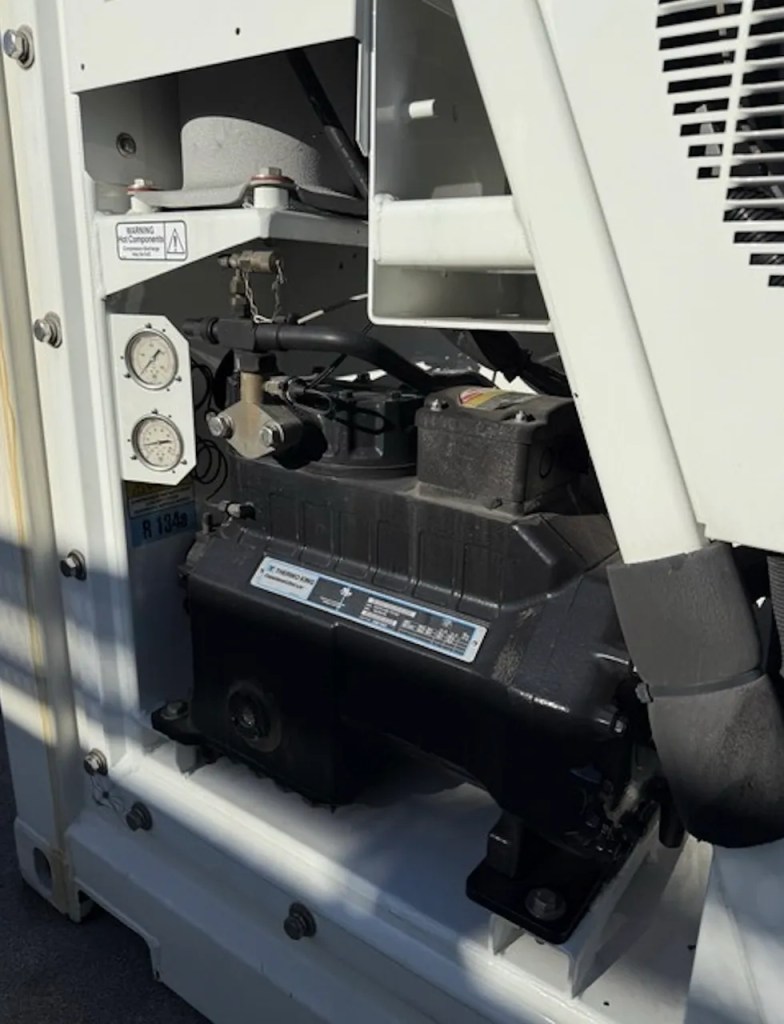
- Primary circuit (higher temperatures): Typically R134a, whose task is to dissipate heat from the cascade condenser.
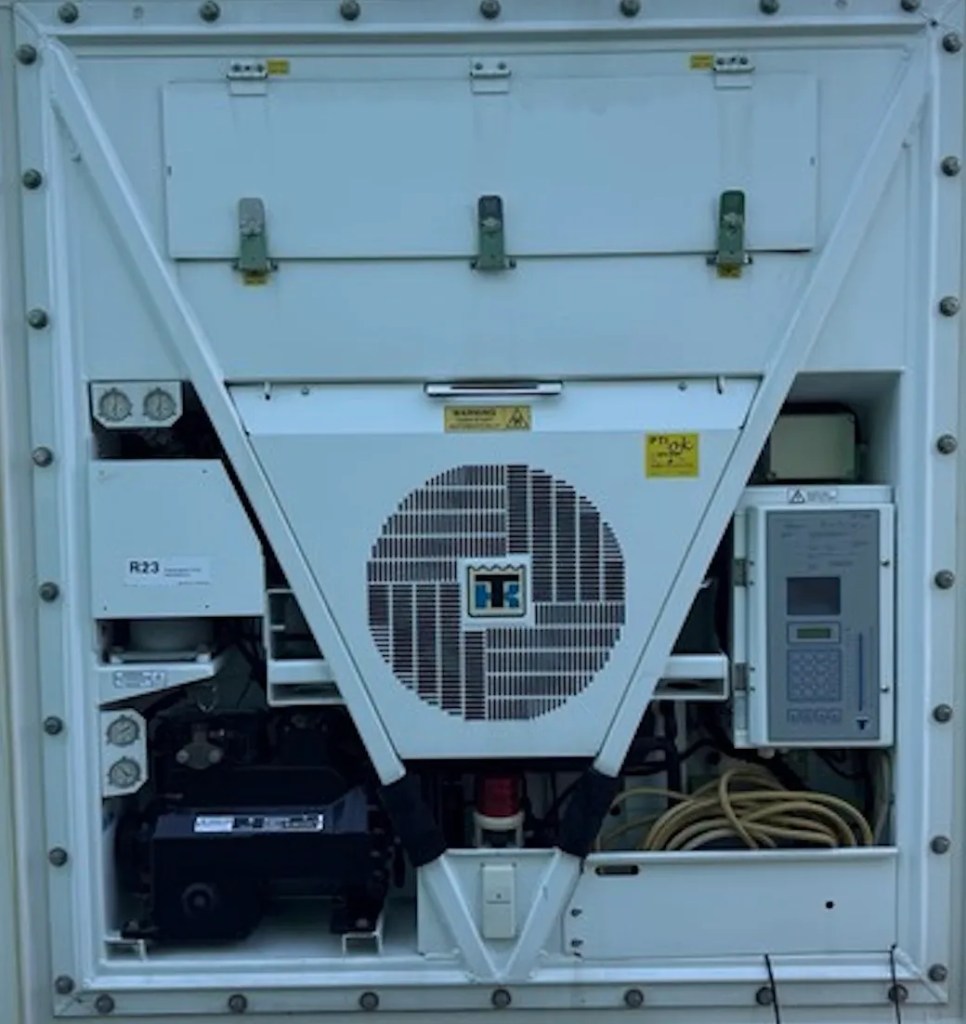
- Secondary circuit (low temperatures): Uses special refrigerant with extremely low boiling point (for example R23), which enables reaching temperatures down to -70 °C.
- Cascade heat exchanger: Between the circuits is a heat exchanger that ensures efficient heat transfer.
- Microprocessor control: Typically Thermo King MP-3000, enables precise temperature setting and monitoring, alarms, remote management and data logging (for example for the pharmaceutical industry).
Key Technical Elements
- Insulation: Polyurethane foam up to 150 mm thick to minimize heat loss.
- Construction: Most often 20′ or 40′ High Cube format for maximum volume and variability.
- Interior lining: Food-grade stainless steel, resistant to brittleness at low temperatures.
- Floor: Aluminum T-profiles to ensure circulation of cold air around the goods.
- Doors: Heavily insulated, with robust seals and lever mechanism for easy opening even in case of freezing.
Main Components and Structural Elements
| Component | Description and Function |
|---|---|
| Cooling unit | Thermo King Super Freezer, two-stage compressor system (scroll and piston), microprocessor control, remote monitoring, telematics. |
| Container box | ISO 20′, 40′ or High Cube, strong insulation (up to 15 cm PUR foam), CSC certification, robust frame for maritime and land transport. |
| Interior walls | Food-grade stainless steel, resistant to brittleness and easily washable. |
| Floor | Aluminum T-profiles for perfect air circulation and even cooling. |
| Doors | Double, heavily insulated, with possibility of opening even when frozen, internal safety button, vinyl curtain against cold leaks during entry. |
| Power supply | 3-phase, 380-460 V, 50/60 Hz, consumption 6–10 kW/h (depending on type), possibility of connection to ship, depot or via Thermo King SG-Series generator (genset). |
Typical Dimensions and Capacity
| Container Size | Interior Dimensions (L x W x H) | Volume (m³) | EUR Pallet Capacity |
|---|---|---|---|
| 20′ Super Freezer | approx. 5.45 x 2.29 x 2.27 m | 28–29 | 10–11 |
| 40′ High Cube Super Freezer | approx. 11.56 x 2.29 x 2.54 m | 67–69 | 23–25 |
These values may vary depending on equipment, insulation thickness and type of cooling unit. For maximum utilization of pallet space, it is necessary to consider the height of the cargo and the method of stacking.
Key Applications and Uses
Ultra-freezing Thermo King Super Freezer containers are essential for transport and storage:
Pharmaceuticals and Biotechnology
- Vaccines (including mRNA): Stable storage at temperatures well below zero (e.g. COVID-19 vaccines).
- Biological samples and blood plasma: Stopping cell degradation and preserving sample integrity.
- Medicines and active substances (API): Protection against decomposition and loss of efficacy.
Premium Foods (especially seafood products)
- Sashimi-grade fish (tuna, swordfish): Preservation of freshness, color, texture and taste – enables maritime transport instead of expensive air freight.
- Seafood, shrimp, sea urchins: Prevention of all molecular activity by freezing below eutectic temperature.
Advanced Materials and Electronics
- Semi-finished products for aerospace and automotive industry: Some composites, resins and other materials require deep freezing to prevent premature curing.
- Sensitive electronics and semiconductors: Storage in an environment with precisely controlled temperature and humidity.
Food and Chemical Industry, Research
- Enzymes, cultures, chemicals: Preservation of activity and extension of service life.
- Research and development: Testing of materials and components in extreme conditions (aviation, automotive, energy).
Advantages and Benefits of Using Super Freezer Containers
- Preservation of quality and value of goods: Minimization of risk of spoilage, loss of efficacy or value.
- Flexibility and mobility: Quick deployment anywhere in the world, possibility of short-term and long-term storage.
- Regulatory compliance: Temperature monitoring and recording (GDP, GxP for pharmaceuticals).
- Safety: Robust construction, internal security, possibility of remote supervision.
Comparison: Super Freezer vs. Standard Refrigerated Container (reefer)
| Feature | Thermo King Super Freezer | Standard Refrigerated Container (reefer) |
|---|---|---|
| Temperature range | -70 °C to -10 °C | -25 °C to +25/35 °C |
| Technology | Cascade, two-compressor | Single-stage circuit |
| Insulation | Extra strong (up to 15 cm PUR foam) | Standard refrigeration insulation |
| Primary use | Cryogenic storage, pharmacy, sashimi fish | Common foods, flowers, medicines, dairy products |
| Price | Significantly higher purchase and operating | Standard price |
| Power supply | 6–10 kW/h, 3-phase, genset option | 3–7 kW/h, 3-phase |
| Designation | Super Freezer, Deep Freezer, ULT | Reefer, Fresh & Frozen, Chiller Container |
Other Important Terms and Concepts
- Cold Chain: Uninterrupted chain of refrigerated transport and storage, where Super Freezer is a key link for products requiring ultra-low temperatures.
- High Cube (HC): Container height 9’6″ (2.9 m), allows greater volume and capacity.
- ISO container: Internationally standardized container for safe and efficient transport.
- Genset (generator set): Portable generator for powering the container in case of absence of grid connection.
- Telematics: Systems for remote monitoring of temperature, location and equipment status in real time.
Energy Intensity and Operation
- Energy consumption: 6–10 kW/h (depending on size and type), depends on required temperature and environment.
- Refrigerant: R134a (primary circuit), R23 (secondary circuit) – more environmentally friendly variants are under development.
- Testing before delivery: Each container is subjected to functionality and tightness test before dispatch.
Certification, Legislation and Safety
- CSC certification: Container must be certified for maritime transport.
- GDP/GxP compliance: For pharmaceutical transport, temperature evidence and monitoring according to directives is required.
- Safety features: Internal emergency opening button, alarms, operational data recording.
Practical Tips for Interested Parties
- Selection of the correct type: Consider the required temperature range, capacity, power supply and certifications.
- Operation and maintenance: Regular checks of the cooling system, seals and temperature records are key to reliable operation.
- Economic aspects: Higher purchase and operating costs are balanced by protection of very valuable cargo and the possibility of cheaper maritime transport instead of air freight.
- Rental options: For short-term needs or trial operation, there are options to rent Super Freezer containers.
Other container news...

What Is a Shipping Container? The Ultimate Definitive Guide
A shipping container is a standardized, reusable steel box engineered to transport goods safely across multiple modes of transportation — ship, rail, and truck — without ever unloading the cargo inside. Also known as an ISO container, intermodal container, freight container, cargo container, sea van, dry box, or conex box, the shipping container is the invisible backbone of the global economy. More than 90% of everything you buy — from the smartphone in your pocket to the coffee in your cup — spent at least part of its journey inside one of these rectangular steel boxes.
Used Shipping Container: Grades, Costs, Inspection & More
A used shipping container delivers the same structural steel integrity as a new unit at 30–50% lower cost. For most storage, farming, job-site, and budget conversion applications, the right used container — properly graded and inspected — provides equal functional value with meaningfully lower upfront investment. This guide covers every decision you’ll face: grades, pricing, inspection, delivery, lifespan, and the mistakes that cost buyers thousands.

40ft Open Side Container
A 40ft open side container is a specialized ISO shipping container in which one full 40-foot long wall is replaced with bi-fold or multi-panel doors that swing open to provide unobstructed access along the entire side of the unit. Unlike a standard shipping container — where the only way in is through the 7-foot-8-inch-wide double doors at one end — an open side container lets you reach every pallet, every piece of equipment, and every inch of stored cargo from the side, without ever having to dig through layers of inventory. The standard end doors remain intact, giving you two fundamentally different access modes in a single unit.

20 Foot shipping container
A 20 foot shipping container is the single most important unit of measurement in global trade. It is the backbone of intermodal logistics, the standard by which every container ship, port terminal, and freight rate is measured, and — increasingly — a building block for homes, offices, and creative architecture. Despite its ubiquity, most people who encounter a 20 foot shipping container know surprisingly little about what defines it, how it came to be, and what it can actually do.