
How much does a shipping container cost?
If you’ve ever typed “how much does a shipping container cost” into a search engine, you already know the answer is rarely straightforward. One seller offers a used 20-foot container for USD 1,300. Another quotes USD 4,800 for what they describe as the same thing. This spread isn’t random — it reflects real differences in size, condition, geography, and market forces that most buyers don’t understand until they get absorbed in the purchasing process.
This guide breaks down every factor that determines what you’ll actually pay for a shipping container in 2026. You’ll find price tables for all common sizes and condition grades, regional comparisons across 10 major American cities, a historical look at price evolution since 2020, and a complete overview of delivery costs, hidden fees, and rent-versus-buy calculations that most beginning buyers overlook.
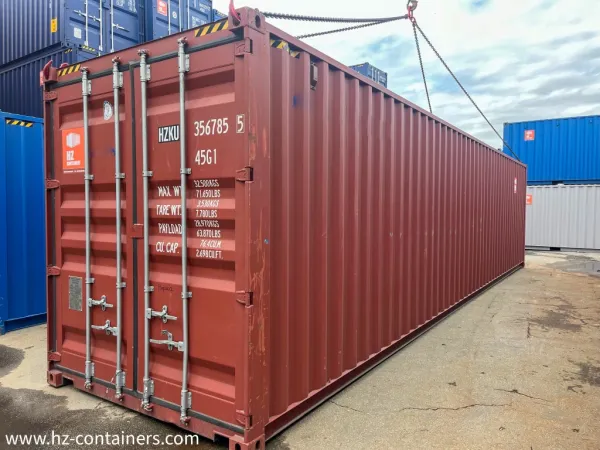
How Much Does a Shipping Container Cost in 2026?
Short answer: you can expect to pay anywhere from USD 1,200 to USD 6,500 for a standard dry shipping container in the United States, depending on size, age, and condition. Used 20-foot containers sit at the lower end of the range. New 40-foot high cube containers occupy the upper end. Special containers — reefer, open top, flatrack — can exceed USD 10,000.
The table below provides a summary of current market valuations based on data from multiple suppliers, industry reports, and regional depots in Q2 2026.
| Container size | Used – wind and water tight | Used – cargo worthy | New – one trip |
|---|---|---|---|
| 10 ft Standard | 1 200 – 1 800 USD | 1 500 – 2 000 USD | 2 200 – 3 500 USD |
| 20 ft Standard | 1 300 – 1 800 USD | 1 400 – 2 100 USD | 2 500 – 4 800 USD |
| 40 ft Standard | 1 600 – 2 400 USD | 1 800 – 2 800 USD | 3 800 – 6 200 USD |
| 40 ft High Cube | 1 800 – 2 800 USD | 2 200 – 3 200 USD | 4 000 – 6 500 USD |
Key insight: A 40-foot container typically costs only 25–40% more than a 20-foot container while providing 100% more storage volume. On a per-square-foot basis, larger containers are almost always the better choice.
Why Container Prices Vary So Much
Seven main factors cause the spread between the lowest and highest quotes you’ll see online:
- Condition grade — the single biggest variable. A cargo worthy certified container costs 20–50% more than an “as is” unit of the same size.
- Size — paradoxically, the most common sizes (20 ft, 40 ft, 40 ft HC) are the cheapest because supply is abundant. Rare sizes like 10 ft and 53 ft command premiums.
- Geographic location — containers are cheapest near major ports (Houston, Los Angeles, Newark) and most expensive in inland cities far from depot infrastructure (Salt Lake City, Denver).
- Steel prices — Corten steel is the main raw material. Spikes in the global steel market translate directly into new container production costs and indirectly into the value of decommissioned containers.
- Market cycles — seasonal construction demand, holiday shipping surges, and global trade disruptions all push prices around.
- Delivery distance — every mile between the depot and your location adds to the cost. Distant deliveries can double the final price.
- Vendor type — buying directly from a depot-connected supplier brings lower prices than going through a broker who adds a margin without added value.
How Much Does a New Shipping Container Cost?
A new shipping container on the American market is almost always a “one trip” container — a unit that was manufactured in China, loaded with cargo, crossed the Pacific, was unloaded at an American port, and then retired from international service after that single voyage.
What Is a “One Trip” Container?
One trip containers are as close to brand-new condition as you can buy without ordering directly from a manufacturer like CIMC or Singamas. They typically have:
- Manufacture date within the last 1–3 years
- Intact paint with no rust or corrosion
- Flawless marine plywood floor
- Factory door seals that close smoothly and lock firmly
- Valid CSC plate (Container Safety Convention) — a metal certification plate affixed to every ISO container confirming its maximum gross weight, tare weight, and compliance with international safety standards
- Structural warranty — most reputable sellers offer a 5-year structural warranty on one trip units
Buyers choose new containers when appearance matters (businesses facing customers, retail pop-up stores), when the container will be converted into a living space, or when they need the longest possible remaining service life.
| New one trip container size | Typical price range (2026) | Cubic capacity | Cost per cubic foot |
|---|---|---|---|
| 10 ft Standard | 2 200 – 3 500 USD | ~566 ft³ | 3.89 – 6.18 USD |
| 20 ft Standard | 2 500 – 4 800 USD | ~1 170 ft³ | 2.14 – 4.10 USD |
| 40 ft Standard | 3 800 – 6 200 USD | ~2 390 ft³ | 1.59 – 2.59 USD |
| 40 ft High Cube | 4 000 – 6 500 USD | ~2 700 ft³ | 1.48 – 2.41 USD |
The cost-per-cubic-foot column tells the real story: larger containers provide dramatically better value. A 40-foot high cube can cost less than half per cubic foot compared to a 10-foot container.
How Much Does a Used Shipping Container Cost?
The used container market offers the widest price range — from less than USD 1,000 for a unit in “as is” condition requiring significant repair to nearly USD 3,500 for an almost new high cube cargo worthy container. Understanding the classification system is essential to knowing whether you’re getting a fair offer.
Understanding Container Condition Grades
The industry uses three standard condition categories. Not every seller labels them consistently, so ask for details before committing.
Cargo Worthy (CW) — These containers have completed multiple ocean crossings but remain certified as safe for international transport. A licensed inspector has examined the unit and confirmed that it meets IICL or CSC standards: structurally sound corner posts, intact cross members, a floor with no soft spots or holes, properly functioning door seals, and watertightness under all conditions. CW containers typically have visible cosmetic wear (surface rust, minor dents, faded paint) but no structural defects. They carry a valid CSC certification and represent the sweet spot for buyers who want reliability without the one trip premium.
Wind and Water Tight (WWT) — Storage-grade containers. The doors seal properly and the roof and walls don’t leak, making them suitable for secure, dry storage. WWT units may have significant surface rust, repaired panels, or cosmetic damage that disqualifies them from cargo certification. They don’t carry current CSC plates and cannot be used for international freight transport. Most reputable sellers provide a 90-day warranty. WWT containers are the most popular choice for on-site storage, construction site tool sheds, and agricultural use.
AS IS — Sold without warranties. These are the cheapest containers on the market, and for good reason. They may have door issues, floor damage, rust-through, or structural concerns. “As is” units are most suitable for buyers who plan to extensively cut, weld, and modify the container, or for temporary, non-critical applications where condition simply doesn’t matter. Whenever possible, inspect them in person.
A fourth category, IICL-5, exists primarily in the rental world. These are containers inspected to Institute of International Container Lessors standards — essentially the gold standard for decommissioned containers. They’re rarely sold to retail buyers, and when they are, they command significant premiums.
Used Container Price Overview by Size and Grade
| Container | WWT (storage grade) | Cargo Worthy (CW) | Notes |
|---|---|---|---|
| 10 ft Standard | 1 200 – 1 800 USD | 1 500 – 2 000 USD | Rare offering; expect a scarcity premium |
| 20 ft Standard | 1 300 – 1 800 USD | 1 400 – 2 100 USD | Most commonly available used size |
| 40 ft Standard | 1 600 – 2 400 USD | 1 800 – 2 800 USD | Best value per square foot |
| 40 ft High Cube | 1 800 – 2 800 USD | 2 200 – 3 200 USD | Extra foot of height; strong demand for conversions |
A used 40-foot high cube container, cargo worthy, at ~USD 2,500 provides roughly 2,700 cubic feet of storage space for less than USD 1 per cubic foot — a value proposition that’s hard to match with any other portable storage solution.
What Factors Affect Shipping Container Prices?
Location and Distance from Ports
Shipping containers enter the American retail market through approximately 30 major depot cities — places where shipping lines and leasing companies maintain facilities for storing, repairing, and selling decommissioned containers. The closer you are to one of these depots, the less you’ll pay.
| City | Used 20 ft (WWT) | New 20 ft (one trip) | Used 40 ft (WWT) | New 40 ft HC (one trip) |
|---|---|---|---|---|
| Houston, TX | 1 400 USD | 2 850 USD | 1 950 USD | 4 400 USD |
| Los Angeles, CA | 1 550 USD | 3 100 USD | 1 850 USD | 4 700 USD |
| Chicago, IL | 1 350 USD | 2 900 USD | 1 800 USD | 4 350 USD |
| Newark, NJ | 1 425 USD | 3 100 USD | 1 800 USD | 4 500 USD |
| Atlanta, GA | 1 850 USD | 2 900 USD | 2 450 USD | 4 500 USD |
| Miami, FL | 1 400 USD | 2 900 USD | 1 850 USD | 4 500 USD |
| Dallas, TX | 1 950 USD | 3 050 USD | 2 700 USD | 4 700 USD |
| Charlotte, NC | 2 300 USD | 3 100 USD | 2 450 USD | 4 750 USD |
| Baltimore, MD | 1 650 USD | 3 100 USD | 2 000 USD | 4 500 USD |
| Salt Lake City, UT | 2 650 USD | 4 350 USD | 3 050 USD | 4 800 USD |
Houston, Los Angeles, and Newark — all major port cities — consistently offer the lowest prices. Salt Lake City and Denver, hundreds of miles from the nearest port and without large intermodal rail depots, command the highest premiums. The difference between Houston and Salt Lake City for the same used 20-foot container is nearly USD 1,300.
Steel Market Conditions
Shipping containers are made almost exclusively from Corten steel — a high-strength, corrosion-resistant alloy that forms a protective rust patina when exposed to weather. Corten steel accounts for roughly 60–70% of the production cost of a new container. When steel prices rise globally, new container prices follow within one to two quarters. Used container prices are partially insulated from steel volatility — the unit already exists and its value is determined more by local supply and demand — but lasting trends in steel prices eventually reach the used container market too, as Chinese replacement inventories become more expensive.
Seasonal Demand and Market Cycles
Container prices follow predictable seasonal patterns. Demand peaks in spring and early summer (March through July), when construction projects pick up pace, retailers prepare for peak season, and homeowners embark on storage and renovation projects. Prices tend to moderate in late fall and winter (November through February), making these months the best time to buy if you can wait. The seasonal swing on a used 20-foot container can be USD 300–500.
Supply Chain and Global Trade Dynamics
The container market is essentially a byproduct of global trade flows. When imports are strong — as during the consumer goods boom of 2020–2022 — shipping lines keep containers in service longer, which reduces the flow of decommissioned units to the secondary market and pushes prices up. When trade slows, more containers enter the used market and prices fall. Geopolitical disruptions — such as the Red Sea crisis in 2024 — also reshape container availability by forcing longer shipping routes and tying up equipment for longer periods.
How Have Shipping Container Prices Changed Over Time?
Understanding where prices have been provides essential context for where they are now.
Pre-2020 baseline: Before the pandemic, a used cargo worthy 20-foot container commonly sold for USD 1,200–1,800, and a new 40-foot high cube one trip could be obtained for USD 3,000–4,500. The market was stable, predictable, and driven primarily by steady growth in global trade.
COVID-19 surge (2020–2022): A combination of surging demand for consumer goods, port congestion, equipment shortages in Asia, and shipping lines’ priority on repositioning empty containers rather than selling to the secondary market pushed prices to historic highs. Used 20-foot containers briefly traded above USD 4,500 in some markets — more than triple their pre-pandemic baseline value. Production of new containers couldn’t keep up, and steel prices simultaneously spiked. This was the most volatile period in the history of the container market.
Correction and “new normal” (2023–2026): As supply chains normalized and consumer spending shifted away from goods back toward services, container prices corrected sharply throughout 2023. By early 2024, prices had stabilized at levels roughly 20–40% above pre-2020 baseline values — a “new normal” reflecting structurally higher steel costs, inflation, and the lasting effects of industry consolidation. In Q2 2026, the market is stable but remains sensitive to geopolitical disruptions and steel price movements.
How Much Does It Cost to Deliver a Shipping Container?
Delivery is the line item that most often surprises beginning buyers. The container itself might cost USD 2,000, but transporting it to your location can add anywhere from USD 200 to more than USD 2,000 depending on distance, accessibility, and delivery method.
Per-Mile Delivery Rates
Most ground-level deliveries cost USD 3 to 7 per mile for truck and driver, with a minimum fee regardless of distance (typically USD 150–300). A short 30-mile haul can cost USD 200–400. A 200-mile delivery can easily run USD 600–1,200. For very long hauls exceeding 500 miles, flatbed truck rates often apply.
| Delivery distance | Typical price range | Notes |
|---|---|---|
| Local (under 50 miles) | 200 – 500 USD | Minimum fees often apply |
| Regional (50–150 miles) | 400 – 900 USD | Most common delivery band |
| Long-distance (150–500 miles) | 900 – 2 500 USD | Flatbed rates may be cheaper |
| Remote (500+ miles) | 2 000+ USD | Consider purchasing from a closer depot |
Tilt-Bed vs. Flatbed vs. Crane Delivery
Tilt-bed (roll-off) trucks are the standard for container delivery. The trailer tilts and the container slides onto the ground. This works for accessible, flat locations with firm terrain and adequate overhead clearance. Flatbed delivery requires a separate forklift, crane, or loader on-site for unloading. Crane delivery — necessary for stacking, tight urban locations, or second-story placement — adds USD 300–800 or more depending on the type of crane and duration.
Site Accessibility Fees
If your site has low-hanging power lines, soft soil, difficult access roads, steep slopes, or limited turning space, the delivery company may charge extra fees or in some cases refuse delivery entirely. Always discuss site conditions with the seller before booking. Clear photos of the delivery location — including the route the truck will take — can prevent surprises on delivery day.
What Hidden Costs Should You Expect?
Site Preparation and Foundations
A shipping container needs a level, well-drained surface. The container’s corner castings — reinforced corner blocks — must be supported. On concrete or asphalt, you may need nothing more than pressure-treated timbers. On dirt or grass, gravel pads, concrete piers, or railroad ties are common. Budget USD 100–500 for basic ground preparation. Pouring a concrete slab costs USD 800–2,500 depending on size and local rates.
Permits and Zoning
Many municipalities require permits to place a shipping container, especially for permanent installations, residential use, or containers visible from public roads. Permit costs range from USD 50 to 500, but can be higher if zoning variances are required. Some HOAs and municipalities ban containers outright. Check local regulations before purchasing.
Modifications and Customization
Cutting openings for doors and windows, adding insulation, installing electrical, or painting the container quickly adds to the cost. A basic modification — one personnel door and one window — can cost USD 1,500–3,000. Complete residential conversions including insulation, plumbing, electrical, drywall, and finishes typically run USD 25,000–250,000 depending on complexity and quality of workmanship.
Insurance and Maintenance
Standard homeowner’s policies rarely cover shipping containers. Separate coverage through a specialized insurer or a rider on an existing policy can cost USD 200–600 per year. Maintenance is minimal for stationary storage — occasional door lubrication, seal inspection, and rust spot repair — but budget USD 50–100 per year for basic upkeep.
Frequently Asked Questions
How Much Does a Used 20-Foot Shipping Container Cost?
A used 20-foot standard container in wind and water tight condition costs USD 1,300 to 1,800. A cargo worthy certified unit ranges from USD 1,400 to 2,100. Prices are lowest near ports (Houston, Los Angeles, Newark) and highest in inland regions.
How Much Does a 40-Foot High Cube Shipping Container Cost?
A used 40-foot high cube in wind and water tight condition ranges from USD 1,800 to 2,800. Cargo worthy units cost USD 2,200 to 3,200. A new 40-foot high cube one trip costs USD 4,000 to 6,500. The extra foot of interior height (9 feet 6 inches versus the standard 8 feet 6 inches) makes the high cube the preferred choice for conversions and tall-item storage.
How Much Does a 10-Foot Shipping Container Cost?
A 10-foot container is a specialty size with limited availability, which raises the relative price. Expect USD 1,200 to 1,800 for a used unit and USD 2,200 to 3,500 for a new one. On a per-square-foot basis, 10-foot containers are significantly more expensive than 20-foot or 40-foot units.
Why Are Shipping Container Prices So High?
Prices remain elevated compared to pre-2020 levels due to structurally higher Corten steel costs, persistent inflationary pressure throughout the supply chain, and the lasting impact of equipment shortages from 2020–2022. Although prices have corrected significantly from their 2021 peak — when used 20-foot containers briefly exceeded USD 4,500 — the market has settled into a “new normal” roughly 20–40% above pre-pandemic baseline values.
What’s the Difference Between Cargo Worthy and Wind and Water Tight?
Cargo worthy (CW) containers have a valid CSC certification from a licensed inspector and are approved for international freight transport. They meet the structural and watertight standards required by shipping lines. Wind and water tight (WWT) containers seal properly and don’t leak, but they don’t have current cargo certification. They are suitable only for storage. The price difference is typically USD 200–500 for the same size.
Can I Negotiate the Price of a Shipping Container?
Yes, especially when buying multiple units. Volume discounts of 5–15% are common on orders of 3 or more containers. For single-unit purchases, room for negotiation is limited, but you can sometimes negotiate delivery fees, especially for local deliveries from nearby depots.
Where Is the Cheapest Place to Buy a Shipping Container?
Major port cities — Houston, Los Angeles/Long Beach, Newark/New York, and Savannah — consistently offer the lowest container prices thanks to a high concentration of depot facilities and a steady influx of decommissioned units from shipping lines. Inland cities far from ports and intermodal rail terminals pay the highest premiums.
How Much Does It Cost to Modify a Shipping Container?
Basic modifications — adding a personnel door and one window — cost USD 1,500 to 3,000. Mid-range modifications including multiple openings, basic electrical, and spray foam insulation cost USD 5,000 to 15,000. Complete residential or commercial conversions with plumbing, HVAC, drywall, and finishes range from USD 25,000 to 250,000.
Do I Need a Permit for a Shipping Container on My Property?
In most American jurisdictions, yes. Requirements vary by city, county, and HOA. Temporary storage containers (less than 30–90 days) sometimes get exemptions. Permanent installations almost always require permits. Costs range from USD 50 to 500 for a standard permit, with additional fees if zoning variances are needed. Research local regulations before purchasing.
What Is the Service Life of a Shipping Container?
With proper maintenance, a shipping container used for stationary storage can last 25 years or more. Containers in active marine service are typically retired after 10–15 years. The main threats to service life are rust (especially on the roof and floor), degradation of door seals, and structural damage caused by improper placement. Keeping the container off the ground out of direct contact with soil, with good drainage beneath it, dramatically extends its useful service life.

 Czech Republic, Třebíč
 FREE DELIVERY


More container news...

What Are the Internal Dimensions of a 40 Foot Container?
A standard 40-foot dry shipping container has internal dimensions of 12,032 mm in length, 2,352 mm in width, and 2,395 mm in height — or approximately 39 feet 5⅝ inches × 7 feet 8⅝ inches × 7 feet 10¼ inches. These figures come from the published specifications of major shipping lines and align with the ISO 668 international standard for Series 1 freight containers. The internal capacity is roughly 67.7 cubic meters (2,390 cubic feet).

what is the internal dimensions of a 40 foot container
A standard 40-foot shipping container has internal dimensions of approximately 12.032 meters (39 feet 5⅝ inches) in length, 2.352 meters (7 feet 8⅝ inches) in width, and 2.395 meters (7 feet 10¼ inches) in height. These internal dimensions are significantly smaller than the external dimensions because the corrugated steel walls, structural frame, corner posts, and the floor system—composed of plywood and steel—occupy valuable space intended for cargo.

What Is the Shipping Cost for a 40ft High Cube Container?
The shipping cost for a 40ft high cube container is not a single number — it is a layered calculation spanning purchase price, international ocean freight, and local ground delivery. A used 40ft high cube container typically costs $1,550 to $5,500 to purchase, while a new one-trip unit runs $2,800 to $9,000 depending on condition, location, and whether delivery is included.

Shipping container types
Roughly 80% of everything you own traveled to you inside a steel box. Shipping containers—also called cargo containers, ISO containers, or “conex” boxes—are the backbone of global trade, carrying about 90% of the world’s non-bulk cargo across oceans, rails, and highways. Yet a “shipping container” is not one single object. It is a family of specialized steel boxes, each engineered for a specific kind of cargo: some vent, some freeze, some open from the top, and some have no walls at all.