
How many euro pallets fit into a shipping container?
When you are planning to transport goods by sea, one of the key factors to consider is the capacity of your container. Euro pallets, standardised in size to 1200 x 800mm, are a popular choice for many logistics operations. But how do you know how many of these pallets will fit into different types of shipping containers? Let’s discuss.
20ft shipping container
20ft containers are one of the most common choices for international shipping. They have shipping container internal dimensions of approximately 5.902 m in length, 2.350 m in width and 2.392 m in height. These containers can hold up to 11 euro pallets if the pallets are loaded in a single layer. This arrangement ensures efficient use of space without overloading the container.
40ft shipping container
If you need to transport larger quantities of goods, a 40ft container may be the right choice. With container internal dimensions of approximately 12.025 m in length, 2.352 m in width and 2.393 m in height, this type of container can hold up to 25 euro pallets in a single layer. This is ideal for larger consignments where maximum use of volume is required.
Pallet Wide Containers
For those who want to maximise capacity for euro pallets, “pallet wide” containers are a great choice. These containers are specifically designed to allow pallets to be placed side by side, increasing the total number of pallets that can be loaded. Compared to standard containers, “pallet wide” containers allow for a more efficient use of the container width.

Factors affecting container capacity
Even if you know the basic dimensions of the containers, it is important to consider other factors that can affect the actual capacity. These factors include the weight of the goods loaded, the method of packing and any additional handling requirements. Proper pallet planning and layout is key to ensuring safe and efficient transportation.
Optimising pallet loading
To optimise pallet loading, it is recommended to use software tools that simulate the arrangement of pallets in the container. These tools will help you determine the best configuration to maximize capacity and minimize the risk of damage to goods during transport.
Other container news...

20 Foot shipping container cost
If you are researching the cost of a 20 foot shipping container, you have likely already encountered wildly different prices — from $999 listings online to quotes exceeding $5,500. That range is not a sign of inconsistency. It reflects real differences in container condition, location, delivery logistics, and the seller you are dealing with.
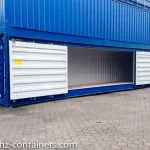
Side Opening container
A side opening container is an ISO-compliant intermodal shipping container engineered with full-length bi-fold doors along one of its long side walls, in addition to the standard cargo doors at one end. Unlike conventional containers that restrict access to a single set of rear doors, a side opening container — also widely called an open side container, open-sided shipping container, or side door container — provides unobstructed lateral access across the entire 20-foot or 40-foot length of the unit. This design transforms the container from a narrow tunnel into a wide-open space that forklifts can enter from the side, multiple workers can load simultaneously, and oversized cargo that would never fit through standard end doors can be placed without struggle.
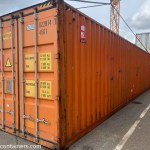
40 Foot High Cube container cost
A 40 foot high cube container — often abbreviated as 40ft HC, 40′ HC, or 40-foot high cube — is one of the most common shipping container sizes sold on the secondary market. But if you are researching what a 40 foot high cube container costs, you have almost certainly noticed that prices are all over the map. One seller quotes $1,500. Another quotes $7,000. Both could be legitimate.
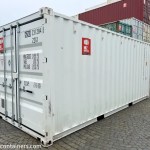
20 Foot container cost
If you have ever searched for a shipping container, you have almost certainly asked one question first: how much does a 20 foot container cost? The answer is not a single number. It is a range that spans from under $1,000 for a weathered, as-is unit to over $5,000 for a pristine, one-trip container — and that is before delivery, site preparation, or modifications enter the picture.