
How Does a Cooling Container Work?
What is a Cooling Container?
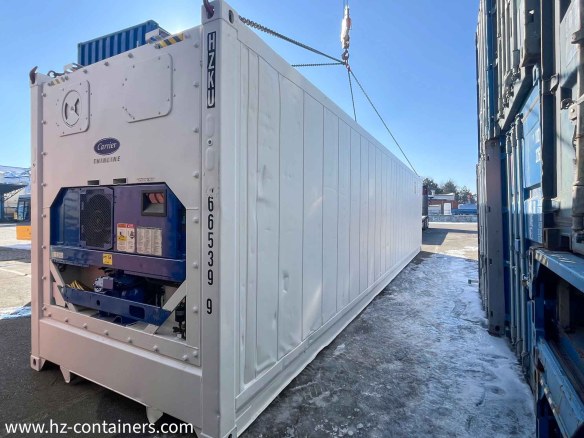
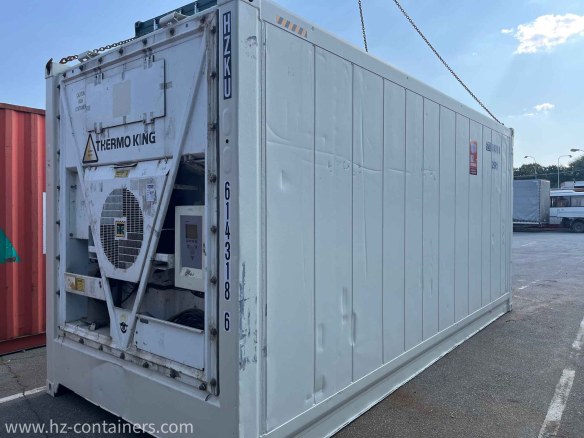
A cooling container, also known as a reefer container, is a specially designed shipping container that is capable of maintaining a constant temperature inside its space. Reefer containers are key to the transport and storage of goods requiring precise temperature regulation. These containers are equipped with cooling units, insulation, and humidity control technologies, which enables the transport of sensitive products such as food, medicines, plants, or chemicals, regardless of external conditions.
Cooling containers are capable of maintaining temperatures in the range from -60 °C to +35 °C, which makes them ideal for transporting deeply frozen goods as well as products requiring mild cooling.
Key Features of Cooling Containers:
- Temperature Regulation:
Cooling units allow maintaining precise temperature set according to the requirements of the transported goods. For example, for pharmaceutical products, compliance with a very narrow temperature range may be key. - Thermal Insulation:
The walls are made of polyurethane foam inserted between double steel or aluminum plates. This insulation minimizes heat loss and maintains constant temperature inside the container even in extreme outdoor conditions. - Humidity Monitoring:
Integrated sensors are able to control humidity levels, which is crucial for transporting products such as fresh food or pharmaceutical products sensitive to humidity. - Standardized Dimensions:
Cooling containers comply with ISO standards, which facilitates their transport by rail, road, or ship and enables easy stacking in ports. - Ecological Solution:
Modern equipment, such as MicroLink 3 cooling units, ensures low energy consumption and lower ecological footprint.
How Do Cooling Containers Work?
Cooling containers work on the principle of maintaining temperature stability through a combination of several technologies:
1. Cooling Unit

At the heart of each reefer container is a cooling unit, which contains:
- Compressor: Compresses refrigerant, which then passes through the condenser and changes into liquid.
- Condenser: Removes heat from the refrigerant and converts it into liquid.
- Evaporator: Ensures distribution of cold air into the internal space of the container.
- Fans: Ensure even air circulation inside the container, thereby eliminating the formation of hot or cold spots.
The cooling unit is powered by electrical energy, which can be obtained from the port network, generator, or truck engine.
2. Thermal Insulation
Quality insulation technology prevents heat exchange between the inside of the container and the external environment. This is key especially when transporting in extremely hot or cold climatic conditions.
3. Humidity Management System
Modern reefer containers allow setting optimal humidity levels, which is crucial for transporting products sensitive to humidity, such as fruit, vegetables, or medicines.
4. Ventilation System
Ventilation openings allow controlled air exchange, which is important especially for goods that produce gases, such as ethylene.
Why Use Cooling Containers?
1. Preservation of Goods Quality
Sensitive goods, such as food, pharmaceutical products, or electronics, require specific temperature conditions. Cooling containers ensure that the quality of goods remains preserved throughout the transport period.
2. Versatility
Thanks to the ability to set a wide range of temperatures, these containers can be used for various types of products, for example:
- Frozen Food: Fish, meat, ice cream.
- Fresh Products: Fruit, vegetables, flowers.
- Medicines and Vaccines: Temperature-sensitive products.
- Chemicals: Requiring stable temperature conditions.
3. Standardization
Reefer containers are designed according to standard dimensions (e.g., 20′, 40′, or 40′ HC), which allows easy handling and stacking.
Typical Applications of Cooling Containers
- Food Industry:
Transport of fresh fruit, vegetables, seafood, dairy products, or meat. - Pharmaceutical Industry:
Transport of vaccines, biological samples, or temperature-sensitive medicines. - Chemical Industry:
Storage and transport of chemical substances requiring specific conditions. - Floristry and Horticulture:
Maintaining freshness of cut flowers or slowing plant growth.
Dimensions of Cooling Containers
Standard Sizes:
- 20′ reefer container:
- Volume: 28,3 m³
- Temperature range: -25 °C až +25 °C (depends on container type)
- 40′ reefer kontejner:
- Volume: 59,3 m³
- Temperature range: -25 °C až +25 °C (depends on container type)
- 40′ HC reefer kontejner:
- Volume: 67,3 m³
- Temperature range: -60 °C až +35 °C (depends on container type)
What Are the Operating Costs?
Energy consumption depends on:
- Temperature Range: Low temperatures increase consumption.
- Insulation Quality: Better insulation reduces costs.
- External Conditions: Extreme temperatures increase consumption.
- Equipment Maintenance: Regular maintenance ensures efficient operation.
 Czech Republic, Třebíč
  FREE SHIPPING

Other container news...

20 Foot shipping container cost
If you are researching the cost of a 20 foot shipping container, you have likely already encountered wildly different prices — from $999 listings online to quotes exceeding $5,500. That range is not a sign of inconsistency. It reflects real differences in container condition, location, delivery logistics, and the seller you are dealing with.
Side Opening container
A side opening container is an ISO-compliant intermodal shipping container engineered with full-length bi-fold doors along one of its long side walls, in addition to the standard cargo doors at one end. Unlike conventional containers that restrict access to a single set of rear doors, a side opening container — also widely called an open side container, open-sided shipping container, or side door container — provides unobstructed lateral access across the entire 20-foot or 40-foot length of the unit. This design transforms the container from a narrow tunnel into a wide-open space that forklifts can enter from the side, multiple workers can load simultaneously, and oversized cargo that would never fit through standard end doors can be placed without struggle.
40 Foot High Cube container cost
A 40 foot high cube container — often abbreviated as 40ft HC, 40′ HC, or 40-foot high cube — is one of the most common shipping container sizes sold on the secondary market. But if you are researching what a 40 foot high cube container costs, you have almost certainly noticed that prices are all over the map. One seller quotes $1,500. Another quotes $7,000. Both could be legitimate.
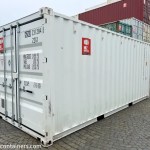
20 Foot container cost
If you have ever searched for a shipping container, you have almost certainly asked one question first: how much does a 20 foot container cost? The answer is not a single number. It is a range that spans from under $1,000 for a weathered, as-is unit to over $5,000 for a pristine, one-trip container — and that is before delivery, site preparation, or modifications enter the picture.