
Developments in the shipping and container market in 2025
1. Current state of the shipping container market
The year 2025 brings new challenges and dynamics to the shipping container market. While the global logistics industry faces the impact of recent geopolitical and economic changes, the container market is struggling with limited availability and rising prices. Used containers that were previously available in abundance are now becoming more expensive and less available. The impact of the pandemic and the subsequent disruption of supply chains has disrupted traditional cycles, making the market more difficult to predict. In addition, the ageing of containers, which used to be typically 7-15 years old, now exceeds the 20-year mark, which is reflected in the quality of the units available.
2. Factors influencing container prices
Geographical and political considerations are among the key factors influencing shipping container prices. In 2025, the limited availability of the Suez Canal and the low water levels in the Panama Canal, which lengthen shipping routes and increase shipping costs. As a result, container prices in a manufacturing country such as China are rising faster than in other regions such as the US. These problems are further accentuated by the differences between supply and demand between markets, with the Chinese market willing to pay higher prices than the US market.
3. Forecasts for the first quarter of 2025
Used container prices are expected to remain high and availability to remain limited, at least through the first quarter of 2025. If global shipping stabilises and there is a better alignment of orders between China and the US, the situation could improve. Shipping container manufacturing plants are struggling to maintain price stability for new containers, although some price adjustments are expected after the Chinese New Year.
4. Impact on freight rates
In parallel with the challenges in the container sector, we are seeing an increase in freight rates. According to recent data, the Drewry World Container Index (WCI) composite rose 2.68% to $3,905 per 40-foot container. This increase is partly due to concerns over a possible strike by the International Longshoremen’s Association (ILA) and expected policy changes by the incoming US administration. While rates on routes from Shanghai to Los Angeles and New York have increased significantly, other routes, such as Shanghai to Rotterdam, have seen a slight decrease.
5. General rate increase for 2025
As of 5 January 2025, rate increases for different types of containers and transport units came into force. For example, rates for 40′ dry containers increased by $500, while the increase for 20′ reefer containers is $300. This change reflects not only rising operating costs but also an effort to adapt to current market conditions. The rate increase applies to all open rates and service contracts.
6. Impacts on global logistics and trade
The global shipping market faces complex challenges that affect not only the availability and pricing of containers, but also overall logistics strategies. Limited availability of shipping routes and rising fuel costs are forcing shipping companies to look for alternative routes and optimise their operations. These changes have a direct impact on the prices of goods and can affect the dynamics of international trade.
7. The future of shipping containers
Despite the challenges facing the market, there is potential for innovation and adaptation. Container manufacturers are looking to improve production efficiency and reduce costs, while shipping companies are investing in digitalisation and automation to increase their competitiveness. At the same time, there is a greater emphasis on sustainability and environmental measures, which could shape the future direction of maritime transport.

 Czech Republic, Písek
  WITHOUT SHIPPING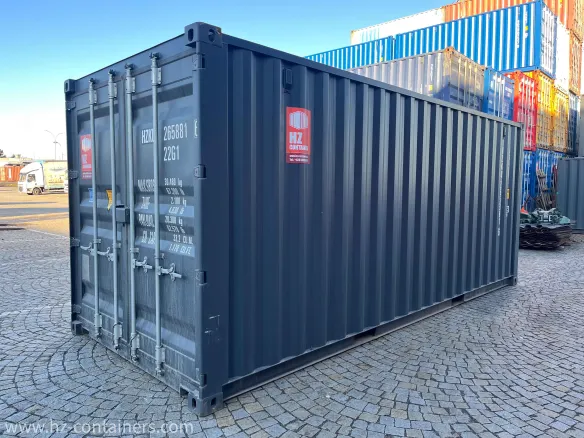


Other container news...

Corner casting steel vs aluminum
Every shipping container in the world — all 40 million of them — rests on eight critical components. Corner castings are the load-bearing blocks at each corner of an ISO shipping container, and they are the universal interface between the container and every crane, twistlock, spreader, and chassis on the planet. When you lift a container, stack it nine high on a ship, or lock it to a truck trailer, every ton of force flows through these fittings.

Construction cabin – selection, tips, dimensions and prices
Every construction project – whether a family house, a development project or a reconstruction – starts with the infrastructure. No construction manager, craftsman or investor who needs an on-site office, a changing room for workers or a safe storage for tools can do without a quality construction cell. But navigating the offer is not easy: residential containers, sanitary cells, storage modules, rental, purchase, refurbished pieces… This guide will give you answers to all the essential questions in one place.
Storage container
A storage container is a lockable steel box designed for the safe and dry storage of materials, tools, goods or equipment. Originally created as a shipping container for maritime transport, its durability and versatility have found their way onto construction sites, corporate premises and private land.
Shipping container 12m (40 ft)
A 12m shipping container is an investment that, if properly selected and cared for, will pay off in decades of trouble-free use. Whether you plan to use it as a warehouse, workshop, garage or the basis for a residential module — the key is careful selection of the condition, a thorough inspection before purchase and high-quality preparation of the base for placement. Take the time to compare offers, check the seller’s references and do not hesitate to personally inspect the container before buying. A properly selected 40-foot container will serve you reliably for many years.