
Container Crisis: Surplus and Shortage
Recently, in the field of container transport, two seemingly contradictory problems have emerged: a surplus of containers in some areas and their shortage elsewhere. On one hand, the COVID-19 pandemic caused a slowdown in manufacturing processes, which led to an excess of unused containers in ports and warehouses. This surplus is now putting pressure on logistics companies, which face problems with insufficient storage capacity. Some ports are even refusing to accept additional containers, forcing carriers to distribute them or even give them away.
On the other hand, problems with a shortage of empty containers are beginning to emerge in China. This shortage is primarily caused by prioritizing export ships with cargo from Europe, which affects the availability of containers for domestic loading. The situation is further complicated by congestion at ports, where ships wait for unloading for several days, which prolongs transport times and increases costs.
Maritime Shipping Prices Rising Again
After a period of relative price stability in maritime transport, the situation is changing again. On key routes from Asia to Europe, there is a significant increase in prices, including surcharges such as Peak Season Surcharge. The reason is a combination of several factors, including longer transport times, bypassing congested ports, and lack of capacity on ships. The Shanghai Containerized Freight Index from the Far East recorded a sharp increase of nearly 10%25 during a single week, signaling tight market conditions.
Shipowners are trying to stabilize the situation through so-called “blank sailings,” which means canceling certain voyages to reduce excess capacity on the market. Nevertheless, it is expected that problems with insufficient capacity and space on ships will persist at least until the beginning of the autumn season.
Technological Innovations Changing the Transport Sector
Technological innovations play a key role in modernizing the transport industry. Automation of logistics processes, the use of artificial intelligence (AI) for route optimization, and the introduction of environmentally friendly technologies, such as LNG-powered ships, are examples of progress in this area. Transport companies are investing in modernizing their fleets to reduce emissions and increase efficiency.
Companies are also focusing on improving transparency and traceability of cargo. The introduction of digital platforms allows customers to track their shipments in real time, which increases the level of service and reduces uncertainty associated with transport.
Strategic Steps to Stabilize the Market
To maintain a balance between supply and demand, transport companies resort to various strategic measures. In addition to the aforementioned “blank sailings,” companies are trying to better plan their operations and secure reservations in advance. This approach helps minimize price volatility and increases the predictability of transport operations.
Another step is cooperation with ports and logistics centers to improve the efficiency of loading and unloading. At some strategic hubs, such as Singapore, no problems with prolonged container dwell times are currently reported, which is good news for traders.
Challenges and Opportunities in Maritime Transport
Maritime transport faces not only economic but also environmental challenges. The growing volume of goods transported increases pressure on ports and infrastructure, which requires further investment in modernization. At the same time, there is increasing pressure to reduce emissions and introduce sustainable technologies. Transport companies are therefore focusing on the development of environmentally friendly ships and the use of alternative fuels.
Despite all these challenges, maritime transport remains a key pillar of global trade. Its importance is growing especially at a time when demand for fast and efficient transportation of goods over long distances is increasing.
Future of Shipping Containers
The future of shipping containers lies in their adaptation to changing market needs. Companies are focusing on the development of modular and multipurpose containers that can be easily adapted to different types of cargo. At the same time, there is growing interest in recycling and reusing older containers, which contributes to sustainable development.
Another trend is the digitalization and automation of processes related to container handling. Smart containers equipped with sensors allow monitoring of cargo condition and increase transport safety.

 Czech Republic, Orlová
  FREE SHIPPING
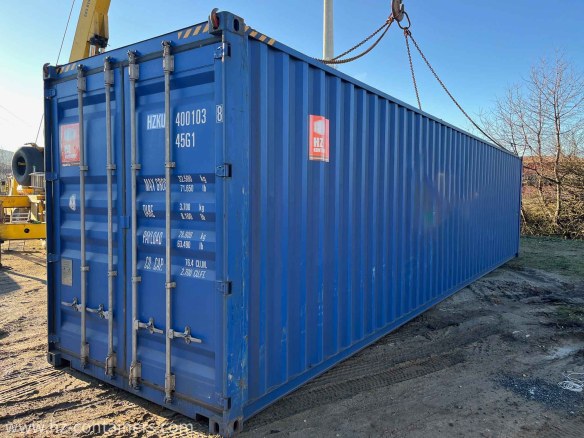
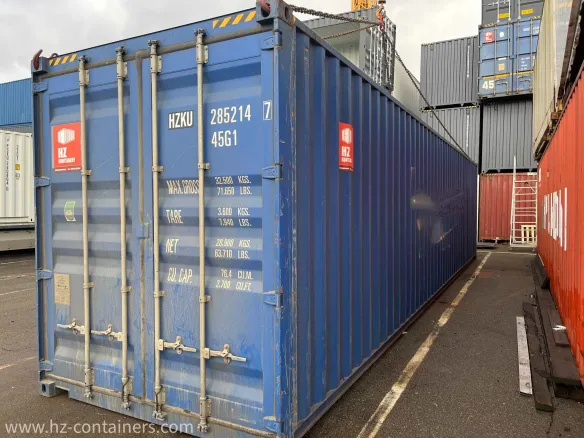
Other container news...

Corner casting steel vs aluminum
Every shipping container in the world — all 40 million of them — rests on eight critical components. Corner castings are the load-bearing blocks at each corner of an ISO shipping container, and they are the universal interface between the container and every crane, twistlock, spreader, and chassis on the planet. When you lift a container, stack it nine high on a ship, or lock it to a truck trailer, every ton of force flows through these fittings.

Construction cabin – selection, tips, dimensions and prices
Every construction project – whether a family house, a development project or a reconstruction – starts with the infrastructure. No construction manager, craftsman or investor who needs an on-site office, a changing room for workers or a safe storage for tools can do without a quality construction cell. But navigating the offer is not easy: residential containers, sanitary cells, storage modules, rental, purchase, refurbished pieces… This guide will give you answers to all the essential questions in one place.
Storage container
A storage container is a lockable steel box designed for the safe and dry storage of materials, tools, goods or equipment. Originally created as a shipping container for maritime transport, its durability and versatility have found their way onto construction sites, corporate premises and private land.
Shipping container 12m (40 ft)
A 12m shipping container is an investment that, if properly selected and cared for, will pay off in decades of trouble-free use. Whether you plan to use it as a warehouse, workshop, garage or the basis for a residential module — the key is careful selection of the condition, a thorough inspection before purchase and high-quality preparation of the base for placement. Take the time to compare offers, check the seller’s references and do not hesitate to personally inspect the container before buying. A properly selected 40-foot container will serve you reliably for many years.