
20 Foot High Cube Container Dimensions
If you have ever tried to load a piece of machinery that is just a few inches too tall for a standard shipping container, you already understand why the 20 foot high cube container exists. It gives you the same footprint as a standard 20ft box — the one every warehouse and freight forwarder knows — with an extra 12 inches of vertical clearance. That single foot changes the math on what you can ship, store, or build inside.
This guide covers every dimension that matters — exterior, interior, door openings, cubic volume, floor area, weight ratings, and pallet layouts — in every unit system you are likely to encounter in the field: feet and inches, meters and centimeters, and millimeters. It also addresses the practical questions that dimension tables alone cannot answer: why the door opening is the real loading bottleneck, how a 20ft HC differs structurally from a standard 20ft, why these containers are harder to find than their 40ft siblings, and what people consistently get wrong when specifying them.
Quick Reference: A 20 foot high cube container measures 20 ft × 8 ft × 9 ft 6 in externally (6.058 m × 2.438 m × 2.896 m) and provides approximately 37.4 cubic meters (1,320 cubic feet) of internal cargo space — roughly 15% more volume than a standard 20ft container.
What Are the Exact Dimensions of a 20 Foot High Cube Container?
The dimensions of a 20ft high cube container are governed by ISO 668, the international standard that defines freight container classifications, dimensions, and ratings. That standard ensures that a 20ft HC loaded in Shanghai will fit on a truck in Rotterdam and a train in Chicago. Within that standard, however, individual manufacturers have narrow tolerances — generally ±5 mm on length, ±2 mm on width, and ±2 mm on height — so the numbers you see on a spec sheet may vary by a fraction of an inch from the numbers on another. The table below represents the consensus across major shipping lines and container manufacturers.
Exterior Dimensions (All Unit Systems)
The exterior footprint is what determines transport compatibility. The 20ft designation refers to length, and the “high cube” designation refers to the 9 ft 6 in height — one foot taller than the standard 8 ft 6 in container height.
| Measurement | Feet & Inches | Meters | Millimeters |
|---|---|---|---|
| Length | 20 ft 0 in | 6.058 m | 6,058 mm |
| Width | 8 ft 0 in | 2.438 m | 2,438 mm |
| Height | 9 ft 6 in | 2.896 m | 2,896 mm |
All three external dimensions are fixed by the ISO standard, and the width in particular — 8 feet (2,438 mm) — is universal across virtually every dry cargo container in global circulation, regardless of length or height.
Interior Dimensions (All Unit Systems)
Interior dimensions are smaller than exterior dimensions because the corrugated Corten steel walls, the plywood-over-steel floor, and the roof panel all consume space. The walls alone account for roughly 4 inches (100 mm) of width loss and about 4 inches of height loss from the ceiling panel and floor structure.
| Measurement | Feet & Inches | Meters | Millimeters |
|---|---|---|---|
| Length | 19 ft 3 in – 19 ft 4 in | 5.89 – 5.90 m | 5,890 – 5,900 mm |
| Width | 7 ft 8 in – 7 ft 9 in | 2.35 – 2.36 m | 2,350 – 2,360 mm |
| Height | 8 ft 9 in – 8 ft 10 in | 2.67 – 2.69 m | 2,670 – 2,690 mm |
The range reflects legitimate manufacturer variation within ISO tolerances. A new, one-trip 20ft HC will typically sit at the upper end of these ranges; a well-used unit that has been repaired or repainted may measure slightly less.
Door Opening Dimensions — The Critical Loading Constraint
Here is a dimension that surprises first-time buyers: the door opening is considerably smaller than the interior cross-section. The double doors at the rear of the container are framed with a heavy steel header beam and corner posts that reduce both width and height.
| Measurement | Feet & Inches | Meters | Millimeters |
|---|---|---|---|
| Door Opening Width | 7 ft 8 in | 2.34 m | 2,340 mm |
| Door Opening Height (New/Trip) | 8 ft 5 in – 8 ft 6 in | 2.57 – 2.59 m | 2,570 – 2,590 mm |
| Door Opening Height (Used/Cargo-Worthy) | 7 ft 6 in | 2.28 m | 2,280 mm |
The door opening height for a new or one-trip 20ft high cube container is approximately 8 ft 5 in (2.58 m). This is roughly 4 to 5 inches less than the interior ceiling height because of the structural header beam that spans the top of the door frame. For used containers — particularly those graded as cargo-worthy or wind-and-water-tight — the door height can drop to approximately 7 ft 6 in (2.28 m) if they were originally built to an older specification or if repair work has altered the door frame.
Practical rule: When loading tall cargo with a forklift, measure against the door opening height — not the interior ceiling height. A load that clears the interior roof by half an inch will still not fit through the door if it exceeds the header beam clearance.
How Does a 20ft High Cube Compare to a Standard 20ft Container?
The standard 20ft shipping container — the most common container in global trade — measures 8 ft 6 in (2.59 m) tall externally, with an internal height of roughly 7 ft 10 in (2.39 m). The 20ft high cube adds exactly 12 inches (305 mm) of external height, and nearly all of that translates into usable internal space.
Side-by-Side Dimension Comparison
| Specification | Standard 20ft | 20ft High Cube | Difference |
|---|---|---|---|
| Exterior Length | 20 ft (6.058 m) | 20 ft (6.058 m) | None |
| Exterior Width | 8 ft (2.438 m) | 8 ft (2.438 m) | None |
| Exterior Height | 8 ft 6 in (2.591 m) | 9 ft 6 in (2.896 m) | +12 in / +305 mm |
| Interior Length | ~19 ft 4 in (5.89 m) | ~19 ft 4 in (5.89 m) | None |
| Interior Width | ~7 ft 8 in (2.35 m) | ~7 ft 8 in (2.35 m) | None |
| Interior Height | ~7 ft 10 in (2.39 m) | ~8 ft 10 in (2.69 m) | +12 in / +300 mm |
| Door Opening Width | 7 ft 8 in (2.34 m) | 7 ft 8 in (2.34 m) | None |
| Door Opening Height | ~7 ft 6 in (2.28 m) | ~8 ft 5 in (2.58 m) | +11 in / +300 mm |
| Internal Volume | ~33.2 m³ (1,172 ft³) | ~37.4 m³ (1,320 ft³) | +4.2 m³ / +148 ft³ |
| Tare Weight | ~2,100 kg (4,630 lb) | ~2,300 kg (5,070 lb) | +200 kg / +440 lb |
| Max Payload | ~28,200 kg (62,170 lb) | ~28,100 kg (61,950 lb) | -100 kg / -220 lb |
What the Extra 12 Inches of Height Actually Means
That single foot of additional height translates into approximately 15% more internal volume — around 4 to 5 extra cubic meters — without increasing the container’s floor footprint. In practical terms, this means:
- Double-stacking pallets becomes feasible. A standard 20ft container can typically fit 10 American standard pallets (40 in × 48 in) on the floor. With a high cube, you can stack a second layer on top — fitting up to 20 pallets — because the internal height accommodates two standard pallet heights plus forklift maneuvering clearance.
- Human occupation becomes comfortable. A standard container’s interior ceiling sits at roughly 7 ft 10 in raw. Add 2 inches of floor insulation and 2 inches of ceiling lining for a container conversion project, and you are down to 7 ft 6 in — usable, but tight for anyone over 6 feet tall. In a high cube, those same modifications leave approximately 8 ft 6 in of finished headroom, which rivals residential ceiling heights.
- Machinery and equipment that tops out at 8 to 8.5 feet tall — generators, compact excavators, printing presses, large-format CNC machines — will fit through the door and inside the box, whereas a standard container would leave them sitting on the dock.
What Is the Cubic Capacity and Storage Volume of a 20ft High Cube?
Cubic Capacity in All Units
The internal cubic capacity of a 20ft high cube container is calculated by multiplying the interior length, width, and height. Using the median internal dimensions:
5.90 m × 2.35 m × 2.69 m = 37.3 m³ (metric)
19.33 ft × 7.71 ft × 8.83 ft = 1,316 ft³ (imperial)
Most manufacturers and shipping lines round this to 37.4 cubic meters or 1,320 cubic feet. By comparison, a standard 20ft container yields approximately 33.2 m³ (1,172 ft³). The 4.2 m³ difference is the equivalent of roughly five full-size household refrigerator-freezers of additional cargo space.
It is important to recognize that these are theoretical maximums. In practice, usable volume is always lower because of the irregular shapes of cargo, packaging inefficiencies, and the need to leave gaps for ventilation and load securing. A realistic loading factor for mixed general cargo in a container is 85–90% of the theoretical volume, yielding a practical capacity closer to 31–33 m³ (1,100–1,180 ft³).
Floor Area
The floor area is simply the interior length multiplied by the interior width:
5.89 m × 2.35 m = 13.84 m² (approximately 150 square feet)
This is identical to a standard 20ft container. The high cube advantage is exclusively vertical.
How Many Pallets Fit in a 20ft High Cube?
Pallet capacity depends on the pallet standard in use, the loading pattern, and whether cargo can be double-stacked (which the high cube’s extra height enables).
| Pallet Type | Pallet Dimensions | Single-Stacked (Floor) | Double-Stacked (HC Only) |
|---|---|---|---|
| American Standard (GMA) | 40 in × 48 in (1,016 mm × 1,219 mm) | 10 pallets | 20 pallets |
| Euro Pallet (EUR/EPAL) | 800 mm × 1,200 mm (31.5 in × 47.2 in) | 11 pallets | 22 pallets |
| ISO Pallet | 1,000 mm × 1,200 mm (39.4 in × 47.2 in) | 9–10 pallets | 18–20 pallets |
The double-stacked figures assume a typical loaded pallet height of roughly 1.0 to 1.2 meters (40–48 inches). Two such pallets, stacked, total 2.0 to 2.4 meters, which fits comfortably within the 2.69-meter interior height while leaving room for forklift fork clearance at the top. This is the high cube’s single greatest operational advantage over a standard container for palletized freight.
What Are the Weight Specifications of a 20ft High Cube Container?
Weight ratings on shipping containers follow a three-part system defined by ISO 668: tare weight, maximum gross weight, and payload.
Tare Weight (Empty Weight)
The tare weight of a 20ft high cube container — the weight of the empty unit — ranges from approximately 2,200 to 2,400 kg (4,850 to 5,290 lb) for a steel dry cargo container. A new one-trip unit typically weighs around 2,300 kg (5,070 lb), which is roughly 200 kg (440 lb) heavier than an equivalent standard 20ft container. The extra weight comes from the taller corner posts, the extended door frame, and the additional steel in the side panels to maintain structural rigidity at the increased height.
Maximum Gross Weight (MGW)
The MGW — sometimes called the maximum rated weight or the maximum gross mass — is the absolute limit of the container’s combined weight when loaded, including the container itself, its cargo, and any dunnage or securing materials. For a 20ft container, ISO and most shipping lines rate this at 30,480 kg (67,200 lb). This figure is driven not by the structural limits of the container alone but also by road-weight regulations on chassis, bridge laws, and crane capacities at port terminals.
Payload (Net Cargo Capacity)
Payload is the difference between the MGW and the tare weight:
30,480 kg − 2,300 kg = 28,180 kg (approximately 62,130 lb)
In practice, payload varies slightly from unit to unit depending on the exact tare weight. A heavier container (with thicker floor, additional coating, or modifications) will have a proportionally lower payload. The practical payload range for a 20ft HC is approximately 27,800 to 28,200 kg (61,300 to 62,170 lb).
Floor Loading Capacity
Shipping container floors are built to withstand the concentrated loads of forklift wheels. The standard plywood-over-steel-crossmember floor in a 20ft container is typically rated for a forklift with an axle load of up to 5,460 kg per running meter of floor length when the load is evenly distributed. However, the point load under a single forklift wheel — particularly a small-diameter solid tire — can easily exceed this. When driving a forklift into a container, the real-world failure mode is not the gross weight but the concentrated load punching through the plywood. Always verify your forklift’s axle and wheel loads against the container’s floor rating before loading.
Where Did the High Cube Container Come From? A Brief History
Understanding why the high cube container exists — and why the 20ft version is relatively uncommon — requires a short look at the history of containerization.
The Birth of ISO Standardization
Before 1956, international cargo moved in barrels, crates, and sacks, loaded individually by longshoremen. Malcolm McLean, a trucking entrepreneur from North Carolina, changed that on April 26, 1956, when his converted tanker, the SS Ideal-X, sailed from Newark to Houston carrying 58 standardized aluminum containers. That single voyage demonstrated that a container could move seamlessly from truck to ship to rail — and global trade was never the same.
By the late 1960s, the International Organization for Standardization (ISO) had published ISO 668 and ISO 1496, which locked in the now-familiar dimensions: 8 feet wide, 8 feet 6 inches tall, and modular lengths of 10, 20, 30, and 40 feet. The 20-foot container became the baseline unit of measurement for the industry — the TEU, or twenty-foot equivalent unit.
When High Cubes Entered the Fleet
The high cube concept emerged in the 1970s as shipping lines sought to maximize revenue per vessel slot. The thinking was straightforward: a container that is one foot taller carries roughly 13–15% more volume while occupying the same deck space and the same chassis. The initial adoption was focused on the 40-foot length — the 40ft high cube became a staple of the Asia-to-Europe trade lane, where voluminous consumer goods (furniture, apparel, electronics in bulky retail packaging) fill the cube before they hit the weight limit.
The 20ft high cube followed, but it never achieved the same ubiquity. The economics are straightforward: on a container ship, every deck slot is a fixed length. A 20ft HC uses the same slot as a standard 20ft, but because most 20ft cargo is dense and hits weight limits before volume limits, the extra height is often wasted. The 20ft HC remains a niche product for specific cargo profiles — lightweight but bulky, or tall and indivisible.
The “rarity” factor: As discussed in logistics forums (including a long thread on Reddit’s r/logistics), 20ft high cube containers are genuinely less available than their standard 20ft or 40ft HC counterparts. Many freight forwarders do not stock them as part of their standard equipment pool. If you need one, you may need to order specifically, pay a premium, or wait longer for availability — particularly if you are buying rather than leasing.
What Is a 20 Foot High Cube Container Used For?
Industrial and Commercial Applications
The 20ft HC is the container of choice when cargo is tall but fits within a 20-foot length. Common examples include:
- Generators and power equipment — large diesel generators often stand 7 to 8 feet tall on their skids. A standard container door will not clear them; a high cube will.
- Compact construction machinery — mini-excavators, skid-steer loaders, and scissor lifts, when the boom or roll cage pushes past the 7 ft 6 in mark.
- Industrial presses and machine tools — many CNC machines, injection-molding presses, and printing presses exceed standard container heights.
- Oversized ducting, pipe spools, and fabricated steel assemblies — items where cutting to fit a standard container would compromise structural integrity.
Storage and Container Conversion Projects
The extra headroom transforms the user experience of a container used for human occupancy:
- Container offices and site sheds: With 2 to 3 inches of floor insulation and a finished ceiling, a standard container leaves approximately 7 ft 4 in of headroom. A high cube leaves roughly 8 ft 4 in — the difference between “you can stand” and “you can stand comfortably without brushing the ceiling.”
- Tiny homes and modular housing: The 20ft HC is increasingly popular for single-module dwellings. The extra ceiling height allows for lofted sleeping areas, overhead storage, or simply a more open, residential feel.
- Retail pop-ups and food stalls: Height provides room for overhead menu boards, ventilation ducting, and lighting rigs without crowding the customer.
Specialized Variants
The 20ft HC platform also appears in several specialized configurations:
- Double Door (DD): Doors at both ends. Useful for drive-through loading or when cargo needs to be accessed from either end of a stacked configuration.
- Open Side: One long side is fully openable, providing crane or forklift access along the entire length. Interior dimensions are comparable to a standard 20ft HC.
- Open Top High Cube: The roof is a removable tarpaulin or a removable steel hatch. The Hapag-Lloyd 20ft Open Top High Cube, for example, has internal dimensions of approximately 5,892 mm × 2,347 mm with a variable-height roof opening — ideal for cargo that must be loaded by overhead crane.
- Pallet Wide High Cube: Slightly wider internally (approximately 2.42–2.44 m internal width vs. the standard 2.35 m) to accommodate two Euro pallets placed side by side without wasted gap space. These are more common in European markets.
What Are Common Misconceptions About 20ft High Cube Containers?
“They Are Just Taller Standard Containers”
Structurally, a high cube container is not simply a standard container with taller side panels. The corner posts — the four vertical load-bearing columns that carry the stacking load — are longer and must resist greater buckling forces. The door header is reinforced for the taller opening. The corrugation profile of the side walls may differ to maintain rigidity across a larger panel area. These differences are why a 20ft HC has a slightly higher tare weight even though the floor and roof are the same gauge steel.
“The Interior Height Is 9 Feet 6 Inches”
It is not. The exterior height is 9 ft 6 in (2,896 mm). The interior height is approximately 8 ft 10 in (2,690 mm). The 8-inch difference is consumed by the floor structure (plywood on steel crossmembers, adding roughly 27 mm), the roof panel and its corrugation (approximately 25–28 mm), and the top rail and header assemblies. If you need 9 feet of internal clearance, a 20ft high cube will disappoint. You would need an open-top high cube and accept that the cargo protrudes above the roofline.
“The Door Opening Is the Same as the Interior”
As highlighted earlier, the door header beam robs approximately 4 to 5 inches of clearance compared to the interior ceiling. This is the single most common loading error: measuring cargo height against the interior specification and then discovering it will not pass through the rear frame. Always check the door opening height on the actual unit you are using — not the manufacturer’s nominal interior height.
“20ft High Cubes Are Easy to Find”
They are not. The global container fleet is dominated by standard-height 20ft containers, 40ft standard containers, and 40ft high cubes. The 20ft high cube is a relatively small fraction of the total fleet. If you are a buyer, expect to pay a 10–20% premium over a comparable standard 20ft container. If you are a shipper, confirm availability with your freight forwarder before building a logistics plan around 20ft HC capacity.
“A 20ft HC Counts as More Than One TEU”
It does not. The TEU (twenty-foot equivalent unit) is a measure of container length, not volume or height. A 20ft high cube counts as exactly 1 TEU, the same as a standard 20ft container. This creates an interesting pricing dynamic: a shipping line charges one TEU slot rate for a container that carries 15% more cargo volume than a standard TEU — which is precisely why high cubes are attractive for voluminous cargo and precisely why lines limit how many they make available on a given service.
Frequently Asked Questions
What are the dimensions of a 20 foot high cube container in feet and inches?
A 20 foot high cube container measures 20 ft 0 in long × 8 ft 0 in wide × 9 ft 6 in tall externally. Internally it is approximately 19 ft 3 in long × 7 ft 8 in wide × 8 ft 10 in tall. Door openings measure approximately 7 ft 8 in wide × 8 ft 5 in tall on new units.
How tall is a 20ft high cube container compared to a standard 20ft container?
A standard 20ft container is 8 ft 6 in (2.591 m) tall externally with approximately 7 ft 10 in (2.39 m) of interior height. A 20ft high cube is 9 ft 6 in (2.896 m) tall externally with approximately 8 ft 10 in (2.69 m) interior height — exactly 12 inches taller in both external and internal dimensions.
What is the internal volume of a 20ft high cube in cubic meters and cubic feet?
The internal volume is approximately 37.4 cubic meters or 1,320 cubic feet. This is roughly 15% more than a standard 20ft container, which offers approximately 33.2 cubic meters (1,172 cubic feet).
How much weight can a 20ft high cube shipping container hold?
A 20ft high cube has a maximum gross weight of 30,480 kg (67,200 lb) and an empty weight of approximately 2,300 kg (5,070 lb), yielding a net payload capacity of approximately 28,180 kg (62,130 lb). Exact payload varies slightly by manufacturer and unit age.
How many pallets fit in a 20 foot high cube container?
Single-stacked on the floor, a 20ft HC fits 10 American standard pallets (40 in × 48 in) or 11 Euro pallets (800 mm × 1,200 mm). Because of the extra height, double-stacking is possible, yielding up to 20 American pallets or 22 Euro pallets per container.
What is the door opening height of a 20ft high cube?
The door opening height of a new 20ft high cube is approximately 8 ft 5 in (2.58 m). On used or older units, it can be as low as 7 ft 6 in (2.28 m). The door opening is typically 4 to 5 inches shorter than the interior ceiling height due to the structural header beam above the doors.
Are 20ft high cube containers rare or hard to find?
Yes, 20ft high cube containers are significantly less common than standard 20ft containers or 40ft high cubes. They represent a small fraction of the global container fleet because most 20ft cargo hits weight limits before volume limits. Buyers should expect to pay a premium of 10–20% over a comparable standard 20ft unit, and shippers should confirm availability with their freight forwarder in advance.
What is the difference between a 20ft standard and a 20ft high cube?
The only dimensional difference is height: the high cube is exactly 12 inches (305 mm) taller externally and internally. This adds approximately 4.2 cubic meters of volume, increases tare weight by about 200 kg, and enables double-stacking of pallets. Length, width, door width, and floor area are identical between the two types.
How thick are the walls of a 20ft high cube container?
The corrugated Corten steel wall panels are typically 1.6 mm to 2.0 mm thick (approximately 0.063 to 0.079 inches, or 16 to 14 gauge). The structural strength of the container comes from the corner posts and the corrugation geometry, not from the wall panel thickness alone.
Does a 20ft high cube count as more than one TEU?
No. A TEU (twenty-foot equivalent unit) measures container length only. A 20ft high cube counts as exactly 1 TEU, the same as a standard 20ft container, despite carrying approximately 15% more cargo volume.

 Czech Republic, Chrudim
  FREE SHIPPING


Other container news...
Can You Modify a 40ft High Cube Container?
The short answer is yes — you absolutely can modify a 40ft high cube container, and it is one of the most popular container types for modification projects worldwide. But the real question is not whether you can modify one; it is how to do it correctly, safely, legally, and within budget. This guide answers every dimension of that question, drawing on engineering principles, real-world pricing data, and the collective experience of thousands of modified container projects.
Key Takeaway: A 40ft high cube container offers 320 square feet of floor space with an extra foot of ceiling height compared to a standard container — making it the ideal canvas for offices, workshops, homes, retail spaces, and industrial applications. The extra height is particularly valuable when you add insulation and still want comfortable headroom.

Cargo worthy container
If you have ever shopped for a used shipping container, you have almost certainly encountered the term cargo worthy — often abbreviated as CW or CWO (Cargo Worthy Only). It is one of the most important classifications in the container industry, yet it is also one of the most misunderstood. A cargo worthy container is not a container that looks new. It is not necessarily a container that has a valid CSC plate. And it is definitely not the same as a wind and watertight container. This guide explains what cargo worthy really means — from its technical definition and historical origins to the precise structural criteria, inspection process, cost implications, and common misconceptions that trip up even experienced buyers.

Shipping container home
A shipping container home is a residential dwelling constructed from one or more steel intermodal containers — the same standardized metal boxes that transport goods across oceans, railways, and highways. These containers, engineered from corrosion-resistant Corten steel and designed to withstand brutal maritime conditions, are repurposed into fully habitable living spaces through insulation, structural modifications, and the installation of all standard residential utilities. A shipping container home can range from a minimalist 160-square-foot studio built from a single 20-foot container to a sprawling multi-level compound combining dozens of 40-foot high-cube units.
Core Definition: A shipping container home is a code-compliant, habitable structure built from one or more steel intermodal shipping containers that have been insulated, structurally reinforced where modified, and fitted with windows, doors, plumbing, electrical systems, and interior finishes to function as a permanent or semi-permanent residence.
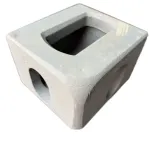
Corner casting steel vs aluminum
Every shipping container in the world — all 40 million of them — rests on eight critical components. Corner castings are the load-bearing blocks at each corner of an ISO shipping container, and they are the universal interface between the container and every crane, twistlock, spreader, and chassis on the planet. When you lift a container, stack it nine high on a ship, or lock it to a truck trailer, every ton of force flows through these fittings.