
What does ONE WAY shipping container mean?
In the field of international container logistics and maritime transport the term ONE WAY shipping container frequently appears. Although this term is common among professionals, its meaning, distinctions, and practical impacts remain unclear for most laypeople and many companies. This article provides a deep, professional, and practical glossary that explains exactly what a ONE WAY container is, its purpose, how it differs from other container types, its economic and environmental advantages, technical parameters, and practical uses.
Definition and essence: What is a ONE WAY shipping container?
ONE WAY shipping container (in Czech also “jednosměrný kontejner” or “jednocestný kontejner”) is not a physical type or specific technical condition of a container, but a logistical and leasing usage model. It is a situation where a carrier (shipper, freight forwarder, NVOCC) rents a container for one specific voyage, typically from point A to point B. After unloading at the destination, the container remains where the owner needs it and does not return to the original carrier.

Typical ONE WAY rental scenario:
- Container owner (leasing company, container leasing firm) has a surplus of empty containers in one area (e.g., Rotterdam, Hamburg) but a shortage in another (e.g., Shanghai).
- Carrier needs to ship goods from Rotterdam to Shanghai.
- Owner offers to rent its container only for this one‑way trip.
- After unloading in Shanghai the carrier returns the container to a designated depot, where the owner subsequently uses it.
- Benefit: the carrier fulfills its logistics goal, the owner moves the container where it is needed, without having to pay for moving an empty container.
Key idea: the ONE WAY model is a response to the imbalance in global trade and the surplus of empty containers in certain regions.
Difference between ONE WAY and ONE TRIP containers
A very common mistake is confusing the terms ONE WAY and ONE TRIP containers. These terms differ both in definition and practical use.
| Property | ONE WAY container | ONE TRIP container |
|---|---|---|
| Definition | One‑way rental model for a specific route | Container condition that has been used for only one trip from production |
| Main purpose | Efficient repositioning of empty containers | Sale of a nearly new container at the destination |
| Container condition | Any (new, used, certified or uncertified) | Practically new, minimal cosmetic defects |
| User | Carriers, freight forwarders, NVOCC | Customers seeking a high‑quality container for storage, conversion, … |
| Target transaction | Short‑term rental (leasing) | Sale of the container |
In detail: ONE TRIP containers
ONE TRIP containers are normally manufactured in China. Their first (and often only) journey is used to transport goods to Europe or the USA, where they are subsequently sold as almost new. They have valid certifications (e.g., ISO 1496‑1, CSC label) and meet strict requirements for tightness, structural integrity, and suitability for further transport.
Advantages of a ONE TRIP container:
- Almost “new” condition – original paint, minimal wear
- Long lifespan (20+ years in static use)
- Certified for international transport and construction purposes
- Ideal for storage, conversion, architecture, or mobile use
Condition verification:
- Original manufacturing labels and paint
- Minimal cosmetic flaws (max. small scratches, floor scuffs)
- Valid technical certifications (ISO 1496‑1, CSC, possibly IICL standard)
Economic and logistical benefits of the ONE WAY model
Global problem: Moving empty containers
Each year one third of all containers are moved empty, which means more than 60 million empty‑container movements annually. According to HZ CONTAINERS this represents a global cost of over USD 20 billion per year! Why does this happen?
- Trade imbalance: For example, Asia (especially China) exports many times more goods to Europe and the USA than it imports. In ports of the western hemisphere this creates a surplus of empty containers, while Asia faces a shortage.
- Costly empty‑box transport: Moving an empty container costs almost the same as moving a full one.
Solution: ONE WAY leasing and its benefits
For container owners:
- Savings on repositioning costs (moving empty boxes)
- Increased fleet efficiency and turnover
- Ability to generate income from otherwise idle boxes
For carriers:
- Availability of containers in regions where they are scarce
- Possibility of a single‑use rental without the obligation to return the container to the original location
- Lower costs due to the absence of demurrage and detention fees
- Greater flexibility in route planning
Environmental and sustainability aspects
- Reduced carbon footprint: Fewer empty trips mean lower fuel consumption and less CO₂ emitted per transported unit.
- Improved utilization of transport capacity: A more efficient flow of containers reduces port congestion and optimizes global supply chains.
Additional ways to cut repositioning costs:
- Leasing/rental via digital platforms (e.g., Container xChange)
- Selling boxes at destinations with surplus
- Renting SOC (shipper owned container) instead of COC (carrier owned container)
- Sharing information and demand forecasting using digital tools
Practical use and applications of ONE WAY and ONE TRIP containers
ONE WAY: Typical uses
- One‑time shipment: Carrier needs a box for a single route and does not want to handle its return.
- Fleet optimisation: Owner moves the box to a region with higher demand while generating income.
- International transport: Used for export/import between regions with trade imbalances.
ONE TRIP container: Versatile uses
| Area of use | Specifics |
|---|---|
| Storage | Safe, dry, mobile warehouses for companies or individuals; suitable for materials, tools, inventory, documents |
| Construction & architecture | Conversions into living units, offices, pop‑up shops, cafés, workshops, technical facilities |
| Further transport | Box has a valid CSC label, can be used for export/import by rail, road, or sea |
| Investment purposes | Long lifespan, minimal maintenance, high residual value |
| Mobile solutions | Temporary storage on construction sites, events, agriculture, as backup logistics capacity |
Technical parameters of a ONE TRIP container:
- Meets ISO standards (e.g., 20′ – ISO 668, 40′ HC – ISO 1496‑1)
- Certifications: CSC, IICL (International Institute of Container Lessors), possibly UIC (for rail use)
- Material: high‑strength steel, watertight, wind‑resistant, plywood or steel floor, payload up to 30 t (depending on type)
- Safety: locking bars, option for security locks, anti‑corrosion treatment
Frequently asked questions (FAQ)
Is a ONE WAY container always new?
- No, it can be any container (new, used, refurbished). “ONE WAY” refers to the rental method, not the technical condition.
Why are almost‑new (ONE TRIP) containers sold?
- Economically it is cheaper to sell the box at the destination rather than ship it back empty, reducing the cost of moving empty containers.
How can I identify a ONE TRIP container?
- Minimal signs of use, original paint, no repairs, valid labels and certifications, clean floor, intact sealing, little or no corrosion.
What do the terms SOC and COC mean in the ONE WAY context?
- SOC (Shipper Owned Container): container owned by the shipper; the user has greater control over the box’s movement.
- COC (Carrier Owned Container): container owned by the carrier/lessor, often with stricter return conditions and higher fees.
Where can I arrange a ONE WAY rental or buy a ONE TRIP container?
- On specialized platforms such as HZ‑CONTAINERS.com, or directly from leasing companies and large container owners.
Technical and normative requirements
ONE TRIP containers and containers intended for ONE WAY rental must meet strict standards if they are to be used for international transport or construction purposes:
- ISO 668, ISO 1496‑1: standardised dimensions and construction
- CSC (Container Safety Convention): mandatory valid label for transport
- IICL standards: maintenance and inspection rules (especially for leasing)
- UIC: for combined rail transport in Europe
When purchasing or leasing, always request:
- Copies of valid certificates (CSC, ISO)
- Photo documentation and inspection report
- History of previous use (especially for a one‑trip box)
Summary
- ONE WAY shipping container is a logistical model of one‑way rental that saves costs, optimises the global flow of containers, and supports sustainability.
- ONE TRIP container is a product in top condition, ideal for customers seeking long‑term quality and versatile use.
- Understanding these concepts is essential for efficient logistics management, investment decisions, and the development of storage, transport, and construction projects.
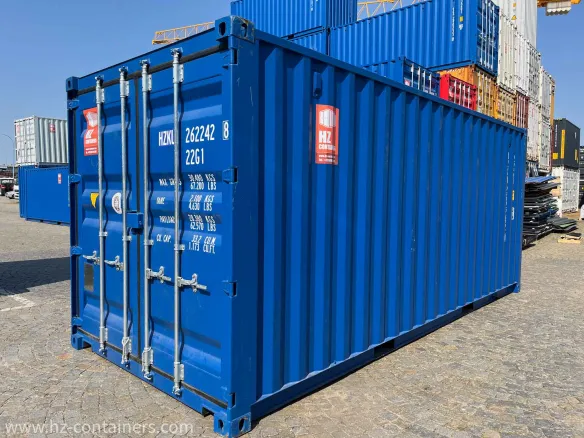
 Mobile, USA
  WITHOUT SHIPPING
Other container news...

Obligation to Check Tightness When Selling a Reefer Container
Who is responsible for the refrigerant leak check when selling a refrigerated container? Find out what obligations the seller has at the time of handover and why they must provide a PTI report along with the technical data plate. Learn which regulatory requirements and F-gas record-keeping duties become the sole responsibility of the new owner.

New shipping containers
If you are currently considering purchasing a new shipping container, you are not alone. While just twenty years ago containers were used almost exclusively for maritime transport, today they have found their way into construction, storage, business, and even housing. This growing popularity brings with it a host of questions: Which type should you choose? How much does it cost? How do you recognize quality? How can you avoid falling victim to scammers?
New sea shipping containers
If you are currently considering purchasing a new shipping container, you are not alone. While just twenty years ago containers were used almost exclusively for maritime transport, today they have found their way into construction, storage, business, and even housing. This growing popularity brings with it a host of questions: Which type should you choose? How much does it cost? How do you recognize quality? How can you avoid falling victim to scammers?

6m shipping container
Are you thinking about buying a 6-meter shipping container but aren’t sure what to look for? You are not alone—this 20-foot container is the best-selling size on the Czech market, and the differences between various types, conditions, and prices can be significant. In this guide, you will find everything you need to know: from exact dimensions and a comparison of categories (such as “one-way,” refurbished, and “Cargo Worthy”) to current prices and shipping advice.