
What does corrosion resistance C4 mean?
Corrosion resistance C4 is a designation for a high level of corrosion aggressiveness of the atmospheric environment according to the international standard ISO 12944. It is an environment where metal (especially steel) is exposed to a significant risk of rapid corrosion loss, therefore requiring thorough anti‑corrosion protection. Typically it includes industrial areas with high humidity and pollution, or coastal zones with mild salinity.
C4 specifications according to ISO 12944-2:
- Steel corrosion loss: >50 to 80 µm/year
- Zinc corrosion loss: >2.1 to 4.2 µm/year
This means that unprotected steel can lose up to 0.8 mm of thickness in 10 years in a C4 environment, which is a crucial figure for the structural stability and service life of a construction.
Where you encounter a C4 environment:
- Industrial parks, power plants, refineries
- Port cities and coastal areas a few kilometres from the sea
- Chemical plants, swimming pools, shipyards
ISO 12944 Standard – foundation for classification of corrosion environments
Structure of ISO 12944
The ISO 12944 standard is the main worldwide guideline for protecting steel structures with coating systems. It provides instructions on how to:
- Identify the level of corrosion aggressiveness of the environment
- Design and apply a suitable protective system
- Achieve the required service life and safety of the structure
Overview of ISO 12944 parts:
| Part | Title | Content |
|---|---|---|
| 1 | General principles | Terminology, definitions, basic principles |
| 2 | Environment classification | Division of environments according to corrosion aggressiveness |
| 3 | Design | Requirements for construction, minimisation of corrosion traps |
| 4 | Surface preparation | Types of substrates, requirements for cleanliness and surface roughness |
| 5 | Coating systems | Types of paints, layer combinations, recommended thicknesses |
| 6 | Laboratory tests | Methods of ageing simulation and coating testing |
| 7 | Execution and supervision | Rules for application and inspection of coatings |
| 8 | Specifications | Creation of specifications for new and maintenance coatings |
| 9 | Offshore structures | Special requirements for coastal and extreme environments |
Update after the 2018 revision: addition of category CX (extreme corrosion environment) and introduction of “very high service life” coatings (over 25 years).
Classification of environments according to ISO 12944-2
Table: Overview of corrosion aggressivity categories
| Category | Typical environment | Steel corrosion loss [µm/year] | Protective systems (examples) |
|---|---|---|---|
| C1 | Heated interiors | ≤ 1.3 | Decorative coating |
| C2 | Rural, warehouses | > 1.3 – 25 | Primer, thin galvanising |
| C3 | Cities, breweries | > 25 – 50 | Standard systems (160–240 µm) |
| C4 | Industry, coast | > 50 – 80 | Robust systems (240–320 µm), galvanising, duplex |
| C5 | Ports, chemicals | > 80 – 200 | Strong systems (>320 µm), duplex, special alloys |
| CX | Tropical, offshore | > 200 – 700 | Special protection, superduplex |
Detailed description of the C4 environment:
- Exteriors: heavily industrial areas, coastal zones with mild salinity (e.g., towns 2–5 km from the sea where salty aerosol is transported by air)
- Interiors: chemical plants, swimming pools, shipyards and boat repair facilities
Corrosion mechanism in C4 environment
Corrosion is an electro‑chemical process in which iron oxidises in the presence of water and oxygen. In a C4 environment corrosion is accelerated by:
- High relative humidity and frequent surface condensation
- Increased concentration of chlorides (salts) and industrial pollutants (SO₂, NOx, HCl)
- Temperature fluctuations that promote condensation
Electrochemical corrosion scheme:
| Anode (Fe) | Cathode (O₂, H₂O) | Result |
|---|---|---|
| Fe → Fe²⁺ + 2e⁻ | O₂ + 2H₂O + 4e⁻ → 4OH⁻ | 2Fe(OH)₂ (iron hydroxide, later oxidises to rust) |
The combination of chlorides and acids further speeds up the breakdown of protective barriers, leading to pitting and crevice corrosion typical for C4.
Real‑world application examples and tests
Practical example (source: konstrukce.cz, 2020):
- For steel structures in a C4 environment a two‑layer system was successfully applied:
- Epoxy primer EPS 620 (DFT 40 µm)
- Topcoat LV AKZ 411 (DFT 80 µm)
- Total dry film thickness: 120 µm
- Samples were subjected to a 120‑hour humidity test according to ČSN EN ISO 6270‑1 and a subsequent cross‑hatch adhesion test (ČSN EN ISO 2409). Results showed high system resistance under simulated C4 conditions.
Recommended protective systems for C4
1. Coating systems
Structure of multi‑layer coating systems:
| Layer | Function | Typical materials | Standard thickness (DFT) |
|---|---|---|---|
| Surface preparation | Removal of rust, oil | Abrasive blast Sa 2½ (ISO 8501‑1) | – |
| Primer | Cathodic protection, adhesion | Zinc‑rich epoxy | 60–120 µm |
| Intermediate layer | Moisture barrier | Epoxy paint (high‑build) | 80–160 µm |
| Topcoat | UV resistance, aesthetics | Polyurethane, acrylic, polysiloxane | 60–120 µm |
Total thickness (DFT): 240–320 µm for C4 environment
Service life according to ISO 12944:
- Medium (7–15 years)
- High (15–25 years)
- Very high (>25 years, new since 2018)
2. Hot‑dip galvanising
- Performed according to EN ISO 1461
- Layer thickness for thick sections (>6 mm): approx. 85 µm
- Service life in C4: 20–40 years until first maintenance
Table: Expected service life of zinc coating in C4
| Zinc thickness [µm] | Expected service life in C4 [years] |
|---|---|
| 55 | 10–20 |
| 85 | 20–40 |
3. Duplex systems (galvanising + coating)
- Synergistic effect: service life up to 1.5–2.5 × longer than individual systems
- Ideal where minimal maintenance and long life are required (bridges, masts, structures in hard‑to‑reach locations)
4. Stainless steel
| Steel grade | Use in C4 | Chloride resistance | Note |
|---|---|---|---|
| 1.4301/304 | Not recommended | Low | High risk of corrosion |
| 1.4401/316 | Recommended | High | Standard for pools, coast |
| Duplex 1.4462 | Premium | Very high | For extreme exposure |
Comparison with categories C3 and C5
| Property | C3 (medium) | C4 (high) | C5 (very high) |
|---|---|---|---|
| Typical environment | Cities, breweries | Industry, coast | Ports, chemical plants |
| Steel corrosion loss | 25–50 µm/yr | 50–80 µm/yr | 80–200 µm/yr |
| Protective systems | 160–240 µm, galvanising | 240–320 µm, duplex | >320 µm, superduplex |
| Stainless steel | 304 sometimes sufficient | 316 minimum | Duplex, superduplex |
| Coating life | 5–15 years | 15–25 years, even >25 years | 10–25 years (extreme conditions) |
Common mistakes when designing protection in C4 environment
- Under‑estimating the aggressiveness of the environment (e.g., treating C4 as C3)
- Selecting an unsuitable stainless‑steel grade (using 304 instead of 316 in a pool or marine setting)
- Inadequate surface preparation before coating (insufficient blasting)
- Too thin a coating system
- Absence of regular maintenance and inspections
- Ignoring the synergistic benefit of duplex systems
Service life of protective systems according to ISO 12944
| Life‑cycle category | Previously | New (after 2018 revision) |
|---|---|---|
| Low (L) | 2–5 years | up to 7 years |
| Medium (M) | 5–15 years | 7–15 years |
| High (H) | >15 years | 15–25 years |
| Very high (VH) | – | >25 years |
For C4 it is recommended to choose at least a high, preferably very high, service life for the system, especially where maintenance is difficult or costly.
Important standards and sources
- ISO 12944 (all parts, especially 2 and 5)
- EN ISO 1461 (hot‑dip galvanising)
- ČSN EN ISO 6270‑1 (climatic chamber tests)
- ČSN EN ISO 2409 (coating adhesion test)
Frequently asked questions
How do I know that I need C4 protection?
If your structure is located in an industrial area, near the sea, in a chemical plant or a swimming pool, it is highly likely to fall into the C4 category. Consultation with a specialist and an environmental assessment (measuring humidity, chloride content, etc.) is recommended.
Can I use only a coating system without galvanising?
Yes, provided the system is properly designed and applied (sufficient thickness, high‑quality surface preparation). For critical applications, however, a duplex system is more reliable.
Why isn’t stainless steel 304 sufficient?
Grade 304 is unsuitable for C4 because of its low resistance to chlorides – in pools and marine settings it quickly suffers pitting corrosion. Use at least grade 316.
 Czech Republic, Tachov
  FREE SHIPPING


Other container news...

The OPNBar leverage tool
The OPNBar leverage tool is a professional-grade, multi-purpose hand tool designed specifically for the shipping container and trucking industry. Manufactured by Shipping Container Safety International (SCS International) and proudly Made in the USA, the OPNBar is fundamentally a 3-in-1 trucker tool that combines a shipping container door leverage bar, a tire thumper, and a 5th wheel pull hook into a single, compact steel implement. The name “OPNBar” is a direct reference to its primary function: it is the bar that “opens” containers.

40 Foot Container Dimensions
If you have ever booked ocean freight, planned a warehouse layout, or designed a modular building project, you have asked the same question: what are the exact 40 foot container dimensions — and what do they mean for what you can actually load? The numbers are standardized worldwide, but the practical implications of those numbers are surprisingly nuanced. A 40-foot container is not simply 40 feet of usable space, and its weight limits are not what most people assume. This guide covers every measurement, every weight rating, and every loading consideration you need to make informed decisions about the world’s most common shipping container.
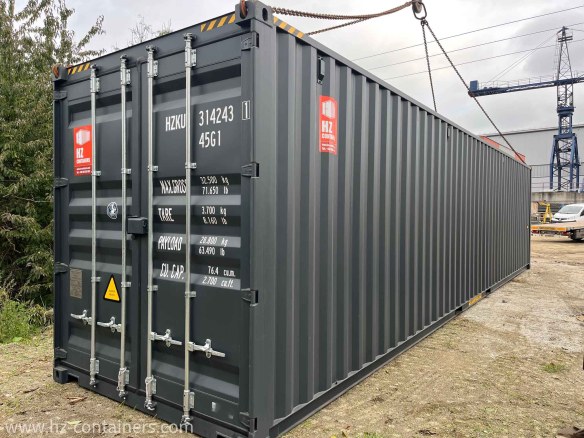
Quick Answer: A standard ISO 40-foot shipping container measures 12.19 m (40 ft) long × 2.44 m (8 ft) wide × 2.59 m (8 ft 6 in) high externally and provides approximately 67.7 m³ (2,390 ft³) of usable internal volume. The maximum gross weight is 30,480 kg (67,200 lbs), with a typical payload capacity of approximately 26,700–26,800 kg (58,900–59,000 lbs).
Shipping container wheels
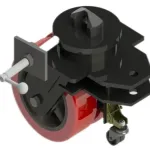
Moving a 12-meter-long steel box that weighs up to 67,200 pounds was, for decades, exclusively a job for a crane and a licensed operator. That reality has changed. Shipping container wheels — an umbrella term covering a family of mobility solutions — now let a single person reposition a 20ft or 40ft container across a yard, warehouse, or construction site without calling in heavy equipment. This guide covers every aspect of container wheel systems: what they are, how they work, the types available, what they cost, and how to choose the right kit for your container.
Can You Modify a 40ft High Cube Container?
The short answer is yes — you absolutely can modify a 40ft high cube container, and it is one of the most popular container types for modification projects worldwide. But the real question is not whether you can modify one; it is how to do it correctly, safely, legally, and within budget. This guide answers every dimension of that question, drawing on engineering principles, real-world pricing data, and the collective experience of thousands of modified container projects.
Key Takeaway: A 40ft high cube container offers 320 square feet of floor space with an extra foot of ceiling height compared to a standard container — making it the ideal canvas for offices, workshops, homes, retail spaces, and industrial applications. The extra height is particularly valuable when you add insulation and still want comfortable headroom.