
Transport of Lithium Batteries in Containers – Risks and Specifics
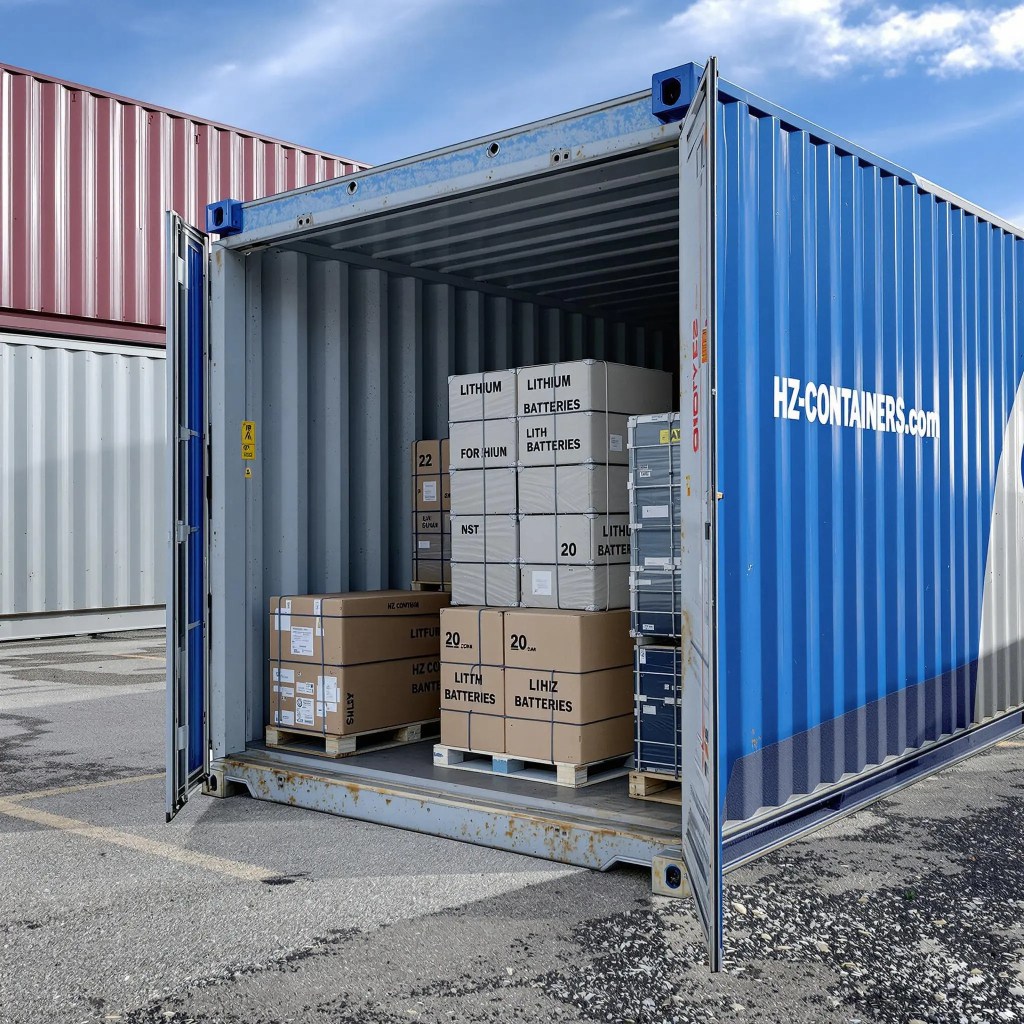
Transport of lithium batteries in containers is a key component of modern logistics, yet it presents extraordinary risks and requires comprehensive knowledge of regulations, safety measures, and practical experience. Lithium batteries, used today in electric vehicles, consumer electronics, and industry, are not only indispensable but also highly dangerous – especially when transported in closed steel containers. The glossary below offers you a deep insight into all aspects of this issue, technical accuracy, practical details, examples of incidents, and the latest trends in safety.
Basic Concepts, Types, and Battery Classification
Lithium Battery
- Definition: Primary (non-rechargeable, lithium-metal) and secondary (rechargeable, lithium-ion) electrochemical sources utilizing lithium. Due to high energy density and low self-discharge, they are the preferred choice of modern industry, but due to reactivity and the possibility of fire, they are considered dangerous goods in class 9 (see below).
- Use: From watches, medical devices, through mobile phones, laptops, to traction batteries for electric vehicles and large-capacity energy storage.
Lithium-Ion Battery (Li-ion)
- Definition: Secondary, rechargeable battery where lithium ions travel between the anode and cathode during charging/discharging. Li-ion batteries have high energy density, long lifespan, and low self-discharge current, but are also prone to thermal runaway.
- Specifics: Most incidents during transport involve these batteries, especially larger accumulators (EV, industrial applications).
Lithium-Metal Battery (Li-Metal)
- Definition: Non-rechargeable battery with metallic lithium as the anode. High capacity, extreme reactivity, long shelf life.
- Risks: Damage or short circuit can cause immediate fire, often even more difficult to manage than Li-ion batteries.
Dangerous Goods (Hazmat)
- Definition: Substances, mixtures, or objects that endanger health, property, or the environment during transport. Lithium batteries fall into class 9 “Miscellaneous dangerous substances and articles”.
- Examples: Besides batteries, for example asbestos, dry ice, environmentally harmful substances.
Class 9
- Marking: Black vertical stripes on a white field, mandatory on all containers and packages with lithium batteries.
- Significance: Indicates that it is goods with various risks (e.g., danger of fire, explosion, gas leakage).
UN Number
| UN Number | Type of Battery / Transport |
|---|---|
| UN 3480 | Lithium-ion batteries (standalone) |
| UN 3481 | Lithium-ion batteries in or packed with equipment |
| UN 3090 | Lithium-metal batteries (standalone) |
| UN 3091 | Lithium-metal batteries in or packed with equipment |
- Significance: Key information on all documents, packages, and labels – serves for quick and correct identification of goods.
Packing Group (PG)
- Division: PG I – high hazard, PG II – medium, PG III – low. For lithium batteries, it is not always explicitly assigned, but strict instructions apply for packing (e.g., ADR 4.1.4.1).
- Practically: Certified boxes must meet resistance to impact, pressure, and fire.
Regulatory Framework and Documentation
International and National Regulations
IMDG Code (International Maritime Dangerous Goods Code)
- Description: The basic IMO code for maritime transport of dangerous goods, including lithium batteries. It establishes classification, packing, marking, segregation, and documentation. Every container with batteries must be clearly marked and recorded in the ship’s manifest.
- Key sections: Segregation of batteries from flammable materials, oxidizers, requirements for non-flammable container fillings.
ADR (European Agreement concerning the International Carriage of Dangerous Goods by Road)
- Description: Governs cross-border transport in Europe, emphasizes driver training, vehicles, marking, and documentation.
- Practically: Every shipping box or container for lithium batteries must be certified according to ADR, typically as a steel box 4A.
IATA DGR (Dangerous Goods Regulations)
- Description: The strictest rules for air transport, e.g., limiting the state of charge (SoC) of Li-ion batteries to max. 30%, prohibition of transport of certain types on passenger aircraft.
- Detail: Each shipment must contain a shipper’s declaration and detailed documentation.
UN 38.3 Test
- What is it: A set of mandatory tests simulating transport conditions, without successful completion of which transport is prohibited.
- Tests: Resistance to pressure, temperature, vibration, impact, short circuit, overcharge, forced discharge.
- Significance: Each type of battery must have a current protocol confirming UN 38.3 compliance.
Shipper’s Declaration
- Necessity: A legally binding document where the shipper certifies that everything complies with regulations (IMDG, ADR, IATA DGR), including correct UN number, classification, and packing.
MSDS/BL (Safety Data Sheet)
- Significance: Must be attached to each shipment, contains information on risks, physical-chemical properties, instructions for emergency response.
Container Packing Certificate (CPC)
- Description: Confirms that the container was clean, suitable, properly loaded and secured to prevent cargo movement.
Transport Risks and Safety Measures
Thermal Runaway
- Definition: A chain reaction inside the battery in which temperature rises sharply (over 800 °C), flammable and toxic gases are released, fire and often explosions occur.
- Causes: Internal/external short circuit, mechanical damage, overcharge, exposure to extreme temperatures.
- Real incidents: For example, fire in Montreal port – a container with batteries caused massive evacuation, fires of EVs on ships (NYT, AVSAX).
- Difficult extinguishing: Common extinguishing agents often do not work, special agents must be used (e.g., dry sand, fire blankets, special extinguishing agents).
Short Circuit
- External: Contact of poles with metal objects (e.g., poorly packed battery in packaging with tools).
- Internal: Damage to the separator inside the cell.
- Prevention: Pole insulation, individual packing, use of UN certified packages, separation of batteries with non-conductive materials.
Mechanical Damage
- Examples: Fall, compression, puncture during container or pallet handling.
- Consequence: Deformation of cells → internal short circuit → fire.
- Packages: Must be certified for the given type of batteries with high mechanical resistance.
Safe Packing and Marking
| Measure | Description and Requirements |
|---|---|
| UN certified packages | Steel boxes that meet ADR, IMDG, RID, or RTDG standards, often hot-dip galvanized, with document pocket, robust construction (lid 3 mm, sides 2 mm, bottom 2.5 mm). |
| Segregation and fixation | Each battery must be packaged separately, packages must prevent cargo movement during transport and handling. |
| Marking | Mandatory labels for class 9, UN number, handling mark for lithium batteries, possibly other required marks (e.g., “Unpacked damaged batteries”, “For recycling only”). |
Segregation (Separation of Incompatible Substances)
- Rules: According to IMDG and ADR, batteries must be separated from flammable materials (class 3), oxidizers (class 5), and other reactive substances.
- Practically: Internal partitions are used in containers, boxes with non-flammable filling, or separate containers.
Practical Aspects of Transport and Fire Prevention
Types of Shipping Boxes and Containers
| Type | Use | Standards/Certification |
|---|---|---|
| Steel boxes | New, used, damaged, and prototype batteries, including for recycling. High resistance, possibility of handling with forklift/crane. | UN certification, ADR 4.1.4.1, DIN 30741 |
| Boxes with filling | Prototype or damaged batteries, boxes with non-flammable filling (e.g., PyroBubbles, vermiculite). | Class X for highly hazardous cargo |
| Fire-resistant boxes | Systems with intumescent (expanding) layer, ventilation holes, and pockets for extinguishing agents. | Special tests according to IMDG/ADR requirements |
- Practically: Boxes must be regularly inspected, properly closed and marked, some types allow reuse without recertification (Elkoplast).
Storage, Charging, and Handling
- Storage: In dry, cool conditions, separately from flammable and reactive materials. Avoid direct sunlight, high temperatures, and humidity.
- Charging: Never in a closed container! Monitor temperature and state of charge. For air transport, the SoC limit applies to max. 30%.
- Handling: Always use protective equipment, forklifts with non-sparking forks, prohibition of dropping and crushing the box.
Incidents, Fire Risks, and Response
Real Incidents
- Montreal: Fire in a container with batteries triggered evacuation of hundreds of households and extensive emergency response – extinguishing lasted several hours, special extinguishing agents and cooling of surrounding containers were necessary.
- Maritime transport: Lithium-ion batteries are today the main cause of major insurance losses from fires on ships, often resulting in loss of the entire ship (AVSAX, NYT). Fires occur not only in accidents but also with poorly declared or packed cargo.
Extinguishing and Fire Prevention Measures
- Common extinguishing devices: Mostly ineffective, water extinguishing can even increase the risk of explosion with Li-metal batteries.
- Special extinguishing agents: E.g., dry sand, PyroBubbles, special types of powders, fire blankets.
- Response: Cooling the surroundings, container isolation, gas ventilation, and protection of responders is necessary.
Prevention
- Detection: Sensors for temperature, smoke, and gases in containers, regular inspections.
- Training: Training of workers on handling, packing, fire response.
- Insurance: Special insurance for transport of dangerous goods, emphasis on proper documentation.
Disposal, Recycling, and Take-Back
- Disposal: Damaged, used, or decommissioned batteries are transported in special boxes, subject to the same or stricter rules as new batteries.
- Recycling: Mandatory take-back, transport only to certified facilities.
- Packages: Often single-use, with internal filling, UN certification, necessary documentation on battery condition.
Recommended Safety Markings and Accessories
- Safety labels: Mandatory for each box and container – class 9, UN number, hazard pictograms, handling marks.
- Fire-resistant blankets and boxes: Suitable for quick response and incident isolation.
- Detectors and alarms: Sensors
 Czech Republic, Litvínov
  FREE SHIPPING

Other container news...
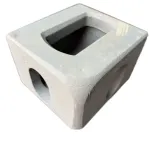
Corner casting steel vs aluminum
Every shipping container in the world — all 40 million of them — rests on eight critical components. Corner castings are the load-bearing blocks at each corner of an ISO shipping container, and they are the universal interface between the container and every crane, twistlock, spreader, and chassis on the planet. When you lift a container, stack it nine high on a ship, or lock it to a truck trailer, every ton of force flows through these fittings.

Construction cabin – selection, tips, dimensions and prices
Every construction project – whether a family house, a development project or a reconstruction – starts with the infrastructure. No construction manager, craftsman or investor who needs an on-site office, a changing room for workers or a safe storage for tools can do without a quality construction cell. But navigating the offer is not easy: residential containers, sanitary cells, storage modules, rental, purchase, refurbished pieces… This guide will give you answers to all the essential questions in one place.
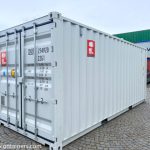
Storage container
A storage container is a lockable steel box designed for the safe and dry storage of materials, tools, goods or equipment. Originally created as a shipping container for maritime transport, its durability and versatility have found their way onto construction sites, corporate premises and private land.
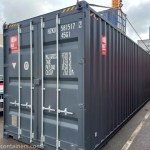
Shipping container 12m (40 ft)
A 12m shipping container is an investment that, if properly selected and cared for, will pay off in decades of trouble-free use. Whether you plan to use it as a warehouse, workshop, garage or the basis for a residential module — the key is careful selection of the condition, a thorough inspection before purchase and high-quality preparation of the base for placement. Take the time to compare offers, check the seller’s references and do not hesitate to personally inspect the container before buying. A properly selected 40-foot container will serve you reliably for many years.