
Shipping Containers – NCTS (New Computerised Transit System) – Electronic Customs Transit System
This dictionary page provides the most comprehensive explanation of the topic NCTS (New Computerised Transit System), its latest versions and key importance in international goods transport in shipping containers. The article provides detailed answers to the question:
What is NCTS and how does it work in practice in container transport?
What is NCTS (New Computerised Transit System)?
NCTS (New Computerised Transit System) is a pan-European, fully electronic system that enables digital management and control of goods in customs transit mode. Its main task is to streamline, secure and accelerate the movement of goods for which customs duties or taxes have not yet been paid across the territory of several countries. The system is used in all EU member states, countries of the European Free Trade Association (EFTA), the United Kingdom, Turkey, Ukraine and other contracting parties to the Common Transit Convention (CTC).
Key system features
- Fully electronic process: Everything takes place digitally, from the submission of a transit customs declaration to the monitoring and completion of the operation.
- International network: NCTS connects the national applications of individual countries into one European system. Communication takes place between:
- economic operators and customs authorities (external domain)
- between customs offices of one country (national domain)
- between national customs administrations and the European Commission (common domain)
- Security and traceability: Each shipment is uniquely identified in the system using MRN (Master Reference Number) and its movement is electronically monitored.
Importance for container transport
The system is key in international container transport because it enables smooth movement of containers between ports, inland terminals and final recipients across Europe – without the need to pay customs duties and taxes when entering a new country. Customs clearance can be moved from congested ports to inland customs offices or directly to company premises.
Why is NCTS important?
NCTS fundamentally modernized and simplified customs transit, which has a direct impact on supply chains, efficiency and security of international container transport.
Advantages of NCTS in logistics and container transport
| Advantage | Description |
|---|---|
| Streamlining of customs procedures | Digitalization and electronic communication reduce clearance time and reduce administrative errors. |
| Financial savings | Payment of customs duties and taxes is deferred until the end of transit. This significantly improves company cash flow. |
| Security and control | Electronic tracking of shipments and automatic information exchange reduce the risk of fraud and loss of goods. |
| Flexibility in multimodal transport | Containers can be easily transferred between ships, trucks and trains without the need for customs clearance at each step. |
| Wide geographical applicability | The system covers not only the EU, but also key European and neighboring countries, which facilitates trade to/from third countries. |
Who uses NCTS the most?
- Shipping companies and ports (Hamburg, Rotterdam, Antwerp, Gdańsk…)
- International freight forwarders and logistics companies
- Importers and exporters with regular container shipments
- Customs representatives and declaration agencies
How NCTS works: detailed process in container transport
Example: Container shipment from China to Czech Republic via German port
| Step | Description |
|---|---|
| 1. Submission of transit declaration | After the container arrives at the port (e.g. Hamburg), the declarant electronically submits a transit declaration with detailed information about the goods, recipient, route and financial security to the customs office. |
| 2. Validation and acceptance of declaration | The customs office verifies the correctness of the data and security. The system generates a unique MRN number. |
| 3. Issuance of TAD (Transit Accompanying Document) | The system issues a transit accompanying document (TAD) with MRN, which accompanies the shipment in paper or electronic form. |
| 4. Release into transit mode | The container is released for transport inland (e.g. to a customs warehouse in Czech Republic). |
| 5. Electronic monitoring of movement | All movements of the shipment are monitored and communicated between the involved customs offices. |
| 6. Arrival at destination and completion of transit | At the destination customs office, the carrier presents the goods and TAD/MRN, inspection and completion of transit takes place. |
| 7. Release of guarantee | After confirmation of completion of transit, the financial security (guarantee) is released. |
| 8. Further customs regime | Goods are released into free circulation, warehouse or other regime according to the recipient’s needs. |
Technical details (NCTS-P5)
- Declaration in NCTS-P5 now has up to four levels of detail: declaration, master consignment, house consignment, goods items.
- Mandatory is a 6-digit HS (Harmonized System) code for each item.
- Possibility to submit a declaration even before physical presentation of goods.
- Integration with other IT systems: AES (export), ICS2 (security data), national risk analysis systems.
Key concepts and terminology of NCTS
| Term | Explanation |
|---|---|
| Common Transit | Goods are transported between EU and CTC countries (Norway, Switzerland, UK, Turkey, Ukraine, etc.) according to uniform rules. |
| Union Transit | Movement of goods only within the EU, T1/T2 regimes. |
| T1 | External transit – for transport of goods that are not Union goods (e.g. imported containers). |
| T2 | Internal transit – for Union goods that temporarily pass through the territory of a third country. |
| MRN (Master Reference Number) | Unique 18-digit code for identifying each transit operation. |
| TAD (Transit Accompanying Document) | Transit accompanying document with key information about the shipment. |
| Economic Operator | Company/person responsible for the transit operation. |
| Guarantee | Financial security against the risk of customs debt. |
Development and phases of NCTS (NCTS Phases)
History and development to date
- 1997: Adoption of EU action plan for transit system reform.
- 2004: Launch of NCTS.
- 2005: Mandatory use for all EU and CTC countries.
NCTS Phase 4
- Standardization of electronic transit, two levels of declarations.
NCTS Phase 5 (NCTS-P5) – NEWS 2024/2025
| News | Description |
|---|---|
| Full harmonization with UCC | Declaration data structure corresponds to the Union Customs Code. |
| Four-level declaration | Allows detailed description of complex shipments (e.g. container with multiple types of goods). |
| Mandatory HS6 code | All items must have a 6-digit harmonized code. |
| Integration with AES and ICS2 | Ensures automated data exchange between systems (export, security, risks). |
| Possibility of advanced declaration submission | Accelerates the process, possibility to submit a declaration before presentation of goods. |
| Digital submission of TAD/MRN | In practice, only electronic submission of the code can be used (e.g. QR, barcode). |
| Coverage of 29 countries | The entire system now covers all EU and CTC countries, including the newest members. |
Full deployment of NCTS-P5 was completed on 2.12.2024 and in January 2025 the system is already running in all member and partner countries.
NCTS Phase 6 (being prepared – 2025+)
- Full integration with ICS2 (Import Control System 2)
- Unification of security and protection data with transit declaration
- Further automation and digitalization of processes
Integration with other IT systems
NCTS is part of the European digital infrastructure of customs and logistics systems:
- AES (Automated Export System): Integration of transit and export, automatic information transfer.
- ICS2 (Import Control System 2): Preparation for mandatory security and risk analysis before goods enter the EU territory.
- National risk analysis systems: Automation of recommendations for physical inspections based on NCTS data.
- EOS/CDS (Economic Operator System/Customs Decisions System): Real-time verification of EORI numbers and customs permits validity.
Frequently Asked Questions (FAQ)
Do I have to use NCTS for container transport in transit?
Yes, NCTS is mandatory for all transport in Union transit and common transit mode. The only exception is emergency/accident cases.
What if NCTS is not available?
The so-called Business Continuity Procedure is used – paper forms and subsequent entry into the system after service restoration.
What software do I need?
- Larger companies: Commercial software certified for NCTS (often linked to ERP/logistics systems).
- Smaller entities: Web portal of the Czech Customs Administration (free, suitable for smaller volumes).
Main benefit of NCTS for shipping containers?
- Possibility to move customs formalities from ports to inland
- Acceleration of the logistics chain, reduction of storage costs at ports
- Better control and security of container movement
Who is responsible for proper completion of transit?
- Holder of the regime (declarant, importer, carrier) is always responsible for proper completion of transit – financial guarantee protects customs authorities against potential losses.
Overview of countries involved in the NCTS system (2024/2025)
| Country | Status |
|---|---|
| EU | All member states |
| EFTA/ESVO | Norway, Switzerland, Iceland, Liechtenstein |
| Others | United Kingdom, Turkey, Ukraine, Serbia, North Macedonia, Andorra, San Marino, etc. |
 Czech Republic, Třebíč
  FREE SHIPPING

Other container news...
Can You Modify a 40ft High Cube Container?
The short answer is yes — you absolutely can modify a 40ft high cube container, and it is one of the most popular container types for modification projects worldwide. But the real question is not whether you can modify one; it is how to do it correctly, safely, legally, and within budget. This guide answers every dimension of that question, drawing on engineering principles, real-world pricing data, and the collective experience of thousands of modified container projects.
Key Takeaway: A 40ft high cube container offers 320 square feet of floor space with an extra foot of ceiling height compared to a standard container — making it the ideal canvas for offices, workshops, homes, retail spaces, and industrial applications. The extra height is particularly valuable when you add insulation and still want comfortable headroom.

Cargo worthy container
If you have ever shopped for a used shipping container, you have almost certainly encountered the term cargo worthy — often abbreviated as CW or CWO (Cargo Worthy Only). It is one of the most important classifications in the container industry, yet it is also one of the most misunderstood. A cargo worthy container is not a container that looks new. It is not necessarily a container that has a valid CSC plate. And it is definitely not the same as a wind and watertight container. This guide explains what cargo worthy really means — from its technical definition and historical origins to the precise structural criteria, inspection process, cost implications, and common misconceptions that trip up even experienced buyers.

Shipping container home
A shipping container home is a residential dwelling constructed from one or more steel intermodal containers — the same standardized metal boxes that transport goods across oceans, railways, and highways. These containers, engineered from corrosion-resistant Corten steel and designed to withstand brutal maritime conditions, are repurposed into fully habitable living spaces through insulation, structural modifications, and the installation of all standard residential utilities. A shipping container home can range from a minimalist 160-square-foot studio built from a single 20-foot container to a sprawling multi-level compound combining dozens of 40-foot high-cube units.
Core Definition: A shipping container home is a code-compliant, habitable structure built from one or more steel intermodal shipping containers that have been insulated, structurally reinforced where modified, and fitted with windows, doors, plumbing, electrical systems, and interior finishes to function as a permanent or semi-permanent residence.
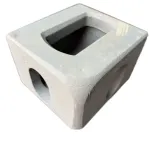
Corner casting steel vs aluminum
Every shipping container in the world — all 40 million of them — rests on eight critical components. Corner castings are the load-bearing blocks at each corner of an ISO shipping container, and they are the universal interface between the container and every crane, twistlock, spreader, and chassis on the planet. When you lift a container, stack it nine high on a ship, or lock it to a truck trailer, every ton of force flows through these fittings.