
Shipping containers Brno
Demand for shipping containers in Brno has been growing significantly in recent years. Whether you’re looking for a solution for material storage, need a construction site cabin, or are planning a more ambitious project such as container housing — the right container choice determines whether your investment will serve you for years without problems, or turn into a rusty nightmare. This guide will walk you through everything that matters: from types and quality grades, through current price ranges, to an overview of suppliers and practical transport advice.
What is a shipping container and what is it used for?
A shipping container — more precisely an ISO container — is a standardized steel transport unit originally designed for maritime transport. However, thanks to its durability, modular dimensions, and relatively affordable price, it has gradually become established in many other areas.
Definition and basic characteristics
Every ISO container complies with international ISO 668 and ISO 1496 standards, which define its dimensions, load capacity, and structural requirements. The basis is a self-supporting steel frame with corrugated sheet metal that withstands demanding conditions — from salt spray at sea to freezing winters inland. Containers are primarily made of COR-TEN steel (resistant to atmospheric corrosion), have wooden or bamboo flooring treated with protective agents, and standardized corner fittings (corner castings) for handling by crane or forklift.
Main uses
- Storage: The most common use in Brno and surroundings. The container serves as a secure warehouse for tools, construction materials, seasonal equipment, or company inventory.
- Goods transport: Original purpose — containers with a valid CSC plate can be used for international maritime and rail transport.
- Construction cabins: Modified containers as facilities for construction workers, offices, or changing rooms.
- Container housing: A growing trend — shipping containers are used to build family houses, cottages, and commercial buildings.
- Freezer storage: Special cooling (reefer) containers for food, medicines, or chemicals.
Why a shipping container specifically? Advantages and disadvantages
Advantages:
- High resistance to weather and mechanical damage
- Security — massive steel construction and lockable double-leaf doors
- Mobility — the container can be relatively easily moved to another location
- Modularity — possibility to stack multiple containers on top of or next to each other
- Lower price compared to brick construction of comparable area
Disadvantages:
- Without insulation, it is hot in summer and cold in winter
- Moisture condensation — ventilation solution necessary
- Limited width (2.44 m) may not suit all purposes
- Requires a reinforced and level base
Types of shipping containers available in Brno
Before you start inquiring about specific offers, you need to be clear about what type of container you need for your purpose. In Brno and surroundings, the following variants are commonly available:
Standard 20′ and 40′ containers
The most widespread types that form the backbone of the offer of all shipping container suppliers in Brno.
- 20′ (6 m): Length 6,058 mm, width 2,438 mm, height 2,591 mm. Internal volume approx. 33 m³. Ideal for smaller storage, tool shed, or workshop. Thanks to lower weight (approx. 2,200 kg), it is easier to handle.
- 40′ (12 m): Length 12,192 mm, width 2,438 mm, height 2,591 mm. Internal volume approx. 67 m³. Suitable for large company warehouses, vehicle garaging, or extensive conversions.
High Cube (HC) — taller variant for conversions
The 40′ HC container has an increased height of 2,896 mm compared to the standard (internal approx. 2,690 mm). This seemingly small difference of 30 cm is crucial if you plan a conversion to housing or office — after installing underfloor heating, insulation, and a suspended ceiling, a standard container leaves the ceiling uncomfortably low above your head.
Refrigerated containers (Reefer)
Refrigerated containers with an integrated unit that maintains a constant temperature typically ranging from -25 °C to +25 °C. In Brno, they are offered by HZ-containers, for example. They are equipped with stronger insulation and a stainless steel interior, making them an ideal choice for food operations, pharmaceutical warehouses, or florists.
Residential and office containers
These are containers already modified from production for human occupancy — they include insulation, electrical installation, windows, doors, and interior cladding. The price of a new residential container starts at around 135,000 CZK excl. VAT. They can also be rented as construction cabins.
| Container type | Length (mm) | Width (mm) | Height (mm) | Volume (m³) | Typical use |
|---|---|---|---|---|---|
| 20′ Standard | 6,058 | 2,438 | 2,591 | ~33 | Small storage, workshop, tool shed |
| 40′ Standard | 12,192 | 2,438 | 2,591 | ~67 | Large storage, garage, conversion |
| 40′ High Cube | 12,192 | 2,438 | 2,896 | ~76 | Housing, offices (higher ceiling) |
| 20′ Reefer | 6,058 | 2,438 | 2,591 | ~28 | Cold storage, food |
| Residential container | 6,058 | 2,438 | 2,591 | — | Construction, office, temporary accommodation |
Quality grades of shipping containers: How to understand the designations
One of the most common mistakes when buying a shipping container: a customer sees an ad “used 20′ container for 38,900 CZK” and doesn’t check what condition it’s in. It’s precisely the quality grade that determines whether the container will serve you for years or become a rusty coffin in two years.
IICL6 — premium quality
IICL (Institute of International Container Lessors) defines strict standards for container inspection and repairs. The IICL6 grade (sometimes referred to as IICL-5 or IICL-6 depending on the current revision) represents the highest quality of a used container — practically without defects, with intact flooring, tight doors, and no signs of corrosion. HZ-containers offers in this grade, for example, a shipping container 20′ IICL6 for 64,500 CZK excl. VAT. It’s the choice for those who want a used container in perfect condition without the need for repairs.
Cargo Worthy (CW) — suitable for transport
A container with a valid CSC plate (Convention for Safe Containers), which has passed periodic inspection and is certified for maritime transport. A CW container is structurally completely sound, may have cosmetic defects (scratches, initial surface corrosion), but its load capacity and tightness meet the standards. Suitable for those who plan to continue using the container for transport or require high reliability.
Wind & Watertight (WWT) — dry and tight
The absolute minimum you should require when buying a used container for storage. WWT means that the container does not leak and is wind-resistant. It may show signs of wear, dents, surface rust, but the floor must be solid and the doors functional. The CSC plate may no longer be valid. WWT containers are the cheapest variant for storage — prices start at around 38,900 CZK excl. VAT for a 20′ variant.
One Way / new containers
Containers that have made only one journey (usually from China to Europe) and are then sold. They are practically new — without corrosion, with intact flooring, and a valid CSC plate. The price of a new 20′ container is around 62,000 CZK excl. VAT, 40′ HC around 85,000 CZK excl. VAT.
What to watch out for when buying a used container
- Inspect the floor — hit it with a hammer or the toe of your shoe. Soft spots signal rot.
- Check the door seals — they must be flexible and intact, otherwise leaking is a risk.
- Focus on the roof — dents on the roof retain water and accelerate corrosion.
- Verify the origin — containers from seaside depots may bear signs of aggressive corrosion from salt.
- Request detailed photos — if buying remotely, insist on photos of all six sides, the roof, and floor details.
How much does a shipping container cost in Brno? Price overview 2025
Shipping container prices in Brno vary by type, condition, age, and supplier. The following overview is based on current publicly available offers (July 2025):
| Container type | Condition | Indicative price (excl. VAT) | Indicative price (incl. 21% VAT) |
|---|---|---|---|
| 20′ Standard | WWT (used) | 38,900–45,000 CZK | 47,069–54,450 CZK |
| 20′ Standard | IICL6 (premium used) | 60,000–64,500 CZK | 72,600–78,045 CZK |
| 20′ Standard | One Way (new) | 62,000–68,000 CZK | 75,020–82,280 CZK |
| 40′ Standard | WWT (used) | 52,000–60,000 CZK | 62,920–72,600 CZK |
| 40′ HC | Used | 68,500–75,000 CZK | 82,885–90,750 CZK |
| 40′ HC | One Way (new) | 85,000–92,000 CZK | 102,850–111,320 CZK |
| 20′ Reefer | Used | from 80,000 CZK | from 96,800 CZK |
| Residential container | New | from 135,000 CZK | from 163,350 CZK |
Rental prices
Renting a shipping container in Brno costs approximately:
- 20′ storage container: 97 CZK/day (approx. 2,900 CZK/month)
- 40′ storage container: 145 CZK/day (approx. 4,350 CZK/month)
What affects the price
- Condition and grade: The difference between WWT and IICL6 can be as much as 25,000 CZK.
- Season: In spring and summer, prices rise due to higher demand from construction.
- Transport: Some suppliers offer free transport when purchasing multiple units (e.g., HZ-containers when purchasing two 20′ or one 40′ container).
- Location: The distance from the supplier’s depot affects the transport cost.
Where to buy or rent a shipping container in Brno?
In Brno and the wider surroundings, several established suppliers operate. Each has its strengths and specialization.
Main supplier
HZ-containers — international supplier with a wide range
HZ-containers stands out from local competitors primarily through the scope of its offer. Thanks to an international partner network, it offers containers from 47 countries worldwide, with almost 2,800 units currently available in the Czech Republic. The range includes used shipping containers in WWT and IICL6 grades, new One Way containers, refrigerated containers, and accessories (shelving, lighting, shelves). For customers in Brno, free transport (subject to conditions) and the option of personal container selection at the depot in Třebíč (approx. 60 km from Brno) are also significant.
Transporting a shipping container to Brno and surroundings
Transport is often an underestimated but essential part of the whole process. Poorly planned logistics can result in container damage, property damage, or additional costs in the thousands of crowns.
How transport works
A shipping container is transported on a truck with a hydraulic arm (so-called HR), which places the container itself at the designated location. A standard 20′ container weighs approximately 2,200 kg, 40′ around 3,900 kg — handling requires equipment with appropriate load capacity. Most suppliers in Brno provide transport with their own resources or through verified carriers.
Handling — hydraulic arm vs. crane
- Hydraulic arm (HR): The most common method. The vehicle arrives at the property, the hydraulic arm extends the container from the loading area and places it on the prepared location. HR reach is typically 6–8 meters from the vehicle.
- Crane: Necessary if the container cannot be placed directly from the road (e.g., behind a building, in a garden). A crane is more expensive — expect a surcharge of 3,000–8,000 CZK.
How to prepare the site before delivery
- Level and reinforced base: Concrete panels, compacted gravel, or asphalt. The container cannot be placed on soft ground — it will sink over time.
- Access road: At least 3.5 m wide for the truck to pass through. No low branches, wires, or narrow gates.
- Handling space: Next to the designated location, there must be free space for the hydraulic arm to extend — at least 6 m.
- Supports: It is recommended to place the container on concrete pads or beams so air can flow underneath and moisture doesn’t accumulate.
Indicative transport costs within Brno
The transport price depends on the distance and container type. Within Brno, expect 3,000–6,000 CZK for transporting a 20′ container. Some suppliers (e.g., HZ-containers) offer free transport when a minimum order is met, which can save a significant amount.
Renting vs. buying a shipping container: Which pays off?
The decision between renting and buying is one of the most important. The answer depends on three factors: duration of use, purpose, and budget.
When renting pays off
- Short-term projects (up to 12 months): Construction companies, seasonal storage, renovations.
- Need for flexibility: If you expect to move the container elsewhere in a year or won’t need it.
- Limited budget: Renting does not require a one-time investment of tens of thousands of crowns.
- Testing: If you’re starting out with containers and want to verify if they suit you.
Example: Renting a 20′ container for 97 CZK/day = 35,405 CZK/year. If you plan to use the container for more than 2 years, buying starts to pay off.
When buying is better
- Long-term use (2+ years): After two years, the investment in buying typically pays off compared to renting.
- Conversions and housing: A container you invest hundreds of thousands in during conversion must be yours.
- Possibility of resale: A used container holds its value — even after years, you can sell it for 50–70% of the original price.
Tax aspects for entrepreneurs
For self-employed persons and companies, the purchase of a shipping container is depreciable property (2nd depreciation group, 5 years). Renting is fully tax-deductible in the given year. When deciding, it’s worth consulting an accountant.
How to choose the right shipping container in Brno — step by step
If you’re facing a decision and don’t know where to start, follow this procedure:
Step 1: Determine the purpose and requirements
Before you start looking for specific offers, answer these questions:
- What will I store? (Moisture-sensitive material? Heavy machinery? Food?)
- How long do I need the container? (Short-term → rent, long-term → buy)
- Will people be working in it? (If yes → residential/office container with insulation and electricity)
Step 2: Choose the type and size
Based on the answers from step 1, choose the type:
- Tools and material storage: 20′ standard, WWT
- Company storage: 40′ standard or HC, IICL6 or CW
- Conversion to housing: 40′ HC, new or IICL6
- Cold storage: Reefer container
Step 3: Decide on the quality grade
- Lowest budget: WWT — but watch out for floor condition and seals
- Balanced price/performance: IICL6 — used but in perfect condition
- Absolute certainty: One Way / new container
Step 4: Compare supplier offers
Don’t just look at the price. Compare:
- The price of the container itself
- The price of transport to your address
- Possibility of personal inspection before purchase
- Warranty conditions and complaint procedure
- References and reviews
Step 5: Arrange transport and installation
After selecting the container and supplier, agree on the delivery date. Prepare the site according to the instructions above and be present at delivery — verify that the container matches the order and has no defects not listed.
Shipping containers in Brno represent an affordable and flexible solution for storage, business, and housing. The key to success is an informed choice: knowing the difference between WWT and IICL6, knowing whether renting or buying pays off for you, and not underestimating site preparation. Browse supplier offers, compare prices, and if you’re unsure, consult your project directly with the seller — a quality supplier will gladly advise you on which container type is the right one for your needs.
FAQ
What is the difference between a shipping container and a construction cabin?
A shipping container is a standardized steel transport unit (ISO container) that is inherently intended for goods transport. A construction cabin is a lighter construction intended exclusively for human occupancy or storage at a fixed location — it usually has integrated insulation, electricity, and windows. A shipping container is more durable, but for human occupancy it requires additional modifications.
How to transport a shipping container to Brno?
Transport is provided by the supplier. The container is transported on a truck with a hydraulic arm, which places it on your property. You need to ensure a level and reinforced base, a sufficiently wide access road (min. 3.5 m), and handling space next to the designated location.
How much does a 20-foot shipping container cost in Brno?
A used 20′ container in WWT grade starts from 38,900 CZK excl. VAT (47,069 CZK incl. VAT). The better-quality IICL6 variant costs around 64,500 CZK excl. VAT. A new One Way container runs 62,000–68,000 CZK excl. VAT.
What to watch out for when buying a used shipping container?
Check primarily the condition of the floor (rot, soft spots), the door seals (must be flexible and intact), the roof (dents retain water), and the overall extent of corrosion. If buying remotely, request detailed photos of all sides. Also verify that the container does not come from a seaside depot where it may have been exposed to aggressive salt corrosion.
Does it pay off to rent or buy a shipping container?
Renting pays off for short-term use up to 1–2 years, for seasonal storage, or if you need flexibility. Buying is more advantageous for a long-term horizon (2+ years), for housing conversions, and if you want the option to sell the container later.
What are the dimensions of a shipping container?
The most common 20′ container measures 6,058 × 2,438 × 2,591 mm (L × W × H). The 40′ variant measures 12,192 × 2,438 × 2,591 mm. The High Cube version (40′ HC) is taller — 2,896 mm. The internal width is always approx. 2,350 mm, the height is 230 mm less than the external.
What does the abbreviation WWT mean for shipping containers?
WWT (Wind & Watertight) means that the container is wind and water resistant — it does not leak, the floor is solid, and the doors are tight. It is the minimum standard you should require for storage. WWT containers are the cheapest, but they may have cosmetic defects and may not have a valid CSC plate for transport.
Does HZ-containers provide shipping container transport to Brno?
Yes, HZ-containers provides shipping container transport throughout the Czech Republic, including Brno and surroundings. When purchasing two units of size 8′, 10′, 20′ or one unit of 40′ or 45′, transport is free. Containers are available for personal inspection at the depot in Třebíč, located approximately 60 km from Brno.
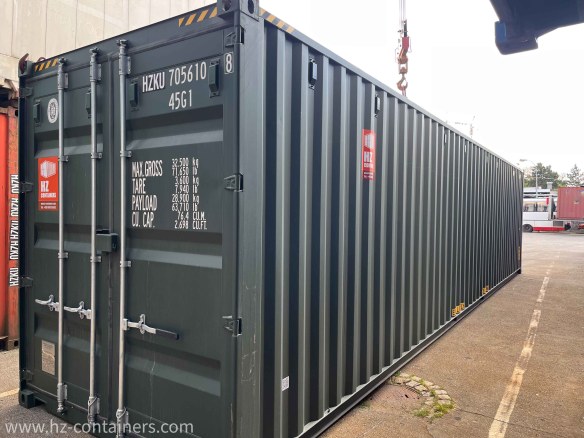
 Brno, Czech Republic
 FREE SHIPPING


Other container news...

New sea shipping containers
If you are currently considering purchasing a new shipping container, you are not alone. While just twenty years ago containers were used almost exclusively for maritime transport, today they have found their way into construction, storage, business, and even housing. This growing popularity brings with it a host of questions: Which type should you choose? How much does it cost? How do you recognize quality? How can you avoid falling victim to scammers?
New shipping containers
If you are currently considering purchasing a new shipping container, you are not alone. While just twenty years ago containers were used almost exclusively for maritime transport, today they have found their way into construction, storage, business, and even housing. This growing popularity brings with it a host of questions: Which type should you choose? How much does it cost? How do you recognize quality? How can you avoid falling victim to scammers?

6m shipping container
Are you thinking about buying a 6-meter shipping container but aren’t sure what to look for? You are not alone—this 20-foot container is the best-selling size on the Czech market, and the differences between various types, conditions, and prices can be significant. In this guide, you will find everything you need to know: from exact dimensions and a comparison of categories (such as “one-way,” refurbished, and “Cargo Worthy”) to current prices and shipping advice.
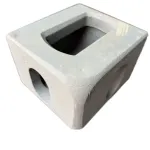
Corner casting steel vs aluminum
Every shipping container in the world — all 40 million of them — rests on eight critical components. Corner castings are the load-bearing blocks at each corner of an ISO shipping container, and they are the universal interface between the container and every crane, twistlock, spreader, and chassis on the planet. When you lift a container, stack it nine high on a ship, or lock it to a truck trailer, every ton of force flows through these fittings.