
Shipping containers Augsburg Germany
Shipping containers have become an exceptionally popular solution in the Czech Republic in recent years for storage, business operations, and creative conversions. Growing demand leads many Czech buyers to look for offers across the border — and Augsburg, the third-largest city in Bavaria, represents, thanks to its strategic location and dense network of dealers, an ideal destination for purchasing a shipping container. This guide summarizes everything you need to know
What are shipping containers and why is Augsburg an interesting destination for their purchase?
A shipping container — more precisely a maritime shipping container — is a standardized steel transport unit manufactured according to the international standard ISO 668. The construction from high-strength Corten steel (also known as weathering steel) ensures exceptional resistance to corrosion and weather conditions. Every container used for international maritime transport must carry a valid CSC plate (Convention for Safe Containers), which confirms its structural safety and fitness for transport.
A standard shipping container is wind-resistant and watertight (referred to by the abbreviation WWD — Wind and Watertight), which makes it not only an ideal means of transport, but also a perfect basis for ground-based use: as a tool and material storage, mobile workshop, garage, or even a living space after a suitable container conversion.
Augsburg as a logistics hub of Bavaria
Augsburg lies on the key transport arteries of southern Germany — it is crossed by the A8 motorway (Munich–Stuttgart), which intersects with the B17 motorway in the immediate vicinity of the city and offers a fast connection towards the Czech border (approximately 320 km via Rozvadov to Plzeň). Thanks to this infrastructure, Augsburg is not only the seat of several significant container depots, but also a starting point with efficient logistics for the transport of shipping containers throughout Central and Eastern Europe.
Bavaria is moreover home to a strong industrial base (automotive industry, mechanical engineering, logistics), which has long generated high demand for transport and storage containers — and at the same time their robust supply, both of new units from Chinese production after one journey (the so-called One-Way), and quality used containers retired from European maritime rotation.
Overview of dimensions and parameters of the most common shipping containers
| Container type | External dimensions (L × W × H) | Internal dimensions (L × W × H) | Internal volume | Max. payload | Typical use |
|---|---|---|---|---|---|
| 10′ container | 3.05 × 2.44 × 2.59 m | 2.83 × 2.35 × 2.39 m | ~15.9 m³ | ~10,000 kg | Compact storage, construction site cabin, small workshop |
| 20′ container (22G1) | 6.06 × 2.44 × 2.59 m | 5.90 × 2.35 × 2.39 m | ~33.2 m³ | ~28,000 kg | Universal storage, garage, transport |
| 20′ High Cube (25G1) | 6.06 × 2.44 × 2.90 m | 5.90 × 2.35 × 2.70 m | ~37.4 m³ | ~28,000 kg | Higher storage, workshop with shelves |
| 40′ container (42G1) | 12.19 × 2.44 × 2.59 m | 12.03 × 2.35 × 2.39 m | ~67.6 m³ | ~26,000 kg | High-capacity storage, residential conversion |
| 40′ High Cube (45G1) | 12.19 × 2.44 × 2.90 m | 12.03 × 2.35 × 2.70 m | ~76.3 m³ | ~26,000 kg | Maximum volume, ideal for conversions |
High Cube containers offer approximately 30 cm of extra height compared to standard versions. This seemingly small difference brings roughly 13% more volume and significantly increases comfort when moving inside — which is why High Cube variants are preferred particularly for residential and office conversions.
Special types of containers
In addition to standard closed units, specialized types can also be found in Augsburg depots:
- Refrigerated containers (Reefer) — equipped with an integrated cooling unit, ideal for the transport and storage of food or pharmaceutical products. Always verify the validity of PTI certification (Pre-Trip Inspection) before purchase.
- Open Top — container with an openable roof (tarpaulin), suitable for the transport of oversized cargo that exceeds the height of a standard container.
- Flat Rack — an open platform with folding end walls, designed for the transport of heavy and bulky machinery or construction elements.
How much do shipping containers cost in Augsburg and how do prices vary by condition?
The price of a shipping container depends primarily on its size, age, and condition category. In the German environment (and thus also in Augsburg), the following classification is used:
Container condition categories
- One-Way (new / almost new) — a container after a single maritime journey, manufactured as a rule in China in the last 1–3 years. Minimal signs of use, at most a few minor scratches. Ideal for demanding, representative use.
- Round Trip (warranty, IICL) — a container after several journeys, still in the Cargo Worthy category with a valid CSC plate. Very good condition, no structural damage, occasional cosmetic defects.
- Cargo Worthy (CW — used) — used but still fully functional container. It may bear signs of more intensive use (minor dents, surface rust), however it still maintains watertightness and structural strength. Suitable for regular storage and workshops.
- Decommissioned (as-is) — container retired from maritime transport, without valid CSC certification. Lower price, suitable for ground-based storage without demands on a representative appearance.
Approximate prices of shipping containers in the Augsburg region (June 2026)
The following prices are based on currently published offers of the above-mentioned dealers and apply for collection directly at the Augsburg / Gersthofen depot (without transport):
| Size / Type | One-Way condition | Cargo Worthy condition (used) |
|---|---|---|
| 20′ standard (22G1) | from 1,800 € | from 800–1,200 € |
| 20′ High Cube (25G1) | from 2,400 € | from 1,200–1,800 € |
| 40′ standard (42G1) | from 3,400 € | from 1,100–1,800 € |
| 40′ High Cube (45G1) | from 3,200 € | from 1,300–2,000 € |
| Office container (20′) | from 7,500 € | from 3,500 € |
Note: The prices stated are approximate and do not include German VAT (19%). In cross-border trade within the EU with a valid VAT ID, reverse charge applies (transfer of tax liability), where the buyer pays the VAT in their own country. Always verify the current tax conditions with your tax advisor.
How does the purchase of a shipping container proceed step by step?
The purchase process is straightforward, however it pays to follow several proven steps that will save you time, money, and potential complications.
Step 1: Specification of requirements
Before contacting a dealer, clarify:
- Size and type of container — 10′, 20′, 40′ or High Cube; standard closed, or special?
- Required condition — One-Way, Cargo Worthy, decommissioned?
- Purpose of use — storage, conversion, transport, or representative purposes?
- Budget — including a reserve for transport
Step 2: Inquiry and selection of a specific unit
Contact the dealer by phone or email. Most dealers in Augsburg communicate primarily in German or English — in case of a language barrier, online translators or interpreter services can be used.
When making an inquiry, require:
- Current photographs of the specific available unit (not illustrative)
- Information on the date of manufacture and origin (CSC manufacturing plate)
- Confirmation of condition — whether the container is watertight, whether the floor is not rotted, whether the doors seal properly
How to arrange transport of a shipping container from Augsburg to the Czech Republic?
The transport of a shipping container from Augsburg to the Czech Republic is a key item that can significantly affect the overall economics of the purchase. The distance Augsburg → Prague is approximately 380–420 km depending on the route.
Transport options
| Method of transport | Approximate price (Augsburg → CZ) | Advantages | Disadvantages |
|---|---|---|---|
| Self-collection (rig with trailer) | Fuel + tolls (~200–300 €) | Lowest price, full control | Need for own equipment, time, driving license |
| External truck transport (1× 20′) | From 500–700 € | Professional loading, insurance | Higher fixed price for a single unit |
| External truck transport (2× 20′) | From 600–850 € / pair | Cost distribution across 2 units | Need to purchase two units at the same time |
| External truck transport (1× 40′) | From 600–900 € | Including hydraulic arm/crane | Price depends on the exact location in the CZ |
When is it worth buying in Augsburg
- Multiple units at once — the transport of two 20′ containers is only slightly more expensive than one, so the price per unit drops dramatically
- Special types — if you are looking for High Cube, reefer, Open Top, or office container that is not available in the Czech Republic
- One-Way in top quality — in Augsburg you can find freshly imported One-Way units that have not yet reached the Czech market
- Proximity to the border — if you live in western or southern Bohemia, the transport distance is relatively short
When is it worth buying in the Czech Republic
- One 20′ container — when purchasing a single smaller unit, transport from Germany practically eliminates the price advantage
- You need a container quickly — Czech companies deliver within 24–48 hours
- You want to communicate in Czech — without a language barrier
However, for long-term use (3+ years), it is almost always worth buying — acquiring a used 20′ container for ~900 € represents, over three years of use, a cost of approximately 25 € per month, which is a fraction of the rental price. A used container moreover still retains residual value after years of use — it can be resold.
Frequently Asked Questions
How much does a shipping container cost in Augsburg?
Prices vary according to size and condition. A used 20′ container in Cargo Worthy condition can be acquired already from 800 € (~20,000 CZK). A new One-Way 20′ container starts at approximately 1,800 €. A used 40′ High Cube can be found from 1,300 €. To these prices it is necessary to add transport to the Czech Republic (500–900 €) and tax obligations.
How to buy a shipping container in Germany?
The procedure is straightforward: Contact HZ Containers → specify the required type and condition → after selecting a specific unit you will receive an invoice → after payment you collect the container, or arrange transport. For companies with a VAT ID, reverse charge applies — VAT is paid in the Czech Republic, not in Germany.
How long does delivery from Augsburg to the Czech Republic take?
The truck journey itself takes approximately 4–6 hours depending on the destination in the Czech Republic and the traffic situation. The total time from order to delivery ranges between 5–10 working days, depending on the dealer’s and carrier’s workload. Dealers such as HZ Containers state an average delivery time of 5–7 working days for all of Bavaria.
What is the difference between a One-Way and a used (Cargo Worthy) container?
A One-Way container is a practically new unit that has completed only one maritime journey (as a rule from China to Europe). It is in top condition — minimal cosmetic defects, perfect tightness, floor as new. A Cargo Worthy container has gone through several journeys, shows signs of use (minor dents, surface rust), however still meets the criteria for international transport. The price difference can be up to double.
Is it necessary to pay German VAT when buying in Germany?
It depends on your status. Individuals not registered for VAT pay standard German VAT of 19%. VAT payers with a VAT ID from another EU member state can purchase under the reverse charge regime — the seller issues an invoice without VAT and the buyer pays the VAT in their own country. Always consult with a tax advisor.

 Bad Salzuflen, Germany
  WITHOUT SHIPPING
Other container news...

New sea shipping containers
If you are currently considering purchasing a new shipping container, you are not alone. While just twenty years ago containers were used almost exclusively for maritime transport, today they have found their way into construction, storage, business, and even housing. This growing popularity brings with it a host of questions: Which type should you choose? How much does it cost? How do you recognize quality? How can you avoid falling victim to scammers?
New shipping containers
If you are currently considering purchasing a new shipping container, you are not alone. While just twenty years ago containers were used almost exclusively for maritime transport, today they have found their way into construction, storage, business, and even housing. This growing popularity brings with it a host of questions: Which type should you choose? How much does it cost? How do you recognize quality? How can you avoid falling victim to scammers?

6m shipping container
Are you thinking about buying a 6-meter shipping container but aren’t sure what to look for? You are not alone—this 20-foot container is the best-selling size on the Czech market, and the differences between various types, conditions, and prices can be significant. In this guide, you will find everything you need to know: from exact dimensions and a comparison of categories (such as “one-way,” refurbished, and “Cargo Worthy”) to current prices and shipping advice.
Corner casting steel vs aluminum
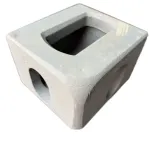
Every shipping container in the world — all 40 million of them — rests on eight critical components. Corner castings are the load-bearing blocks at each corner of an ISO shipping container, and they are the universal interface between the container and every crane, twistlock, spreader, and chassis on the planet. When you lift a container, stack it nine high on a ship, or lock it to a truck trailer, every ton of force flows through these fittings.