
Role of the customs office in shipping containers
Customs authorities and their procedures are essential for efficient and safe international trade in shipping containers. Understanding customs processes, complying with international regulations, and using modern technology and experts can contribute significantly to successfully navigating customs challenges.
Customs authorities play a key role in the handling of shipping containers. Their role is not only to ensure the smooth flow of cross-border movement of goods, but also to protect the economic and security interests of the country. Every container that crosses the border has to undergo customs control, which includes verifying documentation, checking the contents and ensuring that the goods comply with all applicable regulations. Customs also ensures that all import and export duties and taxes are correctly calculated and paid.
Customs clearance process
Customs clearance begins with the shipping company submitting a customs declaration that contains detailed information about the goods being shipped. This declaration includes details such as the value of the goods, their origin, classification and quantity. The customs office then checks this information carefully and may request additional documents or carry out a physical inspection of the container. The speed and efficiency of the customs clearance process often depends on the accuracy and completeness of the documentation provided.
The importance of international regulations
International trade and container transport is subject to a number of regulations that help standardise processes and ensure that trade runs smoothly and safely. These regulations include, for example, the Incoterms rules, which define the obligations of the seller and buyer during transport, and the Union Customs Code, which harmonises customs procedures within the European Union. Compliance with these regulations is key to avoiding delays and reducing the risk of fines or other penalties.
Simplified customs procedures
To simplify and speed up the customs process, some companies can use simplified customs procedures. These procedures, such as issuing a simplified customs document for free circulation (SAD) or electronic customs declarations, allow for faster and less complex customs control. Companies that regularly trade with international partners often seek Authorised Economic Operator (AEO) status, which provides them with a number of customs procedural advantages.
Key challenges and solutions
One of the main challenges in customs clearance is the complexity and constant evolution of international trade rules. Customs must constantly update their knowledge and procedures to comply with the latest regulations. Modern technologies, such as automated systems for processing customs declarations and real-time container tracking, play a key role in addressing these challenges. These technologies not only streamline processes, but also increase the security and accuracy of customs clearance.
Benefits of working with experts
For companies involved in international trade, it is often beneficial to work with customs experts. These experts can provide valuable advice and assistance in navigating the complex world of customs regulations. With their expertise, companies can minimize the risks associated with customs inspections and optimize their logistics processes.
Similar articles behind our site

Corner Cubes For Shipping Container – HZ CONTAINERS.com – HZ CONTAINERS.com
The corner blocks for the shipping container are an important spare part. The container corner element has been a standard feature since their manufacture.

Shipping Container Seal – HZ CONTAINERS.com – HZ CONTAINERS.com
Seal for shipping container
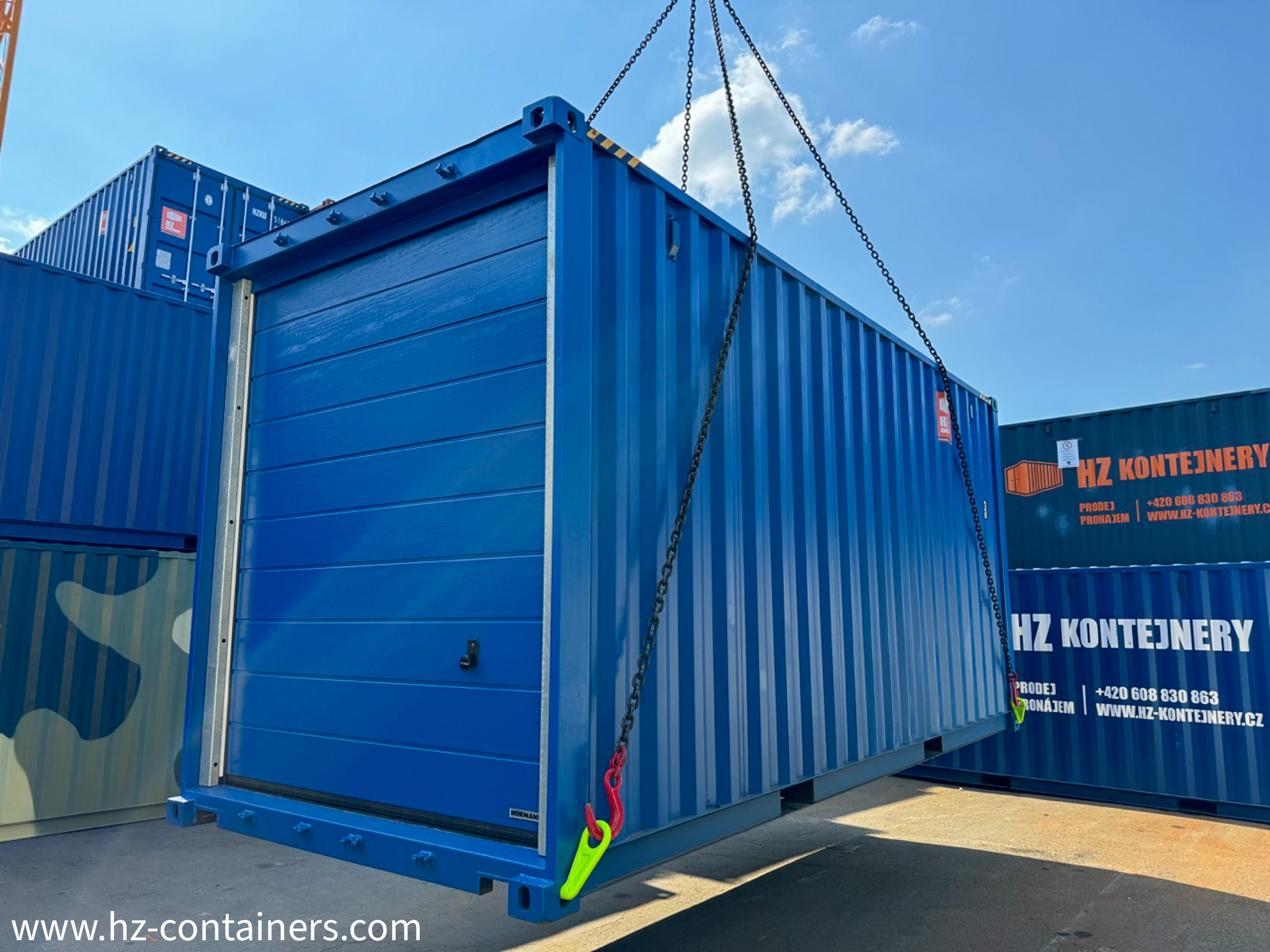
Shipping container lifting lugs – HZ CONTAINERS.com – HZ CONTAINERS.com
Shipping container lifting lugs
Other container news...

Shipping Container on Legs ConFoot
The ConFoot shipping container on legs is a revolutionary solution for anyone who needs to safely, efficiently and independently handle ISO containers without investing in heavy equipment. Finnish quality, certified safety and universal compatibility make this system a key tool for modern logistics, construction, industry and crisis management. Thanks to its ease of use and speed of process, it can significantly optimize costs, increase the throughput of transport nodes and make container logistics accessible to smaller companies or temporary projects.

Used Shipping Containers Milan – Italy
Are you looking for a used shipping container in Milan without paying the price of a new one? HZ-Containers is your reliable partner for finding used shipping containers of guaranteed quality from our warehouse in Milan. In this guide, you will learn how to select the right container, various quality classifications (IICL, Cargo Worthy, As Is), how to assess conditions, competitive prices and a transparent purchasing process. Whether you need storage, temporary warehouse or specific use, you will find here the information needed to make the best decision.

Do Shipping Containers Catch Fire?
A shipping container itself does not catch fire, but its robust and tight construction makes it an ideal environment for catastrophic fires to start and escalate if there is flammable or reactive cargo inside. The problem of container ship fires is complex and requires the cooperation of the entire logistics chain – shipper, carrier, shipping company and regulator. The key to greater safety is strict compliance with regulations, technological innovation and a responsible approach – trying to save on declaration can lead to losses in the hundreds of millions and endanger human lives.

How to Properly Choose a Shipping Container?
Choosing the right shipping container is a complex decision influenced by the purpose of use, budget, desired lifespan and legislative requirements. Always set clear priorities, call for a personal inspection, verify the history of the container and the seller’s references. Investing in a higher quality container will pay off in lower maintenance costs, longer lifespan and higher safety. If you are planning to convert to a residential or commercial building, do not forget about the need for a building permit, floor modifications and ensuring insulation against moisture and temperature fluctuations.