
Myjava – Slovakia shipping containers
Shipping containers are one of the most important elements of global logistics and trade. These robust, reusable containers enable safe and efficient transportation of goods worldwide. Whether you are an entrepreneur in Myjava or anywhere else, understanding the function and possibilities of shipping containers will help you optimize your logistics and reduce transportation costs. This guide will provide you with all the information you need to know about shipping containers, their types, applications, and advantages.
What exactly does the term shipping container mean?
A shipping container is a standardized steel container specifically designed for transporting goods by sea, road, rail, and air. These are robust, reusable transport units with a solid steel construction that withstands adverse weather conditions and mechanical loads. Shipping containers are manufactured according to international ISO standards, which guarantee their compatibility with all types of transport vehicles.
The basic characteristic of a shipping container is its standardized size. The most commonly used containers are 20 feet (6 meters) and 40 feet (12 meters) long, designated as TEU (Twenty-foot Equivalent Unit) and FEU (Forty-foot Equivalent Unit). These dimensions are not arbitrary – they were developed to fit efficiently on ships, trains, and trucks, and to be easily stacked on top of each other.
Shipping containers are used not only for international transport but increasingly for local transport and storage. In Myjava and surrounding areas, you will find shipping containers used as storage spaces, business premises, or even residential units. Their versatility and durability make them an ideal solution for a range of applications.
What is the history and development of shipping containers?
The concept of the shipping container is not new. The idea of a standardized transport unit was born in the 1950s when American entrepreneur Malcolm McLean introduced the first standardized containers on his ships. This innovation revolutionized global trade because it enabled unprecedented efficiency in transporting goods.
Before the introduction of containers, the transport of goods was very labor-intensive and expensive. Goods had to be manually loaded and unloaded, which took a long time and was prone to damage. Containers completely changed this process. Goods were packed once into a container and then the entire container was transported without opening until the final destination. This reduced costs, time, and the risk of damage.
In the 1960s, the international organization ISO (International Organization for Standardization) approved the first standards for shipping containers. These standards – ISO 668 and ISO 1496 – define the exact dimensions, weight, and structural properties of containers. These standards remain in force today and ensure that containers manufactured in Japan are fully compatible with those manufactured in Europe or the United States.
In recent decades, shipping containers have become an indispensable element of the global economy. More than 90% of international trade is transported in containers. Their development continues – modern containers are equipped with GPS tracking, temperature and humidity monitoring sensors, and other technologies that increase their functionality.
How do shipping containers work in practice?
Shipping containers work on the principle of standardization and modularity. Every time goods are packed into a container, the same format and same dimensions are used. This means that containers can be easily stacked, transported, and handled using standard equipment regardless of content.
The basic working cycle of a shipping container looks like this:
- Packing: Goods are packed and loaded into an empty container at the place of origin.
- Transport: The full container is transported by ship, train, or truck to the transport terminal.
- Transfer: At the terminal, the container is transferred from one mode of transport to another (e.g., from ship to train).
- Storage: If necessary, the container is stored at the terminal or transport center.
- Delivery: The container is delivered to the final recipient.
- Unloading: Goods are unloaded from the container.
- Return: The empty container is returned to a place where it can be refilled.
This cyclical nature is key to efficiency. Shipping containers are not intended for one-time use – they are designed to be used for decades and to return to circulation. A quality shipping container can last 10–15 years of intensive use.
In Myjava and Slovakia, shipping containers are used not only for transporting goods but also as solid storage spaces. Many businesses rent or buy containers to have a flexible storage solution that they can easily move if their needs change.
What are the main types of shipping containers?
Shipping containers are divided into several categories according to their purpose and construction. Understanding these types will help you choose the right one for your needs.
Standard dry container
A standard dry container is the most common type of shipping container. It is a closed steel box without internal partitions. These containers are used for transporting dry goods – e.g., clothing, electronics, furniture, packaged food, and other products that do not require special air conditioning.
A dry container is ideal for general industry and trade. In Myjava, they are often used as temporary storage spaces or as construction containers on construction sites.
Refrigerated container (Reefer Container)
Refrigerated containers are equipped with their own cooling system that maintains a constant temperature in the range from -25°C to +15°C. These containers are used for transporting goods that require temperature control – e.g., frozen foods, medicines, flowers, and biological samples.
Refrigerated containers are more expensive than standard dry containers, but they are essential for transporting temperature-sensitive goods.
Open top container
An open top container has an open top that can be covered with a tarpaulin. These containers are used for transporting large or heavy items that cannot fit into a standard container – e.g., construction materials, machines, or long pieces of steel.
Container with side doors (High Cube Container)
A High Cube container is a taller version of a standard dry container (2.89 m instead of 2.59 m). This extra height allows more goods to be transported in one container, increasing efficiency.
SWAP and BDF containers
SWAP (Swappable) and BDF (Brücken-Deckel-Fahrzeug) containers are special types intended for road transport. These containers can be easily attached and detached from the vehicle chassis, allowing for quick exchange.
| Type of Container | Dimensions (length × width × height) | Capacity | Main Use |
|---|---|---|---|
| Standard 20 foot | 6.06 × 2.44 × 2.59 m | 33 m³ | General transport |
| Standard 40 foot | 12.19 × 2.44 × 2.59 m | 67 m³ | General transport |
| High Cube 40 foot | 12.19 × 2.44 × 2.89 m | 76 m³ | Transport with higher capacity |
| Refrigerated 20 foot | 6.06 × 2.44 × 2.59 m | 28 m³ | Frozen foods, medicines |
| Refrigerated 40 foot | 12.19 × 2.44 × 2.59 m | 58 m³ | Frozen foods, medicines |
How do shipping containers differ from other transport solutions?
Shipping containers have a number of advantages over traditional transport methods and other transport solutions.
Shipping containers vs. palletized transport
Palletized transport involves packaging goods on wooden or plastic pallets. Although this method is suitable for smaller shipments, shipping containers are much more efficient for large volumes. Containers allow several times more goods to be transported in one unit, reducing transport costs per unit of goods.
Shipping containers vs. tanker trucks
Tanker trucks are used for transporting liquids and gases. Shipping containers are used for solid goods. Although containers are sometimes used for transporting liquids (in the form of special tanks inside the container), this is not their primary use.
Shipping containers vs. storage spaces
Traditional storage spaces are permanent buildings. Shipping containers are mobile and temporary. If you have changing storage needs, containers are a more flexible solution. In Myjava, many businesses rent containers instead of investing in building new warehouses.
Shipping containers vs. air transport
Air transport is much more expensive than transport in shipping containers, but it is much faster. If you have time, shipping containers are more economical. If you need goods urgently, air transport is a better choice.
What are the practical applications and examples of use?
Shipping containers are used in many industries and applications. Here are some practical examples:
International trade
The most common use of shipping containers is international trade. Companies from Myjava that export goods abroad or import goods from abroad almost always use shipping containers. Whether it is clothing from Asia, electronics from China, or components from Germany, containers are the standard transport unit.
Temporary storage
Many businesses in Myjava rent shipping containers for temporary storage. If you are expanding and need more space but are not sure if you will need a permanent new warehouse, renting a container is a cheaper and more flexible solution than renting or buying a new storage space.
Construction
Construction companies often use shipping containers as storage spaces for construction materials and tools. Containers protect goods from weather and are easily portable between construction sites.
Conversions and architecture
Recently, shipping containers have become a popular building material. Architects and builders convert them into offices, residential units, restaurants, and other spaces. Container buildings are affordable, ecological (older containers are recycled) and have a modern appearance.
Humanitarian aid
Organizations providing humanitarian aid often use shipping containers to transport food, medicines, and other humanitarian goods to affected areas.
Agriculture and food industry
Agricultural businesses and food companies use refrigerated containers to transport agricultural products, milk, meat, and other foods that require temperature control.
What are the main advantages of shipping containers?
Shipping containers have a number of advantages that make them an ideal solution for transport and storage:
Efficiency and lower costs
Standardization of shipping containers enables efficient handling and transport. Transport costs are lower compared to traditional methods because large volumes of goods can be transported in one unit.
Safety and protection
The solid steel construction protects goods from damage during transport. Containers are also resistant to theft and unauthorized access.
Flexibility and mobility
Shipping containers can be transported by various modes of transport – ship, train, truck, or plane. They can also be easily stored in various locations.
Long service life
A quality shipping container can last 10–15 years of intensive use. This means that the investment in purchasing a container pays off over time.
Environmental benefits
Recycling and reuse of shipping containers reduces waste and has a positive impact on the environment. Many architectural projects also use old containers that would otherwise end up in a landfill.
How to choose the right shipping container for your needs?
Choosing the right shipping container depends on several factors:
1. Type of goods
What goods do you want to transport? If it is frozen foods or medicines, you will need a refrigerated container. If it is dry material, a standard dry container will suffice.
2. Volume
How much goods do you need to transport? If the volume is small, a 20-foot container will suffice. If the volume is larger, a 40-foot container will be more efficient.
3. Distance
How far do you need to transport the goods? For long distances, maritime transport will be most economical. For short distances in Myjava and surrounding areas, transport by truck may be more efficient.
4. Time
How urgent is the transport? Maritime transport takes longer than air transport but is cheaper. If you have time, shipping containers are a better choice.
5. Budget
What is your budget? Renting a container is cheaper than buying. If you plan long-term use, buying may pay off.
| Factor | Small Volume | Large Volume | Temperature Sensitive | Standard Goods |
|---|---|---|---|---|
| Recommended Type | 20 foot | 40 foot | Refrigerated | Standard Dry |
| Approximate Price (rental/month) | 50–150 EUR | 80–250 EUR | 150–400 EUR | 50–150 EUR |
| Capacity | 33 m³ | 67 m³ | 28–58 m³ | 33–67 m³ |
FAQ – frequently asked questions about shipping containers
What is the typical price of a shipping container in Myjava?
The price of a shipping container in Myjava and surrounding areas varies depending on the type, size, and condition of the container. Renting a standard 20-foot dry container usually costs 50–150 EUR per month. Renting a 40-foot container costs 80–250 EUR per month. Buying a used container costs 1,500–3,500 EUR, while a new container costs 3,500–6,000 EUR.
How long does shipping container transport take?
The transport time depends on the distance and type of transport. Local transport in Myjava and surrounding areas takes 1–3 days. Transport across Europe takes 5–14 days. International transport by ship takes 2–6 weeks depending on the route.
Can I rent a shipping container for a short period?
Yes, many companies in Myjava rent shipping containers for short periods – from one month. Some companies also offer weekly rentals. Short-term rental is usually more expensive per month than long-term rental.
How to safely pack goods in a shipping container?
Goods should be packed and secured so that they do not move during transport. Suitable packing materials should be used – e.g., bubble wrap, paper, foam, or wood. Heavy items should be placed at the bottom of the container. Light items can be placed on top.
What are the documentation requirements for shipping container transport?
Documentation requirements vary depending on the type of goods and destination country. Usually required: commercial invoice, packing list, certificate of origin, and possibly other certificates (e.g., for dangerous goods). The transport company will help you prepare the necessary documentation.
How is the position of a shipping container tracked during transport?
Modern shipping containers are often equipped with GPS tracking. The transport company will provide you with a tracking number that you can use to track the position of the container in real time. Some companies also offer SMS or email notifications when the container reaches certain points during transport.
What are the insurance options for a shipping container?
Transport companies usually offer insurance for the contents of the container. Insurance protects the contents from damage, loss, or theft during transport. The insurance price is usually around 1–2% of the value of the goods.
Can I buy an old shipping container?
Yes, older shipping containers are sold at lower prices than new ones. Older containers can still be functional and safe for transport if they are in good condition. Before buying an old container, carefully inspect it and make sure it has no rust spots, holes, or other damage that could compromise the safety of the goods.
What are the options for transporting a shipping container in Myjava?
In Myjava and surrounding areas, there are several options for transporting a shipping container: local transport companies offer truck transport, rail transport is available for longer distances, and maritime transport is available for international transport. It is recommended to compare prices and services of various transport companies.
How long does a shipping container last?
A quality shipping container can last 10–15 years of intensive use. The service life depends on the quality of construction, maintenance, and conditions in which the container is used. Containers used in calmer conditions (e.g., as static storage spaces) can last longer.

 Myjava, Slovakia
  FREE SHIPPING
Other container news...
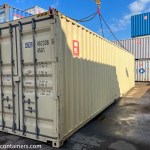
Buy shipping containers
Buying a shipping container means purchasing a standardized steel intermodal box — typically 10, 20, or 40 feet long — for use as ground-level storage, job site equipment housing, cargo transport, or architectural conversion. The right container can last decades. The wrong one can leak, rust through, or fail inspection the day it arrives. This guide covers every step of the process, from understanding what you’re actually buying to inspecting it in person and preparing your site for delivery.

20 Foot shipping container cost
If you are researching the cost of a 20 foot shipping container, you have likely already encountered wildly different prices — from $999 listings online to quotes exceeding $5,500. That range is not a sign of inconsistency. It reflects real differences in container condition, location, delivery logistics, and the seller you are dealing with.
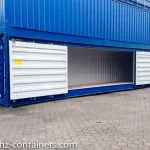
Side Opening container
A side opening container is an ISO-compliant intermodal shipping container engineered with full-length bi-fold doors along one of its long side walls, in addition to the standard cargo doors at one end. Unlike conventional containers that restrict access to a single set of rear doors, a side opening container — also widely called an open side container, open-sided shipping container, or side door container — provides unobstructed lateral access across the entire 20-foot or 40-foot length of the unit. This design transforms the container from a narrow tunnel into a wide-open space that forklifts can enter from the side, multiple workers can load simultaneously, and oversized cargo that would never fit through standard end doors can be placed without struggle.
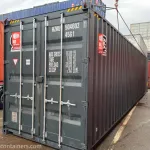
Can You Modify a 40ft High Cube Container?
The short answer is yes — you absolutely can modify a 40ft high cube container, and it is one of the most popular container types for modification projects worldwide. But the real question is not whether you can modify one; it is how to do it correctly, safely, legally, and within budget. This guide answers every dimension of that question, drawing on engineering principles, real-world pricing data, and the collective experience of thousands of modified container projects.
Key Takeaway: A 40ft high cube container offers 320 square feet of floor space with an extra foot of ceiling height compared to a standard container — making it the ideal canvas for offices, workshops, homes, retail spaces, and industrial applications. The extra height is particularly valuable when you add insulation and still want comfortable headroom.