
Is it automatic to receive a CSC certificate with a shipping container, or is it charged?
In the global world of international transport, safety and standardisation are crucial. Every shipping container that travels across oceans, railways and roads must meet strict requirements to guarantee the safety of people, cargo and the transport equipment itself. The central element of this system is the CSC certificate. A common question asked by new owners, carriers and companies is: Is it automatic to receive a CSC certificate with a shipping container, or is it charged?
This comprehensive article provides a detailed answer to this question and explains all related terms, processes and obligations. We will answer what the CSC certificate is, how the certification process works and who bears the costs of obtaining and maintaining it. The article is supplemented with experience from practice, terminology, tables and concrete examples.
What is a CSC certificate?
The CSC certificate is not a physical paper document that you would keep in a folder. It is a safety approval certificate whose existence and validity are shown by a special CSC plate (Safety Approval Plate) attached to the container. CSC stands for Convention for Safe Containers.
Main purposes of CSC certification:
- Confirms that the container was designed, manufactured and tested according to international safety standards (IMO, ISO).
- Guarantees structural integrity and durability during stacking, handling and transport.
- Allows legal participation in international transport.
Legal framework:
- Based on the International Convention for Safe Containers (adopted in 1972 under the International Maritime Organization, IMO).
What is a CSC plate?
The CSC plate (also called “Safety Approval Plate”) is the physical proof that a container meets the requirements of the CSC Convention. It is a permanent, non‑corroding, fire‑resistant metal plate (usually stainless steel) that is permanently riveted to the outer side of the left door of the container at the time of manufacture.
A container cannot be used in international transport without a valid CSC plate. Port terminals and carriers will reject any container lacking a valid and legible plate.
Content of the CSC plate:
| Information on the plate | Meaning |
|---|---|
| “CSC SAFETY APPROVAL” | Clearly identifies the purpose of the plate |
| Country of Approval | Country that issued the approval |
| Approval Reference | Reference number of the approval |
| Date of Manufacture | Manufacture date (month, year) |
| Manufacturer’s ID Number | Manufacturer’s identification number of the container |
| Maximum Gross Weight | Maximum allowed gross weight (kg/lb) |
| Allowable Stacking Weight | Allowed stacking weight (kg/lb) |
| Racking Test Load Value | Value of the transverse frame stiffness test |
| Next Examination Date (NED) | Date of the next mandatory inspection (for the PES scheme) |
| ACEP Scheme Number | Number of the approved continuous inspection programme (ACEP) |
In practice the CSC plate is often part of a “Combined Data Plate”, which also includes:
- Customs approval (TIR)
- Wood treatment certificate (important for Australia, New Zealand, etc.)
- Owner identification (often with a BIC code)
Types of inspections and approval regimes
1. Periodic Examination Scheme (PES) – Periodic inspections
- First inspection up to 5 years after container manufacture.
- Subsequent inspections at most every 30 months.
- After each successful inspection the CSC plate is updated with the next inspection date.
- Suited mainly for smaller fleets or individual owners.
2. Approved Continuous Examination Programme (ACEP) – Continuous approved inspections
- Used by large operators and leasing companies.
- Inspection is performed continuously with every major handling, repair or before leasing.
- The plate shows, instead of a NED date, the ACEP scheme number.
- Efficient system for large fleets.
How does the certification process work?
Phase 1: Type approval and initial certification
- The manufacturer submits technical drawings, material specifications and strength calculations to an approved authority (Lloyd, DNV, ABS, LR).
- A prototype container undergoes rigorous tests:
- Lifting tests – lifting by corner fittings with overload.
- Stacking test – simulation of load from containers stacked above.
- Wall and roof strength test – resistance to external and internal forces.
- Floor test – floor load‑bearing capacity.
- Racking test – verification of frame stiffness.
- After successful testing the design type is approved and all containers produced to that type receive their CSC plate.
- Certification costs are included in the price of a new container.
Phase 2: Maintaining certification validity
- Initial certification is valid for 5 years.
- The owner must ensure periodic inspections (according to PES) or be part of an ACEP programme.
- Inspections are performed by an approved inspector, e.g. at an authorised depot, port or repair yard.
Is the CSC certificate automatic or charged?
For new containers
- Initial CSC certification is included in the price – it is part of every new container.
- Valid for 5 years from the manufacture date.
- The owner does not pay anything extra; the first plate is “automatic”.
For used containers and extending validity
- Extending validity is a paid service.
- After 5 years (or when purchasing an older container) an inspection must be carried out and a fee paid.
- Inspection fees vary with condition, location and provider (e.g. in the EU from about CZK 1 000, in the USA about USD 150 plus possible repairs).
- Without a valid plate/inspection the container cannot be used in international transport.
What does a CSC inspection cover?
The purpose of the inspection is to verify that the container remains safe, structurally sound (cargo‑worthy / seaworthy).
Standard 7‑point checklist:
- Undercarriage: Check load‑bearing cross‑members, corrosion, deformation, cracks.
- Doors: Functionality, sealing, locking mechanisms, hinges, gaskets.
- Right side: Condition of side wall, beams, hidden defects.
- Front wall: Ventilation, corner fittings, deformation.
- Left side: Same procedure as right side.
- Floor: Damage, rot, flatness, punctures.
- Roof: Holes, cracks, leaks, deformation.
Additional checks:
- Condition of corner fittings, weld quality, signs of extensive corrosion, functionality and sealing of all joints and closures.
A container that fails inspection must be repaired and re‑inspected.
Container status categories in relation to CSC
| Designation | Description and use |
|---|---|
| Cargo Worthy (CW) | Container is structurally suitable for cargo transport and has a valid CSC. |
| Cargoworthy/Seaworthy | Synonyms indicating suitability for international transport. |
| Wind & Watertight (WWT) | Container is watertight and suitable for storage, not necessarily for transport. |
| AS IS | Retired container, no guarantee of condition, intended only for static storage. |
SOC/COC containers and CSC
- SOC (Shipper Owned Container): The container is owned by the customer; CSC certification is required for transport, but not needed for later uses such as storage or offices.
- COC (Carrier Owned Container): The container belongs to the carrier; CSC is always provided by the carrier.
Inspections of SOC/COC containers are carried out by independent inspection organisations that guarantee transport safety according to the CSC convention.
Related terms and conventions
- International Convention for Safe Containers (CSC): Key convention for container safety.
- International Maritime Organization (IMO): Supervising body that issues and oversees conventions.
- ISO standards: Define dimensions, materials, corner fittings and other technical parameters (most commonly ISO 668, ISO 1161).
- IMDG Code, ADR, RID, IATA DGR: International regulations for the transport of dangerous goods, often linked with CSC.
Practical advice for container owners
- Monitor the CSC plate’s validity, especially for older and used containers.
- Entrust inspection and certification only to approved entities.
- After any major repair or accident, have the container re‑inspected.
- When buying a used container, request the inspection report and a valid CSC plate.
- For storage purposes (without international transport) a valid CSC is not required.
Conclusion
The answer to whether the CSC certificate is automatic or charged is two‑fold:
- For new containers the CSC certification is part of the price and you receive it automatically.
- For extending validity on older/used containers the inspection and issuance of a new plate is a paid service and is the owner’s responsibility.
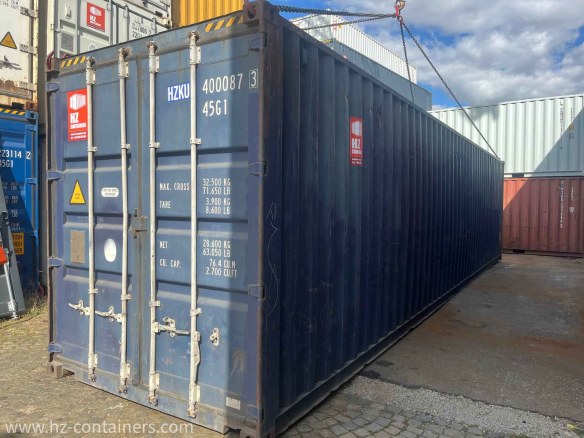
 Czech Republic, Příbram
  FREE SHIPPING

Other container news...

New sea shipping containers
If you are currently considering purchasing a new shipping container, you are not alone. While just twenty years ago containers were used almost exclusively for maritime transport, today they have found their way into construction, storage, business, and even housing. This growing popularity brings with it a host of questions: Which type should you choose? How much does it cost? How do you recognize quality? How can you avoid falling victim to scammers?
New shipping containers
If you are currently considering purchasing a new shipping container, you are not alone. While just twenty years ago containers were used almost exclusively for maritime transport, today they have found their way into construction, storage, business, and even housing. This growing popularity brings with it a host of questions: Which type should you choose? How much does it cost? How do you recognize quality? How can you avoid falling victim to scammers?

6m shipping container
Are you thinking about buying a 6-meter shipping container but aren’t sure what to look for? You are not alone—this 20-foot container is the best-selling size on the Czech market, and the differences between various types, conditions, and prices can be significant. In this guide, you will find everything you need to know: from exact dimensions and a comparison of categories (such as “one-way,” refurbished, and “Cargo Worthy”) to current prices and shipping advice.
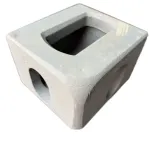
Corner casting steel vs aluminum
Every shipping container in the world — all 40 million of them — rests on eight critical components. Corner castings are the load-bearing blocks at each corner of an ISO shipping container, and they are the universal interface between the container and every crane, twistlock, spreader, and chassis on the planet. When you lift a container, stack it nine high on a ship, or lock it to a truck trailer, every ton of force flows through these fittings.