
How to Properly Distribute Cargo in a Container and Why It’s Essential for Transport
What is Proper Cargo Distribution in a Container?
Proper cargo distribution in a container (in English container loading) is a complex and technically sophisticated process aimed at safe, efficient, and cost-effective placement of goods in a shipping container. It is not merely about filling space, but about optimizing weight distribution, volume utilization, and securing cargo to prevent damage to goods, endangerment of human lives, or financial losses during transport.
According to OECD data, up to 90% of global goods are transported by sea in containers. Proper loading of these containers is a key element of global logistics. Each improperly loaded container can cause damage to goods, endanger crew, damage transport equipment, or even catastrophic events (such as ship capsizing or containers falling overboard).
Basic Principles and Key Definitions
Definition: Container Loading
Container loading is more than just physical loading. It includes:
- Planning – selection of container type, analysis of dimensions, weight, and cargo properties.
- Space utilization optimization – the goal is to minimize dead space and maximize the number of transported items while maintaining safety.
- Stability assurance – cargo must be distributed so it does not move, fall, and does not cause deformation of packaging or the container itself during transport.
Key Concept: Weight Distribution
Weight distribution is the cornerstone of safe transport. International standards (such as CTU Code and IMO rules) establish these main principles:
| Rule | Description |
|---|---|
| Longitudinal balance | Weight must be distributed approximately evenly between the front and rear of the container. |
| Transverse balance | Cargo must be distributed evenly between the left and right sides. |
| Low center of gravity | Heavy objects are always placed at the bottom, light ones at the top. This reduces the risk of container tipping. |
| Maximum load | Never exceed the “Max Payload” value stated on the CSC label of the container. |
Practical example: If all heavy goods in a 20′ container are placed on one side or at the rear, there is a risk of truck tipping when turning or container falling from a crane at the port.
Stowage Plan
A quality stowage plan is the foundation of success. Today, advanced 3D loading planning software exists that takes into account dimensions, weight, fragility, unloading order, and specific requirements of individual items. Planning must also consider the unloading order at the destination (LIFO principle – Last In, First Out).
Secure Cargo
Cargo securing is a set of methods and materials that prevent goods movement in the container. The basics are:
- Fillings (dunnage): Inflatable bags, wooden beams, polystyrene, foam blocks, cardboard, old blankets. The purpose is to fill gaps and prevent cargo movement.
- Blocking and bracing: Wooden blocks, partitions, thresholds, and struts that prevent goods movement in longitudinal and transverse directions.
- Lashing: Straps, chains, or ropes attached to anchor points (lashing points) in the floor and walls of the container.
- Shoring: Wooden or metal beams that lean against the container walls and fix the cargo.
Why is Proper Cargo Distribution Essential?
1. Safety
Safety always comes first. An improperly loaded container endangers:
- Personnel – especially during unloading, there is a risk of falling goods and injury.
- Equipment – an unbalanced container can damage cranes, ships, or other containers.
- Transport vehicles – during road or rail transport, there is a risk of vehicle tipping, containers falling from platforms, or loss of control of the truck.
- The entire ship – poor weight distribution in dozens of containers can destabilize the ship (for example, in the phenomenon of “parametric rolling,” which causes extreme tilting and containers falling overboard).
2. Cargo Protection
The goal is to deliver goods in undamaged condition. Proper distribution protects cargo from:
- Impact damage – if goods have room to move, they become damaged. A good stacking plan and gap filling is essential.
- Pressure damage – heavy items always at the bottom, light ones at the top. Improper stacking leads to crushing.
- Moisture – long transports can lead to water condensation (“container rain”), so proper ventilation, use of desiccants, and packaging protection are important.
3. Economic Efficiency
Efficient loading saves money:
- Space utilization maximization – proper planning allows more goods to be loaded into one container.
- Avoiding penalties – overloaded or improperly loaded containers may be rejected, which means repackaging costs and possible fines.
- Lower insurance – fewer damages mean more favorable insurance rates.
4. Regulatory Compliance
International and national regulations impose on the shipper the obligation of proper container loading. Key standards:
- CTU Code (IMO/ILO/UNECE) – code of good practice for packing and securing cargo in containers. Recommended and mandatory principles for safe packing.
- SOLAS – obligation of verified gross weight of container (VGM – Verified Gross Mass) before loading onto ship.
How to Properly Distribute Cargo – Practical Guide
Step 1: Planning and Preparation
- Container inspection – check cleanliness, dryness, tightness (“wind and water tightness”), integrity of floor, walls, and doors. Check anchor points.
- Cargo analysis – determine weight, dimensions, fragility, hazard (ADR, dangerous substances) and storage requirements (temperature, ventilation).
- Container type selection – depending on the nature of goods (standard, refrigerated – reefer, open top, flat rack, ventilated).
- Creation of stowage plan – use optimization software for placement distribution, consider center of gravity, unloading order, and access to special items.
Step 2: Loading Process
Main Loading Principles:
| Recommendation | Description |
|---|---|
| Heavy items at the bottom | This lowers the center of gravity and stabilizes the container. |
| Even distribution | Distribute weight longitudinally and transversely, never on one side only. |
| Tight stackability | Stack boxes “brick-like,” minimize gaps. |
| Use pallets | Palletization facilitates handling and increases cargo protection. |
Technical Tips (according to CTU Code):
- Each cargo must be secured so it does not move during acceleration (up to 0.8g forward during road transport).
- The coefficient of friction between floor and goods should be at least 0.4. To reduce shifting risk, use anti-slip mats.
- If cargo is unstable, it must be additionally secured (strapping, shrink-wrapping, reinforcement of cargo groups).
- Container doors are a “strong boundary” only if there is no risk of goods spilling out when opened.
Step 3: Securing and Bracing
Securing Principles:
According to CTU Code, there are three key principles of cargo securing:
| Principle | Description |
|---|---|
| Direct securing | Immediate force transfer from cargo to container (blocking, lashing, shoring, locking). |
| Friction | Increased friction using tie-down lashing straps with pre-tension, anti-slip mats. |
| Compacting | Bundling, strapping, wrapping with stretch film, always combined with the above methods. |
Practical Recommendations:
- Lashing – use straps or chains with appropriate load capacity (MSL – Maximum Securing Load), tighten along the shortest path, pre-tension max. 50% MSL.
- Shoring – wooden or metal beams leaning against container walls, prevent movement of heavy or unstable items.
- Blocking – wooden blocks fixed to container structure, suitable for fixing pallets and heavy machinery.
- Fillings (dunnage) – inflatable bags, foam blocks, cardboard, “big bags,” or other materials to fill gaps.
Important: Each securing must be designed so that packaging deformation or container damage does not occur.
Step 4: Special Considerations
- Refrigerated goods (reefer): Leave free space between pallets for air circulation. Check temperature settings and sensor position.
- Dangerous substances (ADR, IMO): Strictly follow regulations for packing, labeling, separation of incompatible substances, and documentation.
- Liquids: Use leak-proof containers, fix drums in longitudinal and transverse directions, prevent tipping.
Common Loading Mistakes and How to Avoid Them
| Mistake | Risk | Solution |
|---|---|---|
| Uneven distribution | Tipping, cargo damage | Plan placement carefully |
| Loose gaps | Cargo movement, damage | Fill with dunnage materials |
| Container overloading | Fines, loading rejection | Observe Max Payload limit |
| Insufficient securing | Damage, cargo loss | Block, strap, fix |
| Ignoring cargo properties | Damage from moisture, pressure | Choose correct container and protective measures |
Technical Calculations and Physical Principles
According to CTU Code, the following must be considered when designing securing:
- Acceleration – during transport, a container can experience acceleration up to 0.8 g forward, 0.5 g to the sides, 0.3 g backward.
- Coefficient of friction (μ): Standard 0.4, can be increased with anti-slip mats.
- Container wall resistance: Some walls and doors are considered “strong boundaries” only with proper loading without risk of impacts.
- Anchor point load capacity: Exact values are listed on the container manufacturing label or in its documentation.
Invest time in planning and securing cargo – it will pay off in the form of safe, fast, and trouble-free transport.

 Czech Republic, Litoměřice
  FREE SHIPPING
Other container news...
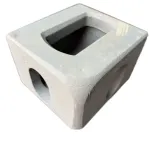
Corner casting steel vs aluminum
Every shipping container in the world — all 40 million of them — rests on eight critical components. Corner castings are the load-bearing blocks at each corner of an ISO shipping container, and they are the universal interface between the container and every crane, twistlock, spreader, and chassis on the planet. When you lift a container, stack it nine high on a ship, or lock it to a truck trailer, every ton of force flows through these fittings.

Construction cabin – selection, tips, dimensions and prices
Every construction project – whether a family house, a development project or a reconstruction – starts with the infrastructure. No construction manager, craftsman or investor who needs an on-site office, a changing room for workers or a safe storage for tools can do without a quality construction cell. But navigating the offer is not easy: residential containers, sanitary cells, storage modules, rental, purchase, refurbished pieces… This guide will give you answers to all the essential questions in one place.

Storage container
A storage container is a lockable steel box designed for the safe and dry storage of materials, tools, goods or equipment. Originally created as a shipping container for maritime transport, its durability and versatility have found their way onto construction sites, corporate premises and private land.
Shipping container 12m (40 ft)
A 12m shipping container is an investment that, if properly selected and cared for, will pay off in decades of trouble-free use. Whether you plan to use it as a warehouse, workshop, garage or the basis for a residential module — the key is careful selection of the condition, a thorough inspection before purchase and high-quality preparation of the base for placement. Take the time to compare offers, check the seller’s references and do not hesitate to personally inspect the container before buying. A properly selected 40-foot container will serve you reliably for many years.