
Horizontal Connectors for Shipping Containers
In the dynamic world of logistics, construction, and modular architecture, shipping containers are much more than just transport boxes. They have become fundamental building blocks for innovative and flexible solutions. To fully exploit their potential, it is essential to connect them safely and efficiently. This is where horizontal connectors come into play – small but extremely important components that allow individual containers to be transformed into one cohesive and stable unit.
This article answers in detail the question: “What are horizontal connectors for shipping containers?” and provides a comprehensive overview, supplemented with practical examples, of their types, functions, materials, certifications, and uses.
What are horizontal connectors for shipping containers?
Horizontal connectors for shipping containers are specialized mechanical joining elements, whose main function is the firm and safe connection of two or more containers placed side‑by‑side or front‑to‑front in a horizontal plane. They enable the creation of larger, stable, unified structures without the risk of movement, shift, or separation of the containers.
Principle of attachment
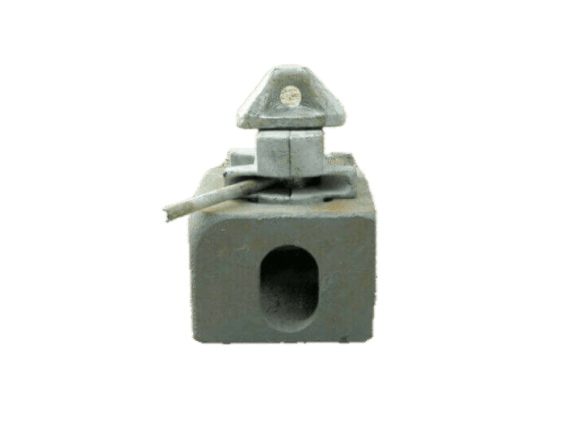
Connectors use standardized corner fittings (corner castings) according to ISO 1161, which each container has at its eight corners. These massive steel castings contain precisely shaped holes into which the connectors fit securely, forming a firm connection.
Importance in logistics and construction
The use of horizontal connectors allows:
- Increasing the usable value of container assemblies
- Ensuring stability against wind and dynamic forces
- Enabling fast and safe assembly and disassembly (modular solutions)
- Guaranteeing safety during transport and stacking
Operating principle and types of mechanisms
| Mechanism Type | Description | Application |
|---|---|---|
| Bridge fitting | Two hooks and a central screw that pulls the containers together | Suitable for side‑by‑side connection |
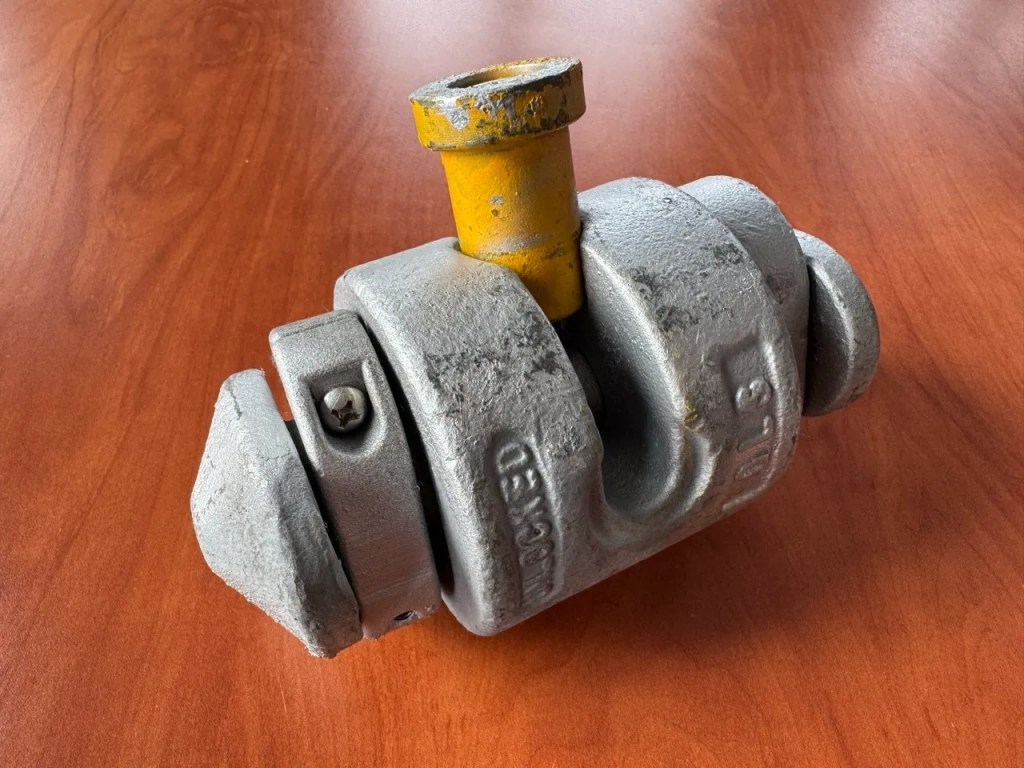
| Horizontal Twist Lock | Rotating “heads” fit and lock into the corner fittings, often with a lever (twist lock) | Fast installation, common in transport |
| Special couplings | Massive connecting elements for extreme loads, often certified for lifting | Composite assemblies, extreme conditions |
| 2‑way/4‑way joinery | For multi‑level and multi‑point connections, e.g., crossing containers on two levels | Modular structures, special configurations |
Bridge Fitting
- Construction: Two hooks joined by a screw with opposite threads, allowing “pulling” of the containers together.
- Installation: Inserted into the corner holes of two adjacent containers and tightened with a wrench.
- Advantages: Simple installation, high strength, usable without lifting the containers.
- Material: High‑grade steel, hot‑dip galvanized for long life.
- Price (2024): approx. €65 excl. VAT.
Horizontal Twist Lock
- Construction: Rotating mechanism; “heads” rotate 90° and lock in the corner casting hole.
- Installation: Placed into the corner holes of adjacent containers and locked with a lever.
- Advantages: Fast assembly/disassembly, lockable, suitable for stacking.
- Price (2024): approx. €59 excl. VAT.
Special couplings and interconnectors
- Use: For joining longer assemblies (e.g., two 20‑ft units to a 40‑ft unit), common in industrial and military logistics.
- Certification: Some are certified according to CSC for lifting assemblies as a single unit.
Key purposes and benefits of use
Horizontal connectors significantly expand the possibilities for container utilization:
- Creation of large spaces: Joining side walls creates open halls, offices, warehouses, and living spaces.
- Stability and safety: Eliminates the risk of empty containers overturning in wind or during handling.
- Walls and barriers: Enables construction of temporary or permanent fences, barriers, and retaining walls from containers.
- Efficient transport: Two 20‑ft units can be joined into one 40‑ft unit, reducing handling costs.
- Modular construction: Fast assembly/disassembly of complex structures without permanent modifications (drilling, welding).
- Precise positioning: Guarantees exact placement for doors, windows, ceilings, and other architectural elements.
Overview of basic types of horizontal connectors
| Connector Type | Image* | Description and Use |
|---|---|---|
| Bridge fitting | – | The most universal, suitable for side‑by‑side and stacked connections |
| Horizontal Twist Lock | – | Mainly for quick fixation, lockable |
| High‑load couplings | – | For transferring extreme forces, certified for lifting |
| Interconnector | – | For front‑to‑front connection, creating long assemblies |
| 2‑way, 4‑way joineries | – | For complex, multi‑level and multiple connections |
Technical parameters
- Strength: The load capacity of individual connectors typically ranges in the tens of kN, commonly 50–100 kN and higher.
- Material: High‑grade, heat‑treated steel.
- Surface treatment: Most often hot‑dip galvanized for corrosion resistance even in extreme conditions.
Materials, construction and durability
| Property | Specification and Recommendations |
|---|---|
| Base material | Cast/forged steel, often with EN or ASTM certification |
| Surface treatment | Hot‑dip galvanized |
| Operating temperatures | –40 °C to +80 °C (per manufacturer) |
| Service life | 20+ years with proper maintenance |
| Durability | High tensile, compressive and shear strength |
Corrosion protection
Hot‑dip galvanizing is the standard – a thick zinc layer protects the connector from oxidation, which is crucial for containers placed outdoors, often in aggressive environments such as ports and industrial areas.
Certification and testing
High‑quality connectors are typically tested for:
- Static and dynamic strength
- Fatigue resistance
- Compatibility with ISO corner castings (ISO 1161)
- Suitability for transport according to CSC (Convention for Safe Containers)
Practical applications and examples of use
| Application Area | Example Solution |
|---|---|
| Construction site | Offices, changing rooms, warehouses from multiple connected containers |
| Festivals, events | Temporary shops, ticket booths, barriers, stages |
| Modular housing | Linked living units, apartments, student dormitories |
| Industry | Large storage halls, technological assemblies |
| Military applications | Operational bases, field hospitals, command posts |
| Emergency situations | Temporary shelters after disasters |
Practical advantage: Installing a connector takes minutes; no heavy equipment, welding, or drilling is required. Installation can be performed by any experienced worker with standard tools.
Essential role of corner fittings (Corner Castings)
Without corner fittings, horizontal connectors would not be usable. These steel castings are standardized according to ISO 1161, ensuring global compatibility of joining systems. Corner fittings:
- Transfer all forces during stacking, handling, and joining
- Are the strongest part of the container structure
- Serve as a universal interface for connectors, twist locks, crane hooks, lifting devices, and mounting accessories
Related terms and technologies
| Term | Meaning and Use |
|---|---|
| Corner Casting | Corner casting, anchoring point for all connectors |
| Twist Lock | Locking mechanism (vertical and horizontal) |
| Domino Clamp | Adapter for universal accessory mounting |
| Vertical connector | For stacking containers |
| CSC Plate | Certification plate, confirms container safety |
Note: The Domino Clamp allows attachment of accessories without permanent modifications – ideal for temporary lighting, security cameras, advertising banners, etc.
Frequently Asked Questions (FAQ)
What is the difference between a bridge fitting and a horizontal twist lock?
- Bridge fitting: Pulls containers together with a screw, suitable for containers already placed side‑by‑side.
- Twist lock: Rotating mechanism, faster installation and removal, also suitable before stacking.
How many connectors are needed to join two containers?
- At least 2 connectors on the long side (top and bottom); for maximum strength, 4 connectors (one at each corner contact).
Can horizontal connectors be used for lifting an assembly?
- Standard connectors are NOT intended for lifting. Certified interconnectors are required for that purpose.
What is the service life of the connectors?
- With proper maintenance and quality surface treatment (hot‑dip galvanizing), they last over 20 years even in outdoor environments.
Is installation complicated?
- No, usually a wrench or lever is enough. No welding, drilling, or special skills required.
 Czech Republic
  WITHOUT SHIPPING

Other container news...

High Cube container specifications
A high cube container — also referred to as an HC container, HQ container, or high-cube — is an intermodal shipping container that stands one foot taller than the standard ISO container. While a standard general-purpose container measures 8 feet 6 inches (2.59 m) in external height, a high cube container extends to 9 feet 6 inches (2.89 m). This extra 12 inches of vertical clearance translates into approximately 10–15% more cubic capacity without altering the container’s footprint — the same length and width are maintained, meaning the container occupies the same floor space on a vessel, chassis, or storage yard.

Shipping container parts
A shipping container looks like a simple steel box from the outside, but it is an assembly of dozens of precisely engineered shipping container parts — each governed by international standards, each designed to survive decades of ocean transit, crane lifts, and stacking loads that would crush an ordinary structure. Whether you are buying a used container, planning a container home, troubleshooting a repair, or simply building your logistics vocabulary, understanding every individual component is the difference between making an informed decision and an expensive mistake.

40 Foot Container Dimensions
If you have ever booked ocean freight, planned a warehouse layout, or designed a modular building project, you have asked the same question: what are the exact 40 foot container dimensions — and what do they mean for what you can actually load? The numbers are standardized worldwide, but the practical implications of those numbers are surprisingly nuanced. A 40-foot container is not simply 40 feet of usable space, and its weight limits are not what most people assume. This guide covers every measurement, every weight rating, and every loading consideration you need to make informed decisions about the world’s most common shipping container.
Quick Answer: A standard ISO 40-foot shipping container measures 12.19 m (40 ft) long × 2.44 m (8 ft) wide × 2.59 m (8 ft 6 in) high externally and provides approximately 67.7 m³ (2,390 ft³) of usable internal volume. The maximum gross weight is 30,480 kg (67,200 lbs), with a typical payload capacity of approximately 26,700–26,800 kg (58,900–59,000 lbs).

Cargo worthy container
If you have ever shopped for a used shipping container, you have almost certainly encountered the term cargo worthy — often abbreviated as CW or CWO (Cargo Worthy Only). It is one of the most important classifications in the container industry, yet it is also one of the most misunderstood. A cargo worthy container is not a container that looks new. It is not necessarily a container that has a valid CSC plate. And it is definitely not the same as a wind and watertight container. This guide explains what cargo worthy really means — from its technical definition and historical origins to the precise structural criteria, inspection process, cost implications, and common misconceptions that trip up even experienced buyers.