
Easter and Shipping Containers
Easter 2026: Security Measures in Motion and on Water
The Easter holidays of 2026 bring not only traditional celebrations and increased movement of residents, but also extraordinary security measures across the Czech Republic. The Czech Police have strengthened supervision on roads, at public transport hubs, and in places with high foot traffic during the holiday days. The emphasis was placed primarily on accident prevention and ensuring the safety of “soft targets” – places where larger numbers of people gather, such as religious buildings, monuments, or cultural events. Special patrols equipped with modern protection and reinforced weapons were involved in the operation. Increased supervision and stricter controls aim to minimize risks resulting from increased traffic while also responding to the current geopolitical situation, which also affects the movement of goods at sea.
Shipping Containers: Symbol of Global Logistics and Easter Commercial Rush
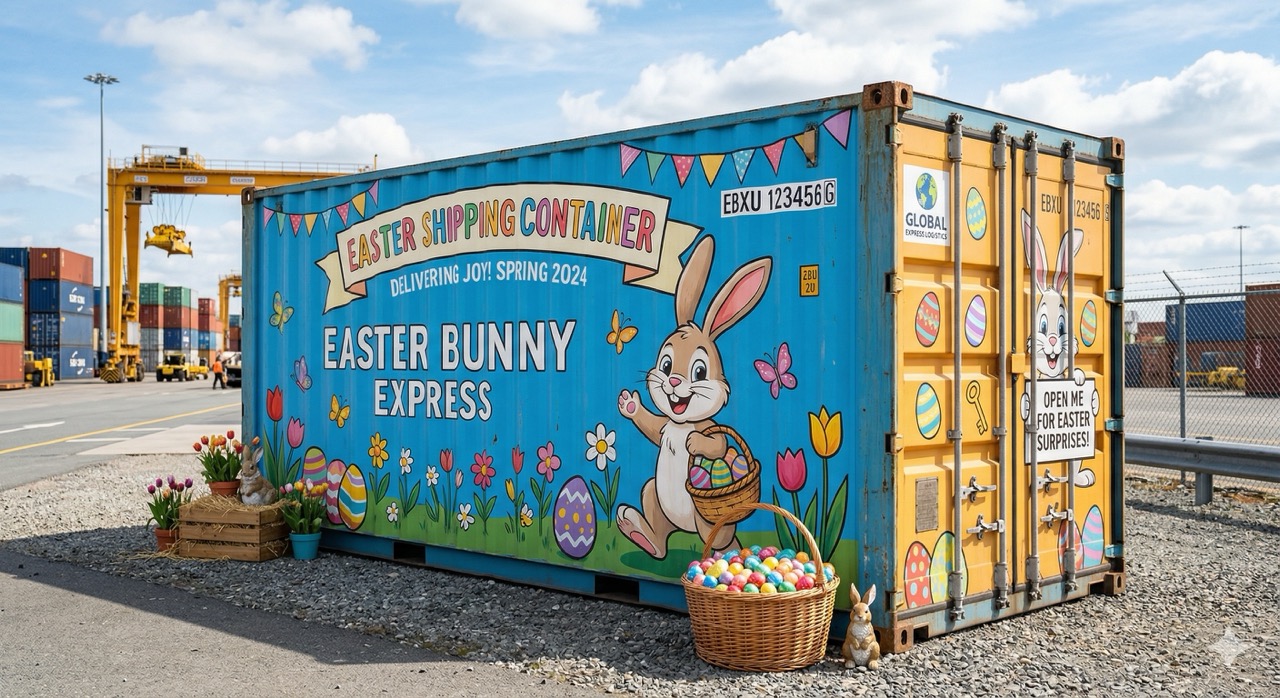
Shipping containers have again come into the focus of world media and logistics experts in recent days. Precisely during the Easter period, when retail chains expect increased demand for goods, containers play a key role in supplying not only Europe but the entire world. Shipping container transport is a fundamental pillar of the global supply chain and enables the movement of enormous quantities of raw materials, food, building materials, and consumer goods. During the holidays, containers are used not only for standard transport but also for special shipments – for example, seasonal food, decorations, or technological equipment for events and festivals. In recent days, logistics companies including HZ-Containers.com have recorded increased demand for short-term and long-term container rentals due to special events and increased shipment volumes.
Global Crisis and Chaos in Maritime Transport: How Easter Affects Prices and Goods Availability
However, this year’s Easter comes at a time when world maritime transport is under extraordinary pressure. Geopolitical tensions in the Middle East and related military operations in the Strait of Hormuz and the Red Sea fundamentally affect the smooth flow of transport. Ports are overwhelmed, ships wait long hours, sometimes days, for unloading and loading of goods. Large carriers, trying to minimize risks, often change routes or charge clients special surcharges for “risk areas.” Outages at key ports and rerouting of shipments lead to extended delivery times and increased transport costs. For European consumers, this means higher prices not only for fuel but also for common goods found in containers around the world.
Easter Logistics in Practice: Case Studies and Current Trends
The practical impacts of the Easter period on shipping are evident not only in statistics but also in specific cases from recent days. Carriers report increased demand for express transport especially from Asia to Europe, where the seasonal wave of orders for Easter decorations, food, and electronics is most evident. At the same time, there is visible pressure for more efficient unloading at European ports, which in response to global complications are introducing extraordinary measures, extending operating hours, and strengthening staff. HZ-Containers.com customers often use the option of flexible storage in containers, which allows them to better manage such peaks and quickly respond to unexpected supply disruptions.
Security Aspects of Shipping During Easter
Easter is a period of increased risk not only on roads but also in maritime transport. In recent weeks, security forces have increased their attention to monitoring ship movements in risk areas and protecting critical infrastructure. Shipping containers, often transporting valuable goods, are frequent targets not only of criminal activity but also of possible sabotage in war zones. Therefore, there is a strengthening of security procedures, stricter controls, and the introduction of modern technologies for real-time tracking of container movements. From the perspective of insurance companies, there has also been an increase in requirements for documentation and shipment security. Companies including HZ-Containers.com are investing in security innovations to protect not only their assets but also customer trust.
Impact on Czech Customers and Entrepreneurs
Increased costs for containers and shipping affect the domestic market as well. Czech importers and exporters must cope with higher transport prices, longer delivery times, and more complex administration associated with new security measures. Prices of goods transported in containers may rise again in the coming weeks. At the same time, however, there is room for innovation in logistics, for example through process digitalization, shared storage capacity, or the use of modern containers with shipment tracking capabilities. HZ-Containers.com is responding to the current situation by expanding its offer to include containers with a higher degree of security and online monitoring options.
Future of Shipping Container Transport: Challenges and Opportunities After Easter
A look into the future shows that shipping containers will remain a key element of global logistics in the coming months. Challenges related to geopolitics, climate change, and growing customer demands for speed and transport safety will lead to further innovations in the industry. Experts expect that digitalization and automation of processes, including the deployment of intelligent containers, will bring greater efficiency and enable better response to demand fluctuations and unexpected crises. For Czech companies and consumers, it is good news that flexibility and the ability to quickly adapt to new conditions are highly valued in this sector. HZ-Containers.com, as one of the major providers of container solutions, actively participates in the development and implementation of new technologies that will help maintain competitiveness even in turbulent times.

 Czech Republic, Třebíč
 FREE DELIVERY


More container news...

What Are the Internal Dimensions of a 40 Foot Container?
A standard 40-foot dry shipping container has internal dimensions of 12,032 mm in length, 2,352 mm in width, and 2,395 mm in height — or approximately 39 feet 5⅝ inches × 7 feet 8⅝ inches × 7 feet 10¼ inches. These figures come from the published specifications of major shipping lines and align with the ISO 668 international standard for Series 1 freight containers. The internal capacity is roughly 67.7 cubic meters (2,390 cubic feet).

what is the internal dimensions of a 40 foot container
A standard 40-foot shipping container has internal dimensions of approximately 12.032 meters (39 feet 5⅝ inches) in length, 2.352 meters (7 feet 8⅝ inches) in width, and 2.395 meters (7 feet 10¼ inches) in height. These internal dimensions are significantly smaller than the external dimensions because the corrugated steel walls, structural frame, corner posts, and the floor system—composed of plywood and steel—occupy valuable space intended for cargo.

What Is the Shipping Cost for a 40ft High Cube Container?
The shipping cost for a 40ft high cube container is not a single number — it is a layered calculation spanning purchase price, international ocean freight, and local ground delivery. A used 40ft high cube container typically costs $1,550 to $5,500 to purchase, while a new one-trip unit runs $2,800 to $9,000 depending on condition, location, and whether delivery is included.

Shipping container types
Roughly 80% of everything you own traveled to you inside a steel box. Shipping containers—also called cargo containers, ISO containers, or “conex” boxes—are the backbone of global trade, carrying about 90% of the world’s non-bulk cargo across oceans, rails, and highways. Yet a “shipping container” is not one single object. It is a family of specialized steel boxes, each engineered for a specific kind of cargo: some vent, some freeze, some open from the top, and some have no walls at all.