
Customs Storage and Temporary Storage Regime – Benefits, Process, Risks
In today’s interconnected world of international trade, customs regimes – specifically customs warehousing and temporary storage regime – are fundamental tools for efficient supply chain management and cash flow optimization. These regimes enable companies not only to manage the flow of goods but also to significantly reduce administrative and tax burden. In the following detailed article, you will find not only explanations of concepts but also deep insights into processes, types of warehouses, obligations, risks and benefits including specific examples and legislative references.
Temporary Storage Regime (Temporary Storage)
Definition and Legal Framework
Temporary Storage Regime (Temporary Storage Warehouse, TSW) is not an independent customs regime, but a transitional status of goods that are not EU goods. This regime begins at the moment goods are presented to customs authorities at the external border of the EU and ends with their release into another customs regime (e.g. free circulation, transit, customs warehousing) or re-export outside the EU.
Legislation:
Directive of the European Parliament and of the Council (EU) No. 952/2013 (Union Customs Code), Articles 144–149.
Typical situations of use:
- Import of goods by air, sea or road from third countries
- Short-term “bridging” while waiting for customs clearance
- Storage of goods in transit logistics hubs (airports, ports)
Temporary Storage Process – Step by Step
| Step | Description | Details/Legal Risks |
|---|---|---|
| Arrival of goods | Entry of goods into EU territory | Goods are physically inspected, transition from transport documentation to customs declaration |
| Presentation to customs authorities | Carrier/representative presents goods and submits summary customs declaration | Obligation to submit within 90 days of arrival. Non-compliance = risk of sanctions, goods may be seized |
| Storage in approved space | Goods are placed in approved warehouse under customs supervision | Space must be approved by customs administration, security and records ensured |
| Temporary storage period | Goods can be stored max. 90 days | After this period, goods are subject to forfeiture, may be sold/destroyed by the state |
| Decision on further regime | Importer selects further customs regime, prepares documents | E.g. transition to free circulation regime, customs warehouse, or re-export |
Benefits of Temporary Storage Regime
- Administrative flexibility – allows obtaining all documents, permits and certifications for further regime without time pressure immediately after goods arrival.
- Consolidation of shipments – possibility to combine multiple smaller shipments before clearance into one (lower handling and administrative costs).
- Deferral of duty and VAT payment obligation – payments are required only after goods are released into free circulation, which slightly improves cash flow.
- Basic handling permitted – inspection, repackaging for protection, sorting and labeling.
Obligations and Risks
- Strict record of movement and condition of goods – every movement must be recorded and verifiable during customs inspection.
- Responsibility for condition of goods – responsibility is borne by both the warehouse operator and the declarant.
- Risk of goods forfeiture – if goods are not timely released into another regime or exported, they may be seized or destroyed (see Article 149 of the Union Customs Code).
- Limitation of handling – only actions necessary to preserve the condition of goods are permitted.
Overview of Permitted and Prohibited Activities in Temporary Storage Regime
| Permitted Activities | Prohibited Activities |
|---|---|
| Inspection of condition and quantity | Sale of goods |
| Protective repackaging | Manufacturing, assembly |
| Labeling, sorting, record-keeping | Change of technical parameters |
Customs Warehousing (Customs Warehousing)
Definition and Legislative Framework
Customs warehousing is an independent customs regime allowing storage of goods from third countries on EU territory without the need for immediate payment of duty and VAT. Goods can be held in a customs warehouse for an unlimited period, provided the nature of goods allows it (e.g. goods with limited shelf life have an exception).
Legal basis:
- Article 98 and following of the Union Customs Code (Regulation EU No. 952/2013)
- Commission Implementing Regulation (EU) No. 2015/2447
A customs warehouse must be approved and registered by customs authorities. Warehouses are divided into public (for various importers) and private (for a specific importer).
Types of Customs Warehouses
| Type of Warehouse | Characteristic | Typical Users |
|---|---|---|
| Public customs warehouse | Accessible to multiple entities, operated by specialized logistics company | E-shops, distributors, smaller importers |
| Private customs warehouse | Operated by specific company for own needs | Large companies with own imports, manufacturing enterprises |
| Warehouse type A, B, C, D, E | Distinction according to method of record-keeping, responsibility and operational rules | Various, depending on needs and type of trading |
For more details on warehouse types, visit the Czech Customs Administration website
Customs Warehousing Process – Step by Step
- Application for storage permission and warehouse operation
- Preparation of application according to Article 100 of the Union Customs Code
- Demonstration of security, record-keeping and financial guarantees
- Receipt of goods into customs warehouse
- Goods are often first in temporary storage regime, then released based on customs declaration into customs warehouse regime
- Storage of goods under customs supervision
- Customs authorities have the right to conduct inspection at any time, both physical and record-based
- Obligation to maintain accurate records continuously
- Handling of goods (so-called “usual forms of handling”)
- Permitted activities: repackaging, sorting, labeling, consolidation, testing, adjustments for market
- Prohibited: manufacturing, change of substance of goods
- Termination of regime
- Release into free circulation (payment of duty and VAT)
- Re-export outside EU (exemption from duty and VAT)
- Transition to another customs regime (e.g. transit)
Benefits of Customs Warehousing
- Deferral of duty and VAT payment – fundamental advantage for company cash flow, payment only upon actual sale of goods on EU market
- Unlimited storage period – possibility of long-term inventory planning even with market fluctuations
- Flexibility of handling – adaptation of goods to customer (e.g. repackaging, labeling for different markets)
- Possibility of re-export – when exporting outside EU, neither duty nor VAT is paid
- Inventory optimization and availability – reduced risk of stock depletion due to ready storage near customer
- Compliance with legislation and security – warehouse is under direct supervision of customs authorities, meets high security standards
Practical Benefits According to Czech Logistics Companies:
- More efficient delivery of goods from supplier in third country
- Reduced risk of stock depletion
- Cash flow optimization
- Advantageous expansion to foreign markets without need for immediate clearance of all inventory
Disadvantages and Risks of Customs Warehousing
- Administrative complexity – need for registration, record-keeping, regular inspections and knowledge of current customs regulations
- Financial guarantee – warehouse operator must deposit a guarantee to cover potential customs debt
- Responsibility for compliance with rules – any violation (record-keeping errors, unauthorized handling) may lead to high fines, in extreme cases even revocation of permission
- Limitation in handling of goods – only “usual” adjustments permitted, prohibition of manufacturing or change of substance of goods
Comparison: Temporary Storage vs. Customs Warehousing
| Criterion | Temporary Storage (TSW) | Customs Warehousing |
|---|---|---|
| Legal status | Transitional status | Independent customs regime |
| Purpose | Short-term “waiting”, document preparation | Long-term strategic storage |
| Duration | Max. 90 days | Unlimited |
| Duty and VAT payment | Deferred max. 90 days | Deferred until sale / re-export |
| Permitted handling | Actions for preservation of condition | Usual forms of handling |
| Administrative burden | Lower | Higher |
| Typical use | Fast-moving goods, completion of formalities | Strategic inventory, distribution centers |
Role of Logistics Companies and Supply Chain Optimization
Most companies use services of specialized logistics operators (3PL/4PL), who operate their own public customs warehouses and provide comprehensive service including:
- Ensuring customs declaration and communication with customs authorities
- Continuous updates of records and management of goods movement
- Processing of re-exports, consolidation and distribution of shipments
- Ensuring financial guarantees and minimizing risks of regulatory violations
Benefits of outsourcing:
- Minimization of administrative burden and errors
- Faster customs clearance and goods delivery
- Better overview and inventory optimization through professional warehouse management
- Reduction of fixed costs through shared infrastructure (public customs warehouses)
Most Frequently Asked Questions and Practical Examples
When is it worthwhile to use a customs warehouse?
– If you plan larger volumes of imports from third countries, need to flexibly respond to demand on multiple EU markets, or expect demand fluctuations.
What are the obligations of a customs warehouse operator?
– Ensuring security, record-keeping, communication with customs authorities, deposit of financial guarantee, regular internal and external audits.
Can goods be sold in a customs warehouse?
– No, goods can only be stored, possibly transferred between owners, only after release into free circulation can they be sold to end customer.
What happens in case of regime violation?
– Customs debt may arise, fine may be imposed, goods may be seized or destroyed and permission to operate warehouse may be revoked.

 Brno, Czech Republic
  FREE SHIPPING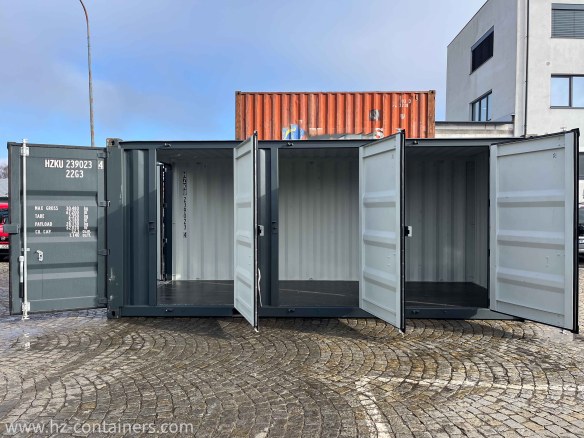
Other container news...
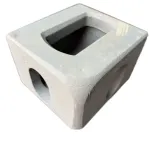
Corner casting steel vs aluminum
Every shipping container in the world — all 40 million of them — rests on eight critical components. Corner castings are the load-bearing blocks at each corner of an ISO shipping container, and they are the universal interface between the container and every crane, twistlock, spreader, and chassis on the planet. When you lift a container, stack it nine high on a ship, or lock it to a truck trailer, every ton of force flows through these fittings.

Construction cabin – selection, tips, dimensions and prices
Every construction project – whether a family house, a development project or a reconstruction – starts with the infrastructure. No construction manager, craftsman or investor who needs an on-site office, a changing room for workers or a safe storage for tools can do without a quality construction cell. But navigating the offer is not easy: residential containers, sanitary cells, storage modules, rental, purchase, refurbished pieces… This guide will give you answers to all the essential questions in one place.
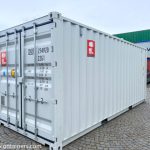
Storage container
A storage container is a lockable steel box designed for the safe and dry storage of materials, tools, goods or equipment. Originally created as a shipping container for maritime transport, its durability and versatility have found their way onto construction sites, corporate premises and private land.
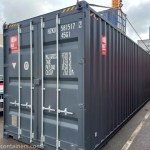
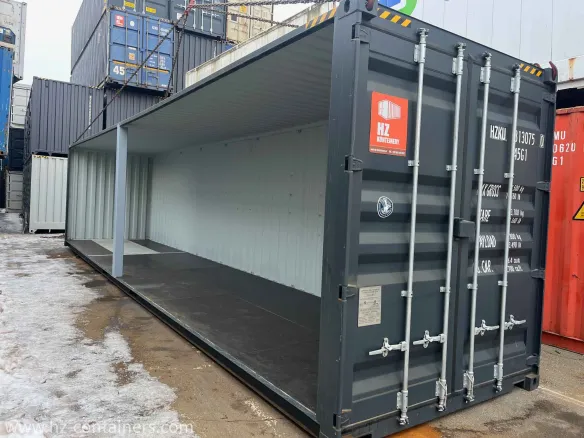
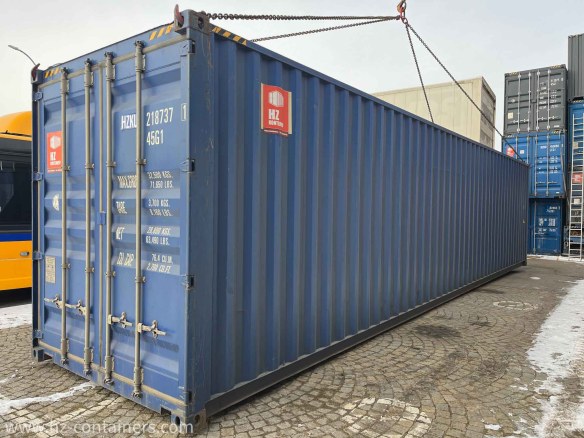
Shipping container 12m (40 ft)
A 12m shipping container is an investment that, if properly selected and cared for, will pay off in decades of trouble-free use. Whether you plan to use it as a warehouse, workshop, garage or the basis for a residential module — the key is careful selection of the condition, a thorough inspection before purchase and high-quality preparation of the base for placement. Take the time to compare offers, check the seller’s references and do not hesitate to personally inspect the container before buying. A properly selected 40-foot container will serve you reliably for many years.