
Can a Cargo Worthy (CW) Shipping Container Be Repaired?
In logistics, construction, and the private sector, the question often arises: Can a shipping container with CW (Cargo Worthy) certification be repaired, and does it remain truly fit for transport after repair? The answer is clear: Yes. Repairs are a common, standardized, and even necessary part of every container’s lifecycle. The goal of the entire process is to maintain or restore structural integrity of the container so that it complies with strict international standards and is safe for global transport.
In this article you will find:
- Detailed explanation of the term Cargo Worthy
- Overview of certifications and standards (CSC, ISO, IICL, COA, UCIRC)
- Description of inspections, repairs, and recertification
- Comparison of different container conditions
- Practical examples of repairs and damage limits
- Answers to frequently asked questions
- Ecological aspects of CW container repairs
What Does Cargo Worthy (CW) Mean – Definition and Certification
Cargo Worthy – Official Status with Global Validity
Cargo Worthy (CW) is an international designation meaning that a container has passed the required inspection and meets all requirements for safe transport of cargo by sea, rail, and road. It is a guarantee that the container’s structure is sufficiently strong, undamaged, watertight, and that all its elements allow safe stacking and handling.
Key Characteristics of a CW Container:
- Structural integrity: Load-bearing elements, frame, corner posts, and panels must not be damaged beyond established limits.
- Resistance to external influences: The container is capable of protecting cargo from weather, water, and pests.
- Functional equipment: Doors, seals, locking mechanisms, and floor must be in working condition.
Note: The Cargo Worthy designation does not guarantee that the container has a valid CSC plate – however, this is a requirement for international transport.
Certifications and Standards
CSC Plate (International Convention for Safe Containers)
- CSC plate is a metal plate on the container doors containing:
- Technical data (year of manufacture, maximum weight, stacking strength)
- Certification validity (date of last and next inspection)
- Every container intended for transport must have a valid CSC plate.
- First inspection after 5 years from manufacture, subsequent inspections max. every 30 months, or within the ACEP program (continuous monitoring).
ISO Standards
- Define container dimensions, construction, and materials
- Ensure global compatibility and safety (ISO 668, ISO 1496, ISO 6346, etc.)
IICL, COA, UCIRC – Inspection and Repair Standards
| Abbreviation | Meaning | Details |
|---|---|---|
| IICL | Institute of International Container Lessors | Highest requirements for container condition, often required for sensitive goods |
| COA | Container Owners Association | Criteria for Cargo Worthy (CCW), detailed damage limits and repair procedures |
| UCIRC | Unified Container Inspection & Repair Criteria | Unified inspection and repair standard for the entire industry |
| CIC | Common Interchange Criteria | Minimum conditions for container handover between operators |
Practically: IICL is stricter than CW; all IICL containers are CW, but not vice versa.
How Are CW Container Inspections and Repairs Conducted?
Inspection – Point-by-Point Breakdown
CW container inspection is conducted by a trained inspector (surveyor) according to specific damage limits on individual container parts. The goal is to identify all damage that could compromise functionality or safety.
Main Inspection Criteria (source: COA, IICL, ContainerSurveyor.com):
| Element | Maximum Permitted Damage | Repair Required If… |
|---|---|---|
| Top longitudinals | Dents > 30 mm, cracks, holes | Straighten dents, weld/seal holes, reinforce cracks |
| Bottom longitudinals | Dents > 50 mm, cracks, corrosion | Same as above |
| Corner posts | Dents > 25 mm (any number) | Straighten dents above limit, weld cracks, replace severe damage |
| Panels (walls, roof) | Holes, cracks, dents > 50 mm | Weld small holes, cover larger ones with sheet/patch |
| Floor | Holes, delamination, broken boards | Replace/insert new board, cover with steel sheet (min. 4 mm) |
| Doors and seals | Non-opening doors, leaking gaskets | Repair mechanisms, replace seals |
| Corner elements | Cracks, deformation, non-functional twist-locks | Repair or replace corners |
Key: Even more extensive cosmetic damage (rust, minor dents) is acceptable if structural strength and functionality are not compromised.
Typical Repairs and Practical Examples
Frame and Load-Bearing Element Repairs
- Straightening dents (with hydraulic press)
- Welding cracks and holes in steel (MIG/MAG electrode)
- Inserting new profile section in case of major damage (so-called insert)
Panel and Roof Repairs
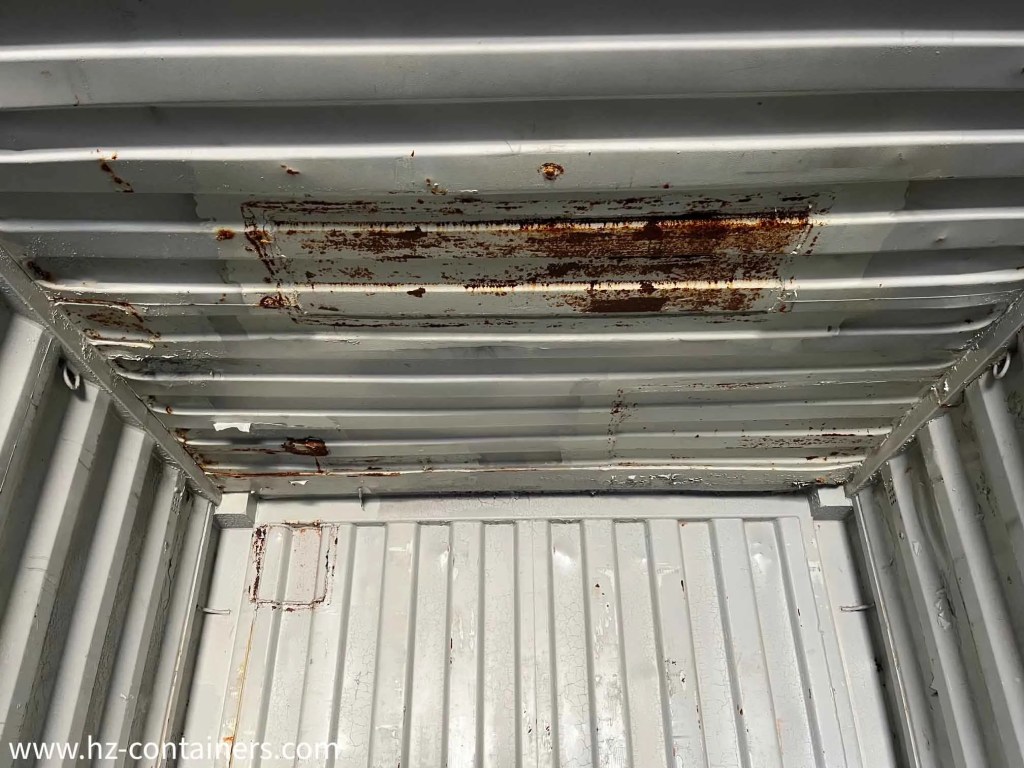
- Welding small holes
- Patch from new sheet metal on larger openings
- Straightening bent panels only if it limits stackability or tightness
Floor Repairs
- Replacing damaged boards (most commonly plywood or bamboo)
- Covering with steel sheet – especially in areas where the floor is loaded with pallet jacks
- Gluing/sealing delamination with sealant
Door and Seal Repairs
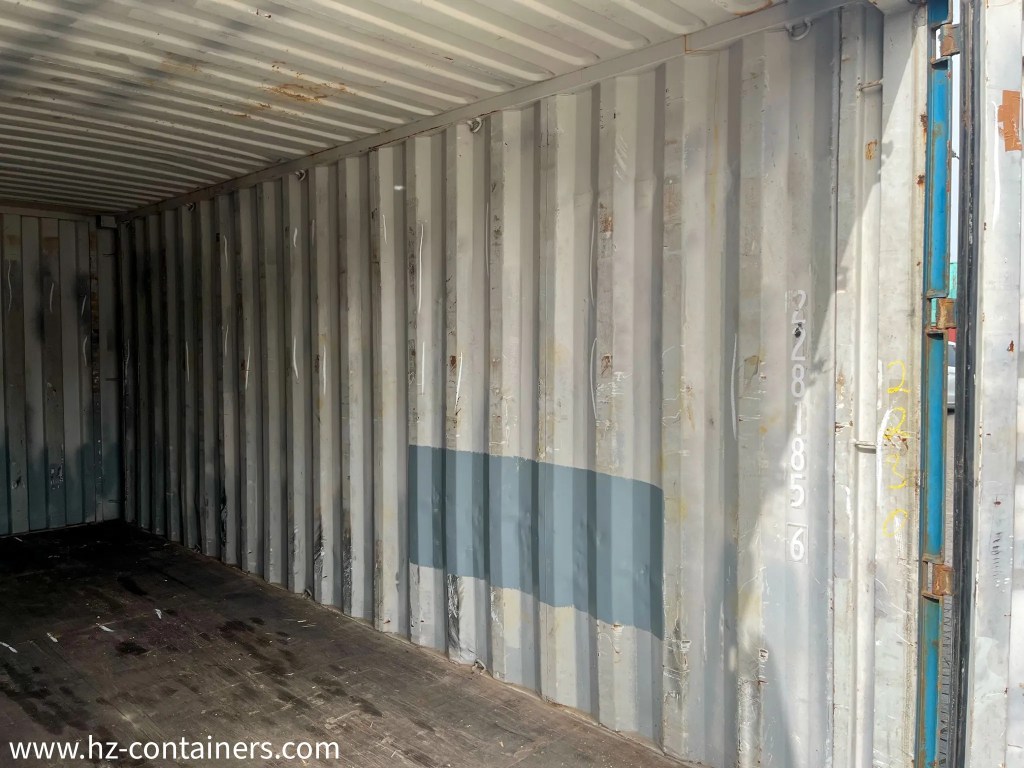
- Replacing sealing gasket – basis of watertightness
- Repair/replacement of locking bars and mechanisms
Replacement of Corner Elements
- Replacement/repair of corner castings is essential for safe stacking and handling (crane, forklift)
Recertification After Repair
After all necessary repairs are completed, the container must undergo inspection again. If it meets all criteria according to the standard (COA, IICL, UCIRC), the inspector records the result in the register and updates or reissues the CSC plate. Such a container is again Cargo Worthy.
Note: Some shipping companies may have even higher internal requirements – it is always advisable to verify with the specific carrier.
Comparison of Shipping Container Conditions
| Condition | Main Purpose | Structural Integrity | CSC Plate | Watertightness | Age | Typical Use |
|---|---|---|---|---|---|---|
| CW (Cargo Worthy) | International transport, warehouse, conversions | Guaranteed, certified | Yes | Yes | 7–15 years and more | Export/import, construction, warehouse |
| WWT (Wind & Water Tight) | Storage | Not guaranteed for transport | No | Yes | 10–20+ years | Warehouse, garage, workshop |
| One Trip | Premium transport, luxury conversions | Maximum | Yes | Yes | < 1 year | Sensitive goods, apartments, offices |
| As-Is | Scrap, budget projects | Compromised | No | Not always | 15+ years | Material, modifications, construction |
Difference Between CW and WWT
- WWT container is always watertight, but may not be structurally sound for stacking and transport.
- CW container meets strength and handling requirements – it is always WWT, but WWT is not always CW.
- WWT can often be repaired to CW (see above) – common practice.
Practical Use of Repaired CW Containers
- For export/import: Only CW with valid certification! Without it, ports will reject the container.
- Storage: WWT is sufficient, CW is suitable for more valuable goods or long-term storage.
- Conversions (shipping container homes, offices, cafes): Recommended to start with CW due to guaranteed strength.
- Economics: Repaired CW is a cost-effective compromise between new (One Trip) and older containers.
Frequently Asked Questions (FAQ)
How Do I Recognize a Real Cargo Worthy Container?
- Check the CSC plate on the doors (date, validity, inspector)
- Request the protocol from the last inspection (survey)
- Reputable sellers provide a CW certificate
How Long Is CW Certification Valid?
- New container: 5 years
- Subsequent inspections: max. every 30 months (or ACEP)
- Rule: Any significant handling/repair requires inspection
Is CW Container Repair Ecological?
- Yes, it extends lifespan to 20–30 years
- Reduces consumption of new materials, saves energy and emissions
Why Do CW Containers Have Visible Patches and Welds?
- Repairs are functional, not cosmetic
- Visible patch = proof of professional repair, not a defect
Glossary of Important Terms
| Term | Meaning |
|---|---|
| Cargo Worthy (CW) | Status confirming structural fitness for transport |
| CSC Plate | Certification plate according to CSC 1972 Convention |
| IICL | Highest standard for container quality and repairs |
| COA | Criteria for Cargo Worthy, detailed damage limits |
| ISO | International standards for container construction and dimensions |
| WWT | Wind & Water Tight – watertight condition, not always suitable for transport |
| Surveyor | Qualified inspector conducting inspections and certifications |
Ecological Aspect of CW Container Repairs
Repairs and redeployment of containers significantly extend their lifespan and reduce the carbon footprint of the logistics sector. It is estimated that recycling and repairs of CW containers save tens of thousands of tons of steel annually and reduce demand for new containers. Moreover, containers after repairs often find a second life in construction, as warehouses, residential units (shipping container homes), or mobile facilities, supporting the principles of circular economy.
Summary – Why and When to Choose a Repaired CW Container?
- Legal requirement for international transport
- Certified safety and strength for construction and innovative projects
- Economically advantageous solution with long lifespan
- Ecological choice for sustainable development
 Czech Republic, Teplice
  FREE SHIPPING


Other container news...
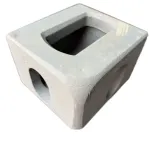
Corner casting steel vs aluminum
Every shipping container in the world — all 40 million of them — rests on eight critical components. Corner castings are the load-bearing blocks at each corner of an ISO shipping container, and they are the universal interface between the container and every crane, twistlock, spreader, and chassis on the planet. When you lift a container, stack it nine high on a ship, or lock it to a truck trailer, every ton of force flows through these fittings.

Construction cabin – selection, tips, dimensions and prices
Every construction project – whether a family house, a development project or a reconstruction – starts with the infrastructure. No construction manager, craftsman or investor who needs an on-site office, a changing room for workers or a safe storage for tools can do without a quality construction cell. But navigating the offer is not easy: residential containers, sanitary cells, storage modules, rental, purchase, refurbished pieces… This guide will give you answers to all the essential questions in one place.
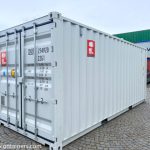
Storage container
A storage container is a lockable steel box designed for the safe and dry storage of materials, tools, goods or equipment. Originally created as a shipping container for maritime transport, its durability and versatility have found their way onto construction sites, corporate premises and private land.
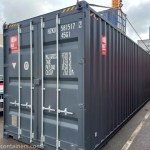
Shipping container 12m (40 ft)
A 12m shipping container is an investment that, if properly selected and cared for, will pay off in decades of trouble-free use. Whether you plan to use it as a warehouse, workshop, garage or the basis for a residential module — the key is careful selection of the condition, a thorough inspection before purchase and high-quality preparation of the base for placement. Take the time to compare offers, check the seller’s references and do not hesitate to personally inspect the container before buying. A properly selected 40-foot container will serve you reliably for many years.