
Buy or Rent a Shipping Container?
When is it advantageous to buy a container?
Long-term use
If you plan to use a container for a long period, buying may be more economically advantageous. Although the initial investment may be higher, over time the rental costs can accumulate and exceed the purchase price. Owning a container also allows you to customize it to the specific needs of your business.
Flexibility and customization
When you buy a container, you have complete control over its modifications. You can customize both the interior and exterior according to your needs, which is a great advantage if you require a special layout or equipment. Buying a container is an ideal choice for businesses that need specific solutions.
Sustainability and reuse
Owning a container can be more environmentally sustainable. You can use it repeatedly for various purposes, reducing the need to produce new containers. Old containers can also be recycled or converted into other structures, such as storage spaces or even residential units.
When is it better to rent a container?
Short-term and seasonal needs
If you need a container only for a short period, for example for seasonal storage or a one-off project, renting is the ideal choice. Renting allows you to respond flexibly to current needs without large initial investments.
Cost savings
Renting a container is generally a cheaper option if you need it for a limited time. You don’t have to worry about maintenance, insurance, or storage of the container when you’re not using it. All these costs are usually included in the rental price.
Quick solution
Renting can be a quick and easy solution if you need a container immediately. Rental companies often offer various types of containers that are readily available. In this way, you can quickly resolve your needs without long waits for delivery or manufacturing of a new container.
Types of shipping containers
Standard containers
The most commonly used containers are standard sizes 20 and 40 feet. They are ideal for transporting and storing ordinary goods, but can also be adapted for various purposes.
Reefer containers
For transporting and storing goods that require controlled temperature, reefer containers are the best choice. These containers are equipped with cooling units that maintain a constant temperature.
Open-top and flat-rack containers
For transporting oversized goods, open-top and flat-rack containers are suitable. Open-top containers have an open roof, making it easier to load tall items. Flat-rack containers have a flat base and are ideal for transporting heavy and bulky cargo.
When deciding whether to buy or rent a shipping container, consider the length of use, budget, need for customization, and flexibility. Buying a container is advantageous for long-term use and specific modifications, while renting is ideal for short-term and seasonal needs. It is also important to consider the various types of containers that match your specific requirements.
Other container news...

New shipping containers
If you are currently considering purchasing a new shipping container, you are not alone. While just twenty years ago containers were used almost exclusively for maritime transport, today they have found their way into construction, storage, business, and even housing. This growing popularity brings with it a host of questions: Which type should you choose? How much does it cost? How do you recognize quality? How can you avoid falling victim to scammers?
New sea shipping containers
If you are currently considering purchasing a new shipping container, you are not alone. While just twenty years ago containers were used almost exclusively for maritime transport, today they have found their way into construction, storage, business, and even housing. This growing popularity brings with it a host of questions: Which type should you choose? How much does it cost? How do you recognize quality? How can you avoid falling victim to scammers?

6m shipping container
Are you thinking about buying a 6-meter shipping container but aren’t sure what to look for? You are not alone—this 20-foot container is the best-selling size on the Czech market, and the differences between various types, conditions, and prices can be significant. In this guide, you will find everything you need to know: from exact dimensions and a comparison of categories (such as “one-way,” refurbished, and “Cargo Worthy”) to current prices and shipping advice.
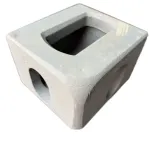
Corner casting steel vs aluminum
Every shipping container in the world — all 40 million of them — rests on eight critical components. Corner castings are the load-bearing blocks at each corner of an ISO shipping container, and they are the universal interface between the container and every crane, twistlock, spreader, and chassis on the planet. When you lift a container, stack it nine high on a ship, or lock it to a truck trailer, every ton of force flows through these fittings.