
Advantages of buying a shipping container
Shipping containers are becoming increasingly popular not only for transportation and storage, but also for various other purposes such as housing or business. Their use offers many advantages that are worth considering if you are planning to invest in a new space. Let’s take a look at the main benefits of buying a shipping container.
Low price
One of the most important advantages of shipping containers is their low purchase price. Compared to traditional building materials, shipping containers are much cheaper. As a result, you can save a considerable amount of money that you can invest in further modifications or equipment. Moreover, if you are planning to build a container house, you do not need an expensive land, which further reduces the overall cost.
COMPLETE RANGE OF SHIPPING CONTAINERS
Resistance and durability
The shipping containers are made of high strength steel which is extremely durable and long lasting. Also known as shipping steel, this steel is designed to withstand the harsh conditions of shipping goods around the world. This makes the containers extremely resistant to weathering, corrosion and mechanical damage. By investing in a shipping container, you get a robust and long-lasting solution for your needs.
Quick and easy installation
Installation of the shipping container is quick and easy. Unlike traditional construction, which requires lengthy building procedures and permits, you can place a shipping container on your property without complicated administrative issues. Simply load it and move it to the desired location. This is the ideal solution for those who need a quick and flexible space solution.
Mobility and flexibility
Shipping containers offer a high degree of mobility and flexibility. You can easily move them to another location if your needs change. This is particularly useful for entrepreneurs who need dynamic solutions for their storage or business premises. Moreover, if you decide to cancel a container warehouse, you can simply load and relocate it, unlike traditional buildings that require complex demolition work.
Environmental sustainability
Recycling and reusing shipping containers is an environmentally friendly solution. Instead of ending up in landfills, containers can be reused for a variety of purposes, helping to reduce waste and protect the environment. So buying and repurposing a shipping container is not only economically viable, but also sustainable.
Customisation and modularity
Shipping containers are highly customizable and modular. You can easily rebuild them according to your needs. For example, if you are planning to create a container house, you can join multiple containers together to create a larger living space. The possibilities for customisation are almost limitless, from installing windows and doors to interior insulation and decoration.
Security
Thanks to their robust construction, shipping containers provide a high level of safety. They are resistant to break-ins and vandalism, making them ideal for storing valuable items or as a secure dwelling. You can also add additional security features such as locks and security cameras to keep your possessions even better protected.
Versatility of use
Shipping containers can be used in many different ways. In addition to their traditional use for transporting and storing goods, they can be used as offices, shops, cafes, workshops or even mobile laboratories. Their versatility makes shipping containers a profitable investment for a variety of business and personal projects.
Easy maintenance
The maintenance of shipping containers is relatively simple and easy. Thanks to their durable steel construction, it is only necessary to regularly check the condition of the surface and carry out minor repairs if necessary. Most containers are treated with anti-corrosive coatings, which ensures their longevity.
Investment value
Shipping containers can also be a profitable investment. Their price can increase over time, especially if you convert them into residential (such as shipping container homes) or commercial space. Plus, if you decide to sell the container, you can expect a decent return on your investment. Thanks to their growing popularity, it is now easier to find a buyer for a used shipping container.
Why choose to buy instead of renting
When faced with the decision between renting and buying a container, it is important to consider the long-term implications of both options. Renting may at first glance seem like the more economically viable option, especially for short-term projects. However, if you plan to use the container for a longer period of time, the rental costs can quickly add up and exceed the purchase price.
Ownership of the container gives you full control over its use and modifications without being restricted by contractual terms. You don’t have to worry about monthly fees or possible rent increases. In addition, you have the option to sell the container at any time and recoup a portion of your investment.
Financial savings and return on investment
A one-off investment in buying a shipping container pays off especially in the long run. Without regular rental fees, there are savings that multiply over time. Container ownership eliminates the recurring costs associated with renting storage space, which positively impacts your budget.
If you use a container for business, it can contribute to the growth and efficiency of your operation without the need for high real estate investments. The savings can be invested in other areas of your business.
Other container news...
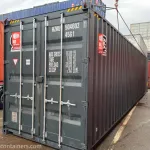
Can You Modify a 40ft High Cube Container?
The short answer is yes — you absolutely can modify a 40ft high cube container, and it is one of the most popular container types for modification projects worldwide. But the real question is not whether you can modify one; it is how to do it correctly, safely, legally, and within budget. This guide answers every dimension of that question, drawing on engineering principles, real-world pricing data, and the collective experience of thousands of modified container projects.
Key Takeaway: A 40ft high cube container offers 320 square feet of floor space with an extra foot of ceiling height compared to a standard container — making it the ideal canvas for offices, workshops, homes, retail spaces, and industrial applications. The extra height is particularly valuable when you add insulation and still want comfortable headroom.

Cargo worthy container
If you have ever shopped for a used shipping container, you have almost certainly encountered the term cargo worthy — often abbreviated as CW or CWO (Cargo Worthy Only). It is one of the most important classifications in the container industry, yet it is also one of the most misunderstood. A cargo worthy container is not a container that looks new. It is not necessarily a container that has a valid CSC plate. And it is definitely not the same as a wind and watertight container. This guide explains what cargo worthy really means — from its technical definition and historical origins to the precise structural criteria, inspection process, cost implications, and common misconceptions that trip up even experienced buyers.

Shipping container home
A shipping container home is a residential dwelling constructed from one or more steel intermodal containers — the same standardized metal boxes that transport goods across oceans, railways, and highways. These containers, engineered from corrosion-resistant Corten steel and designed to withstand brutal maritime conditions, are repurposed into fully habitable living spaces through insulation, structural modifications, and the installation of all standard residential utilities. A shipping container home can range from a minimalist 160-square-foot studio built from a single 20-foot container to a sprawling multi-level compound combining dozens of 40-foot high-cube units.
Core Definition: A shipping container home is a code-compliant, habitable structure built from one or more steel intermodal shipping containers that have been insulated, structurally reinforced where modified, and fitted with windows, doors, plumbing, electrical systems, and interior finishes to function as a permanent or semi-permanent residence.
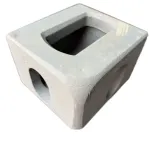
Corner casting steel vs aluminum
Every shipping container in the world — all 40 million of them — rests on eight critical components. Corner castings are the load-bearing blocks at each corner of an ISO shipping container, and they are the universal interface between the container and every crane, twistlock, spreader, and chassis on the planet. When you lift a container, stack it nine high on a ship, or lock it to a truck trailer, every ton of force flows through these fittings.