
40’HC Shipping Container
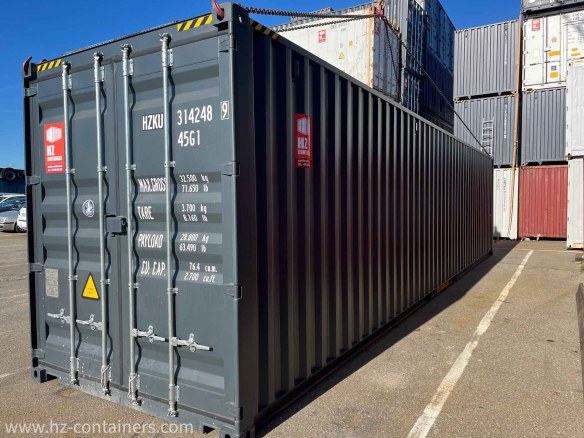
Shipping container 40’HC (High Cube) is one of the most widely used types of intermodal containers in global logistics and on the Czech market. Compared with the standard 40′ container (referred to as 40’DV – Dry Van) it offers an increased external height of 9 ft 6 in (≈ 2.9 m), which is one foot higher than a regular container (8 ft 6 in = 2.59 m). This added height means not only more interior space (about 12 % larger volume), but also broader possibilities for transport, storage and modular construction.
40’HC containers are built according to strict ISO standards, guaranteeing interchangeability, stackability and the ability to be transported by all modes of transport – from ships to railways to road tractors. They are characterized by high resistance to weather, moisture, mechanical damage and corrosion thanks to the use of special Corten steel.
This glossary article provides a comprehensive, technically detailed and practice‑verified overview of 40’HC containers: definition, dimensions, load capacities, comparison, advantages and disadvantages, legislative requirements, modification trends, maintenance and security.
Basic characteristics and construction
| Parameter | 40’HC Container value |
|---|---|
| External length | 12 192 mm (40 ft 0 in) |
| External width | 2 438 mm (8 ft 0 in) |
| External height | 2 896 mm (9 ft 6 in) |
| Internal length | ~12 032 mm (39 ft 5 45/64 in) |
| Internal width | ~2 352 mm (7 ft 8 19/32 in) |
| Internal height | ~2 698 mm (8 ft 10 in) |
| Door opening height | ~2 585 mm (8 ft 5 49/64 in) |
| Internal volume | ~76.4 m³ |
| Empty weight | 3 900–4 200 kg |
| Max. gross weight | 30 480–32 500 kg (per manufacturer/ISO) |
| Max. payload | 26 300–28 600 kg (per manufacturer/ISO) |
| Construction material | CORTEN steel (corrosion resistance) |
| Floor | Layered marine plywood, load capacity 6 000 kg+ |
| Doors | Double, lockable, with sealing option |
| Corner fittings | 8× ISO corner castings (for handling and securing) |
| Standard marking | Yellow‑black stripe at the top (HC marking) |
Construction specifics
- Water‑tightness: All 40’HC containers must be water‑tight, with seals around doors and seams. They are tested for pressure and water tightness.
- Durability: Corten steel provides a several‑fold longer service life compared with ordinary steel, resisting salt water and mechanical stress when stacking multiple containers.
- Floor: Made of multi‑layer plywood (28–30 mm thick), impregnated against moisture and pests.
- Cargo securing: Interior walls are equipped with eyes and anchoring points for straps and wooden battens.
Dimensions, capacity and palletisation

Overview of dimensions and volume parameters
| External dimensions (L × W × H) | 12 192 × 2 438 × 2 896 mm |
|---|---|
| Internal dimensions (L × W × H) | ~12 032 × 2 352 × 2 698 mm |
| Door opening height | ~2 585 mm |
| Internal volume | ~76.4 m³ |
Pallet capacity
| Pallet type | Pallet dimensions | Max. number on floor (single layer) |
|---|---|---|
| Euro pallet (EUR) | 1 200 × 800 mm | 25 |
| US pallet (GMA) | 1 219 × 1 016 mm | 21 |
| Pallet‑wide HC* | 1 200 × 800 mm | 33 (special PW HC type) |
*Standard 40’HC allows 25 EUR pallets side by side (with a small clearance for air circulation and handling). The special “pallet wide” HC type, with an expanded width of about 2 462 mm, can accommodate up to 33 EUR pallets.
Load capacity and limits
- Tare (empty): 3 900–4 200 kg (varies by manufacturer and age)
- Max. gross (including container): 30 480–32 500 kg
- Max. payload: 26 000–28 600 kg (also limited by road legislation per country)
- Floor: Minimum load capacity 6 000 kg evenly distributed
Differences between 40’HC and 40’DV (standard)
| Feature | 40’HC | 40’DV (standard) |
|---|---|---|
| External height | 2 896 mm (9 ft 6 in) | 2 591 mm (8 ft 6 in) |
| Internal height | ~2 698 mm | ~2 390 mm |
| Volume | ~76.4 m³ | ~67.7 m³ |
| Empty weight | approx. 200 kg heavier | lighter |
| Price | approx. 10–25 % higher | lower |
| Marking | Yellow‑black stripe on top | no special marking |
| Ideal for | bulky, lightweight, high cargo | standard, palletised cargo |
| Market availability | slightly lower | very high |
Advantages and disadvantages of the 40’HC container
Advantages
- Greater vertical space: Suitable for taller machinery, equipment, bulky goods, double‑deck racks or built‑ins.
- Higher capacity: 12 % more volume translates into transport cost savings for light and bulky goods.
- Modification flexibility: Ideal for construction adaptations, residential or office projects, HVAC, insulation, ceilings.
- Economic savings: Proper cargo layout can move more goods in a single trip.
- Standardisation and compatibility: Full ISO compatibility for stacking, handling and transport by all transport modes.
Disadvantages
- Higher purchase and transport cost: HC containers are more expensive and some carriers charge a surcharge.
- Legislative limits: Greater height can complicate road transport, especially in Europe (low bridges, tunnels).
- Payload limit: Load capacity is not much higher than standard containers – for very heavy cargo the extra volume may be unused.
- Availability: Fewer used 40’HC units are available on the Czech market compared with standard 40′ containers.
Typical uses of the 40’HC container
Maritime and combined transport
- Bulky, lightweight goods: Furniture, textiles, electronics, automotive parts, packaged foods.
- High cargo: Industrial machines, technology, palletised goods in two layers.
- Special cargo: Height‑sensitive materials (e.g., machine parts, exhibition displays).
Storage
- Company warehouses: Secure, water‑tight and mobile solution – can be placed on a site, at a construction yard or near a facility.
- Racking systems: Increased height allows efficient use of shelving structures.
- Vehicle and machinery storage: Forklifts, motorcycles, ATVs, small agricultural equipment.
Modifications and architecture
- Container offices: Mobile offices, site facilities, temporary classrooms.
- Living units: Tiny houses, mobile shipping container homes, container houses, recreational cabins, student dorms.
- Gastro operations, shops: Pop‑up cafés, bistros, sales stalls, showrooms.
- Special projects: Workshops, studios, laboratories, mobile clinics, data centres.
- Pallet‑wide HC modifications: Special adaptations for maximum Euro‑pallet utilisation.
Special technology – Controlled Atmosphere (CA)
- CA (Controlled Atmosphere): For transporting fruit, vegetables, flowers and other sensitive products. The technology regulates O₂, CO₂ and N₂, slowing ripening and extending product shelf life.
- Reefer modifications: Refrigerated containers with controlled atmosphere are essential for global import and export of fresh food.
Legislative requirements and safety aspects
Legislation in the Czech Republic and the EU
- Transport: Compliance with maximum train height (usually 4 m) – higher chassis may require route planning.
- Stackability and safety: ISO standards dictate corner and frame strength for stacking on ships and on land.
- Customs and import regulations: All containers must have a valid identification plate (CSC label), regular inspections and certifications.
- Sealing: Mandatory sealing of the container when goods are under customs supervision.
Security and protection
- Locks and seals: Use of specialised marine locks (lockbox) and unique security seals.
- Ventilation openings: Several vents reduce condensation.
- Burglary protection: Possibility to install sensors, cameras, GPS trackers for location and condition monitoring.
Maintenance, service life and recycling
Maintenance and service life
- Regular inspection: Check for tightness, frame, floor, door mechanisms and corrosion.
- Corrosion protection: Paint repairs, welding of damaged parts.
- Floor: Replace or refurbish marine plywood as needed.
- Service life: Average lifespan 15–30 years in transport; thereafter can be used as storage or building module.
Recycling and environmental aspects
- Steel recycling: Old containers can be recycled environmentally.
- Reuse: Secondary use in architecture, construction, community projects.
Prices, availability and market trends in the Czech Republic
| Container condition | Approximate price (2024/2025, excl. VAT) |
|---|---|
| New (one‑trip) | 90 000 – 160 000 CZK |
| Used (good condition) | 70 000 – 110 000 CZK |
| Special modifications | according to scope, usually +30–60 % of price |
- Availability: Largest stock is near ports (Hamburg, Rotterdam); in the Czech Republic most are held by specialised firms such as HZ CONTAINERS s.r.o.
- Rental: Short‑term and long‑term rental possible, prices from 3 500 CZK per month.
- Trends: Growing interest in office conversions, residential modules, sales stalls; increasingly used in sustainable projects (recycling, green roofs, solar panels).
Practical advice for purchase and operation
- Choosing the type: Carefully consider whether you need a standard or high‑cube version – it depends on cargo height, interior modification requirements, etc.
- Container condition: When buying a used unit, thoroughly check tightness, floor condition, absence of breaches and corrosion.
- Handling: Ensure access for heavy equipment (crane, forklift) during transport and placement.
- Insurance: Insure both the container and the cargo being transported.

 Czech Republic, Vysoké Mýto
  FREE SHIPPING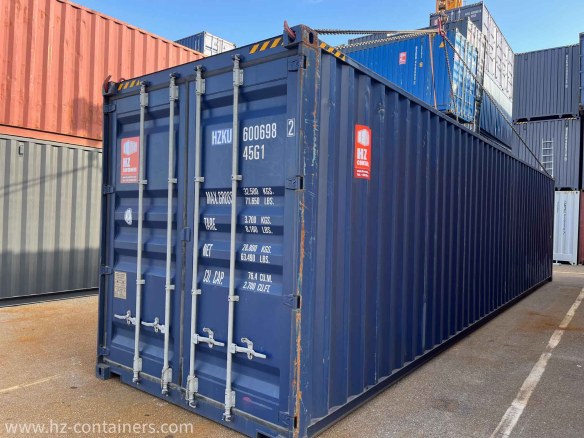
Other container news...

Obligation to Check Tightness When Selling a Reefer Container
Who is responsible for the refrigerant leak check when selling a refrigerated container? Find out what obligations the seller has at the time of handover and why they must provide a PTI report along with the technical data plate. Learn which regulatory requirements and F-gas record-keeping duties become the sole responsibility of the new owner.

New sea shipping containers
If you are currently considering purchasing a new shipping container, you are not alone. While just twenty years ago containers were used almost exclusively for maritime transport, today they have found their way into construction, storage, business, and even housing. This growing popularity brings with it a host of questions: Which type should you choose? How much does it cost? How do you recognize quality? How can you avoid falling victim to scammers?
New shipping containers
If you are currently considering purchasing a new shipping container, you are not alone. While just twenty years ago containers were used almost exclusively for maritime transport, today they have found their way into construction, storage, business, and even housing. This growing popularity brings with it a host of questions: Which type should you choose? How much does it cost? How do you recognize quality? How can you avoid falling victim to scammers?

6m shipping container
Are you thinking about buying a 6-meter shipping container but aren’t sure what to look for? You are not alone—this 20-foot container is the best-selling size on the Czech market, and the differences between various types, conditions, and prices can be significant. In this guide, you will find everything you need to know: from exact dimensions and a comparison of categories (such as “one-way,” refurbished, and “Cargo Worthy”) to current prices and shipping advice.