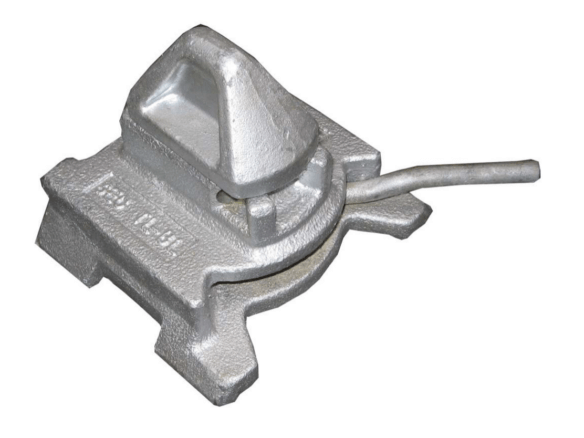
Corner Casting – Shipping Container Lug
Shipping container lug, also called corner fitting, corner lug, or corner block, is a robust steel component located at each of the eight corners of a standard ISO shipping container. These are critical structural elements that form the backbone of the integrity and functionality of the transport container. Each container manufactured according to ISO standards contains exactly eight lugs: two in the top left corner, two in the top right corner, two in the bottom left corner, and two in the bottom right corner. These lugs are forged from high-strength cast steel, typically meeting the SCW480 class specification, and are designed to withstand extraordinary loads and stresses throughout the entire lifecycle of the container.
What are shipping container lugs and why are they fundamental to the function of transport containers?
The basic purpose of corner lugs is to serve as universal attachment points that enable lifting, stacking, transport, and securing of containers across multiple modes of transport – whether by sea, rail, or road. Without properly functioning corner lugs, modern containerized logistics would be impossible. They carry all forces acting on the container during transport, including the weight of stacked containers above them, dynamic forces from waves during sea transport, vibrations from rail transport, and forces generated during loading and unloading operations.
Standardization of corner lugs through ISO standard 1161 was crucial for establishing a global intermodal transport system that is the foundation of international trade. This standardization ensures that a corner lug manufactured in China can seamlessly communicate with lifting equipment manufactured in Germany and that a container built in South Korea can be stacked on a container built in Japan without any compatibility issues.
Corner lugs are not merely passive components – they are actively involved in every phase of the container’s lifecycle. From manufacturing, when they are welded to the container’s corners, through handling in ports, transport, stacking, and until final use or recycling, corner lugs are essential for the safety, stability, and efficiency of operations.
How do corner lugs function as load-bearing structural elements?

The load-bearing function of corner lugs is probably their most critical role. Each corner lug is designed to handle vertical loads exceeding 15,000 kg under normal operating conditions, with tested breaking forces reaching 50 tons per corner. When containers are stacked vertically – often reaching heights of 9 containers or more on container ships – the lower containers must bear the cumulative weight of all containers above them. This is where corner lugs prove essential: weight is distributed through the corner lugs rather than through the container walls, which would cause deformation and structural failure.
The geometry of corner lugs is specifically engineered to efficiently distribute these loads. The lug contains multiple holes and cavities that are not only functional for locking mechanisms – they are an integral part of the structural design. Dovetail-type grooves and precisely positioned holes prevent lateral movement and ensure that loads are transmitted vertically through the lug into the supporting structure beneath it. Each lug has approximate dimensions of 178 mm × 162 mm × 118 mm, with these dimensions standardized across all ISO containers worldwide. This standardization ensures that the lug can communicate with lifting equipment, spreader bars, and other handling equipment from any manufacturer, anywhere in the world.
The material composition of corner lugs is critical to their load-bearing capacity. Cast steel, particularly SCW480 class, offers optimal balance between strength, ductility, and weldability. The material can withstand not only static loads but also dynamic loads – the repeated stresses and impacts that occur during actual transport operations. Unlike aluminum or other lighter materials, cast steel maintains structural integrity even when exposed to temperature changes, corrosive salt spray in marine environments, and mechanical stress from repeated stacking and unstacking.
What are the four types of corner lugs and how do they differ structurally?
Each ISO container uses four distinct types of corner lugs, distinguished by their location on the container: Top Left (TL), Top Right (TR), Bottom Left (BL), and Bottom Right (BR). The container uses two of each type, for a total of eight lugs. Although they may appear similar to the untrained eye, they are specifically designed for their respective positions and are not interchangeable.
| Lug Type | Location | Hole Configuration | Stacking Hole Position | Primary Function | Distinguishing Feature |
|---|---|---|---|---|---|
| Top Left (TL) | Top left corner | Stadium hole + shield hole | Top surface | Lifting from above | Stomach-shaped side hole |
| Top Right (TR) | Top right corner | Stadium hole + shield hole | Top surface | Lifting from above | Mirror image of TL |
| Bottom Left (BL) | Bottom left corner | Stadium hole + shield hole | Bottom surface | Support from below | Semicircular fitting |
| Bottom Right (BR) | Bottom right corner | Stadium hole + shield hole | Bottom surface | Support from below | Mirror image of BL |
The most fundamental structural difference between top and bottom lugs concerns the position of the stacking hole. Top lugs have a large aperture on their top surface, which is designed to receive lifting pins from a crane or spreader bars. This aperture must be precisely positioned to ensure that lifting forces are evenly distributed across the lug and down through the container’s corner posts. Bottom lugs, conversely, have their stacking hole on the bottom surface, where they engage with the top lugs of containers below them or with corner posts of chassis during road transport.
Side holes also differ between top and bottom lugs. Top lugs have a stadium hole on the long side (the side running along the length of the container) and a shield hole on the end (the side running across the width of the container). Bottom lugs have the same configuration but are reversed. These holes are designed to receive twist locks – mechanical devices that mutually lock containers when stacking or attach them to chassis for transport. The different hole shapes serve different functional purposes: the stadium hole accommodates certain lock types, while the shield hole accommodates others. This dual hole design provides flexibility in how containers can be secured depending on the specific handling equipment available.
What is ISO 1161 standard and why is it crucial for global container compatibility?
ISO 1161, officially called “Series 1 freight containers – Corner and intermediate fittings – Specifications,” is an international standard that governs the design, dimensions, and functional requirements of container corner lugs. This standard was first introduced in 1984 and has been updated several times, with the latest version being ISO 1161:2018.
The standard specifies not only the dimensions of corner lugs but also their strength requirements, hole configurations, material specifications, and functional performance characteristics. The standardization provided by ISO 1161 is absolutely crucial for modern containerized logistics. Before this standard was introduced, different container manufacturers used different corner lug designs, which made it impossible to stack containers from different manufacturers or use the same handling equipment across different container types.
| Parameter | Specification | Unit / Note |
|---|---|---|
| Standard Dimensions | 178 mm × 162 mm × 118 mm | Length × Width × Height |
| Dimensional Tolerance | Several millimeters | Ensures interchangeability |
| Top Aperture | Approximately 185 mm diameter | For crane lifting pins |
| Side Holes | Approximately 22 mm diameter | For twist locks |
| Material | High-strength steel, Q355B class or equivalent | Cast steel SCW480 |
| Minimum Breaking Load | 50 tons per corner | 500 kN |
| Weight per Unit | Approximately 11-15 kg | Dependent on material |
| Weldability | Must be weldable by standard procedures | ISO 1161 requirement |
The precision of these specifications is remarkable. The holes in corner lugs must maintain tolerances of only millimeters to ensure that twist locks, spreader bars, and other equipment engage properly without jamming or excessive play. This level of precision is maintained through careful casting procedures and machining and finishing operations after casting.
What materials are used in the manufacture of corner lugs and how do they affect performance?
While cast steel remains the most common material for corner lugs, there are alternatives, each with distinct advantages and disadvantages:
| Material | Composition | Strength | Weight | Corrosion Resistance | Cost | Primary Application |
|---|---|---|---|---|---|---|
| Cast Steel (SCW480) | Iron + carbon + trace elements | Very high (50T breaking load) | ~12-15 kg per unit | Medium (requires coating) | Low to medium | Standard marine containers |
| Ductile Iron | Iron + magnesium + carbon | High | Medium | Medium | Low | Cost-sensitive applications |
| Aluminum Alloy (A356 T6) | Aluminum + silicon + magnesium | Medium | ~5 kg (40% lighter) | Excellent | High | Weight-sensitive applications, refrigerated containers |
| Stainless Steel (304/316) | Iron + chromium + nickel | Very high | ~12-15 kg | Excellent | Very high | Special applications, chemical transport |
Cast Steel (SCW480 class): This remains the industry standard for corner lugs. SCW480 is a cast steel class that offers excellent strength characteristics combined with good weldability. The material can be cast into the complex shapes required for corner lugs and subsequently machined to precise tolerances. The main disadvantage is that cast steel is susceptible to corrosion in marine environments, which requires protective coatings, such as primer or epoxy coatings, to prevent rust formation. With proper coating and maintenance, cast steel corner lugs can reliably function for 20-30 years or longer.
Ductile Iron: Ductile iron (also called nodular iron) is sometimes used as a cost-effective alternative to cast steel. It offers good strength characteristics and excellent castability, making it economical to produce. Ductile iron is, however, more brittle than cast steel and is more susceptible to cracking under impact loading. It is also more difficult to weld than cast steel. Ductile iron corner lugs are sometimes used in non-marine applications or in containers intended for less demanding service.
Aluminum Alloy (A356 T6): Aluminum alloy corner lugs are used in specialized applications where weight reduction is critical, such as refrigerated containers, which require additional insulation and thus benefit from lighter structural components. Aluminum A356 T6 offers excellent corrosion resistance without the need for protective coatings, making it ideal for harsh marine environments. Aluminum is, however, significantly more expensive than cast steel and offers lower absolute strength, which requires more careful design to achieve equivalent load-bearing capacity. Aluminum corner lugs are approximately 40% lighter than steel equivalents, which can result in significant fuel savings for high-volume transport operations.
Stainless Steel (304/316): Stainless steel corner lugs are used in specialized applications, such as containers for transporting chemical products, food products, or pharmaceutical substances, where corrosion resistance and cleanliness are critical. Stainless steel offers superior corrosion resistance compared to all other materials and requires no protective coatings. It is, however, significantly more expensive than cast steel and offers no strength advantages, making it economically justified only when superior corrosion resistance and cleanliness characteristics are necessary.
How are corner lugs installed and integrated with the container structure?
Corner lugs are not simply bolted or pinned to the container – they are permanently welded to the container’s corners during the manufacturing process. The corner posts of the transport container are vertical steel beams that run from the bottom to the roof of the container at each of its four corners. Corner lugs are welded to these posts using high-quality welding procedures that ensure a permanent, structurally reliable connection.
The installation process begins during container manufacturing, before the container is fully assembled. The corner posts are positioned and the corner lugs are then welded to them using multiple weld beads to ensure complete fusion and strength. Welding must be performed by qualified welders according to strict quality control procedures, because any defect in the weld could compromise the entire structural integrity of the container. After welding, the welds are typically inspected using visual inspection and sometimes ultrasonic testing to ensure compliance with quality standards.
| Weld Type | Description | Application | Advantages | Disadvantages |
|---|---|---|---|---|
| Tack Weld | Short weld for temporary part securing | Initial lug positioning | Quick, allows position adjustment | Not structurally sufficient |
| Skip Weld | Series of short welds with gaps | Some repairs and assembly | Reduces thermal stress, lower cost | Weaker than continuous weld |
| Butt Weld | Weld joining two parts end to end | Primary lug connection | Maximum strength, smooth surface | Requires precise alignment |
| Continuous Weld | Uninterrupted weld along entire length | Critical structural connection | Highest strength and tightness | Higher cost, more thermal stress |
Corner lugs must be positioned with extreme precision. Any misalignment – even several millimeters – could prevent proper engagement of twist locks and could affect load distribution during stacking. Modern container manufacturers use fixtures and jigs to ensure proper positioning of corner lugs before welding.
After welding the corner lugs, they become an integral part of the container structure. The entire load path of the container during stacking and transport passes through the corner lugs. The top lugs of one container rest directly on the bottom lugs of the container above it, with twist locks providing horizontal connection that prevents lateral movement.
What is the relationship between corner lugs and twist locks in securing containers?
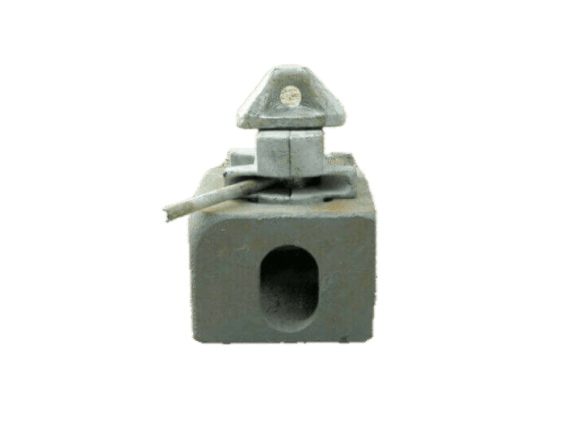
Twist locks are mechanical devices that engage with holes in corner lugs and lock containers together when stacking or attach them to transport chassis. The relationship between corner lugs and twist locks is symbiotic: corner lugs provide the structural framework and attachment points, while twist locks provide the locking mechanism.
When two containers are stacked, the bottom lugs of the upper container rest directly on the top lugs of the lower container. This vertical contact alone, however, does not prevent the containers from shifting horizontally relative to each other. Twist locks address this problem by engaging with the side holes in the corner lugs. A twist lock is inserted through a hole on the side of the lower container, then rotated 90 degrees to engage with the corresponding hole in the upper container. This mechanical locking prevents horizontal movement while still allowing container separation when needed.
There are several types of twist locks, each designed for specific applications:
- Dovetail twist locks: These are the most common type with a dovetail engagement mechanism that locks into holes in corner lugs
- Bridge fittings: Used to connect corners of containers positioned side by side
- Intermediate twist locks: Used to lock vertically stacked containers
- Manual twist locks: Require manual operation to engage and disengage
- Automatic twist locks: Engage and disengage automatically when containers are lifted and lowered
Compatibility between twist locks and corner lugs is ensured by ISO 1161 standard. All twist locks manufactured according to ISO standards will fit properly into the holes of all ISO standard corner lugs, regardless of container manufacturer or country of origin.
What maintenance and inspection procedures ensure the integrity of corner lugs?
Corner lugs, despite their robust construction, are subjected to wear and damage during years of service. Regular inspection and maintenance are necessary to ensure that containers remain safe for continued use.
Common types of damage to corner lugs include:
- Cracking: Fatigue cracks can develop in corner lugs after years of repeated stacking and unstacking cycles, especially if containers were overloaded or dropped
- Corrosion: Rust formation in uncoated areas or where protective coatings have been damaged can weaken structural integrity
- Deformation: Bending or warping of corner lugs can prevent proper engagement of twist locks and can affect load distribution during stacking
- Hole deformation: Holes in corner lugs can enlarge or deform, preventing proper engagement of twist locks
- Weld cracks: Welds connecting corner lugs to corner posts can crack due to fatigue or impact damage
Inspection procedures should include:
- Visual inspection: Look for obvious cracks, dents, rust, or missing parts
- Hole verification: Use a template or gauge to verify that holes maintain proper shape and size
- Corrosion assessment: Evaluate the extent of rust formation and determine whether it has compromised structural integrity
- Diagonal measurement: Measure the container’s diagonals to detect any twisting or misalignment
- Twist lock engagement test: Manually test twist lock engagement to ensure smooth operation
If damage is found, the container should be immediately removed from service. Repair of damaged corner lugs typically involves welding new lugs in place, a procedure that requires qualified welders and careful quality control. In many cases, it is more economical to replace the entire container rather than repair severely damaged corner lugs. Repair costs can reach 30-50% of the price of a new container, especially if multiple lugs are damaged.
Why are corner lugs critical for intermodal transport and global logistics?
The global containerized shipping system depends entirely on the standardization and reliability of corner lugs. The concept of intermodal transport – the ability to seamlessly move containers between ships, trains, and trucks without breaking the load – is possible only because corner lugs provide standardized attachment points that work with equipment from any manufacturer, in any port, anywhere in the world.
Consider a typical container journey: A container is loaded at a factory in Shanghai. It is lifted by a gantry crane that engages with the corner lugs. A truck transports it to the port, where the container is removed from the truck by a spreader that grasps the container by the corner lugs. The container is then placed on a ship by the ship’s crane, which engages with the corner lugs. During the voyage, the container is stacked with other containers, with twist locks engaging with the corner lugs to prevent movement. When the ship arrives in Rotterdam, the process reverses: the container is lifted from the ship by a gantry crane, placed on a rail car by a rail spreader, transported across Europe, removed from the rail car, and placed on a truck for final delivery. Throughout this entire journey, corner lugs provide attachment points that enable safe handling and stacking.
Without standardized corner lugs, this seamless intermodal transport would be impossible. Each port would need specialized equipment for each container type, which would make containerized shipping economically unfeasible. Standardization is therefore not merely a technical requirement but the foundation of global trade.
What are the historical reasons for the development of the ISO 1161 standard?
ISO 1161 standard was not created by accident – it was the result of decades of practical experience and engineering challenges. When containers first began to be used in the 1950s and early 1960s, there was no unified standard. Different manufacturers produced containers with different corner lug dimensions, which caused compatibility and safety problems.
The International Organization for Standardization (ISO) therefore initiated a project in the 1960s to create a unified standard. After many years of discussion and testing, ISO 1161 standard was first published in 1984. Since then, it has been updated in 2016 (ISO 1161:2016) to account for new materials, manufacturing techniques, and operational experience. The current standard is the result of more than 50 years of development and is one of the most important standards in global logistics.
What is the future of corner lug technology?
Although corner lugs have long been a stable technology, there are directions for future development. Some of these include:
- Advanced materials: Development of new alloys with better strength and lower weight
- Smart monitoring: Embedding sensors in corner lugs to monitor loads and detect damage in real time
- Greener manufacturing: Reducing carbon footprint during manufacturing and increasing recycling
- Modular designs: Development of lugs that can be more easily replaced and repaired
Although technology has advanced, the basic principle of corner lugs – providing safe, standardized attachment points for handling and stacking – will remain unchanged for many years to come. They are simple but ingenious components that are the foundation of global containerized shipping.
 Czech Republic
  WITHOUT SHIPPING