
Who is responsible for a container when it is damaged during a rental at a construction site?
Question: who bears responsibility for a damaged container during its rental on a construction site, is one of the most common and sensitive topics in the construction and facility‑management industry. It is not a trivial “who broke it, pays for it” situation – responsibility is determined by several factors:
- The wording of the rental agreement and general terms
- The legal framework (especially the Civil Code)
- The nature and extent of the damage, its causes and documentation
- Existence of insurance or other financial guarantees
- Cooperation and communication between the lessor and the lessee
This article defines the responsibility of all parties, examines typical damage scenarios, presents the legal and operational framework of liability, analyses insurance and recommends preventive measures.
Key parties and their roles
| Actor | Rights | Obligations | Risks |
|---|---|---|---|
| Lessor (Rental Company) | Expect return in original condition, inspection, claim enforcement | Deliver a sound, clean, inspected container; maintain it; insure the equipment | Loss of value, inability to re‑rent, legal disputes |
| Lessee (Construction company, Renter) | Receive a functional container, transparent damage handling, protection from unjust claims | Conduct an initial inspection, use properly, secure it, report damages immediately | Paying for repairs, loss of deposit, increased insurance premiums |
| Third parties | – | – | Sub‑contractors, carriers, vandals whose interventions complicate liability relationships |
Lessor’s rights and obligations
- Deliver a clean, functional container with any required electrical inspection (if equipped)
- Record any defects at hand‑over in a protocol; if they prevent use, remedy within 3 working days
- May require a security deposit or advance payment
- Right to inspect the condition and location of the container (by agreement)
- Arrange transport and handling unless otherwise agreed
- Right to claim compensation for damages exceeding normal wear and tear
Lessee’s rights and obligations
- Accept and sign the hand‑over protocol
- Perform an inspection and note any defects, with photographic documentation
- Use only at the agreed location and in the agreed manner
- Secure the container against theft, vandalism and weather
- Not transfer the container to a third party without consent
- Report damages and faults immediately
- When transporting with own means, the carrier is responsible for insurance and loading/unloading damages
Involvement of third parties
- Sub‑contractors: The lessee is liable for their actions and may seek recourse from the sub‑contractor (see § 2917 CZ Civil Code).
- Carriers: If the lessee arranges transport, the carrier is liable under the transport terms. Damage during transport must be recorded in the protocol immediately.
- Unknown perpetrators: Theft/vandalism – the lessee is liable unless it can prove that the site was properly secured and the incident reported to the Czech Police.
Legal framework of liability for damage
Civil Code – key paragraphs
- § 2913 – Damage from breach of contract: The lessee is liable for damage caused by breaching contractual obligations unless they prove they did not cause it.
- § 2924 – Liability from operational activity: Construction companies are liable for damages caused by the operation of their equipment (including containers), objectively (regardless of fault).
- § 2926 – Damage to immovable property: Liability is objective and cannot be avoided even by compliance with regulations.
Contractual liability (VPP and rental agreement)
- The lessee is liable for damage to the rented asset unless it is normal wear or a defect beyond their control.
- If damage is caused by a third party, the lessee remains liable to the lessor and may subsequently claim reimbursement from the actual wrongdoer.
Definition of normal wear vs. damage
| Wear/Damage type | Typical manifestations | Responsibility |
|---|---|---|
| Normal wear | Small scratches, faded paint, minor floor wear | Lessor |
| Damage beyond normal wear | Dents, broken locks, graffiti, punctures, contamination, fire, loss | Lessee |
Recommendation: always require a precise definition of normal wear and examples of damages that exceed it in the contract.
Types of container damage on construction sites and their causes
| Damage type | Cause | Manifestations | Consequences |
|---|---|---|---|
| Structural | Collision with equipment, improper handling | Dents, bends, loss of structural integrity | Loss of watertightness, need for repairs |
| Surface | Scraping against materials, graffiti | Deep scratches, corrosion | Cosmetic damage, corrosion risk |
| Functional | Rough handling, attempted break‑in | Destroyed doors, seals, locks | Non‑functional, safety hazards |
| Contamination | Storing chemicals, leaks | Pollution, odor, need for cleaning | Expensive cleaning, sometimes part replacement |
| Loss/Destruction | Theft, fire, overturning | Complete loss, severe damage | High financial loss, full compensation required |
Damage claim process
Recommended steps (according to VPP and practice)
- Immediate inspection and photographic documentation
- At both hand‑over and return, photograph the container (exterior, interior, damage details).
- Record findings in the hand‑over protocol signed by both parties.
- Damage reporting
- Inform the lessor immediately after discovering damage (email, phone).
- In case of theft or vandalism, contact the Czech Police without delay and provide the police report.
- Damage valuation
- A qualified technician or expert assesses the extent and estimated repair cost.
- The lessor provides an itemised estimate; the cost may be covered by the deposit or insurance.
- Communication and claim for compensation
- The lessee may acknowledge and pay the claim, or forward it to their insurer.
- Disputed cases can be resolved by expert opinion or court.
- Repair and invoicing
- Repairs are carried out after agreement; after completion, an invoice is issued.
- The deposit may be used to cover the damage.
Financial protection and insurance
Options for financial protection
- General Liability Insurance – Standard product for construction firms; also covers rented movable assets (check limits and exclusions).
- Equipment Insurance – Can be taken out for rented containers; covers damage from operation, vandalism, weather, etc.
- Damage Waiver (contractual damage protection) – A contractual fee (usually 10–15 % of rent) that waives minor damages, but does not cover intentional damage, gross negligence or theft.
- Security Deposit – Refundable deposit from which minor damages or unpaid fees may be deducted after the rental ends.
| Protection type | Benefits | Limitations |
|---|---|---|
| General Liability Insurance | Broad coverage, protects other assets as well | Exclusions, limits, deductible |
| Equipment Insurance | Covers even costly damages | Higher premium, must be arranged in advance |
| Damage Waiver | Simple, fast handling of minor damages | Does not cover serious damage, intentional acts, theft |
| Security Deposit | Quick settlement of small damages | Limited amount, does not cover major losses |
Prevention: How to minimise the risk of damage
Best practices from industry sources
- Detailed entry and exit inspections: Never accept or return a container without a thorough record and photographs.
- Hand‑over protocol: Always complete and sign by both parties, listing all identified defects.
- Strategic placement on site: Position the container away from heavy‑equipment corridors; ensure a level, stable surface.
- Security against theft and vandalism: Fencing, locked gates, security cameras, adequate lighting.
- Staff training: All personnel must be informed about proper container handling rules and risks.
- Regular visual checks during the rental: Early detection of emerging damage enables cheaper repairs.
- Compliance with construction and safety regulations: Ensure that handling, utility connections and operation meet all applicable standards.

 Czech Republic
  WITHOUT SHIPPING

Other container news...

20 Foot shipping container cost
If you are researching the cost of a 20 foot shipping container, you have likely already encountered wildly different prices — from $999 listings online to quotes exceeding $5,500. That range is not a sign of inconsistency. It reflects real differences in container condition, location, delivery logistics, and the seller you are dealing with.
Side Opening container
A side opening container is an ISO-compliant intermodal shipping container engineered with full-length bi-fold doors along one of its long side walls, in addition to the standard cargo doors at one end. Unlike conventional containers that restrict access to a single set of rear doors, a side opening container — also widely called an open side container, open-sided shipping container, or side door container — provides unobstructed lateral access across the entire 20-foot or 40-foot length of the unit. This design transforms the container from a narrow tunnel into a wide-open space that forklifts can enter from the side, multiple workers can load simultaneously, and oversized cargo that would never fit through standard end doors can be placed without struggle.
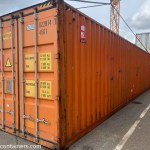
40 Foot High Cube container cost
A 40 foot high cube container — often abbreviated as 40ft HC, 40′ HC, or 40-foot high cube — is one of the most common shipping container sizes sold on the secondary market. But if you are researching what a 40 foot high cube container costs, you have almost certainly noticed that prices are all over the map. One seller quotes $1,500. Another quotes $7,000. Both could be legitimate.
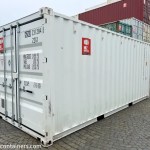
20 Foot container cost
If you have ever searched for a shipping container, you have almost certainly asked one question first: how much does a 20 foot container cost? The answer is not a single number. It is a range that spans from under $1,000 for a weathered, as-is unit to over $5,000 for a pristine, one-trip container — and that is before delivery, site preparation, or modifications enter the picture.