
What Load Capacity Does a Truck for Shipping Containers Have?
What is the Load Capacity of a Truck for Shipping Containers?
The question “What load capacity does a truck for shipping containers have?” is one of the most common in freight transport and logistics. The answer is not straightforward, because load capacity depends on a number of factors: from the technical parameters of the tractor, trailer and the container itself to strict legislative limits and weight distribution rules. In practice, it is almost never possible to use the maximum technical load capacity of the container that you will find on its doors – the main limitation is formed by the legal regulations of the given country and the actual weight of the entire vehicle combination.
This article systematically explains all the technical and legislative factors affecting how much can be loaded into a container during road transport in the Czech Republic, Europe and the USA. We discuss limits, real calculation examples and practical recommendations.
Key Terms and Definitions
| Term | Meaning |
|---|---|
| Useful Weight (Payload / Load Capacity) | Maximum weight of cargo that can be transported. The difference between the total permissible weight and the tare weight of the entire vehicle combination. |
| Tare Weight | Weight of an empty vehicle (tractor + trailer) and empty container. |
| Gross Vehicle Weight (GVW) | Sum of tare weight and cargo. A critical legislative limit. |
| Axle Weight | Load on individual vehicle axles. Each axle has its own legal limit. |
| Shipping Container | Standardized transport unit according to ISO standards. The most common sizes are 20′, 40′ and 40’HC. |
| Verified Gross Mass (VGM) | Mandatory information for maritime transport (according to SOLAS convention): sum of cargo weight and container weight. |
Types of Shipping Containers and Their Technical Parameters
| Container Type | External Dimensions (mm) | Internal Dimensions (mm) | Weight of Empty Container (kg) | Max. Container Load Capacity (kg) | Max. Total Weight (kg) | Internal Volume (m³) |
|---|---|---|---|---|---|---|
| 20′ ISO | 6058 x 2438 x 2591 | 5867 x 2330 x 2350 | 2200–2500 | 21800–28000 | 30480 | approx. 33 |
| 40′ ISO | 12192 x 2438 x 2591 | 11980 x 2330 x 2320 | 3900–4000 | 26000 | 30480 | approx. 67 |
| 40′ High Cube | 12192 x 2438 x 2894 | 11988 x 2330 x 2655 | 4100 | 26000 | 30480 | approx. 70–76 |
Caution: The maximum load capacity listed on the container is a technical design value. The actually usable load capacity is always limited by legal limits for road transport!
Other Special Container Types
- Refrigerated Containers (Reefer): Higher tare weight (e.g. 20′ reefer 3030 kg, 40′ reefer 4600 kg).
- Open Top, Hard Top, Flat Rack: Specific for oversized or heavy cargo (see source tables).
Legislative Limits – Europe, Czech Republic and USA
European Union and Czech Republic
- Council Directive 96/53/ES sets the following limits for standard road vehicle combinations:
- Standard road transport: max. 40,000 kg (40 t) total weight of vehicle combination.
- Combined transport: up to 44,000 kg (44 t), if part of the route is by rail/ship.
- Axle Limits (Czech Republic):
- Single driving axle: 11.5 t
- Single non-driving axle: 10 t
- Tandem axle: 18 t
- Tridem: up to 24 t
United States of America
- Federal Limit: max. 80,000 pounds (approx. 36,287 kg) on federal highways.
- Bridge Formula: Regulates loading according to the number of axles and distance between them.
- State Exemptions: In some states, with special permission, up to 90,000 pounds (approx. 40.8 t) or more can be transported.
- Axle Limits:
- Single axle: 20,000 pounds (9,071 kg)
- Tandem axle: 34,000 pounds (15,422 kg)
Truck and Trailer Specifications
Every kilogram of the vehicle combination reduces space for cargo:
- Tractor: 7,500–9,000 kg (depends on type, cab, engine).
- Container Trailer (Chassis):
- 2-axle: 3,500–4,000 kg
- 3-axle: 5,000–5,500 kg (for heavy containers, better weight distribution)
- Tare Weight of Container:
- 20′: approx. 2,200–2,500 kg
- 40′: approx. 3,900–4,100 kg
- 40′ HC: approx. 4,100 kg
Practical Calculations: How Much Cargo Can Really Be Loaded?
Calculation for Standard Road Transport in the Czech Republic (40 t limit)

20′ Container
- Max. Permitted Vehicle Weight: 40,000 kg
- Tare Weight:
- Tractor: 8,500 kg
- Trailer: 4,500 kg
- Container: 2,300 kg
- Total: 15,300 kg
- Max. Cargo: 40,000 – 15,300 = 24,700 kg
40′ Container
- Tare Weight:
- Tractor: 8,500 kg
- Trailer: 4,500 kg
- Container: 3,900 kg
- Total: 16,900 kg
- Max. Cargo: 40,000 – 16,900 = 23,100 kg
Calculation for Combined Transport (44 t limit)
20′ Container
- Max. Cargo: 44,000 – 15,300 = 28,700 kg
40′ Container
- Max. Cargo: 44,000 – 16,900 = 27,100 kg
Summary in Table:
| Container Type | Transport Limit | Max. Cargo (kg) |
|---|---|---|
| 20′ | 40 t | 24,700 |
| 40′ | 40 t | 23,100 |
| 20′ | 44 t | 28,700 |
| 40′ | 44 t | 27,100 |
Weight Distribution – Why It’s Critical
- If cargo is not evenly distributed, axle limits may be exceeded, which threatens fines even when total weight is complied with.
- Imbalance increases the risk of rollover, extends braking distance and damages the vehicle and road.
- For heavy point loads (steel, stone), it is necessary to use leveling floors and careful securing.
Overweight Cargo and Special Permits
If it is necessary to transport heavier or bulkier cargo (machinery, transformer, large building components):
- Obtain a permit from the relevant authority (in the Czech Republic, the Ministry of Transport).
- Plan the route avoiding bridges with low load capacity.
- Accompanying vehicle and sometimes police escort.
- Significantly higher costs (fees, extended transport time).
Comparison with Other Types of Transport
Maritime Transport
- The actual weight loaded into a container for a ship is usually higher (closer to the technical maximum), because at sea the limits are not as strict as on the road.
- At the port, it may be necessary to transfer part of the cargo or use combined transport with a higher limit.
Rail Transport
- Railways can handle substantially higher weights (wagon up to 67 t and more).
- Ideal for heavy shipments over long distances.
- In the Czech Republic and EU, this method can optimize the transport of heavy containers.
Practical Recommendations
- Always verify the technical specifications of the tractor, trailer and the container itself.
- When planning a route, consider not only the total weight, but also the load on individual axles.
- If you are approaching the legislative limit, contact a professional transport company or freight forwarder with detailed cargo information.
- For combined transport, consider the possibility of increasing the limit to 44 t.
- Remember that the strictest limits apply on the road – even if a ship or train can handle more.
Most Common Mistakes and Myths
- Myth: You can always load into a container what its technical label states.
- Fact: Vehicle and legislative limits are often lower.
- Mistake: Underestimating the weight of the tractor/trailer and overloading the entire vehicle combination.
- Mistake: Poor cargo distribution leads to exceeding axle limits.
- Myth: It is always enough to just meet the total weight limit – axle limits are equally important.
Conclusion
The load capacity of a truck for shipping containers is the result of a complex equation between the technical parameters of the vehicle combination, the type of container and, above all, legal limits on the road. In the Czech Republic and most of the EU, a 40 t limit applies for standard transport, and 44 t for combined transport. Practical load capacity therefore ranges between 23–25 t (standard transport) and 27–29 t (combined transport) depending on the specific type of container and vehicle combination.
We always recommend consulting your specific case with a professional transport company and following not only the technical data on the container, but primarily the limits set by law!
 Czech Republic, Vimperk
  FREE SHIPPING
Other container news...
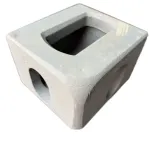
Corner casting steel vs aluminum
Every shipping container in the world — all 40 million of them — rests on eight critical components. Corner castings are the load-bearing blocks at each corner of an ISO shipping container, and they are the universal interface between the container and every crane, twistlock, spreader, and chassis on the planet. When you lift a container, stack it nine high on a ship, or lock it to a truck trailer, every ton of force flows through these fittings.

Construction cabin – selection, tips, dimensions and prices
Every construction project – whether a family house, a development project or a reconstruction – starts with the infrastructure. No construction manager, craftsman or investor who needs an on-site office, a changing room for workers or a safe storage for tools can do without a quality construction cell. But navigating the offer is not easy: residential containers, sanitary cells, storage modules, rental, purchase, refurbished pieces… This guide will give you answers to all the essential questions in one place.

Storage container
A storage container is a lockable steel box designed for the safe and dry storage of materials, tools, goods or equipment. Originally created as a shipping container for maritime transport, its durability and versatility have found their way onto construction sites, corporate premises and private land.
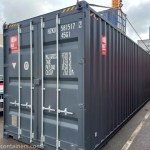
Shipping container 12m (40 ft)
A 12m shipping container is an investment that, if properly selected and cared for, will pay off in decades of trouble-free use. Whether you plan to use it as a warehouse, workshop, garage or the basis for a residential module — the key is careful selection of the condition, a thorough inspection before purchase and high-quality preparation of the base for placement. Take the time to compare offers, check the seller’s references and do not hesitate to personally inspect the container before buying. A properly selected 40-foot container will serve you reliably for many years.