
What is the difference between ONE WAY and ONE TRIP shipping containers?
In the dynamic world of international logistics, maritime transportation and storage of goods are shipping containers an indispensable part of global trade. With their growing popularity not only in industry but also in construction and architecture (for example for modular building, storage or conversions into shipping container houses or offices), the importance of precisely understanding technical terms increases. Two often confused but fundamentally different terms are ONE TRIP and ONE WAY containers. This article provides a detailed glossary and comparison of these terms, including extended technical information to help you make decisions and navigate the container market.
What is a ONE TRIP container?
Definition and basic characteristics
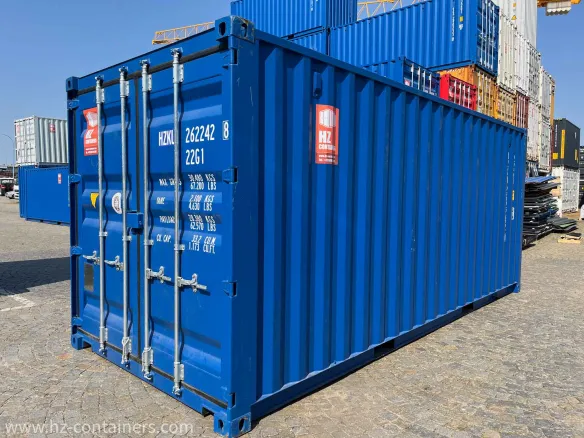
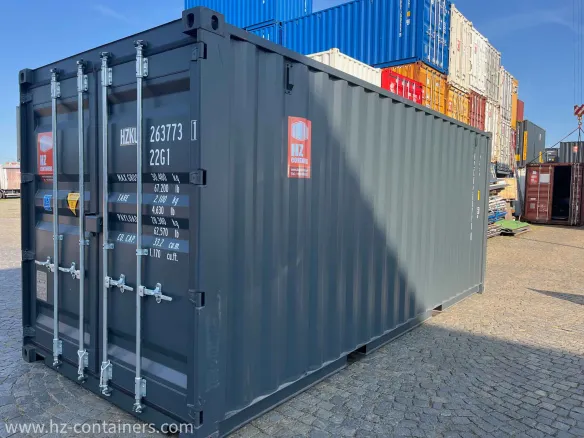
ONE TRIP container (also often called “single trip”, “almost new” or “new container”) is a shipping container that was manufactured, loaded with cargo and made only one journey from the production plant (usually in China) to the destination port in Europe, the USA or elsewhere in the world. After this journey it is offered for sale and no longer returns to the international transport cycle.
ONE TRIP container process
- Manufacturing: The vast majority of world containers (up to 85 %) are produced in China.
- Loading and transport: A new container is loaded with cargo, which reduces transport costs to the demand location.
- Sale: At the destination port the container is offered for sale as almost new.
Typical uses
- Long‑term storage (static use)
- Conversions into container houses, offices, workshops, cafés
- Mobile offices and technical modules
- Projects where appearance and durability are important
Key technical features of a ONE TRIP container
| Feature | Description |
|---|---|
| Condition | Almost new, with minimal handling marks (small scratches, no dents or corrosion) |
| Construction | Corten steel (COR‑TEN®) – high resistance to corrosion and weather |
| Aesthetics | Uniform colour, no carrier logos, no repairs or repainting, ideal for architectural use |
| Floor | Bamboo or birch plywood, clean, often anti‑slip treated |
| Doors and locking | Easy opening, perfect sealing, often with a lock box (secure hanging lock) |
| Service life | 20–30 years in static use with proper maintenance |
| Certification | CSC plate (valid for maritime transport), optional custom colour from factory |
| Durability | Watertight, wind‑resistant, increased vandal‑proof resistance |
Additional extended features
- Modification possibility – thanks to the intact structure doors, windows, electrical installations, ventilation, etc. can be easily added.
- Security – new containers are often equipped with modern security features and are ideal for storing valuable material, equipment or sensitive goods.
- Environmental aspect – ONE TRIP containers are more eco‑friendly than new construction because they can be recycled and have a long service life.

Advantages of ONE TRIP containers
- Maximum service life – a new container provides up to 30 years of useful value with minimal maintenance.
- Aesthetic appearance – no visible repairs, no graffiti or faded logos.
- High security – lock box and unused sealing guarantee protection of contents.
- Possibility of certification for maritime transport – valid CSC plate for export or re‑entry into transport.
- Ideal base for modifications – suitable for architecture, offices, workshops and shipping container houses.
- Minimal wear and no corrosion – unlike used containers.
- Colour selection – for large orders containers can be ordered in the required shade directly from the factory.
Disadvantages of ONE TRIP containers
- Higher purchase price – up to 40 % more than a typical used container.
- Limited availability of non‑standard sizes – most ONE TRIP containers are in the standard 20 ft and 40 ft dimensions.
What is a ONE WAY container?
Definition and basic characteristics
ONE WAY container refers to the way a container is used logistically, not its condition or history. It is a container that is leased to a carrier for a one‑way trip (“one way”) to efficiently move empty containers to areas where they are scarce.
How ONE WAY works
- Imbalance in global trade: Some ports have a surplus of empty containers, others a shortage.
- One‑way lease: The container owner (e.g., leasing company) offers the container for a single‑use lease to a carrier that needs to transport its cargo to a location where the owner needs the container returned.
- Benefit for both parties:
- Owner – saves on repositioning costs for empty containers.
- Carrier – obtains a container without demurrage and detention charges.
Typical uses
- High‑volume commercial transport
- Efficient repositioning of containers within the global logistics network
- B2B sector (logistics and freight forwarding companies)
Key technical features of the ONE WAY process
| Feature | Description |
|---|---|
| What it describes? | The logistical process of moving a container, not its physical condition |
| Container condition | Varies – can be new (ONE TRIP), used, or older, but always with a valid CSC plate |
| Advantage | Efficient and cheaper repositioning of empty containers |
| Target group | Freight forwarding and transport companies, not end customers |
| Market significance | Crucial for optimizing global logistics and reducing the ecological footprint of transport chains |
Additional aspects
- Cost reduction for repositioning – container owners do not pay for moving empty containers.
- Flexibility – often associated with greater freedom in handling and faster availability of containers where needed.
- Exemption from fees – carriers often do not pay demurrage & detention if they meet quick return conditions.
Typical situations for using ONE WAY containers
- Transport of goods between two continents where container repositioning is needed (e.g., Asia → Europe)
- Temporary movement of containers within inland logistics hubs
- Use for special projects with one‑off transport
Direct comparison: ONE TRIP vs. ONE WAY
| Characteristic | ONE TRIP container | ONE WAY container |
|---|---|---|
| What it describes? | Condition and history of the container | Logistical process |
| Primary purpose | Sale, long‑term use | Efficient repositioning (B2B) |
| Container condition | Almost new, minimal wear | Varies – new or used |
| Client | Companies/individuals, architectural projects | Logistics and transport firms |
| Outcome | Container is sold | Container is returned to owner |
| Relevance for customer | High (when buying a container) | Low (for ordinary customers) |
Analogy
Imagine a car:
- ONE TRIP: A brand‑new car that has made only the drive from the factory to the showroom – virtually no wear.
- ONE WAY: A loaned car that must be moved from one rental branch to another – the car’s condition is not guaranteed, only the relocation matters.
Comparison with other container types
ONE TRIP vs. Used (As‑Is/WWT) container
| Feature | ONE TRIP container | Used container (As‑Is/WWT) |
|---|---|---|
| Age | < 1 year | 8–15 years |
| Condition | Almost new, minimal wear | Visible signs of use (dents, corrosion) |
| Aesthetics | Uniform colour, no repairs | Repairs, faded logos, graffiti |
| Floor | Unworn, clean | Worn, possible stains |
| Price | Higher (30–40 % more) | Lower |
| Use | Long‑term and design projects | Short‑term, construction, storage without aesthetic focus |
Container types
ONE TRIP and used containers are available in various variants:
- Standard (20’, 40’): Most common, suitable for most uses.
- High Cube (HC): 30 cm higher, ideal for bulky or tall cargo, modular construction.
- Double Door: Doors on both short ends, easy handling.
- Open Top: Removable roof for top loading.
- Flat Rack: No side walls, for oversize cargo.
- Reefer (cooling): For transport and storage of food and pharmaceuticals.
Technical specifications (example for the most common types)
| Container type | Length (mm) | Width (mm) | Height (mm) | Volume (m³) | Payload (kg) |
|---|---|---|---|---|---|
| 20’ Standard | 6 058 | 2 438 | 2 591 | 33.2 | 28 200 |
| 40’ Standard | 12 192 | 2 438 | 2 591 | 67.7 | 28 800 |
| 40’ High Cube | 12 192 | 2 438 | 2 896 | 76.4 | 28 800 |
Container delivery and logistics
When purchasing or leasing a container, it is important to provide a suitable stacking area (firm, level ground, sufficient space for handling with a hydraulic arm or crane). Delivery is usually made within a few days of ordering.
Trends 2024/2025: Container architecture and sustainability
- Growth of demand for modular buildings: ONE TRIP containers are the basis for modern offices, cafés, mobile shipping container homes or kindergartens.
- Environmental aspects: Long service life and recyclability of containers help reduce the carbon footprint of construction.
- Smart storage systems: Increased interest in security features (lock boxes, biometric locks).
Frequently asked questions (FAQ)
Is a ONE TRIP container really new?
Yes, it has made only one trip with cargo and shows minimal handling marks (scratches, forklift trace inside).
Why is the price of a ONE TRIP higher?
The container is almost new, with a long service life and no need for repairs – an investment in quality and low maintenance.
Can a private individual lease a ONE WAY container?
Practically no, this service is intended for freight forwarding companies, not end customers.
Does a used container have the same service life?
A used container has a shorter service life, higher risk of corrosion and more frequent need for repairs.
How to choose the right type?
For long‑term projects where appearance, modification potential and service life matter, choose ONE TRIP. For short‑term storage without aesthetic requirements, a used container is sufficient.
 Mobile, USA
  WITHOUT SHIPPING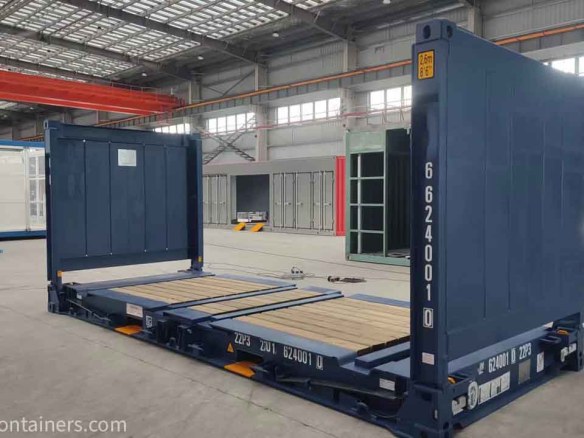

Other container news...

Obligation to Check Tightness When Selling a Reefer Container
Who is responsible for the refrigerant leak check when selling a refrigerated container? Find out what obligations the seller has at the time of handover and why they must provide a PTI report along with the technical data plate. Learn which regulatory requirements and F-gas record-keeping duties become the sole responsibility of the new owner.

New shipping containers
If you are currently considering purchasing a new shipping container, you are not alone. While just twenty years ago containers were used almost exclusively for maritime transport, today they have found their way into construction, storage, business, and even housing. This growing popularity brings with it a host of questions: Which type should you choose? How much does it cost? How do you recognize quality? How can you avoid falling victim to scammers?
New sea shipping containers
If you are currently considering purchasing a new shipping container, you are not alone. While just twenty years ago containers were used almost exclusively for maritime transport, today they have found their way into construction, storage, business, and even housing. This growing popularity brings with it a host of questions: Which type should you choose? How much does it cost? How do you recognize quality? How can you avoid falling victim to scammers?

6m shipping container
Are you thinking about buying a 6-meter shipping container but aren’t sure what to look for? You are not alone—this 20-foot container is the best-selling size on the Czech market, and the differences between various types, conditions, and prices can be significant. In this guide, you will find everything you need to know: from exact dimensions and a comparison of categories (such as “one-way,” refurbished, and “Cargo Worthy”) to current prices and shipping advice.