
What is a Bulk Shipping Container Used For?
In modern global logistics, shipping containers form the backbone of international trade. Among many types, there is a specialized category: Bulk containers (bulk shipping container, bulk container, “bulker”). This type is indispensable for efficient transport and storage of bulk, granulated, or powdered materials, particularly in industries such as agriculture, chemical industry, construction, and mining.
Definition and Purpose of Bulk Shipping Container
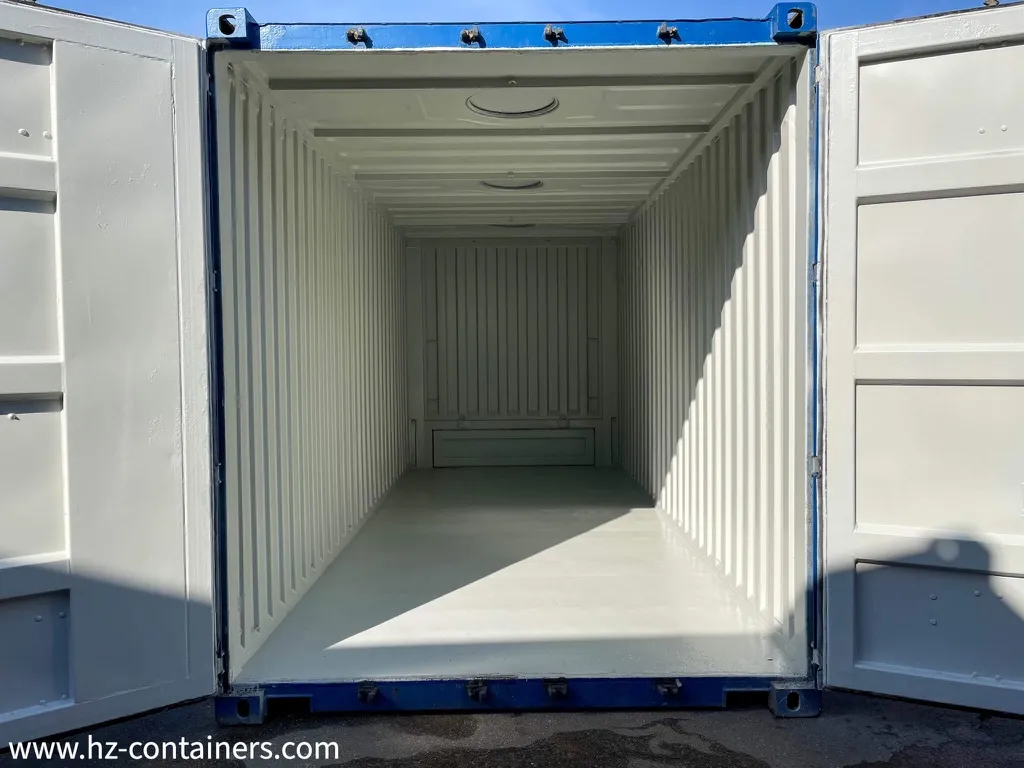
Bulk shipping container is a specialized ISO intermodal container designed for the transport of loose (bulk) materials. Compared to standard containers for general cargo, its construction is adapted especially for rapid top-loading and efficient unloading from the bottom or front openings.
Typical characteristics:
- Loading hatches (usually 2–3) in the roof for gravity or pneumatic loading.
- Discharge opening (or multiple openings) in the lower part of the door, or in the floor.
- Robust steel construction (most common material: Corten A/B, resistant to corrosion).
- Standard ISO dimensions: most commonly 20′ or 40′ (see table below).
Construction and Technical Parameters of Bulk Containers
Dimensions and Volume (20′ and 40′ Bulk Container)
| Container Type | External Dimensions (L x W x H) | Internal Volume | Empty Weight | Maximum Payload |
|---|---|---|---|---|
| 20′ Bulk | 6,058 x 2,438 x 2,591 mm | approx. 32–34 m³ | approx. 2,300–2,500 kg | up to 28,000 kg |
| 40′ Bulk | 12,192 x 2,438 x 2,591 mm | approx. 65–68 m³ | approx. 3,800–4,200 kg | up to 30,400 kg |
Construction specifics:
- Reinforced side walls due to abrasive effects of bulk materials (cement, gravel).
- Special surface treatments (internal coatings, food certifications).
- Possibility of installing internal liners (protective inserts) for sensitive or food materials.
- Reinforced sealing to protect against moisture and contamination.
Key Construction Elements
Loading hatches:
- Diameter typically 450–500 mm.
- Equipped with lids with sealing and locking capability.
- Allow rapid loading using shovels, conveyors, or pneumatic systems.

Discharge hatches:
- Located in the lower part of the door (opening height approx. 300–400 mm).
- Some models have discharge shafts in the floor.
- Suitable for gravity unloading or pouring onto belt conveyors.
Tipping handling:
- For rapid unloading, tilting chassis (tipper chassis) can be used.
- Allows complete emptying without material residue.
ISO Standards and Regulatory Framework
Key ISO Standards:
- ISO 830: Basic terminology and classification of containers.
- ISO 668: Dimensions and payload capacities of ISO containers (20′, 40′, 45′, including HC variants).
- ISO 1496-4: Construction and testing requirements for bulk material containers.
- ISO 15867: Specification for Intermediate Bulk Containers (IBC) – medium-volume containers for hazardous and non-hazardous bulk cargo.
- IMDG Code: International regulations for the transport of dangerous goods by sea (required for certain types of chemicals, powders, etc.).
Legislative and hygiene requirements:
- Food and chemical raw materials are subject to special hygiene regulations (EU 10/2011, FDA, etc.).
- After each transport, certified cleaning and inspection of the container is required, especially when switching between different types of cargo.
Types of Bulk Containers and Related Solutions
Overview of Main Types
| Container Type | Use | Notes |
|---|---|---|
| 20’/40′ Bulk | Most bulk materials | Standardized ISO dimensions, steel body |
| Open Top | General/bulk goods, e.g., coal, scrap | Open roof, covered with tarpaulin |
| Hopper Container | Industrial granules, cement | Sloped floor, bottom discharge |
| Flexitank (insert in 20′) | Liquids, non-aggressive chemicals | Multi-layer bag, single-use |
| Intermediate Bulk Container | Smaller volumes of solid/powdered substrates | Plastic or metal in cage, transport in ISO C. |
Advantages of Using Bulk Containers
- Handling efficiency: Rapid loading and unloading, minimization of manual labor, higher terminal throughput.
- Cost savings: No need for bagging into sacks/drums, less packaging material, lower logistics costs.
- Cargo protection: Minimization of contamination and losses, proper sealing against moisture and pests.
- Safety: Solid construction allows transport of mildly hazardous substances (chemicals, powders) according to IMDG.
- Environmental benefit: Reusable, long service life, possibility of recycling after end of life.
- Logistics flexibility: Can be used for transport by road, rail, and sea without cargo transshipment.
Industrial Uses and Specific Applications
Agriculture
- Cereals (wheat, corn, barley, rice)
- Feed, legumes, oilseeds
- Fertilizers (powdered, granulated)
- Grains for food and industrial purposes
Chemical Industry
- Powdered and granulated plastics (PVC, PE, PP)
- Powdered chemicals, pigments, resins
- Salt, soda, sulfur, certain types of powdered chemicals (including ADR groups)
Construction
- Cement, lime, gypsum
- Sand, gravel, dry mortars
- Granulated building mixtures
Mining and Metallurgy
- Ores, concentrates, granulated alloys
- Coal, coke, fly ash
Food Industry
- Sugar, flour, starch
- Processed cereals, dried milk
Modern Trends and Innovations
- Automated loading/unloading systems: Belt conveyors, pneumatic filling/discharge equipment, terminal robotization.
- Telematics and monitoring: Moisture sensors, GPS tracking, IoT elements for remote cargo condition monitoring.
- Ecological innovations: Reusable internal liners, containers with higher recyclability, CO2 savings through logistics optimization.
- Security elements: Electronic locks, seals with QR codes, certified inspection after each cycle.
Maintenance and Cleaning of Bulk Containers
- Thorough cleaning after each cycle, especially when switching between different types of cargo (food vs. chemicals).
- Use of certified cleaning services (in accordance with HACCP, GMP, chemical standards).
- Regular inspection of sealing, lids, corrosion protection. Damaged containers (according to ISO 1161, 1496) must not be used.
How to Properly Select a Bulk Container?
- Type and properties of bulk material (moisture sensitivity, dustiness, hazard, cleanliness requirements)
- Required volume and logistics routes (availability of equipment for loading/unloading, possibility of tipping)
- Regulations and certifications (food certificate, ADR, IMDG)
- Possibility of reuse/cleaning
- Availability of service and spare parts
Frequently Asked Questions and Practical Tips
What materials must not be transported in bulk containers?
- Highly aggressive chemicals (acids, alkalis) without special internal liner
- Materials prone to contamination (certain foods after transport of chemicals)
- Materials with extreme dustiness without appropriate protection
What is the service life of a bulk container?
- With proper maintenance 12–20 years, depending on intensity of use and type of cargo.
What are the main mistakes in use?
- Insufficient cleaning
- Overloading (exceeding payload capacity)
- Use for unsuitable materials without required certification
 Czech Republic, Třebíč
  FREE SHIPPING

Other container news...

Obligation to Check Tightness When Selling a Reefer Container
Who is responsible for the refrigerant leak check when selling a refrigerated container? Find out what obligations the seller has at the time of handover and why they must provide a PTI report along with the technical data plate. Learn which regulatory requirements and F-gas record-keeping duties become the sole responsibility of the new owner.

New shipping containers
If you are currently considering purchasing a new shipping container, you are not alone. While just twenty years ago containers were used almost exclusively for maritime transport, today they have found their way into construction, storage, business, and even housing. This growing popularity brings with it a host of questions: Which type should you choose? How much does it cost? How do you recognize quality? How can you avoid falling victim to scammers?
New sea shipping containers
If you are currently considering purchasing a new shipping container, you are not alone. While just twenty years ago containers were used almost exclusively for maritime transport, today they have found their way into construction, storage, business, and even housing. This growing popularity brings with it a host of questions: Which type should you choose? How much does it cost? How do you recognize quality? How can you avoid falling victim to scammers?

6m shipping container
Are you thinking about buying a 6-meter shipping container but aren’t sure what to look for? You are not alone—this 20-foot container is the best-selling size on the Czech market, and the differences between various types, conditions, and prices can be significant. In this guide, you will find everything you need to know: from exact dimensions and a comparison of categories (such as “one-way,” refurbished, and “Cargo Worthy”) to current prices and shipping advice.