
What are the lengths of a shipping container
Lengths of shipping containers are the fundamental building blocks of global logistics and goods transportation. Standardization of these dimensions enables seamless handling, stacking, efficient use of ships, trains, trucks and storage spaces. In addition to determining how much and what type of goods can be transported, they also affect costs, speed of logistics operations and safety during transport. In today’s world, where emphasis is placed on efficiency and flexibility, a thorough understanding of the length variants of shipping containers is absolutely key.
Fundamentals of standardization: Why are container dimensions key?

Standardization of shipping container dimensions is primarily anchored in the ISO 668 standard, which defines the basic types, dimensions and tolerance limits. Thanks to this standard, it is possible to transport containers across continents, regardless of which transport vehicle or equipment is currently being used.
Importance of standardization
- Intermodality: A container is designed so that it can be transferred from a ship to a train or truck without the need to unload the goods themselves. This simplifies and speeds up handling, reduces the risk of cargo damage and minimizes costs.
- Equipment compatibility: Handling equipment – cranes, reachstackers, forklifts – is built to precise dimensions, ensuring safety and speed of operations.
- Stackability and space efficiency: Standardized length and width allows stacking of containers up to 9 units high on ships or in ports. This makes it possible to maximize the use of space.
ISO 668 standard and its consequences
The ISO 668 standard sets not only lengths, but also the width and height of containers, as well as their structural strength, the position of corner elements (corner castings) and other parameters. This global standardization brought a revolution to logistics and enabled the creation of giant container terminals and mega-container ships.
What is TEU, FEU and other units?
In container transport, standardized units of measurement are used:
- TEU (Twenty-foot Equivalent Unit): The basic unit corresponding to one 20-foot container.
- 1 TEU = 20′ container (approx. 6.1 m)
- 2 TEU = 40′ container (approx. 12.2 m)
- FEU (Forty-foot Equivalent Unit): A unit corresponding to one 40-foot container, i.e. 2 TEU.
Capacity of container ships, ports and train sets is expressed in TEU, which allows unified planning and comparison.
Overview of the most common lengths of shipping containers
Length is a key parameter determining how much goods you can store in a container. Standard width is always 8 feet (2.44 m), which corresponds to the width of trucks and railway wagons.
Table: Overview of basic container lengths
| Designation | Length in feet (‘) | Length in meters (m) | Most common use |
|---|---|---|---|
| 8′ | 8 | 2.44 | Mini storage, limited spaces |
| 10′ | 10 | 3.05 | Construction, small warehouses, private use |
| 20′ | 20 | 6.06 | Basic unit, versatile use |
| 40′ | 40 | 12.19 | Large-volume transport, construction |
| 45′ | 45 | 13.72 | Volume maximization, specialized routes |
| 53′ | 53 | 16.15 | North America, inland transport |
20-foot container (20′ DC – Dry Container)
- External dimensions: 6.058 m × 2.438 m × 2.591 m (L×W×H)
- Internal dimensions: approx. 5.898 m × 2.352 m × 2.394 m
- Weight of empty container (Tare): approx. 2,200–2,370 kg
- Max. useful load (Payload): approx. 28,000 kg
- Volume: approx. 33.2 m³
- EURO pallet capacity: 11 (pallet size 120 × 80 cm)
- US pallet capacity: 10 (pallet size 120 × 100 cm)
- Use: Export/import of all kinds, construction, storage, production of mobile workshops, basis for container buildings
Interesting facts:
- The most common container type in the Czech Republic and Europe for smaller and heavier shipments.
- Due to higher load capacity in relation to volume, it is ideal for dense and heavy goods (machinery, materials).
40-foot container (40′ DC – Dry Container)
- External dimensions: 12.192 m × 2.438 m × 2.591 m
- Internal dimensions: approx. 12.032 m × 2.352 m × 2.394 m
- Weight of empty container: approx. 3,750–4,000 kg
- Max. useful load: approx. 26,480–28,600 kg
- Volume: approx. 67.7 m³
- EURO pallet capacity: 24–25
- US pallet capacity: 21
- Use: Large-volume shipments, moving, export shipments overseas, basis for container houses and larger modules
Interesting facts:
- Most favorable transport price per cubic meter.
- Compared to two 20′ containers, it has lower weight and lower transport costs.
10-foot container (10′ DC)
- External dimensions: 2.991 m × 2.438 m × 2.591 m
- Internal dimensions: approx. 2.831 m × 2.350 m × 2.390 m
- Weight of empty container: approx. 1,300 kg
- Max. useful load: approx. 8,860 kg
- Volume: approx. 15.9 m³
- Use: Storage on construction sites, small businesses, archives, gardening supplies, mobile garages
Interesting facts:
- Generally not used in overseas transport, but for local storage and transport.
- Can be connected to a 20′ frame for efficient transport.
45-foot and 53-foot containers
45′ High Cube
- External dimensions: 13.716 m × 2.438 m × 2.896 m
- Internal dimensions: approx. 13.556 m × 2.352 m × 2.698 m
- Weight of empty container: approx. 4,800 kg
- Max. useful load: approx. 25,680–27,700 kg
- Volume: approx. 86–86.1 m³
- Use: Transport of bulkier goods (e.g. electronics, textiles), construction, large modular buildings
53′ High Cube (North America only)
- External dimensions: 16.154 m × 2.591 m × 2.896 m
- Width: 2.591 m (compared to standard 2.438 m)
- Use: Inland (USA/Canada) transport, allows comfortable placement of two US pallets side by side, not intended for overseas transport
Height variants: Standard (GP) vs. High Cube (HC)
| Type | External height | Internal height | Use, advantages |
|---|---|---|---|
| Standard (GP) | 8’6″ (2.59 m) | approx. 2.39 m | Versatile use |
| High Cube (HC) | 9’6″ (2.89 m) | approx. 2.69 m | Larger volume, tall goods |
- High Cube containers are 1 foot (approx. 30 cm) higher than standard versions. They offer greater internal volume, which you will appreciate when storing or transporting bulky, light goods or when creating residential modules.
Detailed table of dimensions and capacities
| Container type | External dimensions L×W×H (m) | Internal dimensions L×W×H (m) | Empty weight (kg) | Max. load (kg) | Internal volume (m³) | EURO pallets | US pallets |
|---|---|---|---|---|---|---|---|
| 10′ Standard | 2.99 × 2.44 × 2.59 | 2.83 × 2.35 × 2.39 | 1,300 | 8,860 | 15.9 | 5 | 4 |
| 20′ Standard | 6.06 × 2.44 × 2.59 | 5.90 × 2.35 × 2.39 | 2,200–2,370 | 28,000 | 33.2 | 11 | 10 |
| 20′ High Cube | 6.06 × 2.44 × 2.89 | 5.90 × 2.35 × 2.69 | 2,350 | 28,130 | 37.4 | 11 | 10 |
| 40′ Standard | 12.19 × 2.44 × 2.59 | 12.03 × 2.35 × 2.39 | 3,750–4,000 | 26,480–28,600 | 67.7 | 24/25 | 21 |
| 40′ High Cube | 12.19 × 2.44 × 2.89 | 12.03 × 2.35 × 2.69 | 3,900 | 28,600 | 76.4 | 25 | 21 |
| 45′ High Cube | 13.71 × 2.44 × 2.89 | 13.55 × 2.35 × 2.69 | 4,800 | 27,700 | 86.1 | 27 | 23 |
Special types of containers and their dimensions
| Container type | Available lengths | Typical height | Description / use |
|---|---|---|---|
| Reefer (refrigerated) | 20′, 40′ | Standard/HC | Food, pharmaceutical, flower transport |
| Open Top | 20′, 40′ | Standard | Top loading, heavy and oversized |
| Flat Rack | 20′, 40′ | No roof | Heavy machinery, vehicles, structures |
| Double Door | 20′, 40′ | Standard | Doors on both ends, fast loading |
| Open Side | 20′, 40′ | Standard | Long goods, easy side loading |
| Garment | 20′, 40′ | Standard | Clothing on hangers |
Each type has adapted internal dimensions – for example, Reefer containers have thicker insulation, which reduces internal volume.
Practical examples of using different lengths
- 10′ container: safe storage of tools on a construction site, archiving company documents, seasonal storage of garden equipment
- 20′ container: container workshop, material warehouse, transport of dense cargo (e.g. metals, minerals)
- 40′ container: household moving across the ocean, warehouse for e-shop, basis of a residential module
- 45’/53′ container: transport of large-volume, light goods (textiles, electronics), temporary storage halls
Pallet storage: How many pallets fit in a container?
| Container type | EURO pallets (120×80 cm) | US pallets (120×100 cm) |
|---|---|---|
| 20′ | 11 | 10 |
| 40′ | 24–25 | 21 |
| 45′ | 27 | 23 |
- Pallets must often be inserted “tightly” and goods must not exceed the pallet base.
- With 45′ and 53′ containers, it is possible to use the larger width for two US pallets side by side.
Differences between containers from different manufacturers and ages
- Actual internal dimensions may differ depending on the manufacturer, age and type of container by several centimeters.
- With used containers, internal dimensions may be reduced due to repairs or reinforcement of the structure.
- With special containers (Reefer, Open Top, Flat Rack), it is always necessary to verify the specific technical sheet.
Overview of abbreviations and container designations
| Abbreviation | Meaning | Note |
|---|---|---|
| DC | Dry Container | Standard dry container |
| HC/HQ | High Cube/High Qube | Elevated container |
| OT | Open Top | Container with open roof |
| RF | Reefer | Refrigerated container |
| FR | Flat Rack | Without sides and roof |
| DD | Double Door | Doors on both ends |
| OS | Open Side | Side doors |
 Czech Republic, Opava
  FREE SHIPPING


Other container news...

New sea shipping containers
If you are currently considering purchasing a new shipping container, you are not alone. While just twenty years ago containers were used almost exclusively for maritime transport, today they have found their way into construction, storage, business, and even housing. This growing popularity brings with it a host of questions: Which type should you choose? How much does it cost? How do you recognize quality? How can you avoid falling victim to scammers?
New shipping containers
If you are currently considering purchasing a new shipping container, you are not alone. While just twenty years ago containers were used almost exclusively for maritime transport, today they have found their way into construction, storage, business, and even housing. This growing popularity brings with it a host of questions: Which type should you choose? How much does it cost? How do you recognize quality? How can you avoid falling victim to scammers?

6m shipping container
Are you thinking about buying a 6-meter shipping container but aren’t sure what to look for? You are not alone—this 20-foot container is the best-selling size on the Czech market, and the differences between various types, conditions, and prices can be significant. In this guide, you will find everything you need to know: from exact dimensions and a comparison of categories (such as “one-way,” refurbished, and “Cargo Worthy”) to current prices and shipping advice.
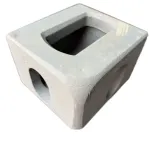
Corner casting steel vs aluminum
Every shipping container in the world — all 40 million of them — rests on eight critical components. Corner castings are the load-bearing blocks at each corner of an ISO shipping container, and they are the universal interface between the container and every crane, twistlock, spreader, and chassis on the planet. When you lift a container, stack it nine high on a ship, or lock it to a truck trailer, every ton of force flows through these fittings.