
Volume of a shipping container
Shipping containers are a key element of global trade as they enable the efficient and safe transport of goods around the world. When choosing the right container for your needs, container volume plays a vital role. In this article, we take a detailed look at the volume specifications of shipping containers so you can better understand their capacity and usage.
Standard 20ft containers
The most common type of container is the 20-foot container, often referred to as a TEU (Twenty-foot Equivalent Unit). This container has an internal volume of approximately 33 cubic metres. It is ideal for transporting smaller quantities of goods or for goods that require less space. The standard container internal dimensions of this type of container are approximately 5.9 metres in length, 2.35 metres in width and 2.39 metres in height, providing ample space for a wide range of cargo.
20ft high containers (HC)
For those who need more space in height, 20ft containers are available with the HC (High Cube) designation. These containers have an increased internal height, which increases their total volume to approximately 37 cubic metres. The shipping container internal dimensions vary mainly in height, which reaches up to 2,695 metres. This variant is suitable for loads that are higher than the standard container height.
Standard 40ft containers
If you need to transport larger quantities of goods, 40ft containers offer more than double the space of 20ft containers. With an internal volume of approximately 67 cubic metres, these containers are optimal for larger shipments. The standard internal length of these containers is around 11.98 metres, with a width of 2.33 metres and a height of 2.32 metres. These containers are often used for transporting oversized or heavy goods.
40ft high containers (HC)
For even greater capacity, 40ft HC containers are available, offering even more volume thanks to the increased height. Their internal volume is approximately 70 cubic metres. These containers have an internal height of up to 2,655 metres, which allows for the transport of higher loads. They are ideal for situations where the usable space needs to be maximised.
Impact of volume on logistics and costs
Understanding the volume specifications of containers is crucial for efficient logistics planning and cost optimization. By selecting a container with the appropriate volume, you can maximize the amount of goods transported while minimizing unused space. Proper container selection can also lead to a reduction in the number of shipments required and thus savings on transportation costs.
Application and use
The different volume specifications of the containers allow them to be used in a wide range of industries. From the automotive and electronics industries to the transport of food and textiles, containers adapt to a variety of needs. Knowing the volumes of each type of container will allow you to better plan your shipment according to the specific requirements of your goods.
Other container news...
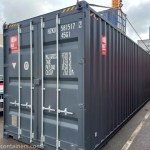
Shipping container 12m (40 ft)
A 12m shipping container is an investment that, if properly selected and cared for, will pay off in decades of trouble-free use. Whether you plan to use it as a warehouse, workshop, garage or the basis for a residential module — the key is careful selection of the condition, a thorough inspection before purchase and high-quality preparation of the base for placement. Take the time to compare offers, check the seller’s references and do not hesitate to personally inspect the container before buying. A properly selected 40-foot container will serve you reliably for many years.
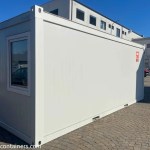
Construction container
A construction container is an investment in safety, order and comfort — whether it is protecting tools from thieves or providing a dignified environment for workers. There are three key decisions: type (storage, residential, sanitary, rubble), form of acquisition (rent vs. purchase) and legislative provision (occupation, building code).

Construction cabin – selection, tips, dimensions and prices
Every construction project – whether a family house, a development project or a reconstruction – starts with the infrastructure. No construction manager, craftsman or investor who needs an on-site office, a changing room for workers or a safe storage for tools can do without a quality construction cell. But navigating the offer is not easy: residential containers, sanitary cells, storage modules, rental, purchase, refurbished pieces… This guide will give you answers to all the essential questions in one place.
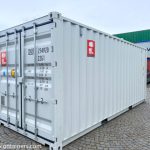
Storage container
A storage container is a lockable steel box designed for the safe and dry storage of materials, tools, goods or equipment. Originally created as a shipping container for maritime transport, its durability and versatility have found their way onto construction sites, corporate premises and private land.