
Refurbished Shipping Container
What is a refurbished shipping container?
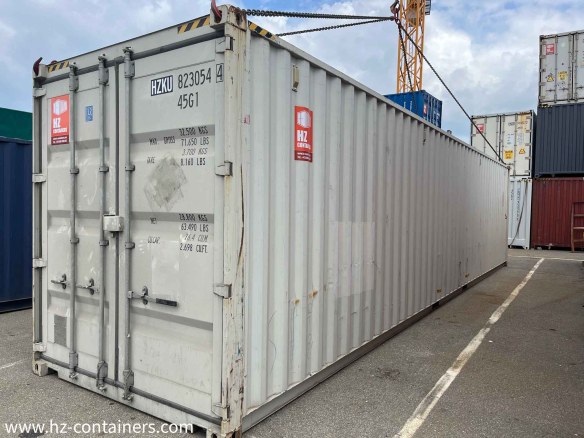
Refurbished shipping container (also known as renovated or reconditioned container) is a used shipping container that has undergone professional inspection, comprehensive maintenance and repairs with the aim of restoring its full functionality, safety and aesthetic value. It is most commonly used for storage or transport, but through renovation it gains extended service life and a significantly better appearance.
Refurbished containers represent a compromise between brand‑new containers and cheap, unmaintained “as‑is” units that may hide risks (corrosion, leaks, poor floor). The basis for refurbishment are containers that meet the WWT (Wind and Water Tight) category, which are structurally sound and resistant to weather influences.
Term distinction:
- Refurbished: Minimal structural changes, focus on repair and aesthetic improvement.
- Modified: Structural changes (windows, doors, insulation, engineering systems).
- Repurposed: Change of purpose (architecture, residential and commercial buildings).
Repair and refurbishment process: How a professional container refurbishment is carried out
Refurbishment of a shipping container is a complex process involving several expert phases. It takes place in container depots – specialized sites near ports or logistics centres where containers are stored, inspected, cleaned and repaired.
Key phases of the refurbishment process
| Phase | Description | Technical aspects |
|---|---|---|
| Selection and initial inspection | Inspection of structure, floor, walls, roof, doors, seals | Diagnosis according to ISO 1496/1, using inspection protocols |
| Damage repairs | Welding of holes, panel replacement, floor and door repair | Use of COR‑TEN steel, standardized welds, replacement of plywood |
| Surface preparation | Cleaning, mechanical grinding and removal of corrosion layers | Industrial grinders, wire brushes, environmental measures |
| Coating application | Anti‑corrosion primer, industrial topcoat | Marine‑grade enamels, airless spraying, colour choice per customer request |
| Final inspection | Check of tightness, functionality, appearance | Test by closing and back‑lighting, testing locks and seals |
1. Selection and initial inspection
Inspection is crucial for determining the scope of repairs. Experts check:
- Structural integrity (bending, deformation, condition of corner castings)
- Floor (soft spots, mold, chemical contamination – e.g. pesticides)
- Walls and roof (holes, deep corrosion, water ingress points, weld cracks)
- Doors and seals (lock functionality, elasticity and integrity of rubber seals)
Tip: Inspection protocols often follow ISO 6346 and ISO 1496/1.
2. Repairs of common damages
Professional depot work enables the use of specialist methods:
- Welding of holes and perforated walls: Performed with arc welding, always using the appropriate type of COR‑TEN steel to preserve corrosion resistance.
- Panel replacement: For major damage, entire steel panels (sidewalls, roof, floor beam) are swapped out.
- Denting removal: Dents that could affect roof water runoff or structural strength are mechanically flattened.
- Rust remediation: Surface rust is removed mechanically; deep rust must be cut out completely and replaced.
- Floor repair: Damaged plywood (usually 28 mm thick, bonded with phenolic resin) is replaced with new certified material.
- Door and seal maintenance: Locks are replaced, hinges lubricated, seals (EPDM rubber) renewed.
3. Surface preparation and coating application
- Mechanical cleaning: De‑contamination from oil, dust, old stickers (in accordance with environmental regulations).
- Grinding and sandblasting: Removal of old paint and rust (sandblasting is more expensive but most effective).
- Anti‑corrosion primer: Essential for long‑term steel protection.
- Topcoat: Marine‑grade enamel, often applied in two layers. Colour chosen by the customer.
4. Final inspection and handover
- Tightness test (closed and back‑lit, optionally water test)
- Check of door, hinge and lock functionality
- Verification of even lines and absence of corrosion and cracks
Types of repairs and levels of refurbishment
| Refurbishment type | Description | Suitable use |
|---|---|---|
| Typical refurbishment | Repair of key damages, new exterior coating | Standard storage, short‑term placement |
| Full refurbishment | Repairs of interior as well, seal replacement, floor cleaning | Long‑term storage, representative purposes |
| Factory refurbishment | Disassembly, sandblasting, complete parts replacement and paint per factory specification | Corporate sites, high demands on appearance and durability |
Distinction of key terms: Refurbished vs. Modified vs. Repurposed
| Attribute | Refurbished container | Modified container | Repurposed container |
|---|---|---|---|
| Main goal | Repair, restoration, aesthetics | Structural change, new function | New purpose, architecture |
| Typical modifications | Welding, coatings, floor replacement | Windows, doors, insulation, electrical installations | Assembling, joining, major reconstruction |
| Examples of use | Warehouse, archive, tools | Office, workshop, server room | Residential house, café, pop‑up shop |
| Structural change | Minimal | Significant | Fundamental |
Benefits of refurbished shipping containers
Economic advantage
- Lower acquisition cost compared to new containers
- Much longer service life and reliability than “as‑is” containers
- Higher residual value due to performed repairs
Extended lifespan and protection
- High‑quality anti‑corrosion coating significantly extends service life (up to 15–20 years depending on climate and maintenance)
- Better protection of stored assets against moisture, dust and pests
Aesthetic improvement
- New coating, uniform appearance without logistics markings and rust
- Option to choose corporate colour and branding
Environmental benefit
- Saving of raw materials, energy and CO₂ emissions compared with manufacturing new containers
- Part of circular economy (principles RRR: Reduce, Reuse, Recycle)
Preservation of durability and safety
- Construction of COR‑TEN steel (chemical composition guaranteeing increased corrosion resistance)
- Robust locking mechanisms, security locks (container lockboxes)
Speed and flexibility
- Immediate storage solution – mobility, easy relocation
- Possibility of expansion (joining multiple containers)
What to watch out for when buying a refurbished container
1. Beware of “just painted”
- A new paint job can hide deep corrosion, leaks, or rotted floor.
- Require an inspection protocol and detailed repair documentation (photos before and after).
2. Supplier reputation and expertise
- Prefer companies with a long history, transparent references and the possibility to physically inspect the container.
- Professional firms often provide a warranty (e.g., 12 months on tightness and coating).
3. Thorough inspection
Ask for or examine photos of these areas:
- Doors and seals (smooth operation, tightness, rubber condition)
- Roof and corner castings (dents, corrosion, stability issues)
- Floor (soft spots, chemical stains, mold)
- Interior walls, welds (signs of repairs, visible rust)
- Overall shape – visual check that the container “sits straight”
4. Transport and placement
- Ensure sufficient space for arrival and handling with a suitable vehicle (e.g., truck with hydraulic arm).
- Base: ideally a gravel bed, concrete pads or sturdy footings for even weight distribution.
Technical standards, lifespan and maintenance
Key standards and lifecycle
- ISO 6346: marking and identification of containers
- ISO 1496/1: dimensions and technical requirements for dry containers
- Lifespan of a refurbished container: on average 15–20 years (with regular maintenance)
Recommended maintenance
- Regular check of tightness and coating condition (once a year)
- Lubricating door hinges and locks
- Cleaning ventilation openings
- Immediate removal of newly formed corrosion
Frequently asked questions (FAQ)
How can I recognise a quality‑refurbished container?
Straight shape, no signs of corrosion, tight doors, new or partially new floor, complete photos of repairs.
Can I store food or sensitive materials in a refurbished container?
Yes, provided it has not been contaminated by chemicals and carries a “food‑grade” certification.
Can a refurbished container be further modified?
Yes, windows, doors, insulation, etc. can be added according to future needs.
What is the weight and payload of a refurbished container?
20′ container: approx. 2 200–2 400 kg empty, payload 28 000 kg
40′ container: approx. 3 700–4 000 kg empty, payload 26 000–30 000 kg

 Czech Republic, Děčín
  FREE SHIPPING

Other container news...
Corner casting steel vs aluminum
Every shipping container in the world — all 40 million of them — rests on eight critical components. Corner castings are the load-bearing blocks at each corner of an ISO shipping container, and they are the universal interface between the container and every crane, twistlock, spreader, and chassis on the planet. When you lift a container, stack it nine high on a ship, or lock it to a truck trailer, every ton of force flows through these fittings.

Construction cabin – selection, tips, dimensions and prices
Every construction project – whether a family house, a development project or a reconstruction – starts with the infrastructure. No construction manager, craftsman or investor who needs an on-site office, a changing room for workers or a safe storage for tools can do without a quality construction cell. But navigating the offer is not easy: residential containers, sanitary cells, storage modules, rental, purchase, refurbished pieces… This guide will give you answers to all the essential questions in one place.
Storage container
A storage container is a lockable steel box designed for the safe and dry storage of materials, tools, goods or equipment. Originally created as a shipping container for maritime transport, its durability and versatility have found their way onto construction sites, corporate premises and private land.
Shipping container 12m (40 ft)
A 12m shipping container is an investment that, if properly selected and cared for, will pay off in decades of trouble-free use. Whether you plan to use it as a warehouse, workshop, garage or the basis for a residential module — the key is careful selection of the condition, a thorough inspection before purchase and high-quality preparation of the base for placement. Take the time to compare offers, check the seller’s references and do not hesitate to personally inspect the container before buying. A properly selected 40-foot container will serve you reliably for many years.