
Red Sea crisis: Shipping containers face new challenges
In the last 24 hours, there have been serious reports of problems in the area of transportation and logistics, particularly in the Red Sea region. The Greek tanker MV Sounion, which was attacked by Houthi militants, is now at the center of a rescue operation. This event significantly affects maritime transport, as there is a risk of an environmental disaster in this already unstable area.
Operation to Rescue the Sounion Tanker
On September 14, 2024, the operation to tow the Greek tanker MV Sounion, which was attacked at the end of August, began. This operation is crucial for preventing a potential environmental disaster, as the tanker contains approximately one million barrels of oil. Rescue teams are trying to prevent a massive oil spill, which would have a devastating impact on the Red Sea ecosystem.
Challenges for International Logistics
Tensions in the Red Sea have a direct impact on the international logistics chain. Shipping companies are facing delays and must reassess their routes to avoid risky areas. This increases transportation costs while threatening the smooth flow of essential raw materials and goods. Uncertainty in the region forces carriers to seek alternative and safer routes.
Environmental Impacts and Responsibility
In addition to economic challenges, incidents such as the attack on the MV Sounion also raise questions about environmental responsibility. Every oil spill poses a threat to marine life and can have long-term consequences for the environment. This incident underscores the need for stricter safety measures and international cooperation in protecting maritime routes.
Green Technologies in Maritime Transport
In response to growing environmental concerns, some companies are working to implement green technologies, such as so-called “scrubbers.” However, as recent studies show, these technologies often merely transfer pollution from the air to the oceans, which questions their effectiveness and suggests the need for innovative approaches to environmental protection.
The Future of Maritime Transport
Incidents such as the attack on the MV Sounion suggest that the future of maritime transport will depend on the industry’s ability to adapt to new threats and challenges. Modernizing the fleet, investing in safety technologies, and expanding international cooperation will be key to ensuring safe and efficient maritime transport.
Other container news...

The OPNBar leverage tool
The OPNBar leverage tool is a professional-grade, multi-purpose hand tool designed specifically for the shipping container and trucking industry. Manufactured by Shipping Container Safety International (SCS International) and proudly Made in the USA, the OPNBar is fundamentally a 3-in-1 trucker tool that combines a shipping container door leverage bar, a tire thumper, and a 5th wheel pull hook into a single, compact steel implement. The name “OPNBar” is a direct reference to its primary function: it is the bar that “opens” containers.

40 Foot Container Dimensions
If you have ever booked ocean freight, planned a warehouse layout, or designed a modular building project, you have asked the same question: what are the exact 40 foot container dimensions — and what do they mean for what you can actually load? The numbers are standardized worldwide, but the practical implications of those numbers are surprisingly nuanced. A 40-foot container is not simply 40 feet of usable space, and its weight limits are not what most people assume. This guide covers every measurement, every weight rating, and every loading consideration you need to make informed decisions about the world’s most common shipping container.
Quick Answer: A standard ISO 40-foot shipping container measures 12.19 m (40 ft) long × 2.44 m (8 ft) wide × 2.59 m (8 ft 6 in) high externally and provides approximately 67.7 m³ (2,390 ft³) of usable internal volume. The maximum gross weight is 30,480 kg (67,200 lbs), with a typical payload capacity of approximately 26,700–26,800 kg (58,900–59,000 lbs).
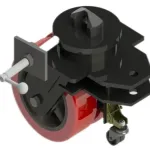
Shipping container wheels
Moving a 12-meter-long steel box that weighs up to 67,200 pounds was, for decades, exclusively a job for a crane and a licensed operator. That reality has changed. Shipping container wheels — an umbrella term covering a family of mobility solutions — now let a single person reposition a 20ft or 40ft container across a yard, warehouse, or construction site without calling in heavy equipment. This guide covers every aspect of container wheel systems: what they are, how they work, the types available, what they cost, and how to choose the right kit for your container.
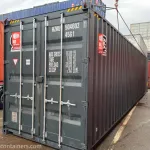
Can You Modify a 40ft High Cube Container?
The short answer is yes — you absolutely can modify a 40ft high cube container, and it is one of the most popular container types for modification projects worldwide. But the real question is not whether you can modify one; it is how to do it correctly, safely, legally, and within budget. This guide answers every dimension of that question, drawing on engineering principles, real-world pricing data, and the collective experience of thousands of modified container projects.
Key Takeaway: A 40ft high cube container offers 320 square feet of floor space with an extra foot of ceiling height compared to a standard container — making it the ideal canvas for offices, workshops, homes, retail spaces, and industrial applications. The extra height is particularly valuable when you add insulation and still want comfortable headroom.