
Maritime Transport and Its Importance
What is Maritime Transport?
Maritime transport represents a key method of transporting goods and people across seas and oceans using various types of vessels. It is not only historically the oldest but also the most fundamental form of international transport and forms the absolute backbone of global trade. According to the International Maritime Organization (IMO), approximately 90% of all world goods are transported by sea, making it absolutely indispensable for the functioning of the world economy.
Importance for the Global Economy
- Connection of economies: Maritime transport connects industrially developed countries with countries that supply raw materials. For example, oil from the Middle East travels to refineries in Asia and Europe, electronics from East Asia to North America, etc.
- Efficiency: It is the cheapest and most energy-efficient way to transport large volumes over long distances (the transport price per ton-kilometer is significantly lower than other types of transport).
- Integration with other types of transport: Thanks to containerization, cargo can be easily transported between ships, trains and trucks within so-called multimodal transport.
Key Statistics
| Parameter | Value |
|---|---|
| Share of world trade | 90% |
| Number of commercial ships | over 50,000 |
| Number of registered countries | more than 150 |
| Number of employed seafarers | over 1 million |
| Largest port (TEU, 2022) | Shanghai: 47.3 million TEU |
| Second largest port (TEU) | Singapore: 19.3 million TEU |
Source: hz-containers.com
Key Role in Global Trade
Maritime transport is the fundamental pillar of a globalized economy. Without it, it would not be possible to efficiently move raw materials or finished products between continents. It significantly influences international relations, economic growth, employment and the daily lives of billions of people.
Main Benefits
- Ensuring supply chain continuity: Enables the connection of manufacturers, suppliers and customers across the world.
- Specialization of production: Countries can specialize in production where they have a comparative advantage and import other commodities.
- Availability of goods: Thanks to regular shipping lines, products are available globally, often at competitive prices.
Examples of Major Trade Routes
- Suez Canal (Asia–Europe connection)
- Panama Canal (Pacific–Atlantic connection)
- Strait of Malacca (key route between India, China and Japan)
Largest World Ports (2022, by TEU Volume)
| Port | Country | Annual Volume (TEU) | Importance |
|---|---|---|---|
| Shanghai | China | 47.3 million | Largest transshipment hub in the world |
| Singapore | Singapore | 19.3 million | Key hub for Asia |
| Rotterdam | Netherlands | ~15 million | Gateway to Europe |
Types of Maritime Transport and Types of Ships
Maritime transport is highly specialized and includes various types of ships and transport methods, adapted to the nature of the cargo being transported.
Container Shipping
- Standardized containers: The most common are 20-foot (TEU) and 40-foot (FEU) containers according to ISO standards.
- Capacity of largest ships: Modern Ultra Large Container Vessel (ULCV) class container ships transport over 24,000 TEU at once.
- Advantages: Fast handling, lower risk of damage/theft, easy integration into multimodal logistics.
Types of Container Transport
| Type of Transport | Description | Suitable for |
|---|---|---|
| FCL | One shipper rents the entire container | Large volumes, companies |
| LCL | Goods from multiple shippers in one container | Smaller shipments, e-shop |
Bulk Cargo Transport
- Dry bulk: Iron ore, coal, grain, cement, fertilizers
- Liquid bulk: Oil, LNG, chemicals, oils
- Specialized ships: Bulk carriers, tankers (divided into crude oil tankers, product tankers, etc.)
Break Bulk and Project Cargo Transport
- Break bulk: Goods that cannot be transported in containers (machinery, turbines, structures)
- Project cargo: Oversized, heavy and atypical cargo (industrial technology, construction machinery)
- Special handling: Requires special cranes, manipulators and logistics planning
Advantages and Disadvantages of Maritime Transport

Main Advantages
- Enormous transport capacity: The largest ships transport up to 24,000 TEU, tankers up to 400,000 DWT (deadweight tons).
- Low price per ton-kilometer: Maritime transport is many times cheaper than air or road transport for large volumes.
- More environmentally friendly than other types of transport: CO2 emissions per ton-kilometer are lower than for aircraft or trucks.
- Versatility: Allows transport of almost any type of goods, including hazardous materials (IMO Class 1–9).
- Safety: Modern ships have advanced navigation systems, monitoring, security and goods are often insured.
Disadvantages
- Low speed: Transit times are in the order of weeks (for example, China–Europe 25–40 days).
- Dependence on ports: Goods must be further transported inland (multimodality).
- Impact of weather and geopolitics: Storms, hurricanes, piracy, blockades of waterways (Suez, Panama) can cause delays and damage.
- Administrative complexity: Requires detailed documentation, customs clearance, knowledge of international regulations.
- Environmental challenges: SOx/NOx emissions, sea pollution, requirements for reducing carbon footprint.
Key Players and Infrastructure
Shipping Companies
- Largest companies: Maersk, MSC, CMA CGM, COSCO – control most of the world’s container transport.
- Operate regular lines and ad-hoc transport.
- Own fleets of various types of ships – container ships, tankers, bulk carriers, etc.
Ports and Terminals
- Strategic infrastructure: Ports Shanghai, Singapore, Rotterdam, Los Angeles, Hamburg.
- Automation: Modern ports use robotic cranes, AGV (autonomous vehicles), IoT sensors for cargo monitoring.
- Connection to rail and road: Port efficiency significantly affects clearance speed and logistics continuity.
Freight Forwarding Companies
- Provide complete logistics services: booking shipping space, documentation, customs services, ground transport.
- Key players: Kuehne+Nagel, DB Schenker, DHL Global Forwarding, DSV.
Shipyards and Repairs
- Largest shipyards: South Korea (Hyundai Heavy Industries), China, Japan.
- Innovation: New types of propulsion (LNG, methanol, hybrids), more efficient hull shapes, environmental technologies (scrubbers).
Regulation and Safety in Maritime Transport
International Rules and Organizations
- IMO (International Maritime Organization): Sets global standards for safety, environmental protection and working conditions in shipping.
- SOLAS: International Convention for the Safety of Life at Sea – mandatory equipment, construction, rescue equipment.
- MARPOL: International Convention for the Prevention of Pollution from Ships – limits on SOx, NOx emissions, oil spills, ballast water.
Environmental Requirements
- Limits on sulfur emissions: From 2020 max. 0.5% sulfur in fuels (Emission Control Areas – ECA have even stricter limits).
- Pressure for decarbonization: IMO targets – reduce CO2 emissions by 50% by 2050 (compared to 2008).
- Technology: LNG as fuel, scrubbers, hybrid propulsion, speed optimization (slow steaming).
Modern Trends and Future of Maritime Transport
Digitalization and Automation
- Real-time tracking: Monitoring ships and cargo via satellite (AIS, IoT).
- Automated ports: Autonomous cranes, vehicles, warehouse systems.
- Blockchain: Safer and faster document processing (e.g., electronic bill of lading).
Artificial Intelligence and Optimization
- Route optimization: AI algorithms consider weather, fuel consumption, delay prediction.
- Predictive maintenance: Sensors and data enable more efficient ship service planning.
- Smart logistics: Real-time connection of production planning, transport and inventory management.
Sustainability and Green Logistics
- Alternative fuels: Green ammonia, methanol, hydrogen, biofuels.
- Design innovation: New hull shapes, wind propulsion (modern sails, rotors), lighter materials.
- Slow steaming: Reducing ship speed significantly reduces fuel consumption and emissions.
Impact on the Workforce
- New professions: Specialists in IT, data analytics, autonomous systems management.
- Changes for seafarers: Greater emphasis on technical and digital literacy, education in cybersecurity.
 Czech Republic, Třebíč
  FREE SHIPPING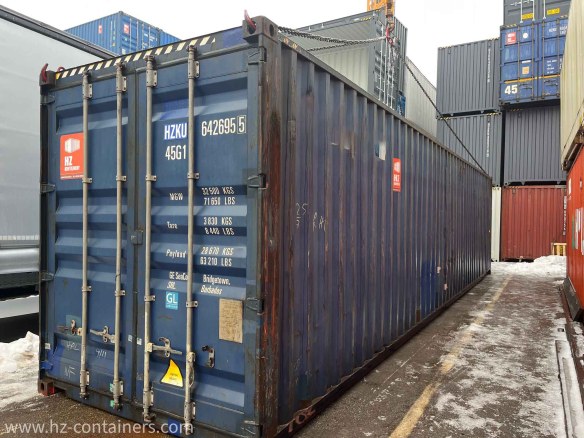

Other container news...

New sea shipping containers
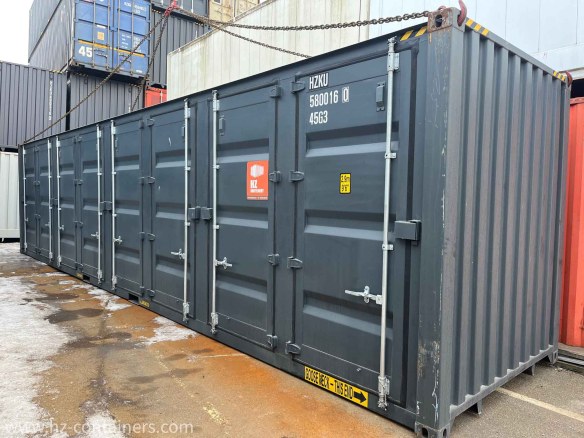
If you are currently considering purchasing a new shipping container, you are not alone. While just twenty years ago containers were used almost exclusively for maritime transport, today they have found their way into construction, storage, business, and even housing. This growing popularity brings with it a host of questions: Which type should you choose? How much does it cost? How do you recognize quality? How can you avoid falling victim to scammers?
New shipping containers
If you are currently considering purchasing a new shipping container, you are not alone. While just twenty years ago containers were used almost exclusively for maritime transport, today they have found their way into construction, storage, business, and even housing. This growing popularity brings with it a host of questions: Which type should you choose? How much does it cost? How do you recognize quality? How can you avoid falling victim to scammers?

6m shipping container
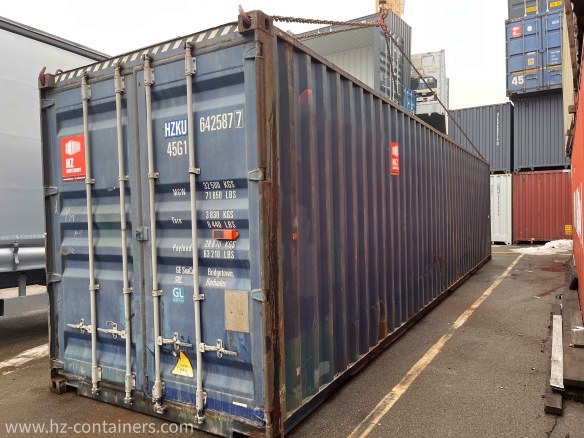
Are you thinking about buying a 6-meter shipping container but aren’t sure what to look for? You are not alone—this 20-foot container is the best-selling size on the Czech market, and the differences between various types, conditions, and prices can be significant. In this guide, you will find everything you need to know: from exact dimensions and a comparison of categories (such as “one-way,” refurbished, and “Cargo Worthy”) to current prices and shipping advice.
Corner casting steel vs aluminum
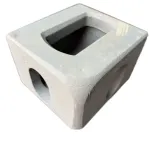
Every shipping container in the world — all 40 million of them — rests on eight critical components. Corner castings are the load-bearing blocks at each corner of an ISO shipping container, and they are the universal interface between the container and every crane, twistlock, spreader, and chassis on the planet. When you lift a container, stack it nine high on a ship, or lock it to a truck trailer, every ton of force flows through these fittings.