
HS Code (Harmonized System) – How to Correctly Classify Goods
In global trade, precision and clarity are key. Imagine a world where each country uses its own unique system to describe and classify goods crossing its borders. The result would be chaos, delays, and endless administrative obstacles. This is precisely why the Harmonized System (HS) was created, serving as a universal language of international trade.
This page is a comprehensive guide to the world of HS codes – a key tool for anyone trading across borders, from beginning entrepreneurs to experienced importers and logistics specialists. You will find detailed explanations of how the system works, why knowledge of it is essential, what variants exist, and practical tips for correct goods classification – including shipping containers.
What is the Harmonized System (HS)? Definition, History and Purpose
The Harmonized System of Description and Coding of Goods (HS, Harmonized System) is an internationally standardized nomenclature for goods classification. It was developed and is managed by the World Customs Organization (WCO) based in Brussels.
Main Purposes and Significance of the HS System
| Purpose | Description |
|---|---|
| Unified Classification | HS provides a systematic, logical structure for all traded goods. It is used by over 200 countries, covering 98% of trade. |
| Setting Customs Rates | Customs authorities set tariffs and taxes according to the assigned HS code. |
| Collection and Analysis of Trade Statistics | HS codes enable countries and international institutions to monitor trade flows and shape economic policy. |
| Control and Regulation | They facilitate control of risk goods (weapons, CITES, hazardous substances, quotas, sanctions…). |
| Simplification and Acceleration of Processes | They enable clear communication across countries, reduce the risk of errors and delays. |
The HS system is regularly updated, typically every 5 years. This reflects technological development and changes in world trade (e.g., new products such as drones, advanced electronics, etc.). The latest versions and changes are published on the WCO website (org topics nomenclature overview).
Structure of HS Code: How to Read the Numerical Code
The basis of HS is a six-digit numerical code (HS code), which consists of three levels of detail:
| Level | Number of Digits | Meaning | Example (container) |
|---|---|---|---|
| Chapter | 2 | Basic group of goods | 86 (vehicles, vessels) |
| Heading | 4 | Group within a chapter | 8609 |
| Subheading | 6 | Specific type of goods within a heading | 8609.00 |
Each additional digit specifies the nature of the product.
Practical Example: Shipping Container
- Chapter 86: Vehicles, vessels, transport equipment
- Heading 8609: Containers (including containers for transporting liquids) specially designed and equipped for transport by one or more modes of transport
- Subheading 8609.00: Customs classification for most standard transport containers
The correct HS code for a shipping container is therefore 8609.00. In some countries, it may be supplemented with additional digits.
How Does the HS Code Structure Look in Practice?
| Example Product | Chapter | Heading | Subheading | Meaning | Complete HS Code |
|---|---|---|---|---|---|
| Shipping Container | 86 | 09 | 00 | Specially designed container | 8609.00 |
| Coffee | 09 | 01 | 11 | Coffee, unroasted, decaffeinated | 0901.11 |
| Notebook | 84 | 71 | 30 | Portable computer | 8471.30 |
National and Regional Variants: HTS, Schedule B and TARIC
The six-digit HS code is the foundation, but most countries expand it further according to their own needs. The best-known systems are:
HTS (Harmonized Tariff Schedule) – USA
- HTS code is ten digits: the first 6 digits are international HS, 7–8 are US subheading, 9–10 are statistical suffix.
- Managed by USITC, enforced by CBP.
- Precise matching is necessary for imports to the USA – otherwise risk of fines, goods detention, or retroactive tariff assessment.
Schedule B – USA (exports)
- Also ten digits, managed by U.S. Census Bureau.
- Primarily for export statistics, but the base (6 digits) is always consistent with HS.
TARIC – European Union
- TARIC code has up to 10 digits: the first 6 is HS, 7–8 is Combined Nomenclature (CN), 9–10 is TARIC measures (e.g., anti-dumping).
- Detailed system for tariffs and trade measures within the EU.
Overview Table of Differences
| System | Country/Region | Number of Digits | Purpose | Administrator |
|---|---|---|---|---|
| HS | Global | 6 | Basic Classification | WCO |
| HTS | USA (imports) | 10 | Imports, tariffs, rates | USITC/CBP |
| Schedule B | USA (exports) | 10 | Export Statistics | Census Bureau |
| TARIC | EU | 10+ | Tariffs, Trade Measures | European Commission |
Why is Correct Goods Classification Critical?
Correct product classification is not a formality – it has a fundamental impact on:
- Amount of Tariffs and Taxes: Wrong code = overpayment or underpayment, fines or interest.
- Legal Consequences: Incorrect classification is a violation of law, threatening fines, goods seizure, criminal prosecution.
- Logistics and Cash Flow: Goods detention, supply chain disruption, unnecessary storage costs.
- Trade Benefits: To obtain preferential tariffs (free trade agreements), the correct HS code is necessary.
- Regulatory Compliance: Licensing, mandatory certificates, sanitary/phytosanitary requirements.
TIP: Any change to a product, modification, or new technology may require reassessment of the code!
How to Correctly Classify Goods: Rules and Systematic Procedure
General Rules for Interpretation (GRI)
| Rule | Meaning |
|---|---|
| 1 | Legal classification is based on the wording of numbers and notes, not merely the chapter title. |
| 2 | Unfinished products, sets, disassembled goods are often classified as finished; mixtures according to composition. |
| 3 | If goods fall under multiple headings, the most precise description or main character decides, or the last in order. |
| 4 | If previous rules cannot be applied, goods are classified according to similarity with other products. |
| 5 | Specific rules for packaging and cases. |
| 6 | Classification into subheadings (six-digit level) according to the same principles. |
Notes to Sections and Chapters
- Each chapter contains legally binding notes: definitions, exclusions, procedures.
- Ignoring notes = frequent cause of incorrect classification.
Systematic Classification Procedure
- Identify the product – determine exact composition, use, material, function.
- Study the nomenclature – compare descriptions in the HS table of contents (chapters, headings, subheadings).
- Carefully read the notes – especially legally binding definitions.
- Apply GRI rules – especially for complex products, sets or combinations.
- Verify correctness at the subheading level.
- Check national extensions (HTS, TARIC…).
Example Procedure for a Shipping Container:
- I determine that it is a standard ISO container for multiple uses.
- In the HS nomenclature, I find Chapter 86 – vehicles and transport equipment.
- In Heading 8609 – containers specially designed for transport by multiple modes of transport.
- I verify in the notes that I meet the definition (repeated use, easy handling).
- Result: HS code 8609.00.
Tools and Resources for Correct Classification
For correct classification, we recommend using the following tools and services:
| Tool/Resource | Description | URL |
|---|---|---|
| WCO Trade Tools | Official online browser of HS nomenclature and notes | https://www.wcotradetools.org/ |
| TARIC EU | Search tool for customs rates and measures for the European Union | https://ec.europa.eu/taxation_customs/dds2/ |
| HTS Search Tool (USITC) | Official search tool for HTS codes for imports to the USA | https://hts.usitc.gov/ |
| Schedule B Search Tool (USA) | Tool for searching US export codes | https://uscensus.prod.3ceonline.com/ |
| CROSS (CBP USA) | Database of binding rulings on goods classification | https://rulings.cbp.gov/ |
| Binding Information on Tariff Classification (EU) | Possibility to request a binding opinion on the classification of a specific product within the EU | https://ec.europa.eu/taxation_customs/bti |
Customs Agents and Consultants
- For complex or risky goods, it is advisable to use the services of an experienced customs broker or specialized consultant.
- They will help minimize the risk of sanctions and optimize the tariff amount.
Most Common Errors and Practical Tips
Classification Errors
- Mechanical adoption of the code from the supplier without verification.
- Ignoring changes in the product, variants, new technologies.
- Not reading legally binding notes in the HS nomenclature.
- Not addressing differences between HS, HTS and TARIC (when importing/exporting outside the EU).
Practical Advice
- When in doubt, always compare multiple chapters/headings.
- Monitor updates – new HS versions may change classification.
- Document the decision-making process in case of inspection.
- Use official tools – WCO, TARIC, CROSS, ZISZ/BTI.
- In case of uncertainty, request a binding opinion.
Conclusion: HS Code as a Strategic Tool for Successful International Trade
The HS code is more than just a number on a customs declaration. It is the cornerstone of international trade, affecting your costs, delivery speed, legal compliance, and opportunities to obtain preferential tariffs. Proper understanding and use of the Harmonized System enables companies not only to fulfill their legal obligations, but also to optimize supply chains and build a reputation as a reliable partner in the global market.
Investment in correct goods classification is an investment in the success and sustainability of your business.

 Czech Republic, Neratovice
  FREE SHIPPING
Other container news...
Corner casting steel vs aluminum
Every shipping container in the world — all 40 million of them — rests on eight critical components. Corner castings are the load-bearing blocks at each corner of an ISO shipping container, and they are the universal interface between the container and every crane, twistlock, spreader, and chassis on the planet. When you lift a container, stack it nine high on a ship, or lock it to a truck trailer, every ton of force flows through these fittings.

Construction cabin – selection, tips, dimensions and prices
Every construction project – whether a family house, a development project or a reconstruction – starts with the infrastructure. No construction manager, craftsman or investor who needs an on-site office, a changing room for workers or a safe storage for tools can do without a quality construction cell. But navigating the offer is not easy: residential containers, sanitary cells, storage modules, rental, purchase, refurbished pieces… This guide will give you answers to all the essential questions in one place.
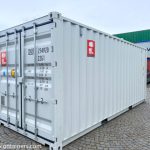
Storage container
A storage container is a lockable steel box designed for the safe and dry storage of materials, tools, goods or equipment. Originally created as a shipping container for maritime transport, its durability and versatility have found their way onto construction sites, corporate premises and private land.
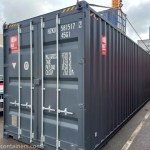
Shipping container 12m (40 ft)
A 12m shipping container is an investment that, if properly selected and cared for, will pay off in decades of trouble-free use. Whether you plan to use it as a warehouse, workshop, garage or the basis for a residential module — the key is careful selection of the condition, a thorough inspection before purchase and high-quality preparation of the base for placement. Take the time to compare offers, check the seller’s references and do not hesitate to personally inspect the container before buying. A properly selected 40-foot container will serve you reliably for many years.