
How Long Is a Shipping Container Depreciated
Depreciation of a shipping container represents a systematic allocation of the container’s acquisition price into company expenses during its expected useful life. The depreciation process is a key tool not only for accurate representation of asset value but also for tax base optimization. In Czech accounting and tax legislation, depreciation of a shipping container is governed by Act No. 586/1992 Coll., on income taxes (ZDP), and Act No. 563/1991 Coll., on accounting.
The depreciation group of a shipping container determines how quickly the container is depreciated from a tax perspective. Correct classification into the appropriate group has a fundamental impact on tax liability and investment planning.
Legislative Framework and Limits for Depreciation
Current Limit for Long-Term Tangible Assets (DHM)
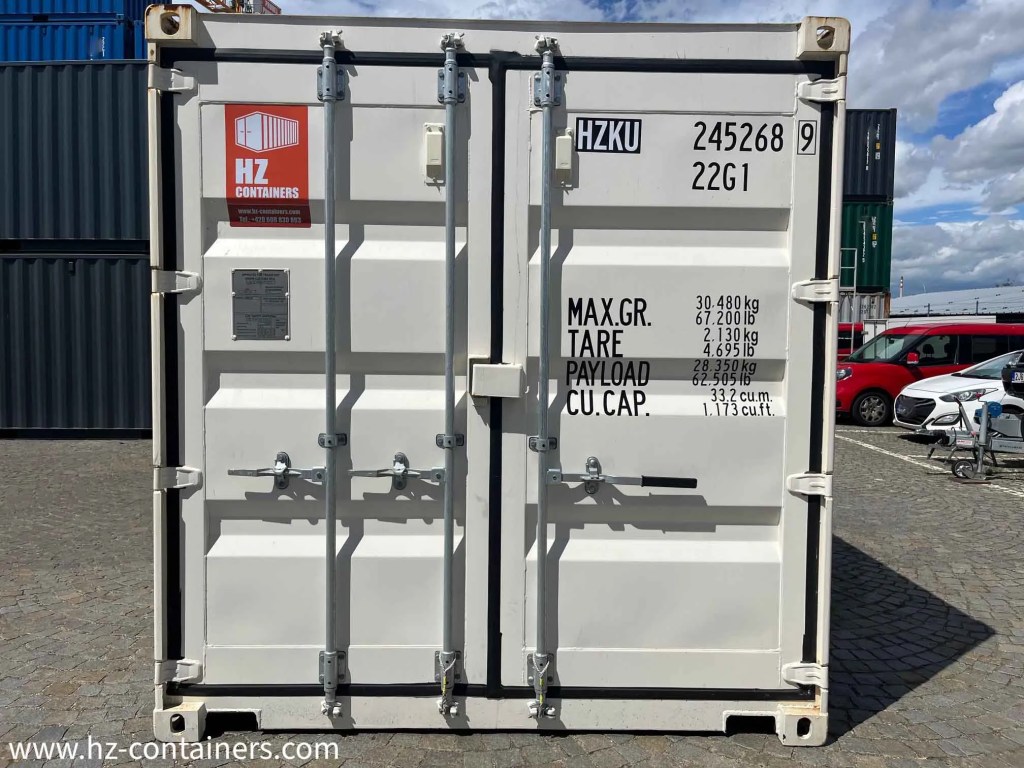
As of January 1, 2021, the limit for classification as long-term tangible assets was increased to 80,000 CZK. Any container with an acquisition price above this limit is subject to accounting and tax depreciation. For VAT purposes and tax deduction, it is also necessary to record containers acquired under older conditions (above 40,000 CZK until 2020).
Act No. 586/1992 Coll., on Income Taxes
- Determines depreciation groups and minimum depreciation periods.
- Regulates the possibility of technical improvements, changes in depreciation, and extraordinary depreciation.
- Establishes that for most shipping containers, classification into the 2nd depreciation group (5 years) applies.
- An exception is containers permanently connected to land (structures) – 5th group (30 years).
Tax vs. Accounting Depreciation: Key Differences
| Aspect | Tax Depreciation | Accounting Depreciation |
|---|---|---|
| Purpose | Reduction of income tax base | Reflection of actual wear and fair representation of assets |
| Legal Framework | Act No. 586/1992 Coll. (ZDP) | Act No. 563/1991 Coll., accounting standards, internal guidelines |
| Period | Determined by law according to depreciation group | Determined by company according to expected useful life, usage, condition |
| Flexibility | Limited, can be interrupted, choice of straight-line/accelerated method | High, possibility of various methods (time-based, performance-based, component-based) |
| Obligation | Optional (can be interrupted) | Mandatory (cannot be interrupted) |
Overview of Depreciation Groups Relevant for Shipping Containers
| Depreciation Group | Minimum Depreciation Period | Typical Assets |
|---|---|---|
| 2 | 5 years | Standard shipping containers, trucks, machinery |
| 3 | 10 years | Specific metal structures |
| 5 | 30 years | Containers as structures (permanent connection to land), buildings, bridges |
Correct Classification in Practice
- Standard shipping container (20′, 40′, 40’HC): Group 2, 5 years
- Container as a structure (e.g., café, office permanently connected to land, engineering networks): Group 5, 30 years
- Specific cases: consultation with a tax advisor is necessary; the purpose, technical design, and method of use are decisive.
Technical Specifications of Shipping Containers and Their Impact on Lifespan and Depreciation
Construction and Materials
- Steel construction: frame made of high-strength steel, walls made of corrugated steel sheet (Corten)
- Floor: multi-layer waterproof wood, often bamboo or plywood
- Corner castings (ISO 1161): enable stacking and handling
- Standardization: all components must comply with ISO standards
ISO Standards and Marking
| Standard | Area of Use |
|---|---|
| ISO 668 | Container dimensions and load capacities |
| ISO 6346 | Container marking and identification |
| ISO 1496 | Technical requirements for construction |
| ISO 1161 | Parameters of corner castings for stacking |
Types of ISO Containers (Most Common)
| Designation | Length (mm) | Width (mm) | Height (mm) | Volume (m³) | Weight (kg) | Description |
|---|---|---|---|---|---|---|
| 1C | 6,058 | 2,438 | 2,591 | 33 | 2,200 | 20 ft, standard |
| 1CC | 6,058 | 2,438 | 2,896 | 37 | 2,350 | 20 ft, High Cube |
| 1A | 12,192 | 2,438 | 2,591 | 67 | 3,800 | 40 ft, standard |
| 1AA | 12,192 | 2,438 | 2,896 | 76 | 4,000 | 40 ft, High Cube |
| 1BBB | 13,716 | 2,438 | 2,896 | 86 | 4,400 | 45 ft, High Cube |
Lifespan: The standard lifespan of a shipping container is 12–15 years in maritime transport, and 25 or more years in static use (warehouse, structure).
Marking and Certification
- CSC Plate: International safety label, mandatory for transport
- ISO marking: Unique identifier, serial number, load capacity, volume
How Acquisition Price Affects Container Depreciation
What Is Included in the Acquisition Price
- Purchase price of the container
- Transportation costs to the place of use
- Customs duties, fees, inspections
- Modifications (painting, insulation, electrical installation)
- Construction work (for permanent structures)
All these items are added together and form the basis for depreciation calculation!
Accounting Depreciation: How to Set It Up Correctly
Factors Affecting the Accounting Depreciation Plan
- Expected useful life: according to the method of use
- Intensity of use: transport vs. static storage
- Residual value: often high due to robustness and recyclability
- Depreciation method:
- Straight-line (time-based): same amount each year
- Performance-based: according to number of transports, cycles, tons
- Component-based: e.g., separate depreciation of cooling unit in Reefer container
Recommendations from Practice
- Accounting depreciation should reflect the actual lifespan, not just the tax period.
- It is recommended to calculate a lifespan of 10–15 years for transport, up to 25 years for construction use.
- The residual value of used containers is often 10–30% of the original price.
Specific Cases: When Does the Depreciation Period Change?
Container as a Structure
If a container is:
- Permanently connected to land (foundations, footings)
- Connected to engineering networks (water, electricity, sewage)
- Serves as a permanent building (café, office, shop, apartment, shipping container home, container house)
It is classified into the 5th depreciation group (30 years) and is depreciated as a structure!
All construction work, sanitary equipment, and land improvements are included in the acquisition price.
Technical Improvements and Reconstruction
- Any additional investment exceeding 80,000 CZK (according to current limit) is added to the price and extends the depreciation period.
- Be careful to correctly determine the date of placing into service – only after completion of all work!
Practical Example of Depreciation Calculation
Example A: Straight-Line Tax Depreciation (Group 2, 5 years)
| Year | Rate | Calculation | Annual Depreciation | Residual Value |
|---|---|---|---|---|
| 1 | 11% | 100,000 x 0.11 | 11,000 CZK | 89,000 CZK |
| 2-5 | 22.25% | always 22,250 CZK | 22,250 CZK | gradually 0 CZK |
Example B: Accelerated Tax Depreciation
| Year | Coefficient | Calculation | Annual Depreciation | Residual Value |
|---|---|---|---|---|
| 1 | 5 | 100,000 / 5 | 20,000 CZK | 80,000 CZK |
| 2 | 6 | (2 x 80,000) / (6 – 1) = 32,000 CZK | 32,000 CZK | 48,000 CZK |
| 3 | 6 | (2 x 48,000) / (6 – 2) = 24,000 CZK | 24,000 CZK | 24,000 CZK |
| 4 | 6 | (2 x 24,000) / (6 – 3) = 16,000 CZK | 16,000 CZK | 8,000 CZK |
| 5 | 6 | (2 x 8,000) / (6 – 4) = 8,000 CZK | 8,000 CZK | 0 CZK |
Practical Tips, Common Mistakes, and Recommendations
What to Watch Out For
- Correct classification of the container determines the length of depreciation (Group 2 vs. Group 5).
- Include all modifications and investments exceeding 80,000 CZK in the acquisition price.
- Be careful with the date of placing into service – only after completion of all work.
- For permanent structures, document the connection to land and connection to networks.
- Regularly update internal guidelines according to current legislation.
Recommendations from Expert Practice
- Always consult more complex cases with a tax advisor or accountant.
- For construction modifications, obtain detailed photographic documentation and work documentation.
- Monitor changes in income tax law and limits for long-term tangible assets.
Economics and Lifespan: What Affects the Actual Depreciation Period
Factors Affecting the Lifespan of a Shipping Container
- Quality of manufacture (material, sheet thickness)
- Type of use: transport at sea (salt water, mechanical stress) vs. quiet static storage
- Maintenance and inspections: regular checks, painting, seal replacement
- Possibility of secondary use: construction units, workshops, garages, modular architecture
Versatility After End of Lifespan
| Secondary Use | Technical Requirements | Residual Value (%) |
|---|---|---|
| Storage spaces | Minimal modifications | 20–40% |
| Structures (offices, apartments) | Insulation, windows, electrical | 30–60% |
| Workshop, technical unit | Floor reinforcement, ventilation | 15–30% |
Frequently Asked Questions (FAQ)
What is the difference between accounting and tax lifespan of a container?
Tax lifespan is determined by law and usually amounts to 5 years (or 30 years for structures). Accounting lifespan is set by the company itself according to actual wear – it is often longer.
Can I depreciate a container even if it is not certified for transport?
Yes, from an accounting and tax perspective, the purpose of use in the business is decisive, not the validity of the CSC label.
What if I technically improve a container (insulation, electrical)?
If the investment exceeds 80,000 CZK, it must be included in the acquisition price and the depreciation period extended.
When should I place a container into service?
Only after complete completion of all modifications, construction work, and connection to networks.
 Czech Republic, Rokycany
  FREE SHIPPING
Other container news...

What can be transported in reefer containers?
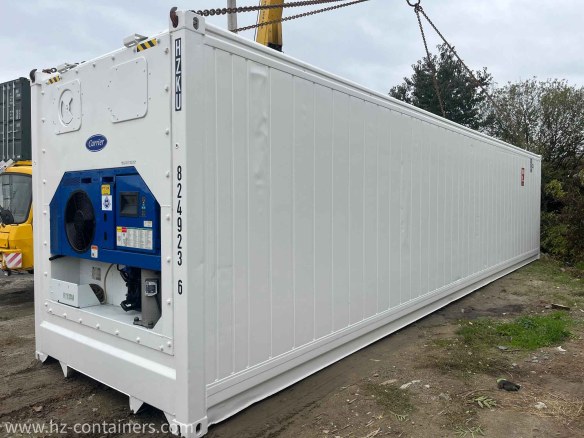
A reefer container — short for refrigerated container — is a temperature-controlled intermodal shipping container built to move goods that would spoil, melt, degrade, or lose efficacy outside a narrow temperature band. The question “what can be transported in reefer containers?” has a deceptively long answer, because reefers carry far more than just frozen peas and bananas. They move fresh produce, chilled meat and seafood, dairy, cut flowers, vaccines, biologics, specialty chemicals, photographic film, and even sensitive electronics and works of art. In short, if a cargo’s value depends on staying at a precise temperature — whether that is −60 °C or a comfortable +25 °C — a reefer container is how it travels across the ocean.
Reefer container uses
A reefer container—short for “refrigerated container”—is an intermodal shipping container fitted with an integrated refrigeration unit that keeps temperature-sensitive cargo at a precise, controlled temperature throughout transport and storage. While a standard dry container simply protects goods from weather and impact, a reefer container actively maintains chilled, frozen, or even heated conditions, making it the backbone of the global cold chain.

Used 40 foot High Cube container
A used 40 foot high cube container is one of the most versatile and cost-efficient storage and shipping assets you can buy. It is a standard-length 40-foot intermodal container with one crucial difference from its “standard” sibling: it stands one extra foot tall, at a nominal 9 feet 6 inches instead of 8 feet 6 inches. That single additional foot of vertical clearance changes how the unit is priced, how it loads, and what it can do. This guide covers everything you need to know about dimensions, weight ratings, pricing, condition grades, and the buying process, so you can make a confident decision whether you are storing tools, expanding a warehouse, shipping cargo overseas, or planning a container-built structure.

How much does a 40 foot shipping container cost?
A 40 foot shipping container is the single most common large-format steel container in the world. Whether you are adding on-site storage, moving freight overseas, or converting a unit into a home or workshop, the first question almost everyone asks is the same: how much does a 40 foot shipping container cost?
The short answer is that a 40 foot shipping container price in the United States typically lands between $1,500 and $7,000 depending on condition, height, location, and delivery. Used, wind-and-watertight 40ft units often start near $1,500–$2,700, while a brand-new one-trip 40ft high cube can exceed $4,000–$6,500. The gap between those two ends of the range is wide because a “shipping container” is not one product—it is a graded commodity whose value shifts with its physical condition, its market, and even the distance from your site to a major port.