
Faults and Most Common Defects of Refrigerated Containers
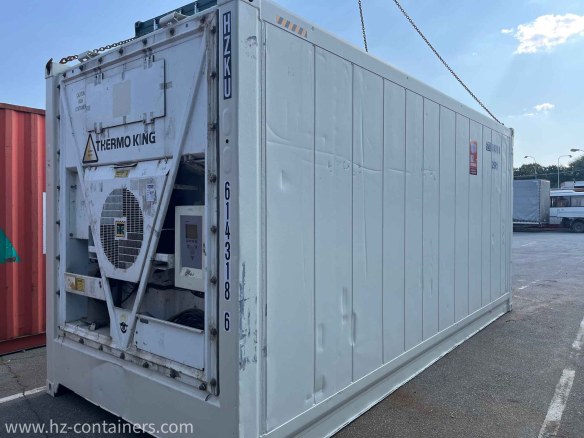
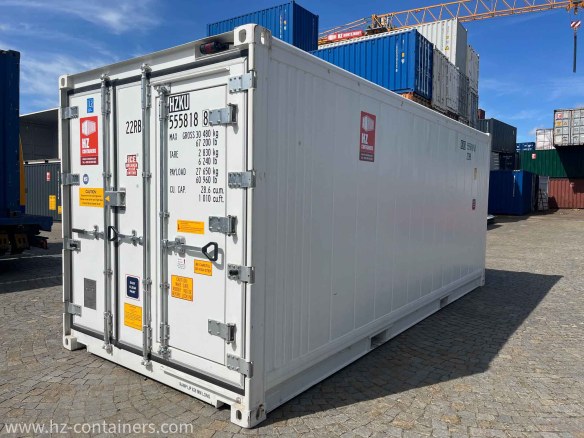
Refrigerated containers (English Refrigerated Containers, often referred to as Reefers) are a crucial tool of global logistics, enabling safe transport and storage of goods requiring temperature stability. Thanks to them we can transport fresh food, pharmaceuticals, chemicals, flowers, or even works of art across continents without the risk of loss of quality.
However, the design of reefers is complex: they contain a robust insulating shell and their own cooling circuit with a compressor, condenser, evaporator, fans, sensors and control electronics. The complexity of this technology means that even a relatively minor fault can lead to the spoilage of cargo worth millions within a few hours – for example compressor failure, refrigerant leak or power failure.
This article provides a comprehensive overview of key concepts, the most common faults, their causes, prevention, and modern ways of troubleshooting refrigerated containers, including the use of telematics, predictive diagnostics, and proven service procedures.
Basic Terminology and Operation of Refrigerated Containers
Refrigerated Container (Reefer)
- Definition: Intermodal transport container equipped with an electromechanical cooling unit that enables active controlled temperature regulation over a wide range (usually from −40 °C to +35 °C).
- Construction: Outer shell made of steel or aluminium, internal thermal insulation (most commonly polyurethane foam), floor with anti-slip surface and drainage channels, special door gaskets.
- Typical dimensions: 20’ or 40’ (feet), standard height (8’6″) or High Cube (9’6″).
- Typical cargo: Food (meat, fish, fruit, vegetables, dairy products), pharmaceuticals, chemicals, cut flowers, live plants, works of art.
Cooling System
Basic components whose failure leads to most defects:
| Component | Function | Typical failures |
|---|---|---|
| Compressor | Compresses and circulates refrigerant in a closed circuit | Overheating, lack of oil, seizure |
| Condenser | Cools the refrigerant, changing it from gas to liquid | Fouled fins, refrigerant leak |
| Evaporator | Converts liquid refrigerant to gas, absorbs heat from the interior | Frost, fouling, refrigerant leak |
| Fans | Ensure air circulation through the evaporator and condenser | Bearing wear, faulty motor |
| Control electronics | Monitors and regulates all parameters, provides alarms and safety functions | Sensor failures, software error |
| Sensors | Measure temperature, humidity, refrigerant pressure, air flow | Calibration issues, electrical fault |
Sources: HZ Containers
Temperature and Atmosphere Control

- Microprocessor control unit: Collects data from multiple sensors, controls switching on/off of the compressor, fans, and heating elements for defrosting.
- Data logger: Stores the history of temperatures, alarms, and service interventions for audit and claims purposes.
- Controlled Atmosphere (CA) function: Allows regulation of O₂, CO₂ and N₂ levels, thus extending the shelf life of sensitive goods (e.g. fruit, vegetables).
- Alarms: Acoustic and visual notification of deviations or failures (temperature alarm, power outage, sensor failure).
Most Common Defects and Failures
Temperature Fluctuations
Symptoms:
- Undesired deviations from the set temperature inside the container (short-term spikes as well as long-term shifts).
- Even a small fluctuation can spoil pharmaceuticals or fresh meat.
Causes:
- Faulty or poorly calibrated sensors.
- Poor air circulation (blocked fans or incorrect cargo loading – goods stacked right up to the walls/ceiling).
- Leaky door seals (aging, damage, contamination).
- Frequent door opening (especially for onshore storage).
- Incorrect defrost cycle (too frequent, too long).
Modern solutions:
Automatic monitoring systems with remote intervention capabilities (SMS/e-mail alarm when limits are exceeded), predictive diagnostics based on temperature data trends.
Cooling System Failures
Serious defects:
- Compressor failure: Lack of oil, overheating, electrical fault, ingress of moisture. Requires professional intervention, often replacement of the entire unit.
- Refrigerant leak: Due to corrosion or mechanical damage to piping. Manifests itself by reduced cooling capacity and system alarms.
- Fouled condenser/evaporator: Dust, salt, and grease reduce efficiency, increase energy consumption and lead to system overload.
Table of typical failures and their symptoms:
| Failure | Symptom | Recommended action |
|---|---|---|
| Refrigerant leak | Insufficient cooling, alarm | Repair, refill refrigerant |
| Frost on evaporator | Reduced air flow | Defrost cycle, inspection |
| Fan failure | Uneven temperature | Replace fan |
| Clogged drain tube | Water on the floor, ice build-up | Clean the drain |
Power Supply Issues
Symptoms:
- Power outage = immediate stop of cooling.
- Critical especially during long-distance transport where the container depends on its own genset (diesel generator).
Causes:
- Faulty power cables, plugs, breakers.
- Generator failure (mechanical, fuel-related, electrical).
- Power outage in the port/on the vessel.
Modern prevention:
- Remote monitoring of power supply status, automatic SMS/e-mail notification in case of outage.
- Regular genset testing, backup power sources.
Structural Damage & Leaks
Typical causes:
- Mechanical damage (impact from a forklift, crane handling, collisions).
- Aging of insulation (loss of insulating properties, degradation of PUR foam).
- Damage to door gaskets (cracks, deformation, dirt, loosening).
Consequences:
- Increased energy consumption, insufficient cooling, temperature fluctuations.
- Frost formation, water ingress, corrosion damage.
Recommended prevention:
Regular visual inspections, seal replacement, checking insulation condition with a thermal camera.
Operational & Setting Errors
Most common mistakes:
- Incorrect setting of temperature, humidity, and ventilation parameters.
- Loading warm goods (the container is not designed for blast freezing, only for maintaining temperature).
- Blocking the evaporator and fans with improperly stowed cargo (it is necessary to leave free space at the walls and ceiling – the so-called red line).
- Failure to perform a Pre-Trip Inspection (PTI).
Prevention:
Operator training, use of checklists, PTI protocol before each loading.
Prevention, Maintenance and Modern Solutions
Container Maintenance
Types of maintenance:
| Type of maintenance | Frequency | Description and main tasks |
|---|---|---|
| Daily operational check | Before each journey | Visual check, verification of display and alarm functions |
| Monthly / quarterly service | Once per month/quarter | Cleaning condenser, checking refrigerant and oil levels, fan test, PTI |
| Annual inspection | Once per year | Complete check of all systems, sensor calibration, replacement of worn parts |
Pre-Trip Inspection (PTI):
- Automated test of the cooling unit before each loading.
- Check of compressor, sensors, fans, alarms, and door seals functionality.
- Recording in the electronic service logbook.
Modern trends:
- Predictive maintenance based on telematics (IoT) data analysis.
- Remote diagnostics via cloud platforms.
Monitoring Technology
Functions of modern monitoring systems:
| System | Description and benefits |
|---|---|
| GPS tracking | Exact location of the container in real time |
| Telematics | Transmission of data on temperature, humidity, door status, power supply |
| Data logger | Historical record for audits and claims |
| Automatic notifications | SMS/e-mail when limits are exceeded or in case of power outage |
Advantage:
Immediate possibility of intervention/dispatcher response even remotely, verifiable transport history (protection against claims).
Troubleshooting Common Issues
Procedure for basic faults:
- Unit not cooling: Check connection, power supply, breaker status, temperature settings, alarms.
- Excessive frost formation: Start manual defrost, check door tightness, clean condensate drain.
- Unusual noise: Check fans, ensure no loose panels or foreign objects.
- Alarms: Always check messages on the display, data logger records and contact professional service in case of serious problems.
For more complex faults (refrigerant leak, compressor failure, repeated temperature alarms):
- Immediately contact a certified service provider with refrigerated container diagnostics.
- Never carry out interventions in the refrigeration circuit without professional qualifications.
Proper Loading Procedures
Key rules:
- The goods must be pre-cooled to transport temperature.
- Never load cargo right up to the walls/ceiling – leave space for air circulation (red load line).
- Do not use the refrigerated container for blast cooling of warm cargo.
Recommended loading scheme:
| Cargo position | Requirement |
|---|---|
| At the walls | Min. 10 cm gap |
| At the ceiling | Min. 15 cm gap |
| At the doors | Do not block the drain |

 Czech Republic, Uherské Hradiště
  FREE SHIPPING
Other container news...

40ft High Cube container price
If you are researching the 40ft high cube container price, you have probably already noticed that the numbers vary wildly — anywhere from $1,200 to over $7,000. That range is not a mistake. It reflects a market where condition, geography, and timing collide to produce dramatically different outcomes for buyers. One person in Houston pays $1,800 for a wind-and-watertight unit delivered to their door, while another in Denver pays $5,500 for the same grade. This guide exists to close that information gap. By the time you finish reading, you will know exactly what drives these prices, what you should realistically budget, and how to avoid the traps that cause buyers to overpay.

High Cube container specifications
A high cube container — also referred to as an HC container, HQ container, or high-cube — is an intermodal shipping container that stands one foot taller than the standard ISO container. While a standard general-purpose container measures 8 feet 6 inches (2.59 m) in external height, a high cube container extends to 9 feet 6 inches (2.89 m). This extra 12 inches of vertical clearance translates into approximately 10–15% more cubic capacity without altering the container’s footprint — the same length and width are maintained, meaning the container occupies the same floor space on a vessel, chassis, or storage yard.

Shipping containers for sale
A shipping container is a standardized steel box built to ISO specifications for intermodal freight transport and storage. Whether you need one for secure on-site storage, a construction project, a home conversion, or international cargo shipping, understanding the market — prices, grades, sizes, delivery logistics, and inspection criteria — is the difference between a smart investment and an expensive mistake. This guide covers everything you need to know before buying shipping containers for sale in 2026.

What Is a Shipping Container? The Ultimate Definitive Guide
A shipping container is a standardized, reusable steel box engineered to transport goods safely across multiple modes of transportation — ship, rail, and truck — without ever unloading the cargo inside. Also known as an ISO container, intermodal container, freight container, cargo container, sea van, dry box, or conex box, the shipping container is the invisible backbone of the global economy. More than 90% of everything you buy — from the smartphone in your pocket to the coffee in your cup — spent at least part of its journey inside one of these rectangular steel boxes.