History of shipping containers
From Outsider to Indispensable Giant
What is the history of shipping containers? When you look around, the computer in front of you, the coffee beside it, and the phone in your hand were once part of the cargo of a large shipping container. It traveled hundreds of kilometers across the sea before it could be delivered right to our doors. Of all the world’s goods, 90% is transported in this way. Each of us spends some time safely at home before venturing out into the world. For goods, there are the big four walls of the shipping container. This is why today these large floating blocks resembling LEGO for the global supply chain are so indispensable that nothing would fit together as smoothly without them. However, it was not always this way.
The Problem that Sparked the Idea
Wherever trade thrived, transportation was needed. However, it could not keep up with the expansion of the market. Bags, crates, and amphorae were used. This method was ineffective both in terms of time and costs. A problem arose that needed to be addressed, and the world waited a long time for a pioneer with a new vision.
Eventually, the necessary visionary was found. It was American businessman Malcolm McLean. He owned a trucking company and, as a good entrepreneur, pondered ways to improve his business. Unloading goods from trucks took too much time and human effort. He came up with the idea of transferring all the contents from a ship to a truck using a large steel box. The idea and project lay on the table. The only thing missing was investors. No one placed great trust in his vision, and they saw the investment as merely a risky whim of a foolish idealist.
In 1956, all doubts evaporated. The first container ship in the world, converted from a tanker that served during World War II under the name Ideal X, sailed the seas. The ship set out from the port of Newark in New Jersey on an unprecedented journey with 58 containers on board. The destination port was Houston, Texas.
This ordinary steel box revolutionized transportation. Due to its low cost, most cargo began to be imported from the other side of the world. Ships were converted to the dimensions of shipping containers, and a new era of trade began.
 | Did you know that… According to The Economist, “the shipping container has been a greater driving force of globalization than all trade agreements combined over the last 50 years.” |
Even a shipping container can have 100 forms…
Shipping Container for Living
Not all containers are the same… The label of a boring metal box has long since rung its bell, and after more than half a century of its existence, storage shipping containers are still finding new uses. Whether it’s for construction modules, art, or even living in a shipping container (known as shipping container home, or container house), there are no limits to imagination, and human creativity continues to take advantage of this.
For students, finding a place to lay their heads can be quite tricky. Apartments are expensive these days, and dorms are constantly overcrowded. Renting a container thus seems like a possible golden path. Architect Holzer Kobler designed a shipping container complex set a short distance from the center of Berlin, which is to serve as student accommodation. The complex includes rooms, kitchens, bathrooms, and even a laundry. However, it is not the only similar building in Berlin.
Cafés, Shops, and More from Shipping Containers
In 2012, an experimental space for artists and creatives, Platoon Kunsthalle, was opened. Located near the Berlin TV Tower, it consists of 34 containers and is open to everyone who wants to experience extraordinary exhibitions, concerts, or workshops.
When you say Marvel, almost everyone thinks of at least one superhero. This giant company took advantage of containers to travel through Phoenix, San Diego, Dallas, and Philadelphia with its show. They placed interactive panels, shops, comics, and cafés inside. This created a unique experience that was easy to pack up and relocate.
The use of shipping containers has been found not only for trade and entertainment but also for non-profit organizations. In just 90 days, a school with a library was built in Omolulu in Anguilla. Its construction is resistant to adverse weather and hurricanes. Thanks to the ordinary container, necessary education can be brought to hard-to-reach places around the world.
| Did you know that…in 1992, a shipping container fell into the North Pacific, and its story inspired a book? Specifically, it contained 28,000 yellow rubber ducks. After the shipwreck, they floated out and drifted to all corners of the globe. To this day, they are being discovered on the shores of America. |
The Environmental Question
Although it has been proven that shipping is more environmentally friendly than most other methods, the fact remains that ships burn oil. Harmful substances such as nitrogen oxides, sulfur, and CO2 are released into the air and sea. Overall, shipping is responsible for 10% of all transportation emissions each year.
One of the main problems is the gap in logistics that causes unnecessary shipping of empty containers back and forth. At the beginning of the Covid-19 pandemic, these problems temporarily ceased. People had to spend time at home, and the ordering of goods saw an enormous increase. Thus, containers could be filled and utilized before being sent to the next port. However, as conditions tightened and hygiene measures in workplaces decreased the number of staff significantly, orders did not decrease, but the people to process them did, and the problem of shipping empty shipping containers returned to its old ways.
By 2030, the goal of the International Maritime Organization is to reduce carbon emissions from the shipping industry by 40% and to fully decarbonize the shipping sector by the end of the century. To achieve this goal, they are installing solar panels and wind turbines on ships and developing cleaner and more environmentally friendly fuels.
The History of Shipping Containers in Numbers
- There are about 5 million active containers in the world, completing approximately 200 million journeys each year.
- China is the world leader in their production with 97%.
- With proper care, a single container can last up to 20 years.
- Every year, more than a thousand are lost at sea.
- Shanghai holds the title of the busiest port in the world, handling 43 million containers annually.
From the History of Shipping Containers to Modern Transportation
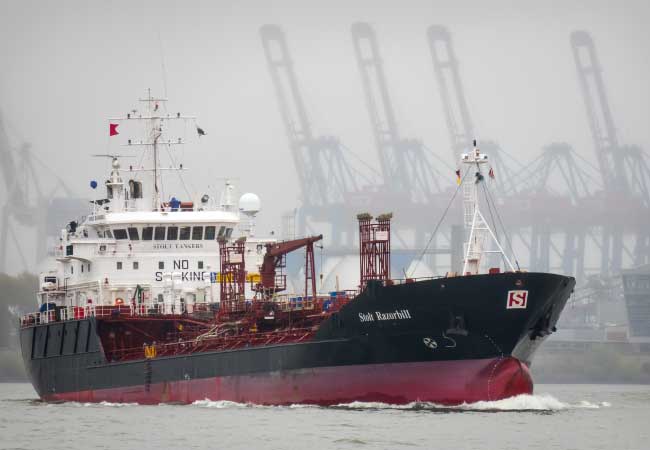
The container has come a long way during its existence. The mentioned Ideal X had less than 60 of them on board, whereas the current largest cargo ship, Ever Ace, can carry an incredible 23,992 pieces. This floating giant, with a deck length of 400 meters for twenty-foot containers, was manufactured by Samsung Heavy Industries in South Korea. To navigate such colossi, technology and the overall logistics of ports had to advance. The Israeli company Orca AI developed an AI navigator and this year sent on a test voyage a fully autonomous ship named Suzaku. Without human intervention, it completed a route of 790 km, including entering a busy bay, where it managed to avoid 500 ships using algorithms and calculations. Acute Market Reports, a global market research firm, expects the market for autonomous navigation ships and related equipment to grow at an average annual rate of 12.6% and reach $235.7 billion by 2028.
Popularity of Shipping Containers
The popularity of containers continues to grow, and their utility is becoming increasingly efficient. They can be insulated or, conversely, refrigerated. For greater automation, terminals or hydraulic support are installed, saving time for trucks. Thanks to container marketplaces, their purchase price is decreasing, making transportation potentially even cheaper. With proper maintenance and suitable accessories, their lifespan increases significantly.
The sectors in which shipping containers are needed are increasing, as is the demand for them. Whether it’s trade and transport, housing, art, or the military, no one can imagine functioning without them anymore. Who would have thought that an ordinary metal box could change the world in just a few years? Investors who once rejected Malcolm McLean had to live for many long years with the fact that they probably made the biggest mistake of their lives.