
Stacking Shipping Containers
Stacking shipping containers refers to the practice of vertically arranging shipping containers one on top of another. This method is primarily used to optimize space during transportation, storage, or when creating temporary or permanent structures on-site. This technique is widely utilized in logistics, ports, storage facilities, or warehouses to maximize available space while ensuring safe handling of containers.
Shipping containers, thanks to their standardized design and durable construction, are ideal for stacking. They are specially designed to interconnect with each other and bear the weight of several containers placed above them, making them a versatile and efficient solution for various industrial sectors.
Key Elements of Stacking Shipping Containers
1. Standardized Design
Shipping containers comply with strict international standards, such as those established by the International Organization for Standardization (ISO). These standards ensure uniform dimensions and structural compatibility, enabling seamless stacking. Common sizes include:
- 20-foot containers (Standard TEU),
- 40-foot containers,
- 45-foot High Cube containers (with greater height for increased storage capacity).
Their design includes corner castings and locking mechanisms (twist locks), which secure containers during stacking.
2. Weight Distribution
When stacking, the weight of each container is considered to prevent structural damage or collapse. Heavier containers are typically placed at the bottom, while lighter containers are stacked on top. This arrangement ensures stability and minimizes risks during transportation or storage.
3. High Cube and Standard Containers
High Cube containers, which are one foot taller than standard containers, are commonly used in stacking when additional vertical storage space is needed. They provide approximately 12% greater storage capacity compared to standard containers.
Uses of Stacking Shipping Containers
A. Ports and Transshipment Hubs
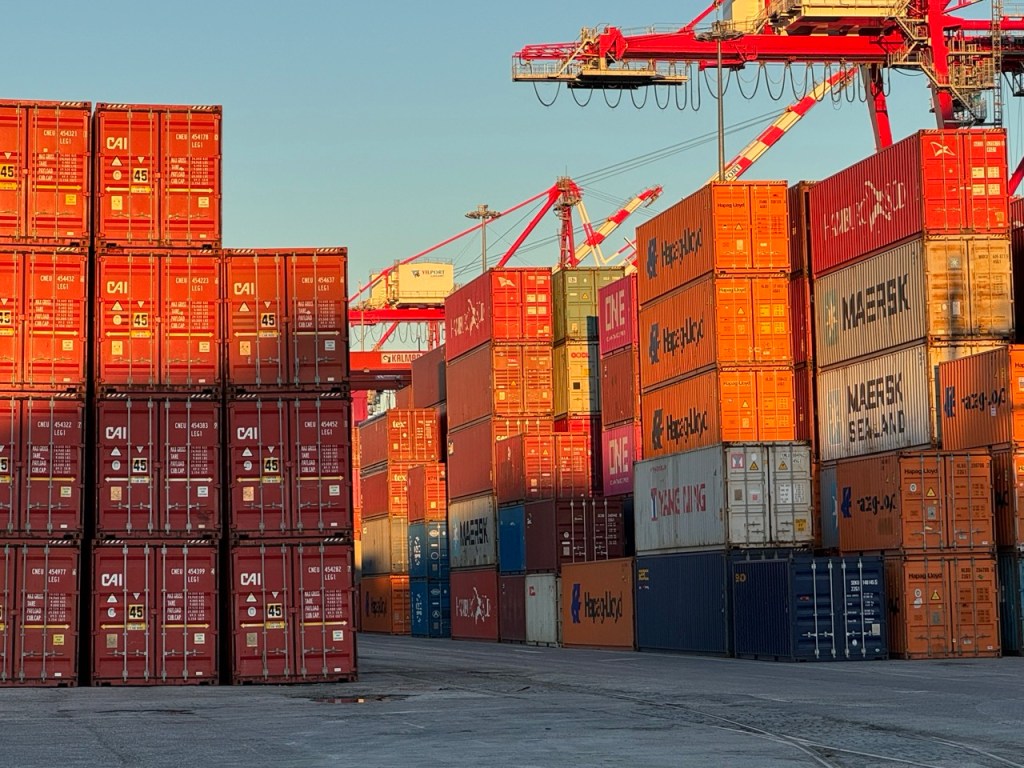
In ports, stacking shipping containers is essential for handling large volumes of cargo. Containers are stacked to height to optimize limited space while awaiting transportation by ship, truck, or train.
B. Long-Term and Short-Term Storage
Shipping containers are widely used for storage purposes due to their durability, portability, and weather resistance. Stacked containers can often be seen at:
- Commercial storage facilities: Containers are rented or used to store goods, equipment, or vehicles.
- Construction sites: Stacked containers provide secure locations for storing tools and materials.
- Residential properties: Homeowners use containers for long-term storage of personal items.
C. Temporary and Modular Structures
Stacking containers enables the creation of modular structures for various purposes:
- Office spaces: Temporary or permanent office spaces created from stacked containers.
- Residential spaces: Innovative container homes built from multiple stacked units.
- Commercial spaces: Pop-up shops and cafes.
Advantages of Stacking Shipping Containers
1. Space Optimization
Stacking containers maximizes vertical space, thereby reducing the need for extensive storage areas. This is particularly important in limited spaces, such as urban areas or busy ports.
2. Cost Efficiency
By using containers for storage and stacking them, companies save costs associated with building permanent infrastructure. Containers can be rented, purchased, or modified according to specific needs.
3. Durability and Security
Shipping containers are designed to withstand adverse weather conditions, making them ideal for outdoor stacking. They are also secure, with lockable doors and anti-corrosion coatings.
4. Sustainability
Reusing shipping containers for storage or modular construction supports sustainability by extending their lifecycle and reducing waste.
Challenges and Considerations in Stacking Containers
Despite their advantages, stacking shipping containers presents certain challenges and requires careful planning:
A. Weight Limits and Load Capacity
Each container has a maximum weight capacity and stacking capacity. Exceeding these limits can compromise safety and cause structural failure.
B. Foundation and Leveling
Containers must be placed on a solid and level foundation to ensure stability. An uneven surface can lead to tipping or difficulties opening container doors.
C. Permits and Regulations
In some locations, permits may be required for stacking containers, particularly if they are used for long-term storage or as part of a structure.
D. Safety and Ventilation
Proper safety measures, such as locks and surveillance, must be implemented to prevent theft. Ventilation systems may also be necessary to prevent condensation and mold growth inside containers.
Tips for Safe and Efficient Container Stacking
- Select the Right Container Type: Consider the size (20ft, 40ft, or High Cube) and condition (new or used) based on your needs. Quality containers reduce the risk of leaks and structural problems.
- Use Appropriate Equipment: Cranes, forklifts, and spreader bars are essential for safely lifting and stacking containers.
- Secure Each Level: Use twist locks and corner castings to secure containers and prevent shifting.
- Plan Weight Distribution: Always place heavier containers at the bottom and lighter ones on top to maintain balance.
- Invest in Modifications: Anti-corrosion coating and reinforced doors increase container durability and security.
- Regular Inspections: Regularly check for wear, corrosion, or damage to keep containers safe for stacking.
- Prevent Moisture and Pest Issues:
- Use desiccant packets to control moisture inside containers.
- Install ventilation systems to reduce condensation.
- Use rodent traps to prevent pest infestations.
Common Uses of Stacked Containers
1. Residential Storage
Homeowners use stacked containers to store seasonal items, furniture, and vehicles. Containers represent an affordable alternative to building permanent storage units.
2. Commercial and Industrial Storage
Businesses use containers to store machinery, equipment, or inventory. Stackable containers allow companies to expand storage capacity as needed.
3. Agricultural Use
Farmers store bulk materials, such as feed, fertilizers, and tools, in stacked containers. High Cube containers are particularly useful for storing taller or bulky items.
Innovative Alternatives: Beyond Traditional Stacking
Stacking shipping containers has evolved beyond logistics and storage. In recent years, creative uses have emerged:
- Container Architecture: Stacked containers are transformed into container homes, offices, schools, or even hotels.
- Pop-Up Retail Spaces: Temporary retail shops or food stalls often use stacked containers for mobility and cost savings.
- Disaster Relief: Stacked containers provide quick and portable housing or medical facilities during emergency situations.
Frequently Asked Questions (FAQs)
Question 1: How many containers can be safely stacked?
The number of containers that can be safely stacked depends on the container type, its condition, and the stability of the foundation. In ports, containers are commonly stacked up to 7–9 units high.
Question 2: Can containers be stacked on any surface?
No, containers require a stable and level surface, such as concrete, to prevent sinking or tipping. Supports, such as concrete blocks or steel beams, are often used.
Question 3: Are permits required for stacking containers?
In many regions, permits are required for stacking containers, particularly for long-term or structural use. Check local regulations.
Stacking shipping containers is a universal and efficient solution for storage, logistics, and creative applications. With standardized designs, appropriate equipment, and safety measures, containers can be safely stacked to optimize space and reduce costs. Whether for industrial storage, residential use, or innovative modular construction, shipping containers offer unique durability, sustainability, and adaptability.

 Czech Republic, Veselí nad Moravou
  FREE SHIPPING

