Shipping Container Opening
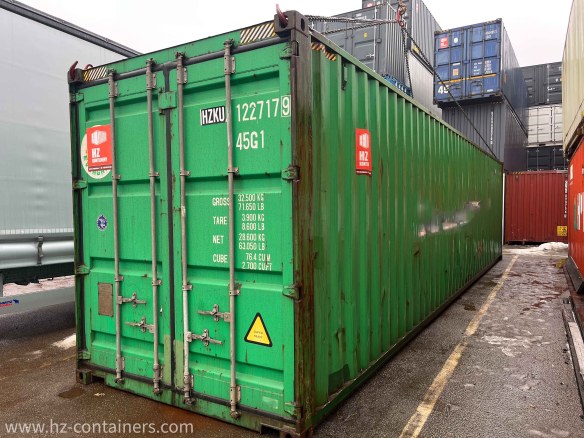
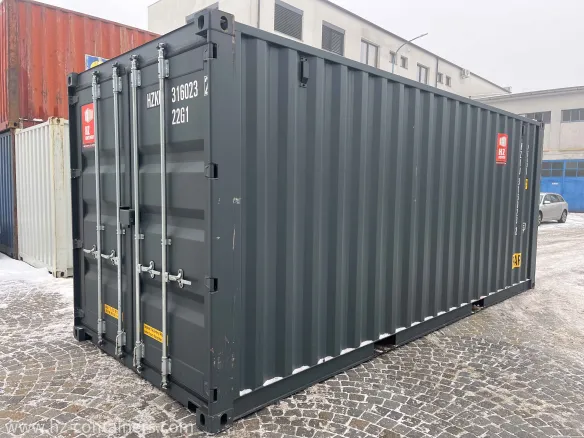
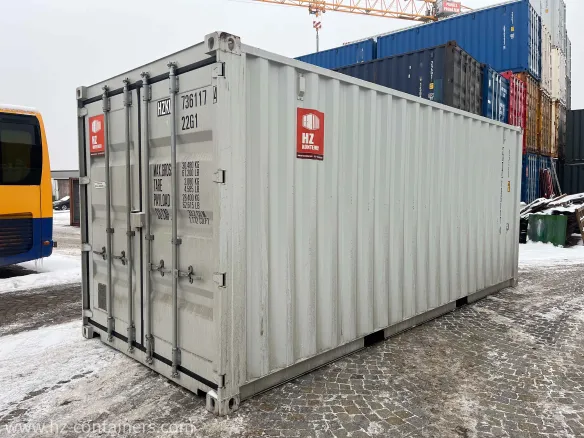
Locking bars, or also locking rods, are a key structural and safety element of every ISO shipping container. These are robust steel rods – usually two on each container door – that run vertically along the outer side of the doors. Their main function is to ensure secure and reliable closure of the container during transport and storage. These rods mechanically connect the top and bottom frame of the door and, using cams, engage into fixed holders in the door frame, thereby locking the doors.
Function of Locking Bars
- Primary security: Protects the container contents from accidental opening during handling and transport (maritime, rail, road).
- Tightness: Together with door seals, they ensure dust-tightness and water-tightness.
- Durability: They are dimensioned to withstand high forces and vibrations.
- Basic security: Serves as a first barrier against unauthorized entry – however, without supplementary locks, they are not sufficiently secure against break-ins on their own.
Anatomy of Doors and Container Locking Mechanisms
To properly understand the system, it is necessary to know all components of the door mechanism. Modern ISO containers have a standardized structure:
| Component | Description and Material Specification |
|---|---|
| Door leaf | Steel structure (COR-TEN), corrugated sheet with reinforcements, height 2,580–2,890 mm (standard/High Cube), width 1,200–1,230 mm |
| Locking bars | Steel S235 or S355, galvanized surface treatment, outer diameter 32 mm, inner diameter 24–25 mm (according to HZ-Containers), length according to door height |
| Handle | Lever made of steel, serves to rotate the rod, often with plastic or rubber grip for better grip |
| Cam | Steel protrusion at the end of the rod; when rotated, it engages into the holder (keeper) |
| Cam holder (keeper/cam retainer) | Fixed steel segment welded to the door frame, into which the cam of the locking rod engages |
| Seal (gasket) | Rubber or EPDM seal around the door perimeter, compression when locked ensures water-tightness and dust-tightness |
| Lock point | Steel eye on the door for placement of a padlock, seal, or other security |
Detailed Dimensions
- Rod diameter: outer 32 mm, inner 24–25 mm (common European standard).
- Rod length: according to door height, typically 2,580 mm (standard) – 2,890 mm (High Cube).
- Spacing between rods: 24–48 cm (important for selecting crossbar locks).
- Material: high-strength steel, usually surface-protected by galvanizing or cataphoresis.
Replacement Parts
Locking systems can be ordered as a set of replacement parts – see HZ-Containers. They typically include:
Types of Opening and Design Variants of Locking Rods
Regarding door configurations of containers, ISO regulations do not contain any officially standardized terminology for these specific variants (such as handle orientation or handle height). These differences arise primarily because different container owners and manufacturers use slightly different door constructions.
To ensure clear communication and prevent misunderstandings when ordering or specifying units, we recommend using the following naming structure:
Standard Parallel System Type A and B
- Both handles on one leaf are oriented the same way (downward), and to open, both must be lifted and rotated simultaneously.
- Requires coordination and some force – doors and mechanism can be heavy, especially on older containers.
Type A – 4 Locking Bars – Same Handle Orientation – Standard Height is 1,050 mm

Type B – 4 Locking Bars – Same Handle Orientation – Handle Height Only 530 mm

Type C – Cross Lock System – 4 Locking Bars – Opposing Handle Orientation
- Handles are at an angle to each other, each operated separately. More intuitive for less experienced users.

Type D – Extended Handles – Single Locking Arm System – Easy Open Door – EOD – 3 Locking Bars with Large Handle
- Mainly for storage and construction containers for frequent access.
- Longer lever significantly facilitates handling, suitable for seniors, women, or frequent users. Easy-to-open doors
- Only one, but robust rod on the active door leaf.
- Popular for warehouses, workshops, archives. Allows faster access without compromising security.

Special Designs
- Interchangeable and adjustable systems: For atypical containers, it is possible to manufacture a locking mechanism to order (e.g., for refrigerated or technological containers).
Dimensions of Shipping and Storage Containers (Selection)
Here are the most common ISO container dimensions:
| Container Type | Length (mm) | Width (mm) | Height (mm) | HC Height (mm) |
|---|---|---|---|---|
| 20′ Standard | 6,058 | 2,438 | 2,591 | 2,896 |
| 40′ Standard | 12,192 | 2,438 | 2,591 | 2,896 |
| 10′ Storage | 2,991 | 2,200 | 2,591 | – |
| 8′ Storage | 2,438 | 2,200 | 2,260 | – |
- High Cube (HC): Elevated design for higher volume, height typically 2,896 mm.
- Door frame: Frame thickness approximately 100 mm, typically made of square or rectangular profiles.
Types of Locks and Security Systems for Locking Rods
Overview of Main Lock Types and Their Properties
| Lock Type | Principle/Location | Advantages and Use | Disadvantages/Limitations |
|---|---|---|---|
| Padlock | Eye on door or lock box | Simple installation, various security levels | Exposed shackle can be cut |
| Crossbar lock | Across both locking rods | Secures both door leaves, massive barrier | Higher price, need for proper spacing |
| Hidden shackle lock | Special hasp/lock box | Cannot be cut, resistant to violence | Door modification required |
| Cylindrical lock | In lock box | Highest security, hidden, resistant to drilling | Higher purchase price |
| Smart lock | Electronics, online access | Monitoring, remote unlocking, access history | Higher price, power supply required |
| Alarm lock | Integrated sensor | Immediate alert to break-in attempt | Battery maintenance required |
| Bolt seal | Door eye | Manipulation control during transport | Protection only against opening, not break-in |
| Internal lock | Inside container | Cannot be attacked from outside, aesthetics, suitable for permanent installations | Installation requires door modification |
Additional Security Types
- Slide bolt locks: Horizontal bolt on doors, effective especially in combination with padlocks.
- Disc locks: Special circular padlocks, very resistant to cutting.
- Door handle locks: Cover only the handles of locking rods, effective as supplementary protection.

Trends, Tips and Security Recommendations
- Combine multiple elements: Ideal is a combination of lock box and crossbar lock.
- Lock selection based on warehouse value: For expensive goods, always lock box + high-security lock (CEN 4+).
- Monitor door and locking system condition: Regularly check for corrosion and mechanical damage.
- Seals for logistics: Bolt seals are mandatory for international transport (comply with ISO 17712).
- Smart locks: Suitable for companies with multiple containers, allow access management and real-time monitoring.
Limitations of Standard Locking Rod Security
- Low resistance to professional tools: A common padlock can be removed in 30 seconds using pry bars.
- Exposed eye: Steel eye can be unscrewed or cut with an angle grinder.
- Single locking point: Unlocking only one handle is often enough to pry open the door.
Therefore, it is recommended to:
- Use lock box (prevents access to the lock)
- Install crossbar locks
- Use a combination of external and internal locks
- Regularly check system integrity
Practical Table – Comparison of Security Types
| Security | Break-in Resistance | Easy Installation | Price (Approximate) | Recommended Use |
|---|---|---|---|---|
| Padlock | Low | Very easy | 400–2,000 CZK | Temporary storage |
| Lock box + lock | High | Welding required | 2,000–7,000 CZK | Long-term storage, companies |
| Crossbar lock | Very high | No modification | 3,500–10,000 CZK | Valuable goods, long-term |
| Smart lock | High | Easy | 5,000–25,000 CZK | Multi-container operations |
| Bolt seal | Low | Very easy | 50–150 CZK/pcs | Transport, logistics |
Recommendations for Security Selection
- Content value: The higher, the more robust the system.
- Location: In remote areas, always choose combined security.
- Access frequency: For daily access, simplicity is important (single locking arm + lock box).
- Budget: Even with limited resources, security can be increased (heavy duty padlock, seal).
Frequently Asked Questions (FAQ)
What lock is best for a container with expensive equipment?
The highest security is provided by a lock box with a cylindrical or hidden shackle lock, supplemented by a crossbar lock.
Is it possible to replace the locking system?
Yes, complete sets of replacement parts are available for most ISO containers (according to rod and door dimensions).
How often should locks and rods be checked?
It is recommended at least once a month, before any longer transport or after extreme weather fluctuations.
Does the type of lock affect insurance?
Yes, insurance companies often require at least a lock box or crossbar lock for insurance coverage recognition.
Locking rods are a fundamental structural element of every shipping container. However, they alone are not sufficient to protect against break-ins, as their main function is to ensure structural integrity and door tightness. For effective security, it is absolutely crucial to understand the types of locking systems, their dimensions, and the possibilities of combining them with modern security elements – from lock boxes through crossbar locks to smart locks and internal mechanisms.
It is worthwhile to invest in quality security elements that not only protect the contents but also increase the value of the container and facilitate insurance claim processing. Modern trends (e.g., smart locks with access monitoring) are pushing security to a new level, which is especially important for companies working with a larger number of containers or storing expensive technologies.

 Brno, Czech Republic
  FREE SHIPPING