Glossary
>
#Container Shipping
Container Shipping
What is Container Shipping?
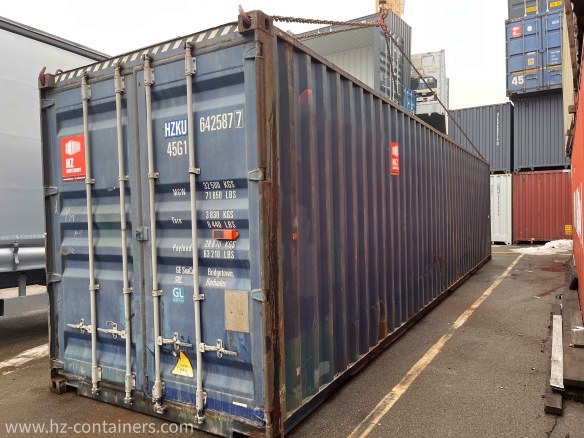
Container shipping is the backbone of modern global trade. It is a standardized method of transporting goods that uses so-called intermodal shipping containers. These containers can be easily moved between different types of transport (maritime, rail, road) without needing to manipulate the cargo inside. The key benefits are efficiency, safety, speed, and reduced costs.
The essence of containerization:
- Standardization: ISO standards determine the dimensions, load capacities, and handling points of containers.
- Intermodality: Containers can be transferred between ships, trains, and trucks without unpacking the cargo.
- Efficiency: Enables fast and safe loading and unloading of large volumes of goods.
- Safety: Steel containers protect goods from damage, theft, and weather.
- Scalability: The system supports enormous volumes of transport – today over 20 million containers are in circulation.
Development and Revolution in Container Shipping
Before Containerization
| Problem | Description |
|---|---|
| Low efficiency | Piece-by-piece transport, labor-intensive manual handling, long port delays |
| High costs | Manual labor accounted for up to 50% of transport costs |
| Risk of damage and loss | Goods were often damaged or stolen |
| Complicated intermodality | Transfer between transport modes was time-consuming and expensive |
Introduction of the Container (Malcolm McLean, 1956)
- First standardized container (corrugated steel sheet, length 8 and 10 feet, later 20 and 40 feet).
- Rapid development of container ships, cranes, and terminals.
- Significant reduction in costs, shortening of loading times from weeks to hours.
- Possibility of “door-to-door” transport.
How Container Shipping Works? Main Process Steps
1. Booking
- The shipper/person arranging transport (e.g., freight forwarder) books capacity with a shipping company for a specific route and time.
- Specification: type(s) and number of containers, destination, schedule.
2. Container Delivery and Loading
- Empty container is delivered to a warehouse/manufacturing facility.
- Goods are professionally loaded, secured against movement (fixation, padding), container is sealed with a security seal.
- At this stage, customs supervision may be required (export control).
3. Inland Transport to Port (Inland Haulage)
- By truck or train to the container terminal.
- First mile operation – may also include customs storage.
4. Port Operations and Loading onto Ship
- Container is registered, weighed (VGM – Verified Gross Mass), undergoes export customs clearance.
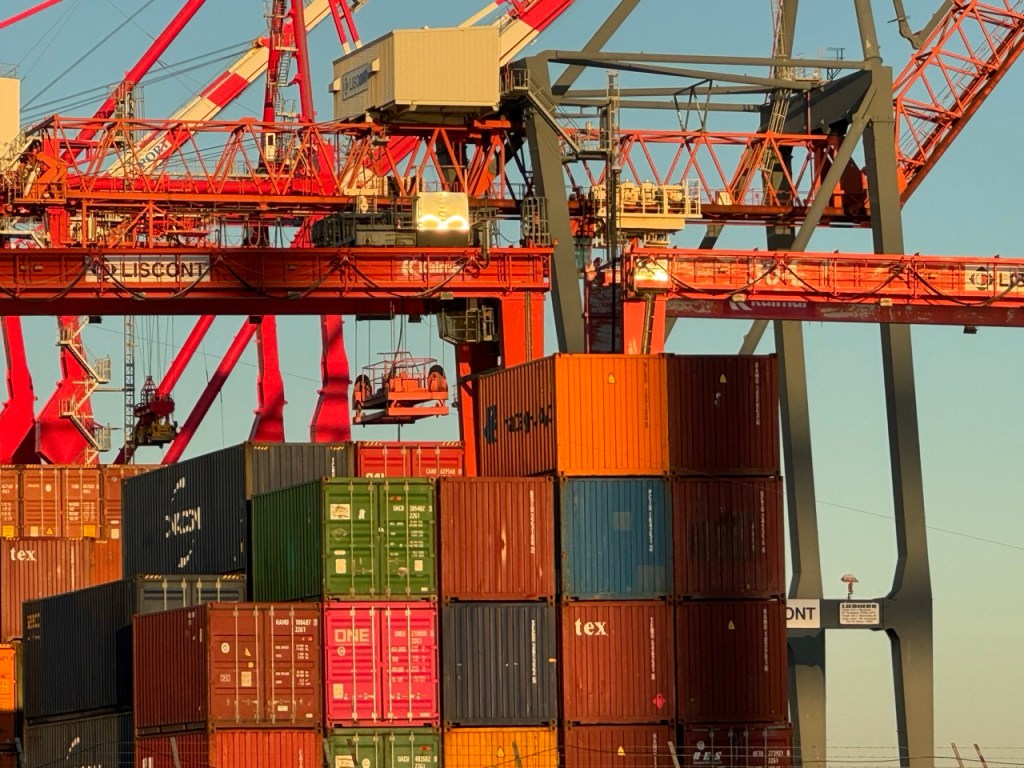
- Gantry cranes load containers onto the ship according to stowage plan (by destination, weight, nature of cargo).
5. Maritime Transport
- Issuance of Bill of Lading (B/L) – key transport document, proof of ownership of goods and transport contract.
- Tracking of ship position and shipment status (nowadays often online, in real time).
6. Unloading and Customs Clearance at Destination Port
- Unloading of container, import customs procedure, possibility of physical inspection of goods.
- Documentation check, correct declaration, payment of VAT and duty.
7. Inland Transport to Recipient (“last mile”)
- After customs clearance, container is transported by truck/train to the destination.
8. Unloading and Return of Empty Container
- After unloading, container is returned to depot, inspected, possibly repaired, prepared for next use.
Types of Shipping Containers – Overview, Dimensions, and Use
| Type of Container | Standard Dimensions (L x W x H, mm) | Internal Volume (m³) | Use and Notes |
|---|---|---|---|
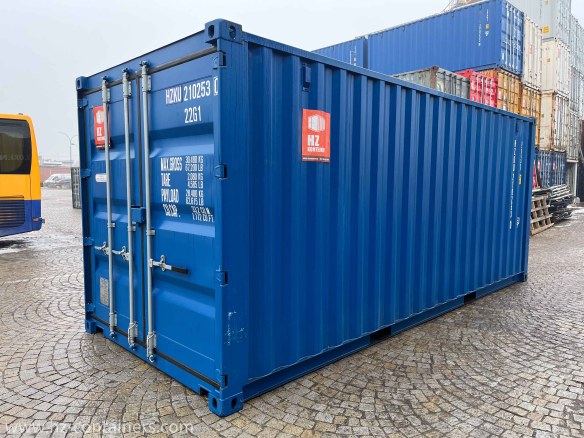
| Standard (Dry Van) | 20′: 6,058 × 2,438 × 2,591 | 33 | Dry, packaged goods, pallets |
| Standard 40′ | 40′: 12,192 × 2,438 × 2,591 | 67 | |
| High Cube | 40′: 12,192 × 2,438 × 2,896 | 76 | Light/bulky cargo, higher internal space |
| Open Top | 20’/40′, no fixed roof | – | Engineering units, oversized goods |
| Flat Rack | 20’/40′, no side walls/roof | – | Heavy machinery, ship engines, vehicles |
| Refrigerated (Reefer) | 20’/40′ with cooling unit | 28/67 | Food, pharmaceuticals, chemicals |
| Tank (Tanktainer) | 20′ with tank | 21–26 | Liquids, gases, food and industrial liquids |
| Ventilated | 20’/40′ with ventilation openings | 33/67 | Coffee, cocoa, agricultural products |
| Platform | 20’/40′, floor only | – | Extreme oversized shipments |
Notes:
- Dimensions and volumes may vary slightly depending on manufacturer and container age (source: DHL, EasyCargo, Wikipedia).
- All containers must be certified according to CSC (Convention for Safe Containers).
FCL vs. LCL – Two Basic Shipping Strategies
| Type of Transport | Description | Advantages | Disadvantages | Suitable for |
|---|---|---|---|---|
| FCL (Full Container Load) | One shipper has the entire container | Speed, safety, less handling | Payment for entire container even if not fully used | Larger volumes |
| LCL (Less than Container Load) | Shipments from multiple shippers in one container | Payment only for own volume/weight | Longer transport time (consolidation/deconsolidation), more handling | Small and medium shipments |
Customs Processes, Documentation, and Legislation
Main Steps of Customs Clearance (source: HZ Containers):
- Customs declaration – must be submitted by the carrier/forwarder before crossing EU borders; contains information about value, origin, and classification of goods.
- Documentation verification – customs authority checks that all documents are correctly completed (B/L, invoice, goods list, certificate of origin, CMR transport documents, EORI number).
- Possible request for additional documents – for sensitive or risky goods, physical inspection of the container may occur.
- Calculation and payment of duty and VAT – according to TARIC code and invoiced value.
- Transit documents – e.g., T1 for goods subject to duty in transit, BHT, ZAPP (in Germany).
- Customs warehouses – possibility of temporary storage of goods without immediate customs clearance.
- Sanctions – for incorrect information/violation of rules, delays, fines, or seizure of goods may occur.
Main Documents in Container Shipping:
- Bill of Lading (B/L) – maritime waybill, proof of ownership and transport contract.
- CMR – transport document for road transport under the CMR convention.
- Certificate of Origin – necessary for some destinations and duty reductions.
- Cargo Insurance – recommended especially for valuable/insured goods.
- EORI number – identification of entity in contact with EU customs authority.
Intermodality, Rail and Air Container Transport
- Intermodal transport = seamless use of multiple types of transport without unloading cargo from container.
- Rail containers – used especially within the Eurasian corridor (Silk Road), efficient compromise between price and speed (20–30 days China–Europe).
- Air transport of containers – only for special containers (e.g., ULD), suitable for urgent, valuable, or sensitive shipments.
- Door-to-door, door-to-port, port-to-port – various options depending on client needs and destination.
Current Trends and Innovations in Container Shipping (source: hz-containers.com)
1. Digitalization and Shipment Tracking
- Smart containers – equipped with GPS, temperature/humidity sensors, real-time data transmission.
- Online tracking – ability to track container location and status from anywhere.
- Port automation – robotic cranes, autonomous vehicles, paperless clearance.
2. Environmental Innovations
- Alternative fuels – LNG, methanol, ammonia, biofuels.
- Slow steaming – reduction of ship speed to save fuel and emissions.
- Eco-friendly ships – new designs, hybrid drives, “green” ports.
3. Global Challenges and Supply Chain Resilience
- Geopolitical risks – conflicts (e.g., Ukraine, Red Sea) force carriers to change routes, increase costs, and extend transport times.
- Container surplus/shortage – pandemic and natural disasters caused fluctuations in storage and container availability.
- Automation and digitalization – need to adapt to new technologies throughout the supply chain.
Economic and Global Significance of Container Shipping
- Foundation of globalization – enables efficient international trade, relocation of production to cheaper countries.
- Availability of goods – wide range of products from around the world for consumers and businesses.
- Inventory optimization and cash flow – possibility of JIT production, reduction of inventory levels.
- Job creation – in logistics, ports, transport, container manufacturing.
- Supply chain vulnerability – dependence on smooth functioning of transport hubs, ports, and service ecosystem.
Related Terms and Abbreviations in Container Shipping
| Abbreviation / Term | Meaning |
|---|---|
| TEU | Twenty-foot Equivalent Unit (standard 20′ container) |
| FEU | Forty-foot Equivalent Unit (standard 40′ container = 2 TEU) |
| Incoterms | International commercial terms (EXW, FOB, CIF, DAP…) |
| Demurrage / Detention | Charges for exceeding free time for container at port/outside port |
| Freight Forwarder | Shipper/forwarder – organizes transport, documentation, insurance |
| Carrier / Shipping Line | Container ship operator (e.g., Maersk, MSC, CMA CGM) |
| VGM | Verified Gross Mass – mandatory weighing of container before loading |
| B/L | Bill of Lading – waybill, key transport document |
| EORI | Identification number of entity in EU customs systems |
| T1 | Transit customs document |
Most Common Mistakes and Recommendations in Practice
- Underestimating packaging and cargo securing – risk of damage, fines, delays.
- Incorrect customs declaration – risk of sanctions, goods detention, additional costs.
- Missing/invalid insurance – financial losses in case of damage/theft.
- Non-compliance with Incoterms – disputes over responsibility, costs, risks.
- Neglecting shipment tracking – missing delays, problems in the chain.
Future of Container Shipping
- Growth in volumes – pressure for innovation, expansion of ports and terminals.
- Green transformation – IMO emission standards, investment in eco-friendly ships and alternative fuels.
- Digitalization and automation – increased efficiency, reduced errors, better planning.
- Crisis resilience – route diversification, larger inventory reserves, predictive risk analysis.
Container shipping represents a highly complex and dynamic system that is a fundamental building block of today’s global economy. Its development, innovations, and daily practice are a constant challenge – from safety through ecology to digitalization. Understanding this world is key.
 Czech Republic, Vimperk
  FREE SHIPPING