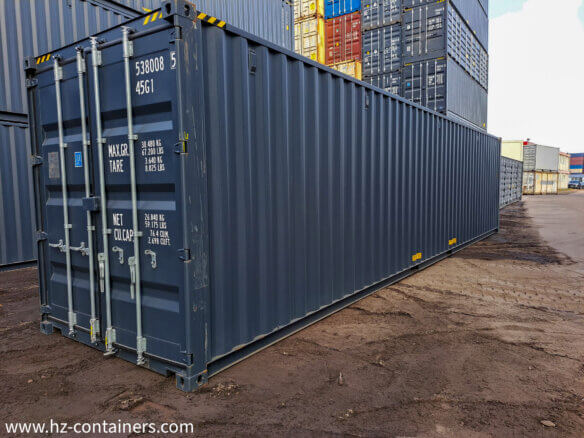
Padova – Italy Container Terminal
Padova Italy container terminal, officially known as Interporto Padova, represents the most modern and important intermodal logistics center in Italy. This container terminal serves as a key node in the global supply chain, connecting maritime transport with rail and road transport. It spans an area of 2 million square meters in the city of Padova in the Veneto region, where it processes more than 13 million tons of goods annually. For anyone interested in international logistics, transport, or trade, understanding how the container terminal in Padova operates is essential.
What is a container terminal and why is it important?
Definition and basic functions of a container terminal
A container terminal is a highly specialized logistics facility that enables transshipment, storage, management, and inspection of cargo containers as they travel between different types of transport. In the case of Interporto Padova, it is specifically an intermodal terminal, which means it enables seamless transfer of containers, trailers, and other units between maritime, rail, and road transport.
The main functions of a container terminal include:
- Transshipment — moving containers from one transport vehicle to another
- Storage — temporary storage of goods in a secure environment
- Handling — loading, unloading, and moving containers using specialized equipment
- Documentation management — maintaining records of goods, customs declarations, and legal documents
- Inspection and maintenance — container inspection, maintenance, and repairs
- Weight and metric controls — ensuring compliance with international standards
Without these terminals, modern global trade as we know it would not be possible at all. It is precisely these facilities that enable efficient transport of goods throughout the world.
Comparison of different types of terminals
| Characteristic | Maritime Port | Dry port (Inland terminal) | Container Terminal |
|---|---|---|---|
| Location | On the coast | In continental inland | Can be on the coast or inland |
| Primary function | Maritime transport | Intermodal transport | Container handling |
| Main transport mode | Ships | Trains, trucks | All modes |
| Capacity | Very high | High | High |
| Distance from sea | 0 km | 50-500+ km | Variable |
| Typical connections | International sea | Inland ports | Ports and terminals |
| Example | Genoa, Trieste | Interporto Padova | Interporto Padova |
History of containerization and terminal development
The container revolution began in the 1950s when American entrepreneur Malcolm McLean introduced standardized shipping containers. Before that, cargo transport was time-consuming and expensive, as each piece of goods had to be manually loaded and unloaded. McLean’s invention of standardized 20- and 40-foot containers (ISO 668) fundamentally changed logistics.
The International Organization for Standardization (ISO) subsequently established standards that allowed containers to be compatible with all types of transport — ships, trains, and trucks. This standardization was key to the emergence of modern terminals like Interporto Padova. In the 1970s and 1980s, terminals began to evolve from simple transshipment points into sophisticated logistics centers with automation and advanced software.
Why do terminals exist in continental inland areas?
Dry ports and intermodal terminals like Interporto Padova exist for several practical reasons:
- Relief of capacity at maritime ports — Large maritime ports are limited in number and their capacity is often overloaded. Interporta allow the load to be distributed and more goods to be processed in parallel.
- More efficient inland distribution — Instead of all containers being processed directly at the port and then traveling by road deep into the continent, they can be transshipped at intermodal terminals closer to their final destinations.
- Cost reduction — Rail transport is cheaper than road transport over long distances. Terminals allow trains to be used for long routes and trucks only for the last mile.
- Environmental benefits — Trains emit less CO₂ per ton of goods than trucks. Interporta thus support more sustainable logistics.
- Strategic location — Padova is located in northern Italy, in the heart of Europe, making it an ideal place for distributing goods to central Europe.
What are the main characteristics of Interporto Padova?
Location and strategic importance in European logistics
Interporto Padova is located in the city of Padova (Padua) in the Veneto region in northern Italy, approximately 40 kilometers from Venice and 150 kilometers from Trieste. This location is strategically extremely important for several reasons.
Interporto Padova is officially recognized as a Core Node of the European TEN-T Network (Trans-European Transport Network). This means it is part of the critical transport infrastructure of the European Union. Specifically, it is located at the intersection of two of nine European transport corridors:
- Mediterranean corridor — runs through northern Italy from west (Turin) to east (Trieste), connecting the Mediterranean Sea with the Alps
- Baltic Sea – Adriatic Sea corridor — connects northern European ports via Austria and Slovakia with the northern Adriatic
This position makes Interporto Padova a natural hub for transporting goods between northern Europe and the Mediterranean Sea.
Infrastructure and technical equipment
Interporto Padova is the most modern intermodal terminal in Italy. Its infrastructure is carefully designed for maximum efficiency and automation:
Basic infrastructure:
- Total area: 2 million square meters
- Owned area: 1.1 million square meters
- Dedicated terminal infrastructure: 520,000 square meters (directly managed by the company)
- Railway tracks: 21 railway tracks with direct connection
- Storage area: approximately 300,000 square meters of rented space
Technical equipment:
- 8 reach stackers for handling full units (containers)
- 7 vehicles for handling empty units (up to 7th position)
- 3 transport vehicles
- 1 locomotive (loco-tractor)
- 3 electronic scales for VGM (Verified Gross Mass)
- 6 gantry cranes powered by photovoltaics
- 2 railway portals for automatic wagon recognition
- 5 entrances and 3 exits for road vehicles with automatic recognition
Automation systems:
- Automatic gates at entrance and exit
- Modern TOS (Terminal Operating System) developed internally
- Planning Room and ROS Room (Remote Operation System) for real-time operation management
- Terminal operation control algorithms
This equipment makes Interporto Padova one of the most automated and efficient terminals in Europe.
Capacity and operational figures
The capacity and performance of Interporto Padova are impressive:
- Annual cargo processing: More than 13 million tons
- Share of rail transport: 43% (which is exceptionally high)
- Number of block trains per year: Approximately 8,000
- Number of companies based in the terminal: Around 150
- Number of employees: Approximately 3,000
- Company capital: 44 million euros
- Legal status: One of nine first-class dry ports according to Italian law no. 240 of 1990
These figures show that Interporto Padova is not just a local facility, but one of the most important logistics centers in Europe.
How does intermodal transport work at Interporto Padova?
What is intermodal transport and how does it differ from multimodal?
Intermodal transport (also called combined transport) is a specific type of transport in which a cargo unit (container, trailer, swap body) is transported in more than one type of transport without repackaging. This is a key difference from traditional transport, where goods would have to be unloaded and repacked when changing transport mode.
In intermodal transport, the container is simply transferred from one transport vehicle to another. For example:
- A container arrives by ship from Asia to an Italian port (e.g., Genoa)
- At the port, it is placed on a railway train
- The train takes it to Interporto Padova
- In Padova, the container is placed on a truck
- The truck delivers it to the final recipient in the Czech Republic
Throughout the entire journey, the container remains closed and the contents are never exposed to handling. This is why intermodal transport is safer, cheaper, and more environmentally friendly.
Intermodal transport differs from multimodal transport in that multimodal can include repackaging of goods when changing mode, while intermodal does not.
Process of container handling in the terminal
Container handling at Interporto Padova follows a precise procedure:
1. Arrival and registration
When a container or train arrives at the terminal, automatic gates register the arrival using reading devices. The TOS system records the time of arrival, container identification, and its contents.
2. Unloading from train or ship
If the container arrives by rail, gantry cranes automatically unload it from the wagon. If it arrives by truck, road gates receive it and direct it to the correct location.
3. Storage
The container is placed in a suitable location in the terminal. Interporto Padova has designated zones for different types of cargo (refrigerated containers, hazardous goods, general cargo, etc.).
4. Inspection and maintenance (if necessary)
If necessary, the container undergoes inspection. If damaged, it can be repaired directly in the terminal.
5. Weight control (VGM)
Before loading onto another transport vehicle, the container is weighed on electronic scales. The actual weight is verified, which is internationally required.
6. Loading onto another transport vehicle
The container is loaded onto a truck or train destined for the next destination. Gantry cranes or reach stackers perform the handling.
7. Departure and documentation
Automatic gates record the departure. The TOS system updates the container status.
The entire process is highly automated and governed by algorithms that optimize waiting times and minimize costs.
Connections with Italian ports and harbors
Interporto Padova is connected to major Italian maritime ports through regular block trains:
- Genoa (Genova) — Italy’s largest port, approximately 300 km from Padova
- La Spezia — second largest port, approximately 250 km
- Livorno — third largest port, approximately 200 km
- Trieste — northeastern port, approximately 150 km
- Bari — southern port (combined transport)
- Gioia Tauro — port in Calabria (combined transport)
- Taranto — port in Apulia (combined transport)
These connections are crucial. They mean that goods arriving at Italian ports do not have to remain in overcrowded port zones, but can be immediately sent to Padova, where it is processed and distributed to the rest of Europe.
Connections with European intermodal terminals
Interporto Padova is also connected to important European terminals:
- Cologne (Köln), Germany — main hub for distribution to Germany and Benelux
- Geleen, Netherlands — connection with Rotterdam
- Rotterdam, Netherlands — Europe’s largest port
- Duisburg, Germany — Europe’s largest inland port
- Gliwice, Poland — connection with central Europe
- Busto Arsizio and Melzo, Italy — other Italian intermodal terminals
- Incoronata and Cervignano, Italy — southern and northeastern Italian terminals
This network means that goods can travel from Asia to central Europe, with Interporto Padova serving as a key point in the chain. For example, goods from China can arrive by ship to Genoa, by train to Padova, and then by train to Duisburg, from where it is distributed throughout Germany and surrounding areas.
When was Interporto Padova founded and how did it develop?
Year 1973: Origins and founders’ vision
Interporto Padova was founded on June 6, 1973 as Società Interporto Merci Padova S.p.A. Four founders had a common vision: to create an intermodal transport system that would connect the city of Padova with major Italian and European ports and terminals.
The four founders were:
- City of Padova (Comune di Padova)
- Province of Padova (Provincia di Padova)
- Chamber of Commerce of Padova (Camera di Commercio di Padova)
- Italian State Railways (Ferrovie dello Stato)
This public-private partnership was innovative. It meant that the terminal was built with the support of local and state authorities, but with the participation of railways, which had an interest in increasing rail traffic.
The goal was clear: to create a sustainable intermodal transport system that would mitigate the impact on the environment and reduce logistics costs. In the 1970s, this was a bold vision.
Development from the 1970s to the present: Growth and modernization
Since its founding, Interporto Padova has continuously evolved:
1970–1980: Initial development
In the first decade, basic infrastructure was created. The first storage buildings, railway tracks, and road access were built. The terminal gradually established itself as an important point in Italian logistics.
1980–2000: Expansion and automation
During the second and third decades, the terminal expanded. The first computer systems for operation management were introduced. The number of connections with other terminals and ports increased.
2000–2010: Digitalization and green initiatives
At the beginning of the 21st century, Interporto Padova focused on digitalization. Its own TOS (Terminal Operating System) was developed. Green initiatives also began to be introduced — for example, in 2004, the Cityporto service was launched, which uses low-energy vehicles for goods distribution in cities.
2010–2020: Environmental leadership
This period was characterized by a strong focus on sustainability. Large photovoltaic facilities were installed. The share of rail transport was increased. Interporto Padova became a leader in environmentally friendly logistics.
2020–2026: New partnerships and modernization
In this period, Interporto Padova decided to modernize and expand. An international tender was announced to select a partner for the development of the intermodal terminal.
50 years of innovation: Celebration in 2023
In July 2023, Interporto Padova celebrated 50 years of its operation with a ceremonial event at the Palazzo del Bo in Padova. This celebration was an opportunity to reflect on achievements and plans for the future.
Key milestones of these 50 years:
- Introduction of standardized containers — Interporto was one of the first places in Italy to adopt ISO containers
- Expansion of rail connections — from the original few lines to the current 8,000 block trains per year
- Automation — from manual operations to a fully automated system
- Environmental leadership — from traditional operations to one of the most environmentally friendly terminals in Europe
- Digital transformation — from paper documents to a fully digitalized system
The 50th anniversary celebration was also an opportunity to announce future plans under the leadership of a new partner.
What services does Interporto Padova offer?
Cargo handling: Containers, trailers, and swap bodies
Interporto Padova offers comprehensive handling services for various types of units:
Containers (20′ and 40′)
Standard maritime containers are the terminal’s primary focus. The terminal handles:
- Unloading from ships and trains
- Loading onto trains and trucks
- Storage in open space
- Handling using reach stackers and gantry cranes
Trailers (semi-trailers)
Large road trailers can also be handled and stored:
- Transfer from trucks to trains (and vice versa)
- Temporary storage
- Maintenance and repairs
Swap bodies (interchangeable bodies)
Special units designed for intermodal transport:
- Handling and storage
- Transfer between transport modes
Storage and maintenance services
Interporto Padova also offers services for cargo care:
Storage
- Covered storage spaces for sensitive goods
- Open storage areas for robust goods
- Refrigerated warehouses for temperature-controlled goods
- Special zones for hazardous goods (with certification)
Maintenance and repairs
- Repairs of damaged containers
- Maintenance of vehicles and equipment
- Service of gantry cranes and reach stackers
Inspection and preparation
- Pre-trip inspection
- Container cleaning
- Tightness and safety checks
Customs and documentation services
Interporto Padova has AEO (Authorized Economic Operator) certification and offers advanced customs services:
Customs department
- Goods clearance
- Documentation for imports and exports
- Consultation on customs regulations
Weighing and VGM (Verified Gross Mass)
- Electronic scales for precise weighing
- Verification of actual container weight
- Issuance of VGM certificates (mandatory for maritime transport)
Temporary storage
- Temporary storage of goods awaiting customs clearance
- Documentation management
Special service: Cityporto
One of the most innovative services of Interporto Padova is Cityporto, launched in 2004. It is a city goods distribution service with low environmental impact.
How Cityporto works:
- Goods arrive at Interporto Padova by rail or truck
- Here it is repackaged into smaller, low-energy vehicles (electric carts, small gas trucks)
- These vehicles distribute goods in the city of Padova and surrounding areas
- This way, emissions in urban areas are reduced
Cityporto is considered a model in Europe and has inspired similar initiatives in other cities.
How does Interporto Padova differ from port terminals?
Dry port vs. maritime port: Detailed comparison
Although Interporto Padova and maritime ports (such as Genoa or Trieste) serve a similar purpose — container handling — there are significant differences between them:
| Aspect | Maritime Port | Dry port (Interporto) |
|---|---|---|
| Location | On the coast | In continental inland (150+ km from sea) |
| Primary transport | Ships | Trains and trucks |
| Capacity | Very high (millions of TEU per year) | High (but smaller than ports) |
| Main function | Maritime transport, transshipment with ships | Intermodal transport, distribution |
| Working hours | 24/7 | Usually 24/7, but less busy |
| Congestion | Frequent at peak times | Rare |
| Environmental impact | High (ship emissions, transport) | Lower (rail, automation) |
| Costs | Higher (rent, congestion) | Lower (more efficient) |
| Safety | High (coastal controls) | High (automation) |
| Distance from final destination | Variable | Closer to central Europe |
| Example | Port of Genoa | Interporto Padova |
Advantages of an intermodal terminal in continental inland
There are several reasons why terminals like Interporto Padova in continental inland are advantageous:
1. Relief of congested ports
Large maritime ports are often overcrowded. Interporto Padova can take on part of the load and process goods that are then distributed throughout Europe. This reduces waiting times at ports.
2. Lower distribution costs
Instead of a truck carrying a container 500 km from Genoa to central Europe, a train can go. A train is cheaper and more environmentally friendly. The truck then carries only the last 50 km. This reduces overall costs.
3. Closer to European destinations
Padova is geographically closer to central Europe (Czech Republic, Poland, Austria) than Italian ports. This means shorter waiting times and lower last-mile costs.
4. Environmental benefits
Rail transport is more environmentally friendly. One train replaces 30-40 trucks. Interporto Padova, which supports rail transport (43% of its operations are rail), thus has a lower environmental impact.
5. Flexibility
While a maritime port is bound by ship schedules, an intermodal terminal can be more flexible. Trains can run according to demand.
6. Less congestion
Interporto Padova is not as overcrowded as large ports. This means shorter processing times and higher efficiency.
Ecological and technological innovations at Interporto Padova
Photovoltaic systems and green energy
One of the most impressive innovations at Interporto Padova is its energy system. The terminal is a leader in the use of renewable energy:
Large photovoltaic system
- Capacity: 13 MWp (megawatt peak)
- Location: On the roofs of storage buildings
- Annual production: Energy equivalent to the consumption of 5,000 households
- Investment: One of the largest rooftop photovoltaic systems in Italy
This facility is remarkable. It means that Interporto Padova produces most of its electrical energy itself, rather than buying it from a power plant.
Innovative accumulation system
- Capacity: 700 kW
- Function: Energy storage for use at night or on cloudy days
- Application: Powering gantry cranes in continuous operation
This is particularly important because gantry cranes are the most energy-intensive equipment in the terminal. Powering them with photovoltaics means that the terminal’s main load is covered by green energy.
Automation and digitalization of operations
Interporto Padova is also a leader in digital transformation of logistics:
Terminal Operating System (TOS)
- Developed internally specifically for the needs of Interporto Padova
- Manages all aspects of the terminal: arrivals, unloading, storage, loading, departures
- Uses algorithms to optimize operations
Planning Room and ROS Room
- Planning Room: Where operations are planned for the coming days
- ROS Room (Remote Operation System): Allows remote control of some operations, such as cranes
Automatic gates
- Entrances and exits have automatic vehicle recognition
- Reading devices identify containers and vehicles without manual intervention
- Waiting times are drastically reduced
Control algorithms
- The system optimizes container placement based on their destination
- Predicts processing time
- Minimizes moves and unnecessary handling
This digitalization makes Interporto Padova one of the most efficient terminals in Europe.
Initiatives for low environmental impact
Interporto Padova has a clear commitment to sustainability:
Preference for rail transport
- 43% of operations are rail (compared to 10-15% average in other terminals)
- This means that Interporto Padova actively supports rail transport
Cityporto — urban logistics
- Launched in 2004
- Uses low-energy vehicles for distribution in cities
- Reduces noise and emissions in urban areas
Energy efficiency
- Photovoltaics cover a large part of consumption
- LED lighting
- Efficient air conditioning and heating
Certification and standards
- Interporto Padova is certified as a first-class dry port
- Meets international environmental standards
- Regularly undergoes audit
New era: PSA and Logtainer at Interporto Padova
Tender process and selection of new partner
In 2025, Interporto Padova decided to modernize and expand its intermodal terminal. It announced an international tender to select a partner to manage and develop the terminal.
Tender preparation
- Tender was announced on May 30, 2025
- A virtual data room was created with more than 2,000 documents
- Later, 300 more files and 350 answers to frequently asked questions were added
- Six potential operators downloaded documents (after paying a 300,000 euro deposit)
- Nearly 100 specialists (economists, lawyers, engineers) analyzed information for more than 1,000 hours
Two finalists
Two strong consortiums applied for the competition:
- PSA Intermodal Italy + Logtainer
- PSA: Singapore logistics company, one of the world’s largest container terminal operators
- Logtainer: Italian company with experience in intermodal transport
- Rail Hub Milano (Contship Group) + Medlog (MSC)
- Rail Hub: Part of the Contship group, already operates terminals in Italy
- Medlog: Part of the MSC group (one of the world’s largest shipping companies)
Selection of winner
In January 2026, it was announced that the winner of the tender is the consortium PSA Intermodal Italy and Logtainer. The commission, led by Interporto Padova’s general director Roberto Tosetto, selected this consortium based on:
- Industrial project (development plan)
- Financial strength
- Price
- Ability to operate the terminal
Who are PSA and Logtainer?
PSA (Port of Singapore Authority)
PSA is one of the world’s largest and most modern logistics companies. It is headquartered in Singapore and has experience operating:
- Container terminals in many countries
- Inland terminals
- Logistics centers
PSA is known for its technological sophistication, efficiency, and global reach.
Logtainer
Logtainer is an Italian company with a solid position in Italian intermodal transport. It has:
- Experience with operations in Italy
- Relationships with shipping companies
- Knowledge of Italian logistics and regulations
The combination of PSA (global expertise) and Logtainer (local knowledge) is considered an ideal partnership.
Future plans and terminal development
PSA and Logtainer presented their plans for the development of Interporto Padova:
Planned improvements:
- Increase capacity for container handling
- Modernization of equipment
- Expansion of customer services
- Increase in operational efficiency
- Continuation of environmental initiatives
Time horizon:
The plan spans several years. Interporto Padova should remain one of the most modern terminals in Europe.
Investment:
The new partner will bring investment for modernization. Exact amounts have not been disclosed, but significant investment is expected.
How to use Interporto Padova: Practical guide
For exporters and importers
If you want to use Interporto Padova for your transport, here is the basic procedure:
1. Registration and contact
- Contact Interporto Padova or one of the authorized agents
- Register as a client
- Receive information about available services and prices
2. Documentation preparation
- Prepare documents about goods (invoices, commercial invoices, etc.)
- Order transport from a shipping company or railway company
- Make sure you have all necessary customs documents
3. Booking space
- Book space in the terminal (storage space, handling services)
- Inform about expected time of arrival
4. Arrival of goods
- Goods arrive at the terminal (by ship, train, or truck)
- Terminal unloads and stores it
5. Handling and services
- Terminal performs necessary services (weighing, inspection, maintenance)
- You can order additional services (cleaning, repairs, etc.)
6. Loading onto another transport
- When goods are ready, the terminal loads it onto another transport vehicle
- It can be a train, truck, or ship
7. Payment and documentation
- You pay for services
- Receive documentation about handling
For logistics operators and carriers
If you are a logistics company, Interporto Padova offers partnerships:
Services for operators:
- Long-term storage space rentals
- Dedicated handling services
- Priority access to equipment
- Special rates
Partnerships:
- Interporto Padova cooperates with MTOs (Multimodal Transport Operators)
- These are major shipping companies and lessors
- Operators can have their own space in the terminal
Integrated services:
- Comprehensive solutions from goods arrival to departure
- Including customs services, maintenance, storage
Practical information and contact
Location:
- Interporto Padova S.p.A.
- Via Interporto, 1
- 35100 Padova, Italy
Access:
- Distance from Venice: approximately 40 km
- Distance from Trieste: approximately 150 km
- Access by road (A4 highway) and rail
Contact:
- Website: http://www.interportopd.it
- Phone: +39 049 8234111
- Email: [email protected]
Working hours:
- Terminal operates 24 hours a day, 7 days a week
- Customs department has standard working hours
Fees:
- Fees vary depending on the type of service
- Contact the terminal for a specific quote
Frequently asked questions
What is a dry port and how does it differ from a maritime port?
A dry port (or inland port) is an inland terminal connected to a maritime port. The main difference is in location: a maritime port is on the coast and handles ships, while a dry port is in continental inland and handles trains and trucks. Dry ports serve to distribute the load from overcrowded ports and to more efficiently distribute goods to the continent.
What is the difference between a container terminal and a port?
A container terminal is a facility focused on container handling. A port is a larger complex that can contain multiple terminals (container, automotive, oil, etc.). A port is usually on the coast, while a container terminal can be anywhere. Interporto Padova is an inland container terminal.
How long does container handling take at Interporto Padova?
The handling time depends on the type of operation. Unloading a container from a train usually takes 15-30 minutes. Storage can take hours to days, depending on the schedule. Loading onto another transport vehicle again takes 15-30 minutes. The total time from arrival to departure is usually 1-3 days.
What are the benefits of intermodal transport?
The benefits of intermodal transport are:
- Lower costs: Trains are cheaper over long distances
- More environmentally friendly: Lower CO₂ emissions
- Safer: Container remains closed
- More efficient: Less cargo handling
- More flexible: Can combine different transport modes
How to get to Interporto Padova?
Interporto Padova is located in Padova in northern Italy. You can get there:
- By car: Via A4 highway (from Genoa or Trieste)
- By train: Direct rail connection with major Italian cities
- By plane: Airport in Venice is 40 km away
What are the fees for services at Interporto Padova?
Fees vary depending on the type of service. They usually include:
- Storage fee (per day or month)
- Handling fee (for unloading/loading)
- Weight fee (for VGM)
- Customs fee (for customs services)
Contact the terminal for a specific quote.
How are containers stored in the terminal?
Containers are stored in open space in the terminal, arranged in rows. The TOS system records the exact location of each container. Special containers (refrigerated, hazardous goods) are stored in designated zones. Tall containers can be stacked on top of each other (up to 5-6 rows high).
What are the future plans for Interporto Padova?
Under the leadership of the new partner PSA and Logtainer, the following is planned:
- Increase in capacity
- Modernization of equipment
- Expansion of services
- Continuation of environmental initiatives
- Strengthening of position as a leading terminal in Europe
The exact timeline and details will be announced gradually.
What are the main competitors of Interporto Padova in Europe?
The main competitors include:
- Duisburg (Germany) — Europe’s largest inland port
- Rotterdam (Netherlands) — Europe’s largest maritime port (also has inland terminals)
- Antwerp (Belgium) — large maritime port with intermodal services
- Genoa (Italy) — Italy’s largest maritime port
- Trieste (Italy) — northeastern Italian port
Interporto Padova maintains a competitive advantage through its location, modernization, and environmental initiatives.
How many containers are processed annually at Interporto Padova?
Interporto Padova processes more than 13 million tons of goods annually. The exact number of containers varies, but is estimated at tens of millions of TEU units (Twenty-foot Equivalent Units). The terminal operates 24 hours a day, 7 days a week to handle this volume.

 Italy, Padua
  WITHOUT SHIPPING