What Key is Needed for Tightening Bridge Fittings on Shipping Containers
Shipping containers are a key component of the modern transport industry. Their universality and standardization enable efficient and safe transportation of goods worldwide. To ensure the stability of containers during transport, particularly on ships, railways, or in land transport, special connecting elements are used, such as bridge fittings (connecting elements). This article provides detailed technical information about bridge fittings, their functions, and the tools needed for their proper fastening.

What is a Bridge Fitting on a Shipping Container?
Definition
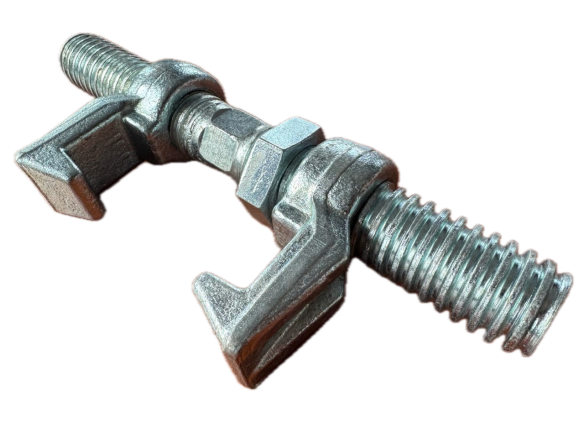
Bridge fittings are mechanical components designed for horizontal connection of two shipping containers. These connecting elements are designed to firmly secure containers using their standardized corner castings, which are predefined connection points on containers. The main function of bridge fittings is to prevent container movement during transport, thereby ensuring cargo safety.
Construction
Bridge fittings are made from high-strength steel or cast iron and often have a protective surface treatment, such as hot-dip galvanized, which protects against corrosion in demanding conditions, for example in marine environments. They consist of several key parts:
- Body: Central part made of metal that connects all components.
- Hooks: Located at both ends, serve to secure into the corner castings of containers.
- Center bolt (turnbuckle bolt): Mechanism allowing tightening and firm connection of containers.
- Jam nut: Prevents bolt loosening during transport.
How Does a Bridge Fitting on a Shipping Container Work?
Operating Principle
Bridge fitting operates on the principle of a turnbuckle mechanism. This mechanism allows gradual tightening of two containers together by rotating the center bolt. The process includes the following steps:
- Installation:
- Hooks are inserted into the corner castings of two adjacent containers.
- After proper hook placement, the center bolt begins to rotate using a key.
- Tightening:
- By rotating the bolt, containers are pulled together. Once the desired connection strength is achieved, the jam nut is tightened to prevent loosening.
- Disassembly:
- The jam nut is loosened and the center bolt is rotated in the opposite direction, thereby releasing the hooks and disassembling the connection.
What Key is Needed for Tightening Bridge Fittings?
Key Specifications
For proper tightening of bolts on bridge fitting, a special tool is required, most commonly an open-end wrench or bridge fitting spanner. These tools are designed to ensure easy handling and secure fastening. Technical specifications include:
- Key size: Standard sizes are 30 mm to 34 mm, depending on the bolt type.
- Material: Keys are usually made from highly alloyed steel, which is resistant to wear and deformation.
- Type:
- Fixed open-end wrenches.
- Adjustable wrenches (crescent wrench) for greater flexibility.

Use of Bridge Fittings in Practice
Main Applications
Bridge fittings are used primarily for:
- Horizontal connection of containers:
- At ports, in warehouses, or in modular construction.
- Transport security:
- On ships, railways, and trucks, where it is necessary to prevent cargo movement.
Advantages
- Quick installation: No need to use welding or other complex techniques.
- Durability: Construction withstands demanding conditions.
- Flexibility: Possibility of temporary and permanent use.
Technical Parameters of Bridge Fitting on Shipping Containers – Bridge Fittings
| Parameter | Value |
|---|---|
| Length | 260 mm to 380 mm |
| Weight | Approximately 3 kg |
| Material | Cast steel |
| Surface Treatment | Hot-dip galvanized |
| Certification | ISO 9001, CCS, GL |
| Safe Working Load | 10 tons (22,046 lbs) |
Frequently Asked Questions
What to do if the bridge fitting cannot be tightened?
- Check proper hook placement into corner castings.
- Use a longer key for greater torque.
Can bridge fittings be used for vertical connection?
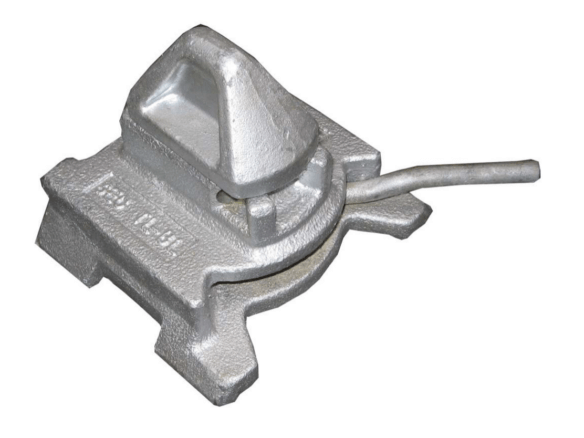
- No. For vertical connection, specific elements such as twistlocks are used.
Bridge fittings are an indispensable part of the transport and storage industry. They provide a safe and efficient solution for connecting containers. Due to their simplicity, strength, and durability, they are an ideal choice not only for transport, but also for modular construction and other applications.
 Czech Republic
  WITHOUT SHIPPING