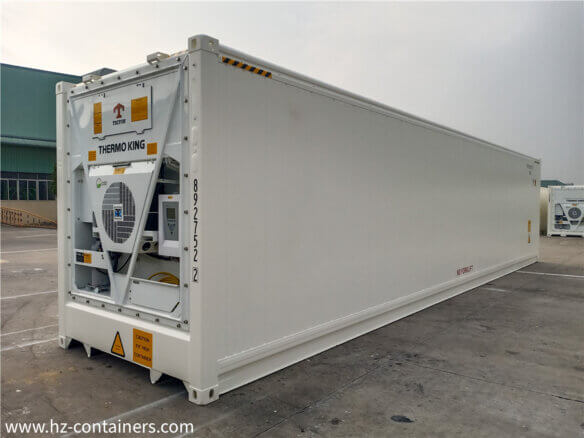
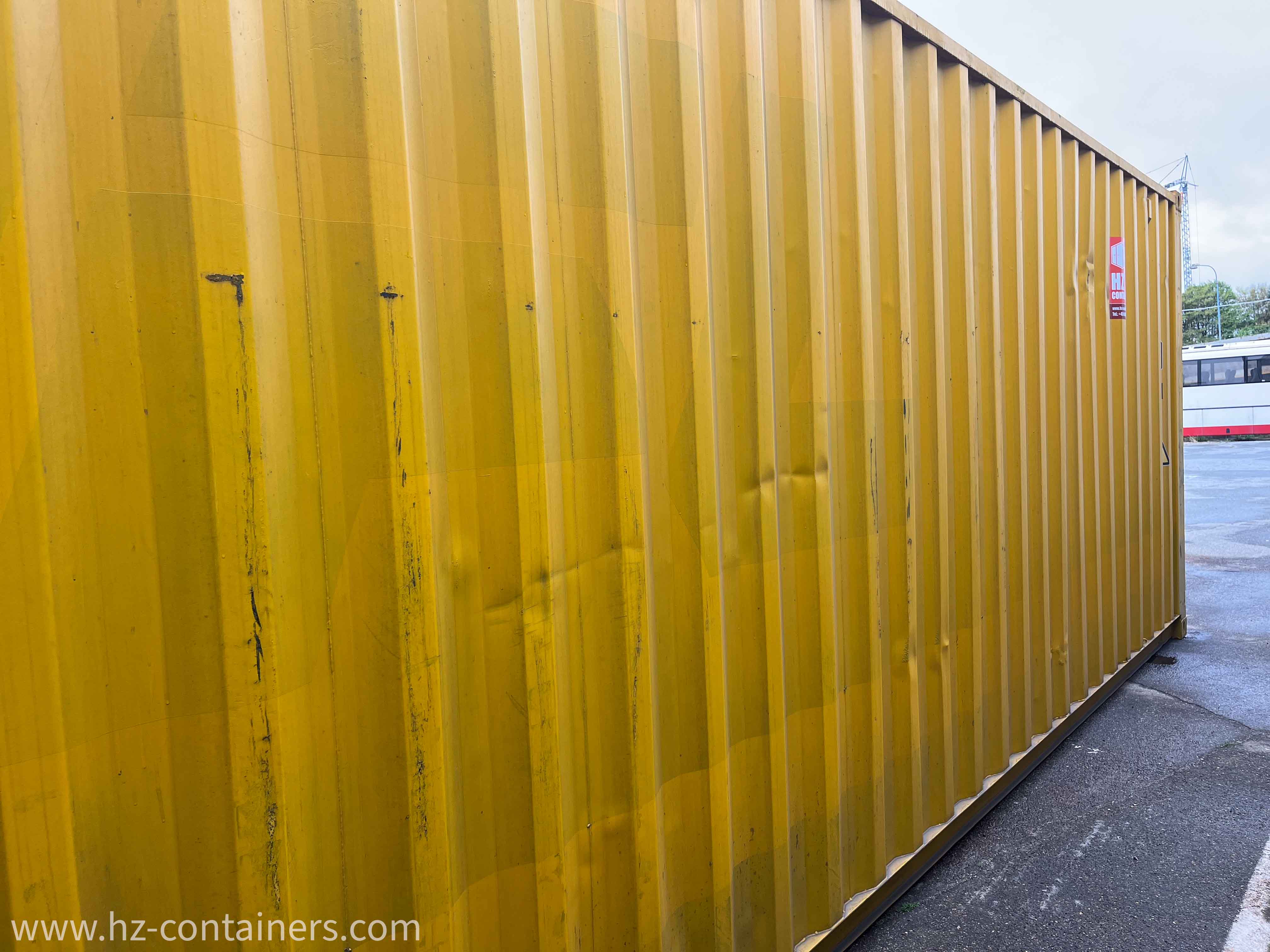
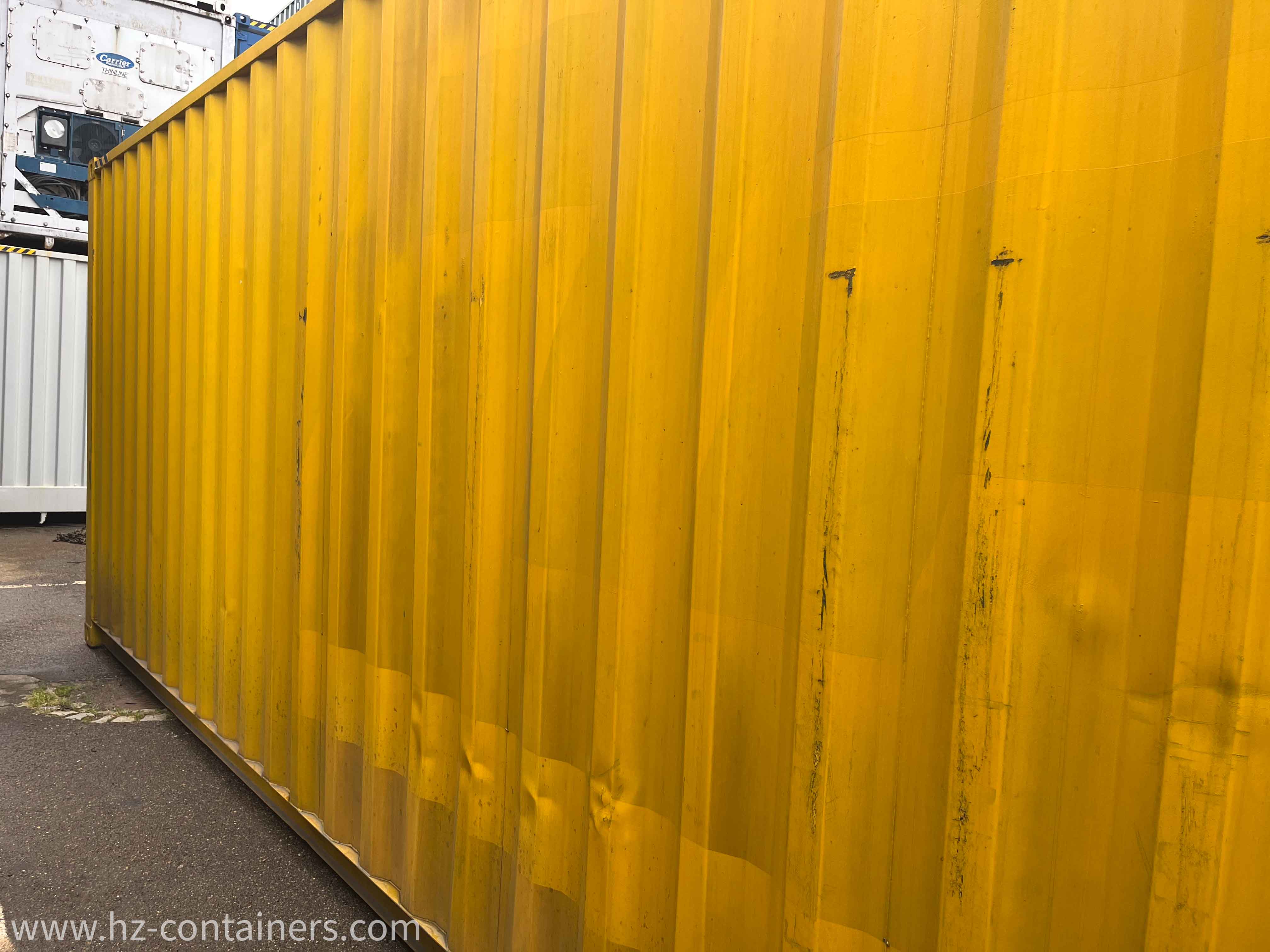
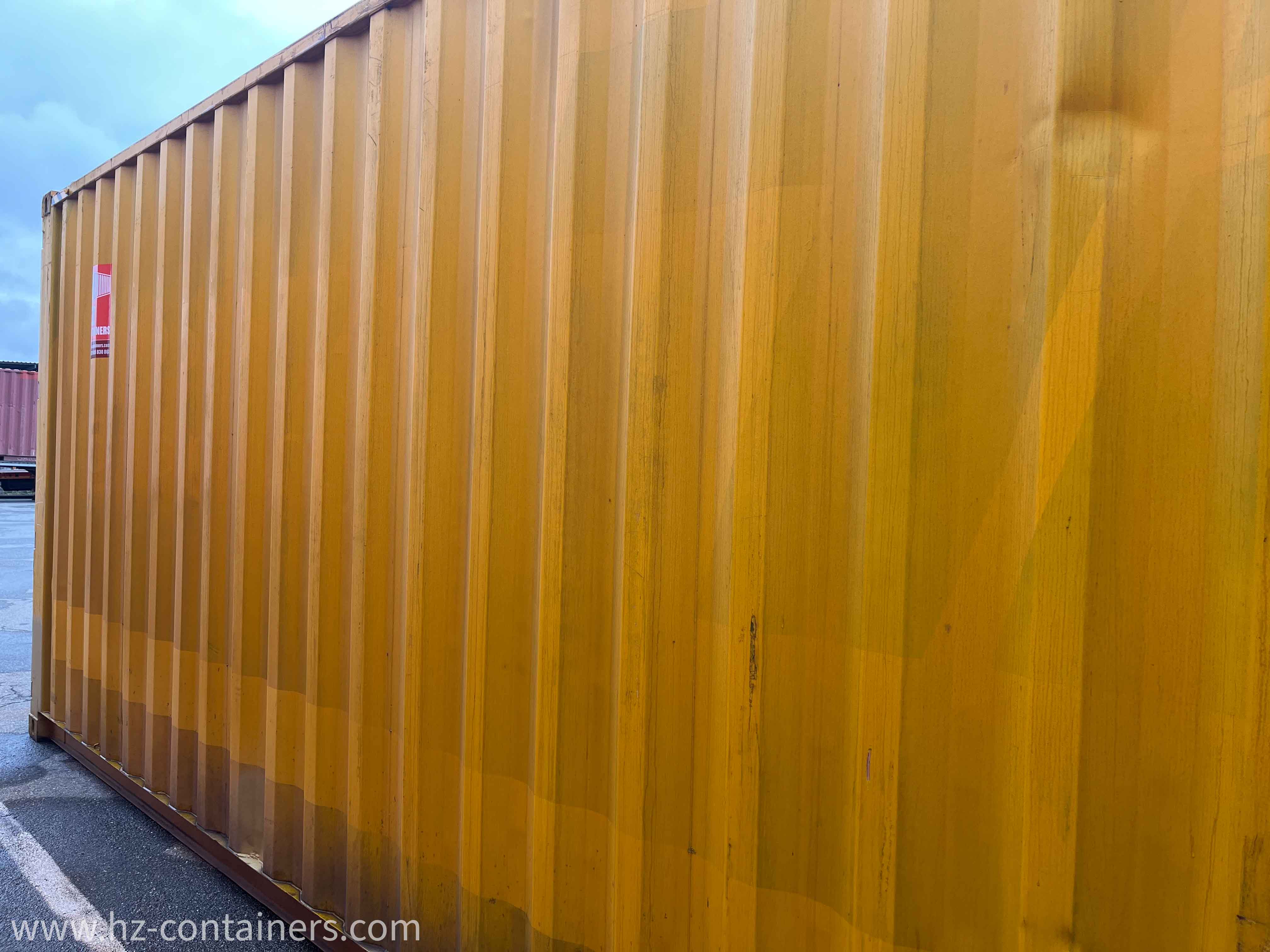
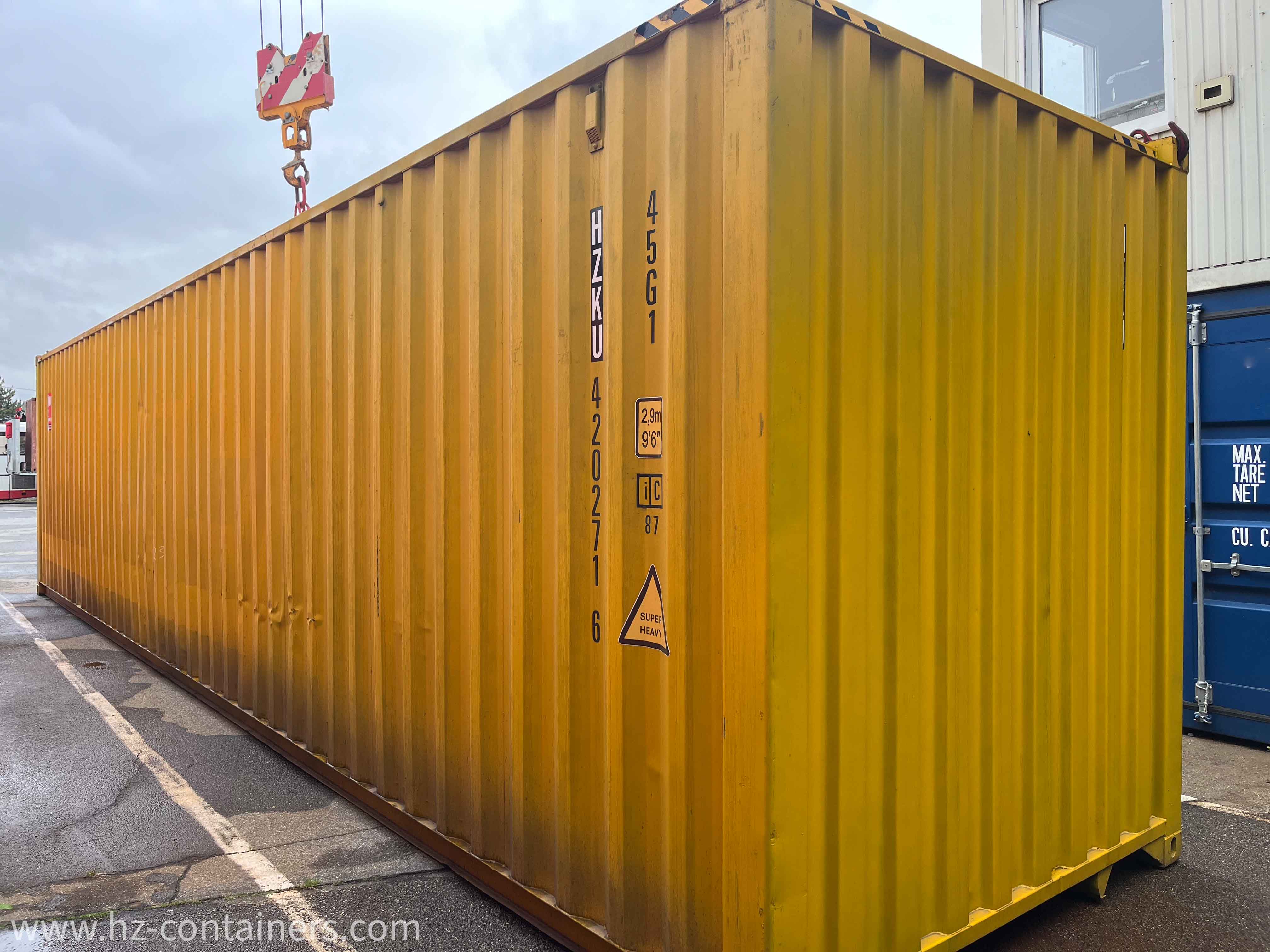
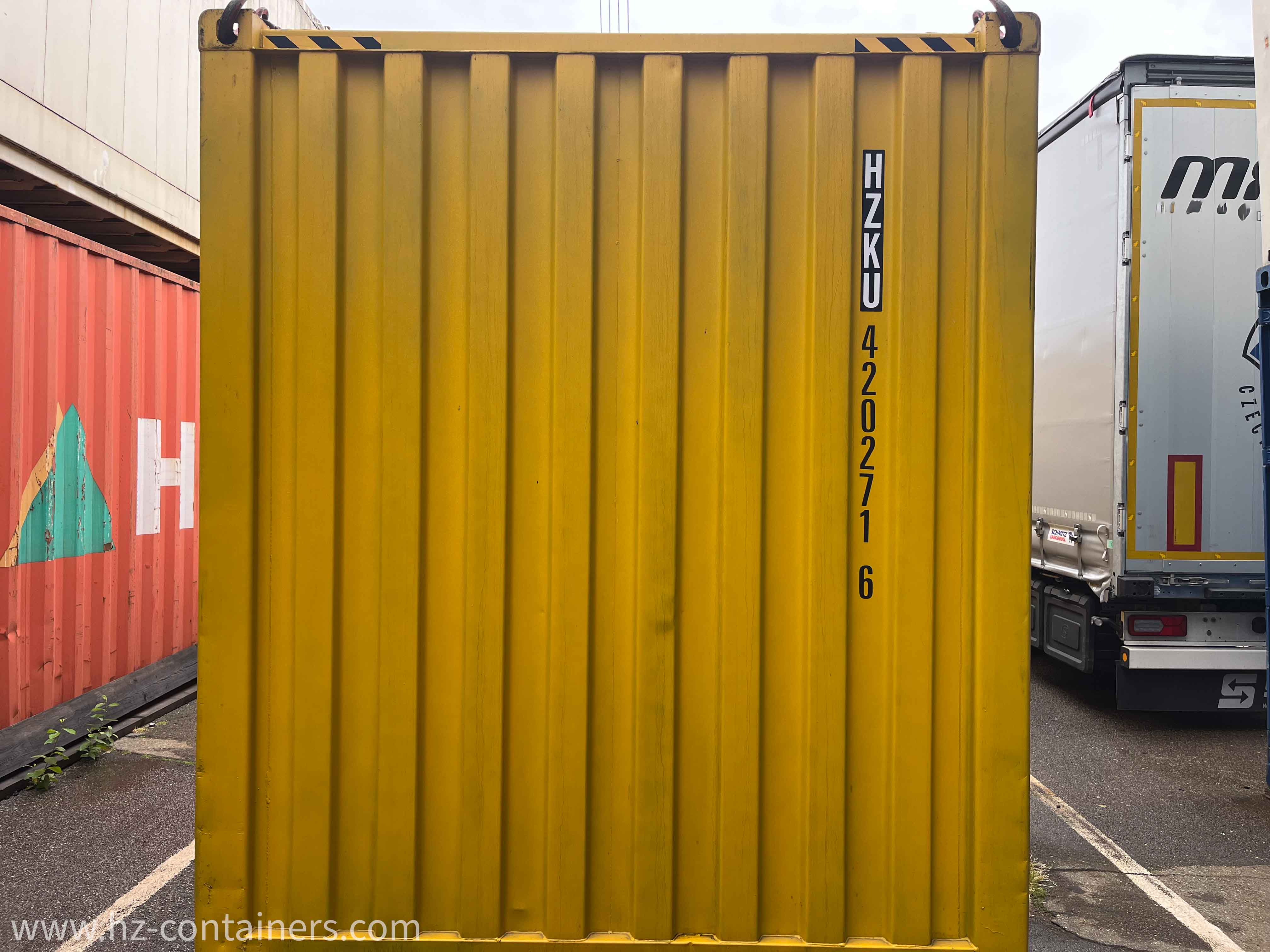
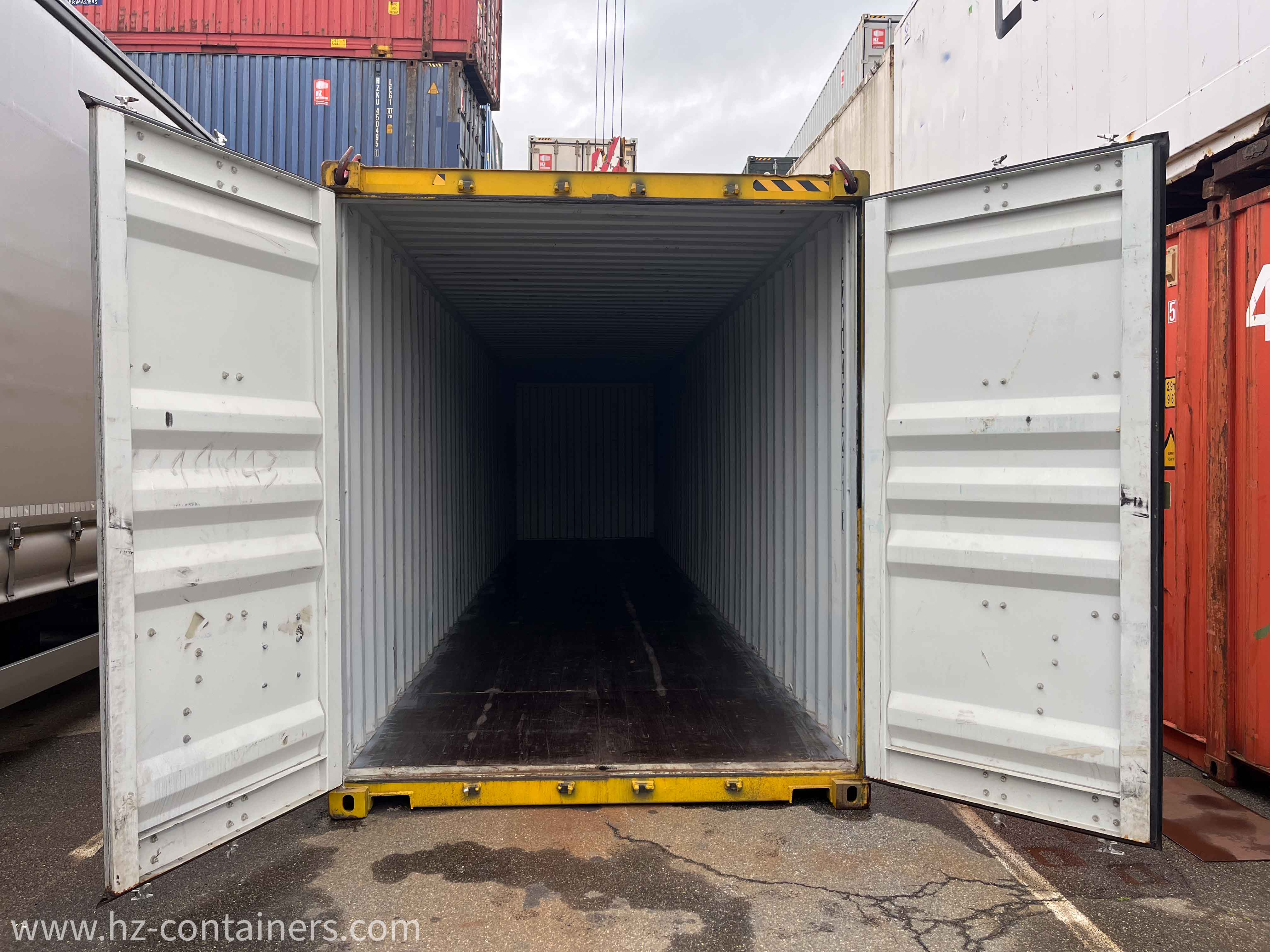
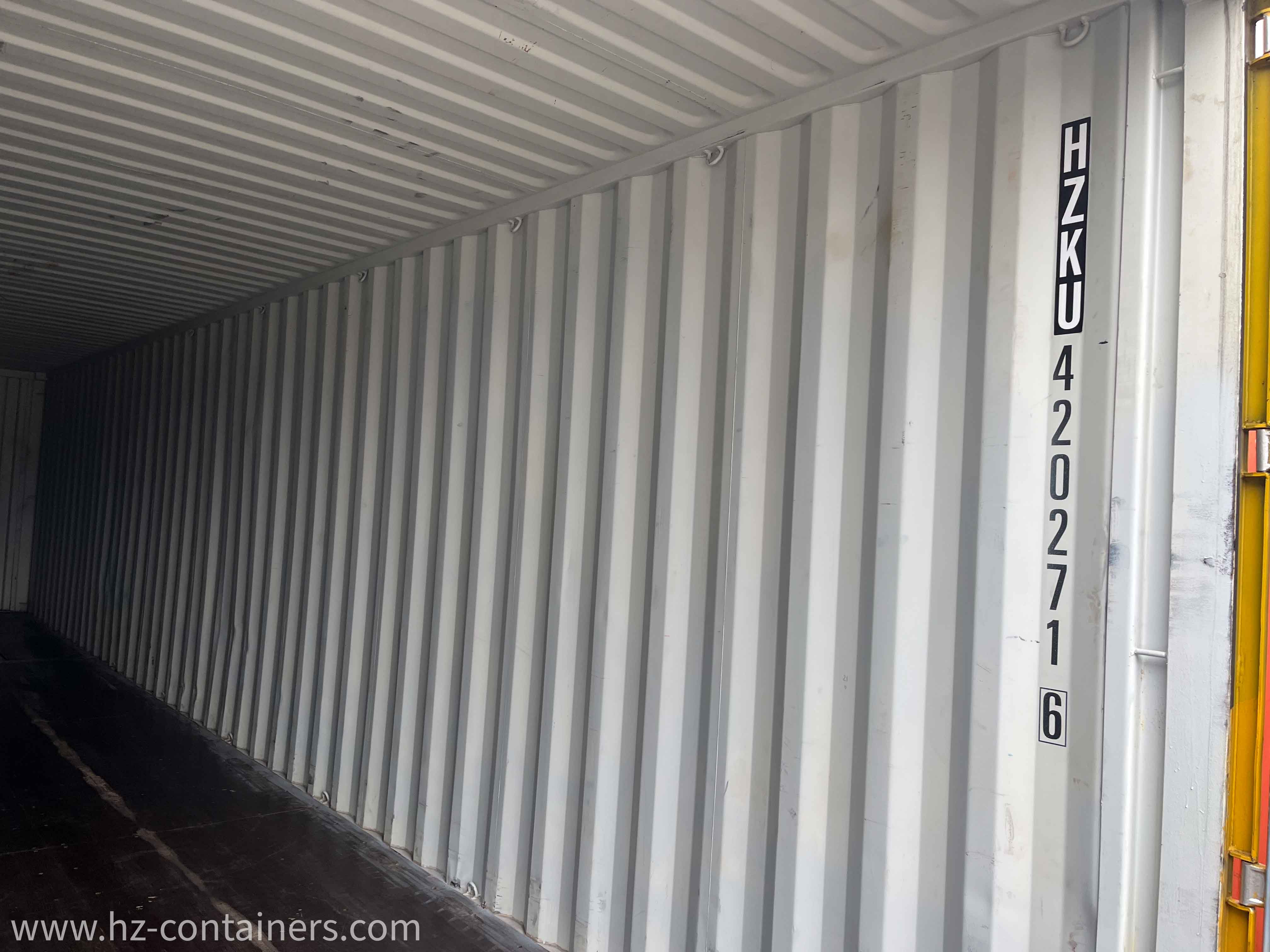
Shipping container 40’HC used – top condition IICL, 420 271-6
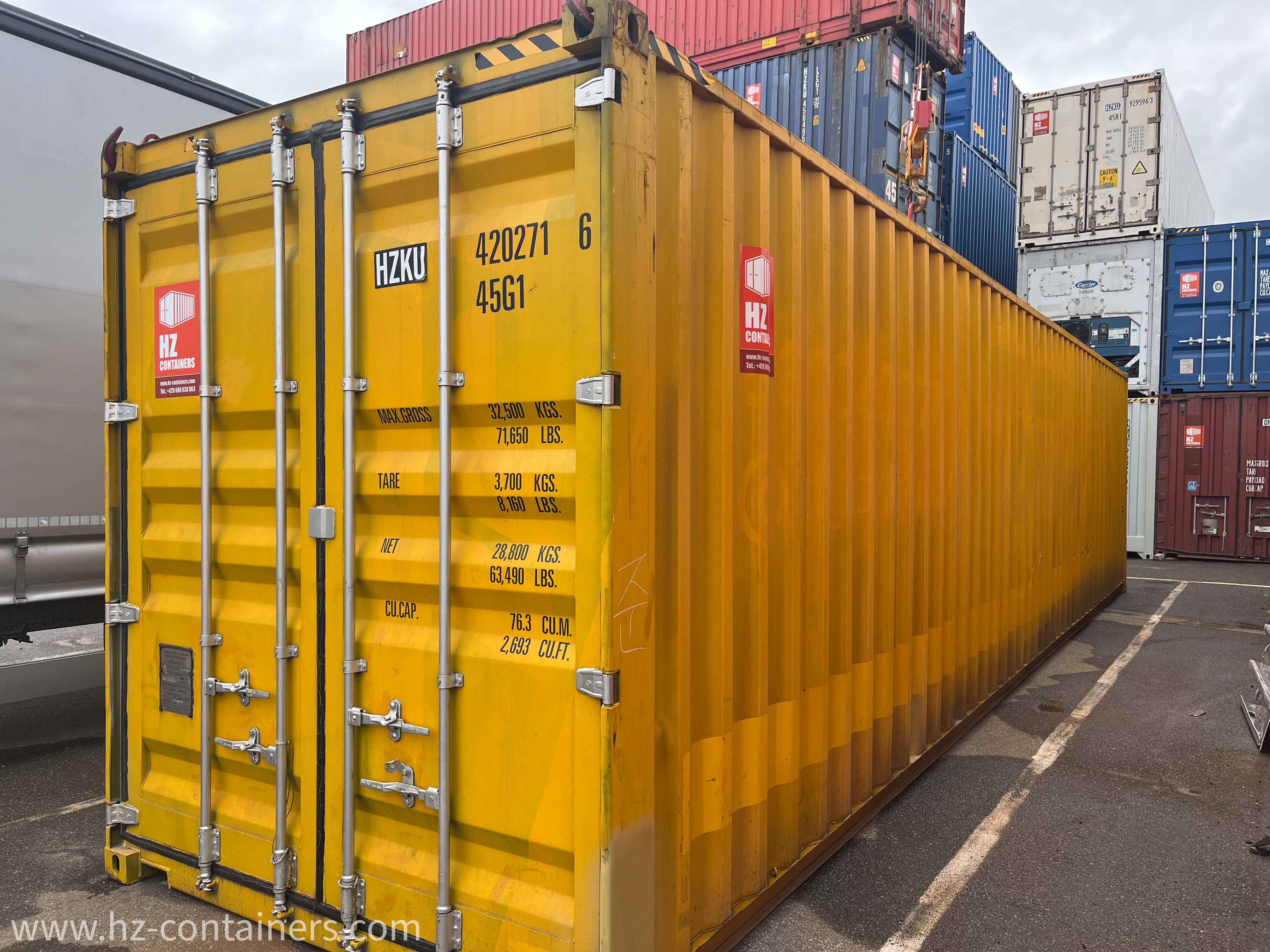
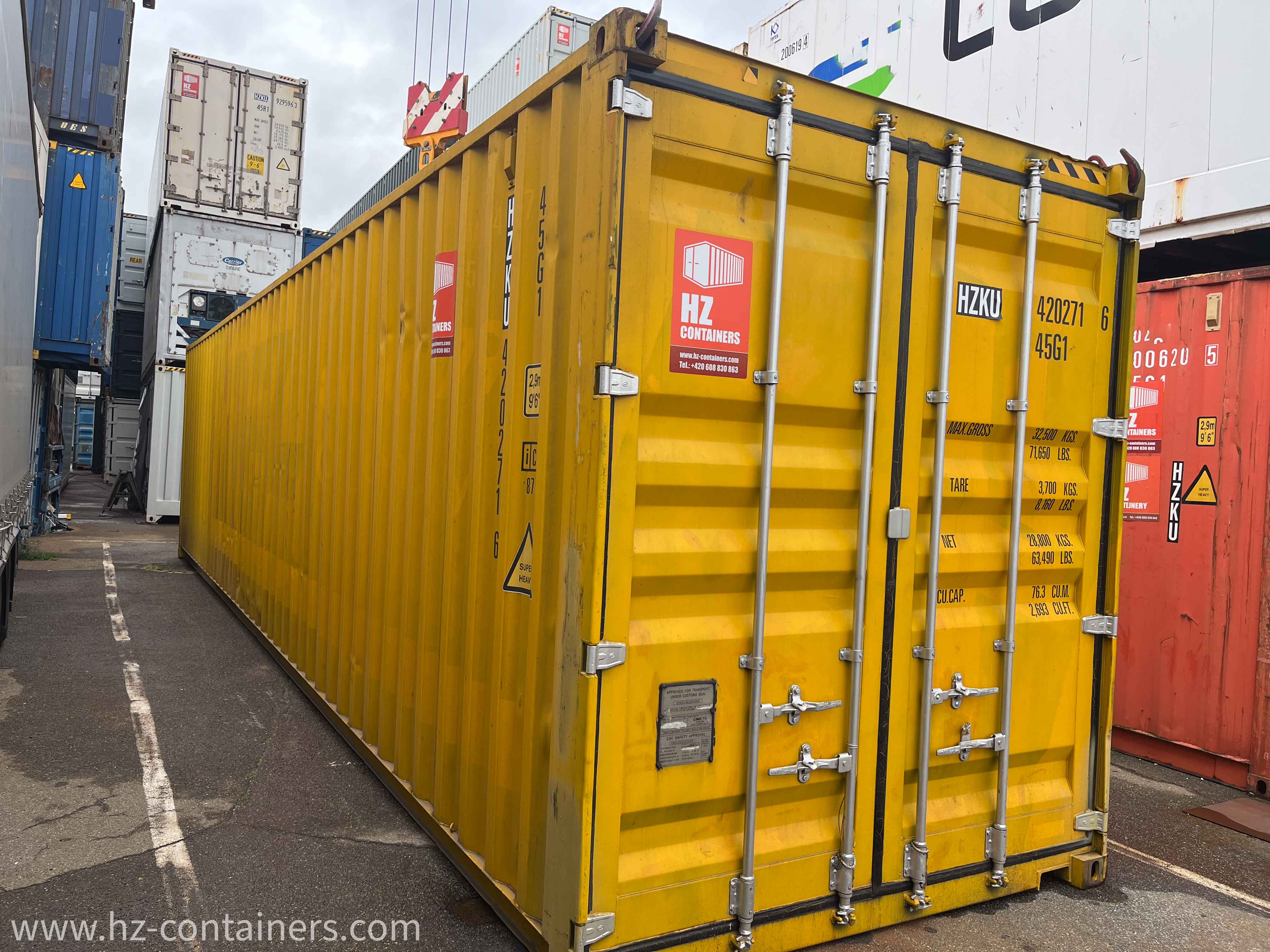
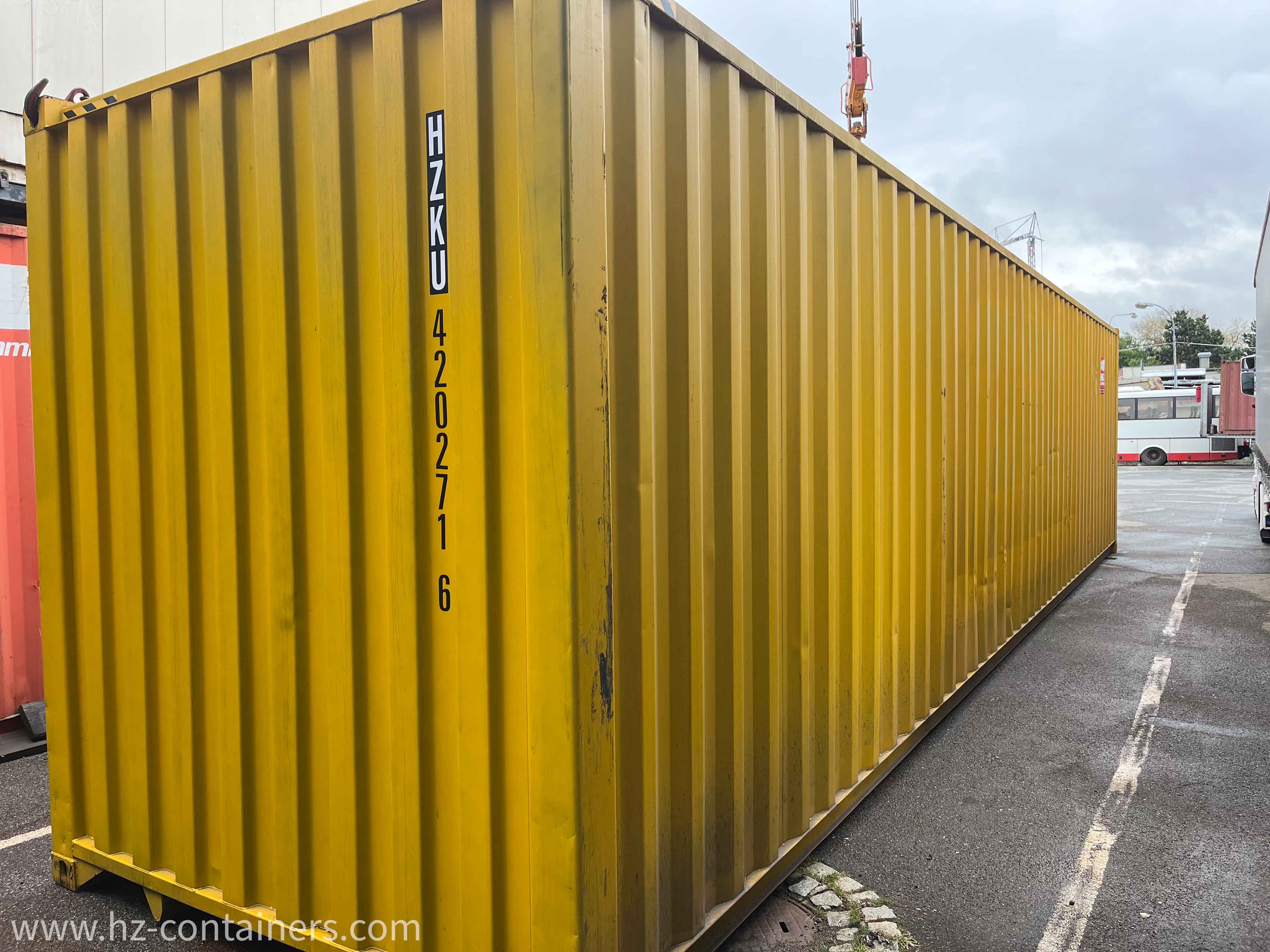





 Czech Republic, Třebíč
  FREE SHIPPING
 We present you with an exceptional 40-foot High Cube intermodal container in used IICL quality, painted in an attractive yellow shade. This container is perfect for beekeepers looking for a reliable, spacious, and safe base for their operation. Thanks to free shipping throughout the Czech Republic and loading at the depot included in the price, this is an extraordinarily advantageous offer that will save you not only money but also the hassle of logistics.
Standard dimensions, load capacity, and volume of 40-foot HC container
The 40-foot High Cube intermodal container differs from the classic model primarily in its increased internal height, which provides 30 centimeters more space. This is a key advantage when storing beekeeping equipment, handling supers, and any conversions. Precise parameters:
- External dimensions: length 12,192 mm, width 2,438 mm, height 2,896 mm
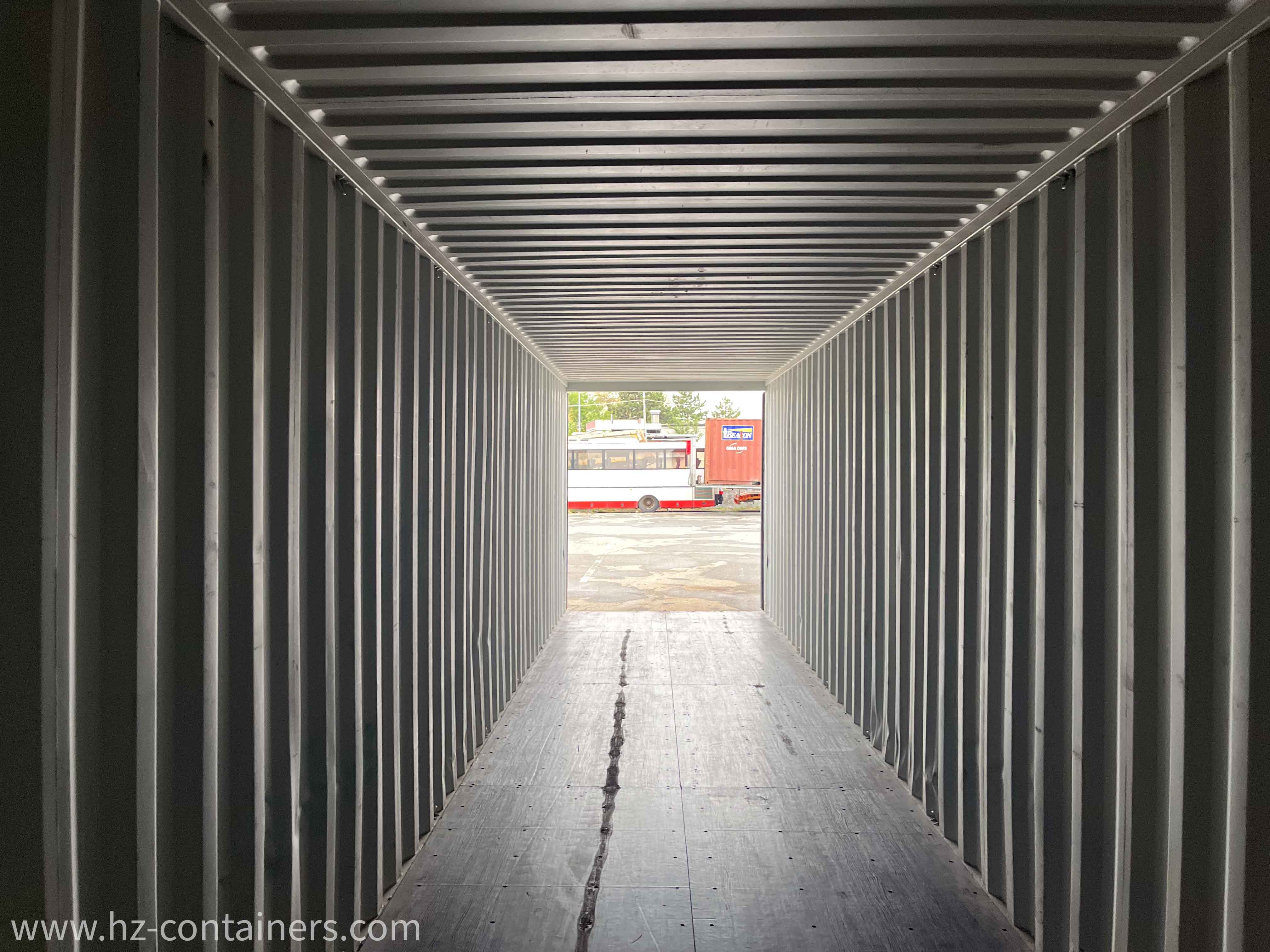
- Internal dimensions: length 12,032 mm, width 2,352 mm, height 2,698 mm
- Internal volume: approximately 76.3 m³
- Maximum load capacity: around 28,800 kg
- Empty container weight: approx. 3,900 kg
- Total maximum weight: 32,500 kg
For perspective – the container with a volume of 76.3 m³ can comfortably fit several hundred beehive supers, dozens of hives, a complete honey extraction line, supplies of frames, barrels of honey, and other beekeeping equipment. The internal height of 2.7 meters allows easy handling even of taller objects and during conversion provides plenty of space for comfortable movement of an adult. The dimensions are approximate and may vary slightly depending on the manufacturer.
IICL Used Quality – What It Means
The IICL designation (Institute of International Container Lessors) represents an internationally recognized quality standard for used shipping containers. An intermodal container in IICL used quality has been in previous service but has been maintained in accordance with the strict criteria of the container lessors’ institute.
What can you expect from such a container? The construction is fully solid and intact, without serious damage. The steel frame is straight, the welded joints are unbroken, and the marine plywood floor is in good condition, without rotted areas or major cracks. The doors seal properly and their locking mechanisms work reliably. Unlike the lowest quality categories, you will not find extensive corrosion, holes in the walls, or deformations that would compromise functionality.
Containers in IICL quality are an ideal compromise between price and condition. They are fully suitable for both sea and road transport, safe for storage, and excellently prepared for any structural modifications. For beekeepers, this quality is more than sufficient – you will get a durable container that will protect your equipment from weather conditions and unwanted visitors.
Yellow Color That Shines
The container is painted in a shade of yellow known as traffic yellow. It is an intense, deep yellow color with a warm undertone, easily visible from a great distance. You know this shade from traffic signs, airport vehicles, or warning elements – and that is exactly why it is so interesting for beekeepers.
Advantages of yellow color for beekeeping:
- High visibility – you won’t miss the yellow intermodal container even in a blooming rapeseed landscape. You can easily find it when returning from the apiary and it serves well as a landmark.
- Natural attractiveness for bees – yellow color is attractive to bees, similar to the colors of flowers they pollinate. Bees feel natural near a yellow container.
- Practical properties – quality RAL stove-enamel paint resists UV radiation, does not fade, and protects the steel construction from corrosion. The yellow color also reflects sunlight, so the container does not overheat in summer as much as darker variants.
- Aesthetic impression – a bright yellow container looks clean, professional, and brings positive energy to the beekeeping operation.
Beekeeping – Who Is the Intermodal Container Suitable For
This intermodal container is intended primarily for beekeepers of all sizes – from small keepers with a few colonies to professional beekeeping operations managing hundreds of hives. Specifically, it will appeal to:
- Beginning beekeepers who need to quickly build a functional base without the costly construction of a masonry building.
- Medium and large beekeeping operations seeking additional storage and processing capacities.
- Beekeeping clubs and associations that need shared equipment for their members.
- Honey producers and manufacturers of bee products who need a hygienic environment for final processing and packaging.
- Ecological farms and beekeeping schools building educational facilities for courses and workshops.
Storage Options in Beekeeping
Storage is the most common and most natural use of a shipping container in beekeeping. The container provides a dry, safe, and lockable environment, which is absolutely crucial for beekeepers. What all can be stored in the container?
- Bee supers and hives – outside the season, you need to store dozens to hundreds of supers, which take up considerable space. The 40-foot High Cube container can fit approximately 400 to 600 supers depending on their dimensions and stacking method.
- Frames with combs and foundation sheets – the dry and clean environment of the container protects frames from moisture, mold, and wax moth. You can comfortably store several thousand frames in the container.
- Honey extraction line – centrifuges, uncapping tanks, filters, and other equipment remain in the container protected from dust and dirt.
- Honey barrels and cans – both stainless steel and plastic honey containers require a clean storage environment, which the intermodal container provides without problems.
- Spare parts and tools – smokers, hive tools, beekeeping veils, gloves, wiring devices, and other small equipment.
- Medicines and disinfectants – in a lockable container, you can safely store even preparations that require controlled access.
- Sugar syrup and feed supplies – barrels with syrup, bags of sugar, and other feed for bees.
How much actually fits in the container? Here is a concrete example: a standard bee super with dimensions of approximately 50 × 40 × 30 cm has a volume of about 0.06 m³. With a container volume of 76.3 m³ and accounting for handling aisles, 500 or more supers can comfortably fit in it. This represents a base for a beekeeping operation with 100 or more colonies.
Transport Options in Beekeeping
Thanks to IICL quality, the intermodal container is fully suitable for road and sea transport. In beekeeping, you can transport:
- Entire hives with colonies – when migrating for nectar flow, you can use the container as a mobile transport unit. After modification (installation of ventilation openings and securing frames), dozens of hives can be safely loaded into the container and transported to a new location.
- Extracted honey in barrels – transporting honey from the apiary to the processing facility is easy and hygienic with the container.
- Beekeeping equipment for exhibitions and markets – the container serves as a mobile warehouse and transporter for all equipment for beekeeping events, sales stands, and presentations.
Conversion Options in Beekeeping
The High Cube container, thanks to its robust construction and internal height of 2.7 meters, is an ideal base for various conversions. In beekeeping, a number of inspiring options are available:
- Honey house – after insulation, installation of washable walls, a floor with water drainage, electrical and water distribution, a full-fledged honey house meeting hygienic standards is created. Inside, you place a honey extractor, uncapping equipment, filters, settling tanks, and a packaging line. The advantage is mobility – you can move the honey house closer to the apiary and minimize honey transport.
- Equipment storage with workshop – you can designate one part of the container for storing supers and frames, and convert the other into a workshop with a workbench, welding machine, and tools for manufacturing and repairing hives.
- Honey and bee product shop – by cutting out a sales window, installing a counter and shelves, you create an attractive sales point right on the farm, by the road, or at markets. The yellow color will attract the attention of passersby.
- Educational and training room – for beekeeping courses, lectures, and workshops. After insulation, lighting, and equipping with benches, a capacity classroom for 15 to 20 participants is created.
- Facility for bee products with controlled temperature – by installing air conditioning or cooling, you create a space for storing honey, propolis, royal jelly, and other products at optimal temperature.
- Apitherapy room – for relaxation and inhalation of bee air. The container can be converted into a rest room with loungers placed above hives, where visitors breathe beneficial bee aerosol.
- Public observation point – by glazing one wall and placing observation hives, you create an educational exhibition for schools, excursions, and public events.
Container Benefits for Beekeepers
Why choose an intermodal container for a beekeeping operation?
- Immediate usability – we deliver the container, unload it, and you can start using it right away. No building permit, no lengthy construction.
- Security – the massive steel construction and lockable doors protect your equipment and honey supplies from thieves. Beekeeping equipment represents a significant investment and the container will reliably protect it.
- Weather resistance – rain, snow, wind, or sun will not harm the container. Your equipment will stay dry and safe.
- Mobility – the container can be moved to another location at any time in the future. If you expand the apiary or change your location, you simply move the container with you.
- Low operating costs – the container requires no maintenance except occasional tightness checks and lubrication of locks.
- Ecological solution – you give a second life to a shipping container and save building material.
- No building permit – the container is considered a mobile structure that can be placed on a plot without a complex administrative process.
Other Uses in Beekeeping
In addition to the main uses, the intermodal container offers a number of other creative possibilities:
- Storage for catch crops and beekeeping botany – seeds, seedlings, and substrates for growing honey plants.
- Facilities for beekeeping competitions and exhibitions – mobile changing rooms, sample storage, and technical facilities for organizers.
- Honey testing laboratory – a small laboratory for honey analysis, moisture measurement, and quality control.
- Beekeeping operation office – a comfortable base for administration, colony records, and season planning.
- Combination with photovoltaics – solar panels can be installed on the roof of the container to achieve energy self-sufficiency for lighting, cooling, or water heating.
Mobility and Flexibility
One of the biggest advantages of the container is its mobility. If you decide to expand the bee farm, move the operation, or migrate for nectar flow, the container is always ready for relocation. Just arrange a crane and a transport vehicle – and your beekeeping base will move wherever you need it. That is an advantage that no masonry building can offer you.
Recommendations and Ideas for Maximum Use
- Place the container on a raised gravel base – this will ensure rainwater drainage and extend the floor lifespan.
- Consider installing ventilation grilles – if you plan to store frames with combs, natural ventilation will help prevent moisture.
- Take advantage of the yellow color – you can keep the container in its original yellow paint, which is naturally attractive to bees and also serves as a distinctive landmark.
- Plan the interior layout – shelving systems, hanging shelves, and mobile partitions will help maximize the use of the 76.3 m³ space.
- Separate the storage and work zone – if space allows, create two separate sections in the container – one for storage, one for work.
- Combine multiple containers – in the future, you can purchase another container and connect them into a larger unit.
Free Shipping Throughout the Czech Republic
One of the extraordinary advantages of this offer is free shipping throughout the entire Czech Republic. Loading the container at our depot is already included in the price, and we will take care of the transport – you don’t have to worry about anything. We will deliver the container to the location of your choice.
A crane is required to unload the container, which the customer arranges independently. The crane must have sufficient load capacity – the empty container weighs approximately 3,900 kg.
Free shipping applies exclusively to the territory of the Czech Republic. In case of interest in shipping outside the Czech Republic, it is necessary to request transport individually according to the destination – we will gladly prepare a custom price quote.
The 40-foot High Cube intermodal container in IICL quality with bright yellow paint is the perfect solution for modern beekeepers. Whether you are looking for a safe storage for supers and equipment, a mobile honey house, a honey shop, or an educational facility – this container will provide you with everything you need. Thanks to free shipping throughout the Czech Republic, loading included in the price, and immediate availability, this is an offer that cannot be refused. Transform your beekeeping operation with minimal cost and maximum benefit.
Send inquiry
Shipping container colors
RAL 1001 RAL 1003 RAL 1014 RAL 1015 RAL 1018 RAL 1023 RAL 2001 RAL 2008 RAL 2011 RAL 3000 RAL 3001 RAL 3002 RAL 3009 RAL 3013 RAL 3020 RAL 4008 RAL 5003 RAL 5005 RAL 5010 RAL 5011 RAL 5013 RAL 5017 RAL 6005 RAL 6007 RAL 6018 RAL 6029 RAL 6031 RAL 6038 RAL 7000 RAL 7004 RAL 7005 RAL 7012 RAL 7015 RAL 7016 RAL 7021 RAL 7024 RAL 7031 RAL 7032 RAL 7035 RAL 7036 RAL 7037 RAL 7038 RAL 7040 RAL 7042 RAL 8004 RAL 8008 RAL 9003 RAL 9004 RAL 9005 RAL 9010 RAL 9016 CAMOUFLAGEQUESTIONS & ANSWERS TO THE MOST FREQUENTLY ASKED QUESTIONS:
We always guarantee the size, quality, and specific type of container including the pickup location of your choice.
Why is it not possible to access the depot to inspect the container? And for what reason is it not possible to take photos of the container from the depot?
How does the self-pickup of a container from the depot work?
What if the container we came to pick up at the depot does not match the condition and quality we ordered?
Afraid of being scammed and not receiving the container? Many questions are answered in our article container purchase scams.
You can find out how to arrange for the unloading of a shipping container here.
The photos are for illustrative purposes only. Detailed information about the properties of shipping containers can be found here: shipping container quality
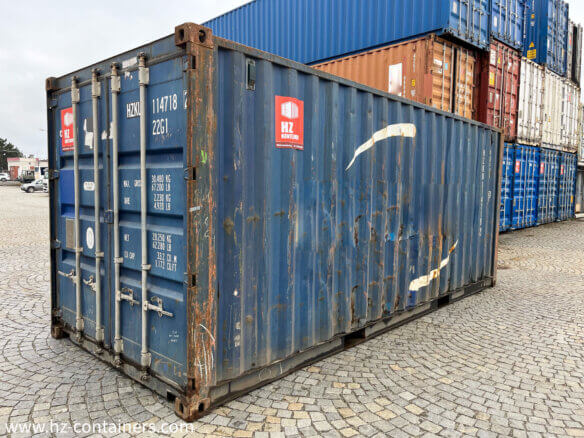
 Czech Republic, Třebíč