
Why Customers Mix Feet and Inches and How to Navigate Them
In the global world of logistics and international shipping we encounter terminology that can be confusing for customers accustomed to the metric system. One of the most common sources of misunderstanding is the use of imperial units – specifically feet and inches. This problem, where the customer mixes up the terminology of feet versus inches, is not just a minor inconvenience. It can lead to incorrect freight cost calculations, loading problems for goods into shipping containers, and ultimately to unexpected expenses and delays.
This comprehensive glossary page is designed to demystify the world of imperial measures in the context of shipping. Our goal is to answer the basic question “What is it?” for each key term and provide you with practical guides and examples. After reading this guide you will be able to measure shipments confidently, understand container dimensions, and communicate effectively with shipping companies worldwide. Let’s dive into a world where feet and inches make perfect sense.
Basic Units: Imperial vs. Metric System
Overview of Differences and Conversion Tables
The root of all confusion is the clash of two different measurement systems. While the Czech Republic and the overwhelming majority of the world use the intuitive metric system, key players in international trade, such as the United States, still cling to the imperial system.
What Is the Metric System?
The metric system is an internationally standardized decimal system of measures and weights. The basic units are:
- metre (m) – length
- gram (g) – mass
- litre (l) – volume
The advantage of the metric system is the simplicity of conversions: multiples and fractions are always in tens (millimetres, centimetres, metres, kilometres). This system is standardized according to the SI (International System of Units).
What Is the Imperial System?
The imperial system of units (British imperial system, today mainly used in the USA, Liberia and Myanmar) is historically older and uses different units for everyday measurement:
- foot (ft, ′)
- inch (in, ″)
- yard
- mile
Unlike the metric system, its structure is not decimal, which is the main source of confusion, especially in conversions and logistics.
Conversion Table of Basic Units
| Imperial unit | Metric equivalent | Conversion factor |
|---|---|---|
| 1 inch | 2.54 cm | × 2.54 |
| 1 foot | 30.48 cm | × 30.48 |
| 1 yard (3 feet) | 91.44 cm | × 0.9144 |
| 1 metre | 39.37 inches | × 39.37 |
| 1 metre | 3.28 feet | × 3.28 |
Conversion Table for Volume and Mass
| Imperial unit | Metric equivalent | Conversion factor |
|---|---|---|
| 1 cubic foot | 0.028 m³ | × 0.028 |
| 1 cubic yard | 0.765 m³ | × 0.765 |
| 1 cubic inch | 16.39 cm³ | × 16.39 |
| 1 pound (lb) | 0.454 kg | × 0.454 |
| 1 kilogram | 2.2046 lb | × 2.2046 |
Practical tip: Many online calculators expect dimensions in inches and weight in pounds! When entering data into forms always verify which units the data should be supplied in.
Foot (Foot, ft, ′)
Foot is the basic unit of length in the imperial system.
- 1 foot = 12 inches
- 1 foot = 30.48 cm
- 1 metre ≈ 3.28 feet
- Notation: ft or ′
Use in logistics:
- Length of shipping containers (e.g., “20ft containers”, “40ft containers”)
- Dimensions of trucks, ocean vessels
- Calculating volumes of large shipments
Inch (Inch, in, ″)
Inch is the smaller unit of length. It is the basic unit for precise measurements.
- 1 inch = 2.54 cm
- 1 foot = 12 inches
- Notation: in or ″
Use in logistics:
- Detailed dimensions of packages, packaging, container doors
- Precise specifications for packing goods, opening heights
- Combination of foot and inch: e.g., 5′ 8″ (5 feet and 8 inches)
Measuring a Shipment: From Theory to Practice
Accurate measurement of a shipment is the absolute foundation for successful and cost‑effective transportation. This is not an academic exercise but a practical process that directly influences price, safety, delivery speed and possible claims.
Why Accurate Measurement Is Key
- Cost: For LTL (Less‑Than‑Truckload) shipments the price usually depends on volume and density. Inaccurate dimensions can result in the shipment being placed in a different class and higher fees.
- Space planning: The carrier must know how much space your shipment will occupy in a truck/container. Wrong data can cause your goods not to fit.
- Safety: Load distribution affects the stability of the transport vehicle and transport safety.
How to Measure a Shipment Correctly
- Length: The longest side of the shipment from one end to the other.
- Width: The shortest side of the shipment.
- Height: From the floor to the highest point of the shipment.
- Always measure the farthest points! Include overhangs, protrusions, corners, handles, etc.
- Record dimensions in the order: length × width × height (L × W × H)
Practical tip: If possible, use both metric and imperial notation. For example: 120 × 80 × 150 cm (47.2 × 31.5 × 59.1 in)
Volume Calculation: Cubic Inches and Cubic Feet
Step 1: Calculate in Cubic Inches
- Formula: length (in) × width (in) × height (in) = volume in cubic inches (in³)
Example:
Pallet measuring 48″ × 40″ × 50″
Volume = 48 × 40 × 50 = 96 000 in³
Step 2: Convert to Cubic Feet
- 1 cubic foot = 12″ × 12″ × 12″ = 1 728 in³
- Formula: volume (in³) ÷ 1 728 = volume in cubic feet (ft³)
Continuing the example:
96 000 in³ ÷ 1 728 = 55.56 ft³
Conversion Table for Volume
| Unit | Convert to metric | Conversion factor |
|---|---|---|
| 1 in³ (cubic inch) | 16.39 cm³ | × 16.39 |
| 1 ft³ (cubic foot) | 0.028 m³ | × 0.028 |
| 1 m³ | 35.31 ft³ | × 35.31 |
Alternative Calculations from the Metric System
- From centimetres: (length × width × height) ÷ 28 316.8 = volume in ft³
- From metres: (length × width × height) × 35.31 = volume in ft³
Freight Density
- Density = weight (in pounds) ÷ volume (in cubic feet)
- 1 kg = 2.2046 lb
Example:
Shipment 100 kg (220.5 lb) and volume 10 ft³
Density = 220.5 lb ÷ 10 ft³ = 22 lb/ft³
Why is it important?
Density is one of the main factors for determining the freight class. The lower the density, the higher the freight class and price.
Shipping Containers and Their Dimensions
Standard Container Sizes
ISO 668 standardization ensures that containers worldwide have identical dimensions and can be easily stacked, transported and handled on ships, trains and trucks.
Overview of Main Types
| Container type | External (L × W × H) | Internal (L × W × H) | Volume | Empty weight (Tare) | Payload |
|---|---|---|---|---|---|
| 20′ standard | 6.06 × 2.44 × 2.59 m | 5.71 × 2.35 × 2.38 m | 33.1 m³ | ~2 200 kg | ~28 000 kg |
| 40′ standard | 12.19 × 2.44 × 2.59 m | 12.00 × 2.33 × 2.35 m | 66.8 m³ | ~4 060 kg | ~26 500 kg |
| 40′ high cube (HC) | 12.19 × 2.44 × 2.89 m | 12.00 × 2.33 × 2.65 m | 75.3 m³ | ~4 300 kg | ~26 300 kg |
Note: Values may vary slightly depending on the manufacturer, age of the container and type of floor or doors.
Detailed Dimensions
20 ft container
- External: 6.06 × 2.44 × 2.59 m (19′ 10.5″ × 8′ 0″ × 8′ 6″)
- Internal: 5.71 × 2.35 × 2.38 m (18′ 8.8″ × 7′ 8.6″ × 7′ 9.9″)
- Door opening: 2.34 × 2.27 m
- Volume: 33.1 m³ (1 169 ft³)
- Empty weight: 2 199 kg
- Max payload: 27 800 kg
40 ft container
- External: 12.19 × 2.44 × 2.59 m (40′ × 8′ × 8′ 6″)
- Internal: 12.00 × 2.33 × 2.35 m (39′ 5″ × 7′ 8.6″ × 7′ 9.9″)
- Door opening: 2.34 × 2.27 m
- Volume: 66.8 m³ (2 350 ft³)
- Empty weight: 3 750–4 060 kg
- Max payload: 26 500 kg
40 ft High Cube (HC)
- External height: 2.89 m (9′ 6″)
- Internal height: 2.65 m (8′ 8″)
- Volume: 75.3 m³ (2 660 ft³)
Practical Loading Tips
- Always plan using internal dimensions!
- Remember the reduction of space near doors and walls.
- European pallets (120 × 80 cm) do not fit optimally into ISO containers – unused spaces appear.
- Stackability of packages greatly increases space utilization.
- The real usable capacity of a container is lower than the theoretical volume because of box shapes, packaging material and the need to secure cargo against movement.
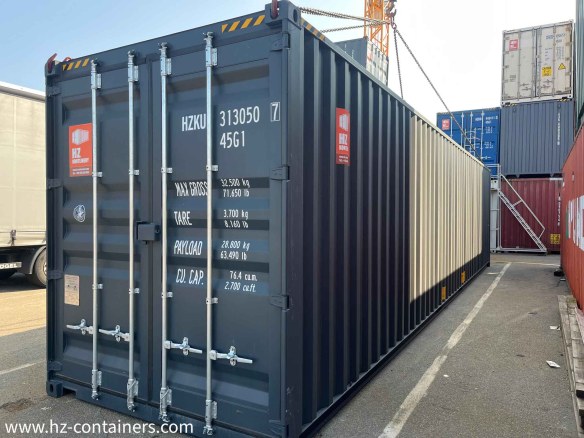
Key Weight Terms
- TARE (empty weight): weight of the empty container
- PAYLOAD: maximum cargo weight
- MAX. GROSS: TARE + PAYLOAD
Most Common Mistakes and Their Solutions
Typical Scenarios
Scenario 1: Unit Mix‑up
- Error: Customer measures a pallet in cm and kg but enters the values into the system without conversion.
- Consequence: Shipment is priced incorrectly; the carrier’s re‑measurement leads to higher charges and delays.
- Solution: Always convert dimensions and weights to the units required by the system!
Scenario 2: Planning Cargo Using External Dimensions
- Error: Loading plan based on external length (40′) instead of the actual internal length (~39′ 5″).
- Consequence: Goods do not fit; you must rearrange or order a different container type.
- Solution: Use only the internal dimensions of the container for planning.
Summary of Common Errors
- Unit mix‑up (cm ↔ in ↔ ft)
- Confusing symbols (′ = foot, “ = inch)
- Measuring the bare product instead of the packed unit
- Ignoring overhangs, corners, handles, etc.
- Planning with external dimensions instead of internal ones

 Czech Republic, Štětí
  FREE SHIPPING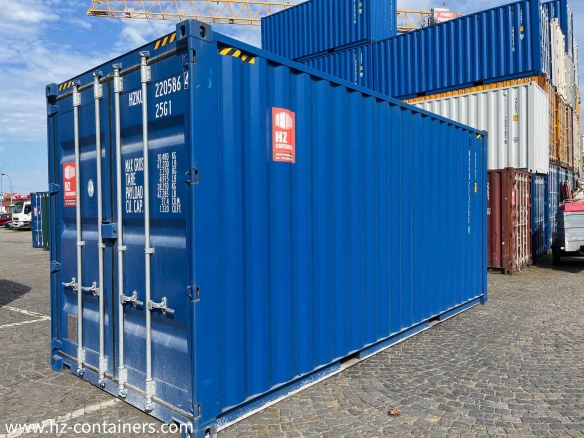

Other container news...

Obligation to Check Tightness When Selling a Reefer Container
Who is responsible for the refrigerant leak check when selling a refrigerated container? Find out what obligations the seller has at the time of handover and why they must provide a PTI report along with the technical data plate. Learn which regulatory requirements and F-gas record-keeping duties become the sole responsibility of the new owner.

New shipping containers
If you are currently considering purchasing a new shipping container, you are not alone. While just twenty years ago containers were used almost exclusively for maritime transport, today they have found their way into construction, storage, business, and even housing. This growing popularity brings with it a host of questions: Which type should you choose? How much does it cost? How do you recognize quality? How can you avoid falling victim to scammers?
New sea shipping containers
If you are currently considering purchasing a new shipping container, you are not alone. While just twenty years ago containers were used almost exclusively for maritime transport, today they have found their way into construction, storage, business, and even housing. This growing popularity brings with it a host of questions: Which type should you choose? How much does it cost? How do you recognize quality? How can you avoid falling victim to scammers?

6m shipping container
Are you thinking about buying a 6-meter shipping container but aren’t sure what to look for? You are not alone—this 20-foot container is the best-selling size on the Czech market, and the differences between various types, conditions, and prices can be significant. In this guide, you will find everything you need to know: from exact dimensions and a comparison of categories (such as “one-way,” refurbished, and “Cargo Worthy”) to current prices and shipping advice.